
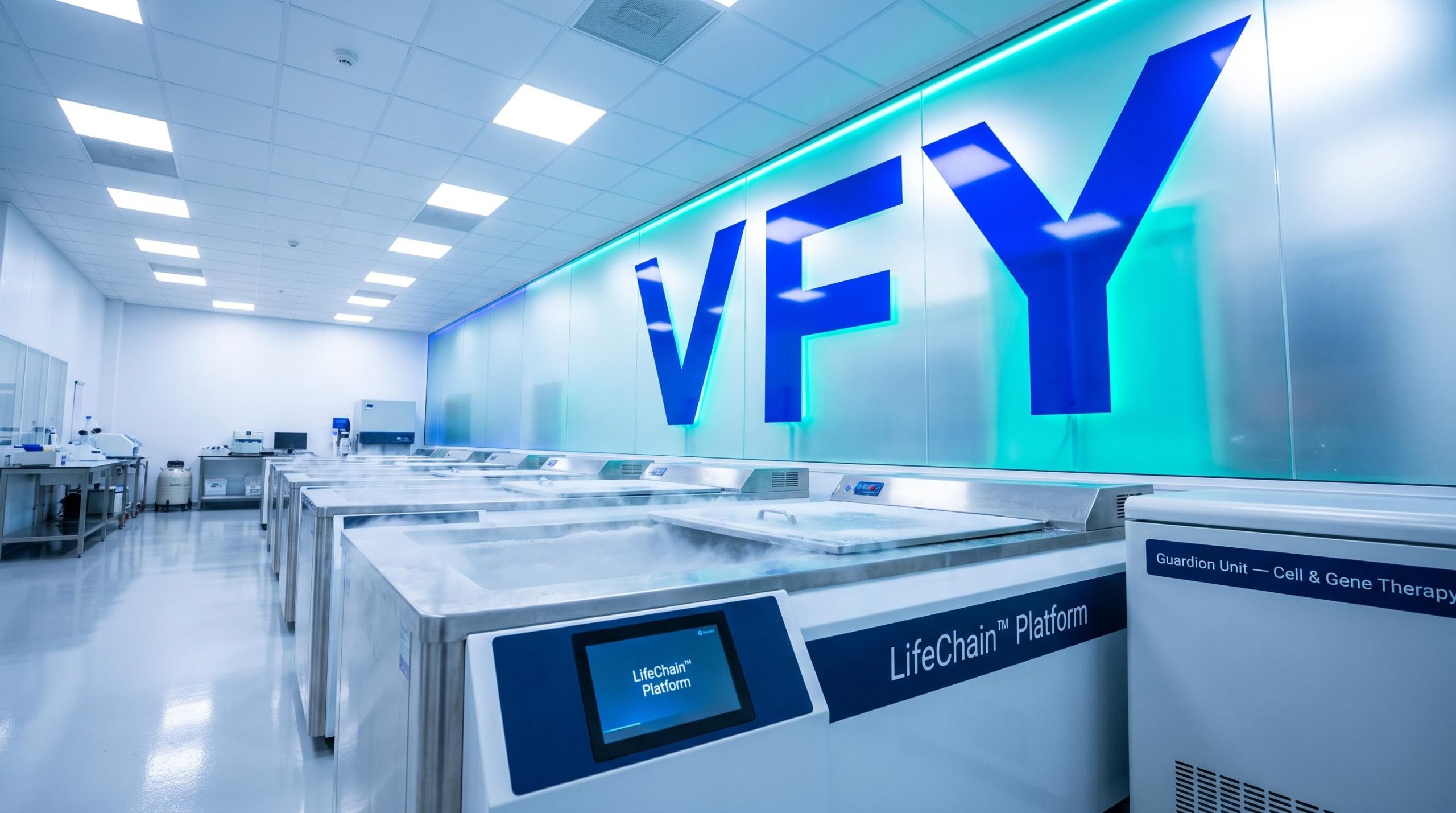
Vitrafy secures first U.S. cell and gene therapy agreement with Charter Medical
Vitrafy Life Sciences (ASX: VFY) has entered an agreement with Charter Medical, LLC to deploy its cryopreservation ecosystem at Charter Medical’s North Carolina Innovation Hub, marking the company’s first cell and gene therapy agreement.
The agreement also represents Vitrafy’s first entry into North America, opening a strategic pathway beyond its core blood market activities. Under the arrangement, Vitrafy will install one Guardion cryopreservation freezing unit and its LifeChain™ software platform at Charter Medical’s facility.
The deployment carries a distinct commercial framing. The initial term spans 6 months, with installation set to occur in 2H FY2027, and no revenue will be generated across the initial term. For investors, the significance lies not in immediate financial impact but in market entry into a high-value new segment alongside an established, trusted partner.
Charter Medical brings more than 30 years’ experience serving industry-leading biopharmaceutical companies. Its Innovation Hub, established in 2024, is located in downtown Winston-Salem’s Innovation Quarter, an innovation district anchored by Wake Forest University School of Medicine and home to a concentration of regenerative medicine and cell therapy activity.
When big ASX news breaks, our subscribers know first
What the agreement covers
Charter Medical will use Vitrafy’s technology ecosystem to support cryopreservation and freeze-curve optimisation studies for its cell and gene therapy (CGT) customers. The announcement describes Vitrafy as deploying its ecosystem, rather than commercialising or licensing it.
The Guardion unit is designed to deliver controlled, reproducible freeze profiles across a wide range of cell lines. The LifeChain™ platform is set up to capture processing data, with the aim of delivering improved cryopreservation protocols and outcomes for Charter Medical’s operations.
An important nuance sits in the announcement’s footnote. As with other process equipment used in CGT manufacturing, therapy developers incorporate the ecosystem into their own FDA submissions, including to the Center for Biologics Evaluation and Research (CBER), ahead of any human use.
| Element | Detail |
|---|---|
| Partner | Charter Medical, LLC (part of the Solesis family of companies) |
| Location | Innovation Hub, Winston-Salem, North Carolina |
| Technology deployed | Guardion unit + LifeChain™ platform |
| Initial term | 6 months, deployment 2H FY2027 |
| Revenue in initial term | None |

Why freeze-curve optimisation matters in cell and gene therapy
Cryopreservation is the process of freezing biological material, such as living cells, so it can be stored and later used without losing its integrity. In cell and gene therapy, where treatments are built from living cells, preserving those cells properly is a critical step in the manufacturing chain.
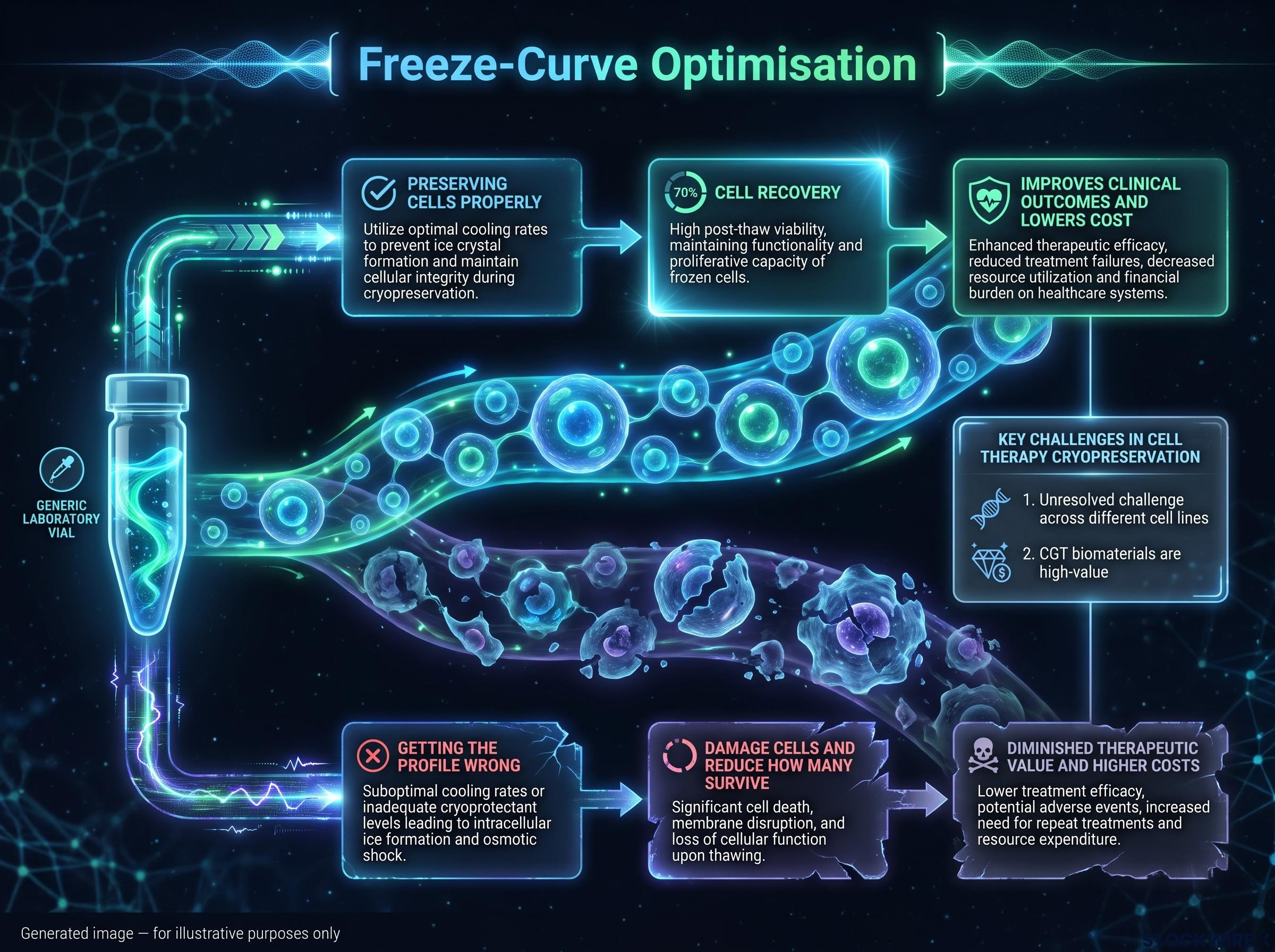
Freeze-curve optimisation refers to fine-tuning the exact rate and profile at which material is frozen. Different cell lines respond differently to freezing, and getting the profile wrong can damage cells and reduce how many survive the process. This measure of survival is known as cell recovery.
According to the announcement, freeze-curve optimisation is a challenge in the cell and gene therapy process, with improvements in cell recovery critical to advancing clinical outcomes and reducing cost. The following points summarise why this matters:
-
Freeze-curve optimisation remains an unresolved challenge across different cell lines
-
Better cell recovery improves clinical outcomes and lowers cost
-
CGT biomaterials are high-value, making preservation performance a critical requirement
For investors, this positions Vitrafy in a segment where the value of preserved biomaterial is high and cryopreservation performance is a recognised critical requirement for many manufacturers.
The strategic significance for Vitrafy investors
The agreement demonstrates the applicability of Vitrafy’s ecosystem beyond blood market activities. It moves the company into a segment where cryopreservation performance is a recognised requirement, extending the reach of its integrated hardware and software offering.
Partner quality is central to the strategic case. Charter Medical is an established supplier of consumables, bags and services to the Contract Development and Manufacturing Organisation (CDMO) and CGT manufacturing sectors, working with many of the sector’s leading developers and manufacturers, the same customer base Vitrafy is targeting.
The announcement frames the pathway carefully. The deployment could open a pathway to further pipeline development and longer-term commercial relationships across the U.S. CGT market. This is conditional language, and no future revenue is guaranteed at this stage.
On market scale, the announcement describes North America as a market with, in its own wording, “over thousands of participants registered contract manufacturers” across the pharmaceutical sector. The figure is loosely worded in the source and should be read as an indicative reference to the market’s breadth rather than a precise count.
Brent Owens, Managing Director and CEO
“This agreement is a significant milestone as our first product deployment in cell and gene therapy, incorporating Vitrafy’s cryopreservation hardware and LifeChain™ software platform from the outset. Freeze curve optimisation across different cell lines is a real and unresolved problem for cell and gene therapy manufacturers, and one our ecosystem is built to solve. Charter Medical has supplied the advanced therapy sector for more than 30 years and works with the CDMOs and therapy developers we are targeting, so this deployment puts our technology directly in front of those customers with a trusted market leader.”
What comes next
Deployment is scheduled for 2H FY2027 under the initial 6-month term. As no revenue will be generated during this period, the arrangement is best viewed as an entry step and proof point rather than a completed commercial win.
The agreement positions Vitrafy to validate its ecosystem within a new, high-value vertical alongside a long-standing industry partner. Whether this translates into further pipeline development and longer-term commercial relationships across the U.S. CGT market will depend on outcomes from the initial deployment and how the partnership evolves beyond the initial term.
The Vitalant partnership, signed in June 2026 with the second-largest U.S. blood network, follows a similar non-revenue entry structure, with two Guardion units placed at the Vitalant Innovation Center for configuration and validation ahead of a potential longer-term commercial relationship.
For now, the strategic thesis rests on Vitrafy establishing a foothold in the cell and gene therapy segment, extending the applicability of its cryopreservation ecosystem beyond its core blood market, and doing so with an established supplier to the CDMO and CGT manufacturing sectors.
For readers wanting to understand how Vitrafy has structured its dual-market commercialisation model across both human health and animal reproduction, our detailed coverage of the IMV Technologies partnership explains the 12-month exclusive arrangement, its up to $930,000 non-dilutive revenue potential, and how management has balanced near-term validation against longer-term FDA-regulated expansion.
Don’t Miss the Next Healthcare Breakout
Big News Blast delivers FREE breaking ASX healthcare news directly to your inbox within minutes of release, complete with in-depth analysis already done for you. Join 20,000+ subscribers staying ahead of the market. Click the “Free Alerts” button at StockWire X to start receiving alerts the moment news breaks.