
Abacus Group outlines FY26 results and simplified Commercial REIT strategy
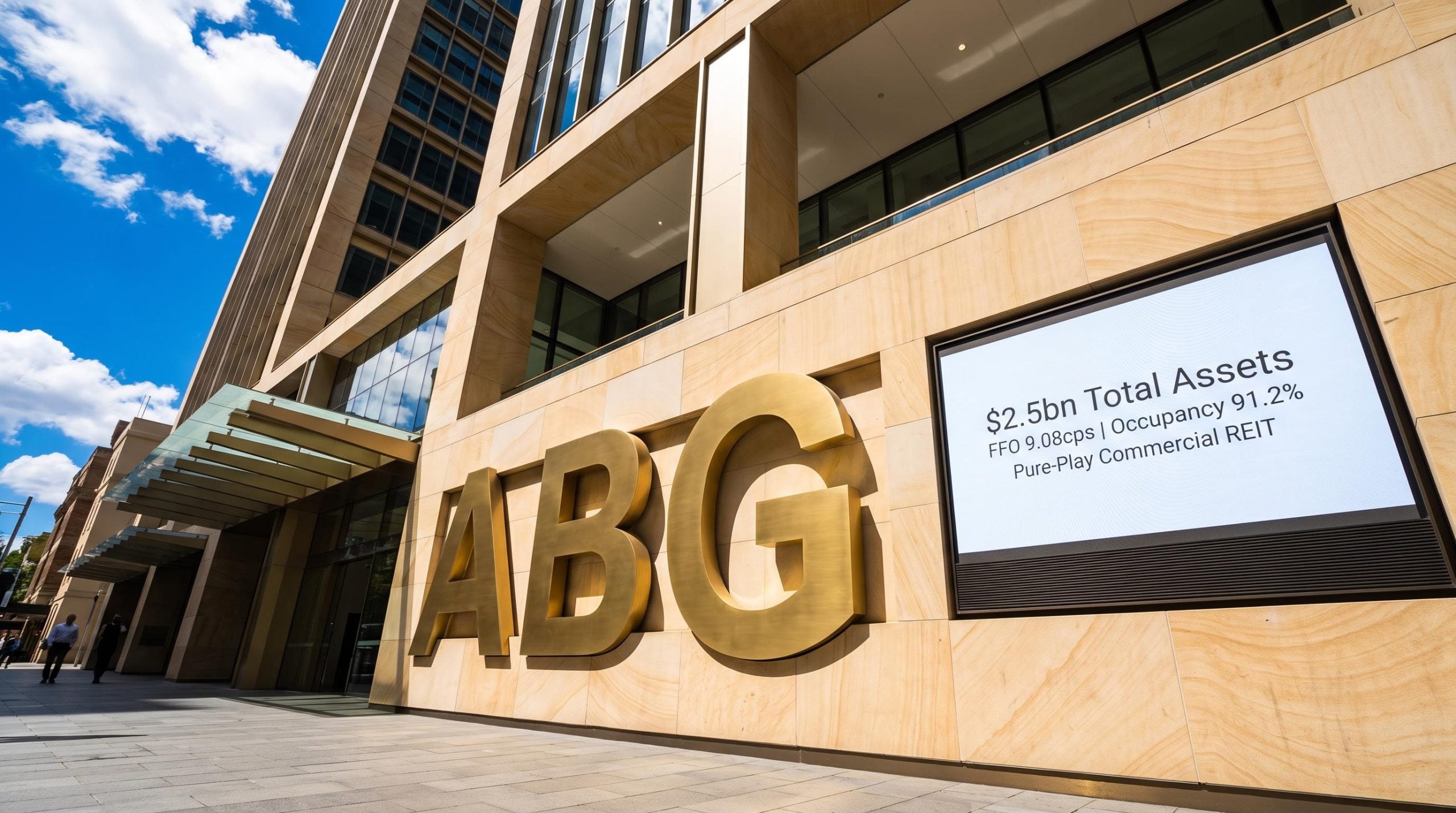
In its FY26 results presentation delivered on 25 August 2026, Abacus Group outlined a full-year result anchored by a $2.5bn total asset base, funds from operations (FFO) of $81.2m (9.08cps), and the completed internalisation of Abacus Storage King (ASK). Management framed the year as a milestone that leaves Abacus a focused, pure play Commercial REIT.
The presentation detailed a statutory loss of $74.5m for the period. Rather than reflecting operating deterioration, the loss was driven predominantly by non-cash fair value adjustments of $120.1m, as set out in the statutory earnings reconciliation.
Management also flagged a deliberate reset of FY27 distribution guidance to 6.70cps, positioning the payout ratio at a level described as more sustainable through the cycle.
| Metric | FY26 | FY25 Movement | What It Signals |
|---|---|---|---|
| Total assets | $2.5bn | ↓ 5.1% | Smaller base following divestments and revaluations |
| FFO | $81.2m | ↓ 1.9% | Broadly held operating earnings |
| FFO per security | 9.08cps | ↓ 1.9% | Stable earnings per security |
| DPS | 8.50cps | Flat | Maintained distribution for FY26 |
| Gearing | 36.2% | ↑ 170bps | Within target range of up to 40% |
| NTA | $1.59ps | ↓ 7.6% | Reflects fair value movements |
| Occupancy | 91.2% | ↓ 90bps | Solid portfolio utilisation |
When big ASX news breaks, our subscribers know first
A milestone measured: the ASK internalisation
Management described the ASK internalisation as the culmination of a multi-year growth strategy, creating an entity of approximately $3.9bn. The move simplifies the Group structure into a pure play East Coast Commercial REIT supported by a clearer capital allocation framework.
The presentation set out the transaction as a three-step journey:
- FY21: Acquisition of the SK Platform
- FY23: De-staple of ASK
- FY26: Internalisation of ASK
Post balance date, ASK changed to Storage King Group (ASX:SKG). Abacus retains a 19.7% shareholding in the entity, valued at $348m as at 30 June 2026, providing ongoing distribution income while removing the associated management and development fee revenue.
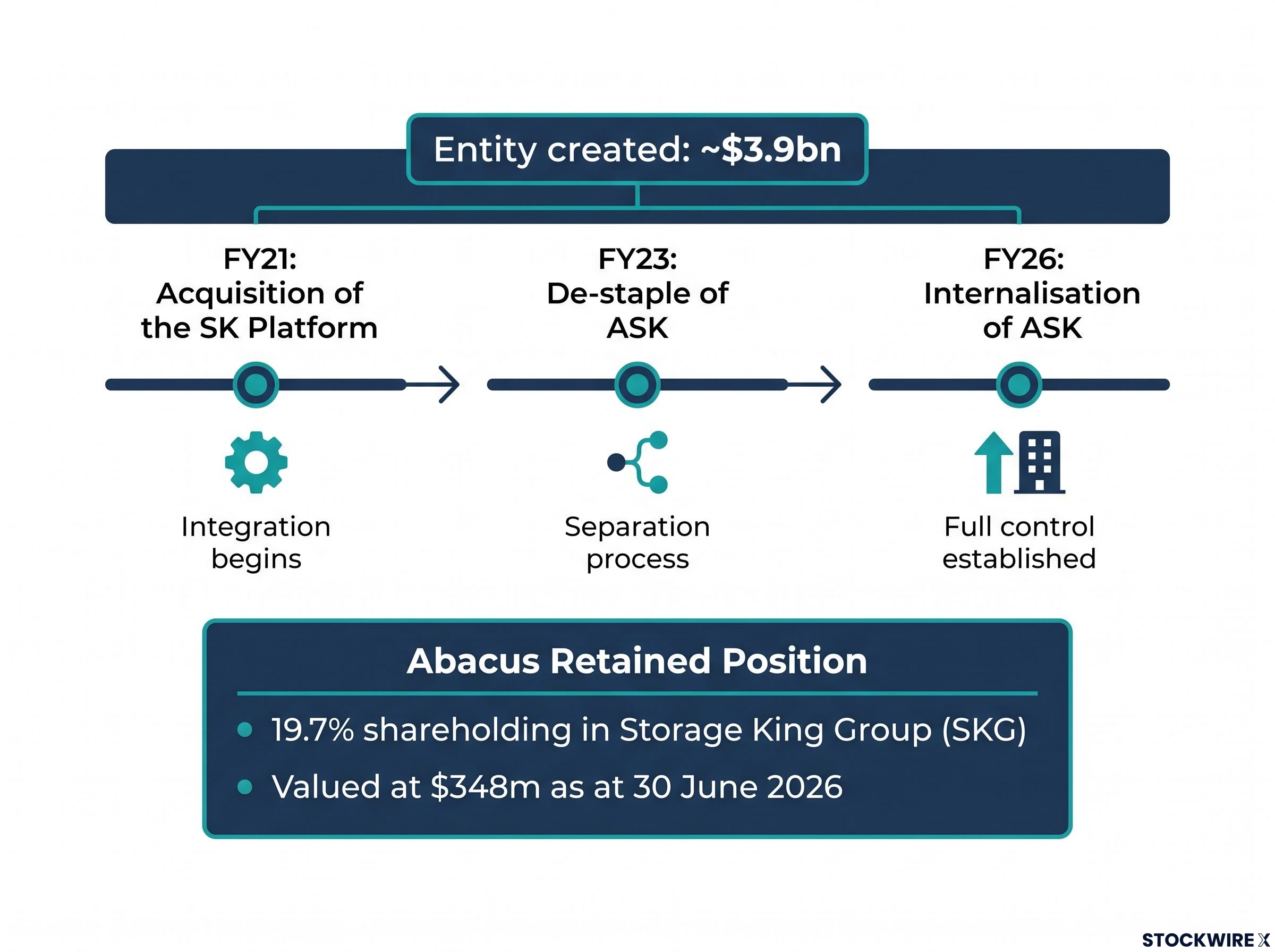
The binding deal to internalise ASK, struck in May 2026 for $19 million plus approximately $5 million in net assets, also quantified the trade-off: ABG would forgo roughly $19.6 million in annual management fee revenue in exchange for $8.4 million in annualised cost savings and a cleaner capital structure.
Understanding a Commercial REIT
A Commercial real estate investment trust (REIT) owns and manages income-producing property such as office towers and retail centres, distributing rental earnings to security holders. For REITs, FFO is the key earnings measure rather than statutory profit, because statutory profit swings sharply with non-cash property revaluations that do not reflect underlying cash generation.
Investors also watch the weighted average cap rate (WACR), which indicates how the market values a property’s income, along with gearing (debt relative to assets) and NTA (net tangible assets per security). For Abacus, the distribution reset and gearing focus matter because they underpin the sustainability of income paid to investors through the property cycle.
Operating performance across Office and Retail
The Office portfolio comprised 13 assets valued at $1.4bn, recording occupancy of 89.2% and net face leasing spreads of +5.5% across 46,628sqm leased. The portfolio maintained a weighted average lease expiry (WALE) of 3.6 years, with 76% rated A-grade and 59% of customers classified as small-to-medium enterprises (SME).
The Retail portfolio of 2 assets valued at $0.4bn delivered occupancy of 97.4%, leasing spreads of +8.4%, and like-for-like rent growth of 4.4%.
| Segment | Value | Occupancy | Leasing Spreads | LFL Rent Growth |
|---|---|---|---|---|
| Office | $1.4bn | 89.2% | +5.5% | 2.0% |
| Retail | $0.4bn | 97.4% | +8.4% | 4.4% |
Management noted an improvement in customer Net Promoter Score (NPS) to +35 (FY25: +27), which supported positive leasing outcomes. The Commercial portfolio valuation rose to $1,826m, with the WACR compressing to 6.70% (FY25: 6.77%).
On platform efficiency, the presentation highlighted:
- A -5.0% lower cost base achieved through organisational simplification
- A targeted 25% reduction in FY27 admin expenses, primarily via headcount reduction
Balance sheet and capital management
Abacus reported a strengthened balance sheet position, with gearing of 36.2% and over $150m in acquisition capacity based on a target gearing of up to 40%. The Group ended the period with cash of $46.0m, up from $23.9m.
Key capital metrics presented include:
- FY26 average cost of drawn debt of 4.5% (down from 5.1%)
- Debt term to maturity of 3.2 years
- 81% of drawn debt hedged
- FY27 weighted average cost of debt (WACD) guided to 5.25%
The liquidity position and hedging profile provide flexibility to pursue East Coast Office opportunities while working to reduce gearing over time.
FY27 guidance and strategic roadmap
Looking ahead, management presented FY27 guidance built around a sustainable income profile. The outlook is predicated on no material deterioration in current business conditions.
The three FY27 guidance points are:
- FY27 distribution guidance of 6.70cps
- A targeted full-year payout ratio of 80%–90% of FFO
- 67% of the FY27 distribution expected to be fully franked, up from 50% in FY26
The strategic roadmap was structured around three priorities. Simplify centres on the pure play Commercial REIT structure and disciplined non-core asset sales, including the Camellia NSW sale contracted with settlement due by the end of September 2026, subject to the satisfaction of contractual conditions. Strengthen focuses on optimising efficiencies and resetting the distribution, while Grow targets East Coast A-grade Office assets oriented to SME customers.
Managing Director, Steven Sewell
“We remain confident that the Group is well positioned to leverage our key enablers and deliver recurring income and create value creation over the medium to long term.”
Don’t Miss the Next ASX REIT Announcement
Big News Blast delivers FREE breaking ASX real estate and commercial property news directly to your inbox within minutes of release, complete with in-depth analysis. Join 20,000+ investors who never miss a market-moving announcement. Click the “Free Alerts” button at StockWire X to get ahead of the market the moment news drops.