


Alterity secures new U.S. patent extending ATH434 protection to at least 2045
Alterity Therapeutics (ASX: ATH, NASDAQ: ATHE) has been granted a new composition of matter patent by the United States Patent and Trademark Office (USPTO) for its lead clinical asset ATH434, extending protection to at least 2045.
The milestone lands as the Company prepares to initiate Phase 3 trial activities in Multiple System Atrophy (MSA) by year-end 2026.
Entitled “Crystalline Form, and Process for its Production”, the patent covers a crystalline form of ATH434 mesylate alongside methods for treating neurological conditions using it. For investors, an extended patent life directly extends the commercial life and revenue runway for ATH434, if approved.
When big ASX news breaks, our subscribers know first
What the new patent covers and why composition of matter matters
The granted patent adds a further layer to Alterity’s intellectual property (IP) position around its lead candidate. Its scope is specific and strategically aligned with the drug form advancing through the clinic.
Key specifics of the patent include:
-
Protection for the novel solid-state crystalline form of ATH434 mesylate
-
Coverage of methods for treating neurological conditions using it
-
The exact form used in Phase 2 trials and planned for the Phase 3 study
-
An estimated expiration of at least 2045
-
Expected listing in the FDA’s “Orange Book” upon regulatory approval
Composition of matter claims are widely recognised as one of the strongest forms of pharmaceutical patent protection. Combined with Alterity’s existing IP and regulatory designations, the new patent creates multi-layered market protection for ATH434.
David Stamler, M.D., Chief Executive Officer
“With protection to at least 2045, this patent extends the commercial life and revenue potential for ATH434 in MSA, if approved, as we prepare to initiate Phase 3 trial activities by year-end 2026. Importantly, Parkinson’s disease is now a viable target indication for ATH434, as our strengthened IP provides the protection needed to justify investment in this major neurodegenerative disorder. The granting of this new U.S. composition of matter patent reflects the deliberate execution of our IP strategy and is one of the most critical steps we have taken to protect the innovation behind ATH434.”
Patent unlocks Parkinson’s disease as a viable new target
The strengthened IP position carries a second major implication. According to the Company, the enhanced protection now justifies investment in Parkinson’s disease (PD) and other neurodegenerative disorders where iron dysregulation and protein aggregation are implicated.
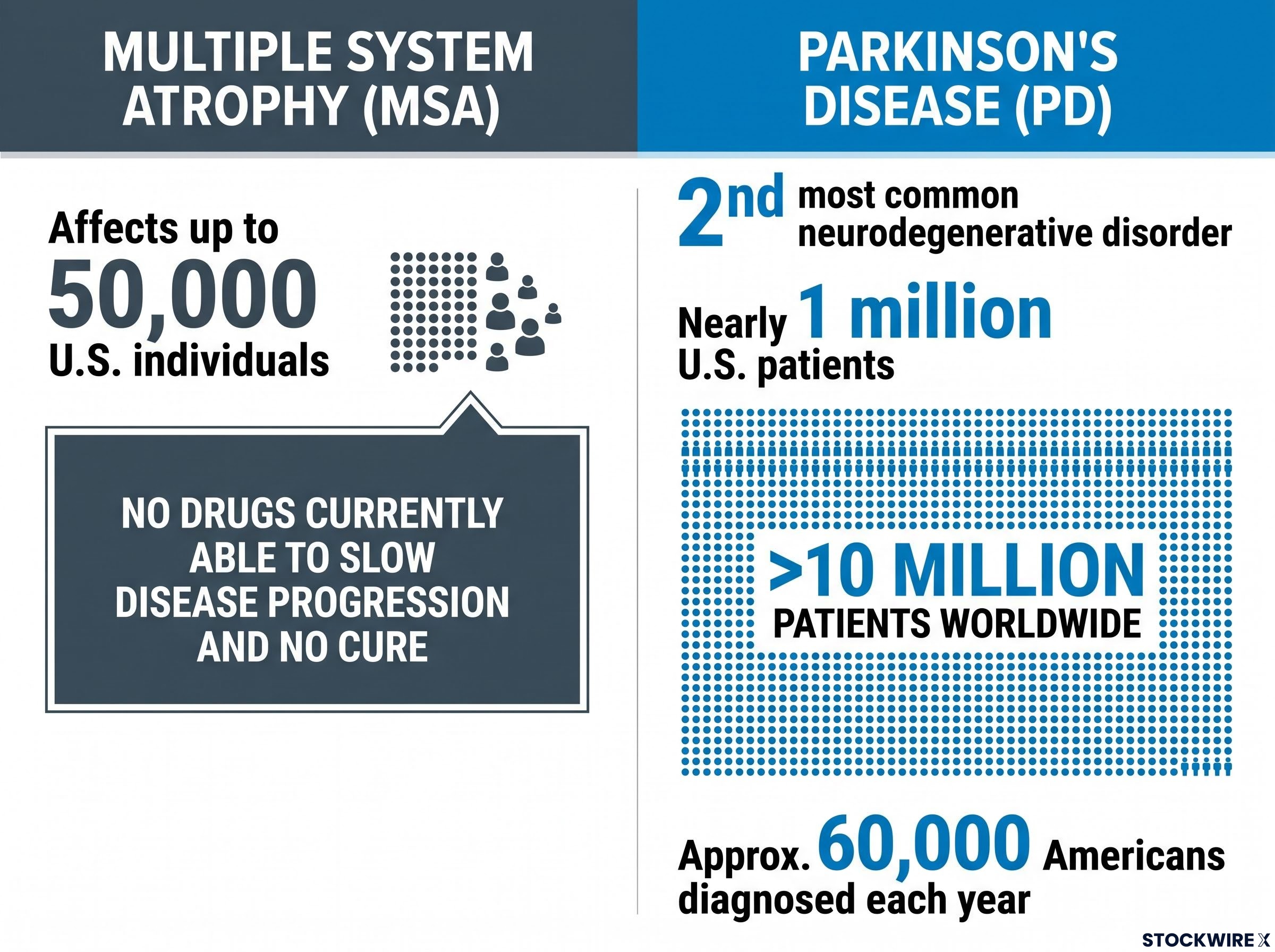
The addressable patient populations are substantial. The following figures reflect broader disease context rather than company forecasts:
-
MSA affects up to 50,000 individuals in the U.S., with no drugs currently able to slow disease progression and no cure
-
PD is the second most common neurodegenerative disorder
-
Nearly 1 million people in the U.S. and more than 10 million worldwide live with PD, with approximately 60,000 Americans diagnosed each year
Expanding the potential indications materially widens ATH434’s long-term commercial opportunity, if approved. Dr Stamler noted that Parkinson’s disease is “now a viable target indication for ATH434, as our strengthened IP provides the protection needed to justify investment in this major neurodegenerative disorder.” Dr. Stamler added that the patent supports “potential partnerships and other opportunities to advance development.”
The bigger picture: ATH434’s growing protection and clinical position
The new patent sits within a broader IP and regulatory framework that the Company describes as delivering multi-layered market protection. The table below summarises how each element contributes.
| Asset / Designation | Detail | Investor Impact |
|---|---|---|
| New composition of matter patent | Protection to at least 2045 | Extended commercial life, if approved |
| Fast Track Designation (FDA) | For MSA | |
| Orphan Drug Designation (FDA + European Commission) | For MSA | |
| Positive Phase 2 data (randomised, double-blind, placebo-controlled) | Clinically meaningful efficacy, target engagement, favourable safety profile | |
| Second Phase 2 open-label biomarker trial (advanced MSA) | Reinforced earlier results | Reinforced results |
It is worth noting the current stage of development. The Phase 3 trial has not yet been initiated, and ATH434 is not yet approved for commercialisation in any indication.
What comes next for Alterity
The near-term roadmap centres on advancing ATH434 into pivotal-stage development while leveraging the strengthened IP position.
-
Phase 3 trial activities in MSA are planned to initiate by year-end 2026
-
The same crystalline mesylate form, now patented, is planned for use in the Phase 3 study
-
Strengthened IP is positioned to support potential partnerships and future PD development
For investors, the combination of patent protection to at least 2045, FDA and European Commission regulatory designations, and positive Phase 2 data forms a multi-layered, longer-life commercial asset, if ATH434 secures regulatory approval. No financial figures, cash position, or partnership terms were disclosed in the announcement.
For investors wanting to understand the registrational pathway in detail, our deep-dive into the FDA-aligned Phase 3 trial design covers the 200-patient enrolment target, the UMSARS I primary endpoint, and an independent commercial assessment projecting US$2.4 billion in global peak sales.
Don’t Miss the Next Healthcare Breakthrough
Get FREE breaking ASX healthcare news delivered to your inbox within minutes of release, complete with in-depth analysis already done for you. Join 20,000+ investors who rely on Big News Blast to stay ahead of the market. Click the “Free Alerts” button to start receiving alerts the moment market-moving news breaks.