
Two major clinical trial results on the horizon for Cynata Therapeutics (ASX: CYP)
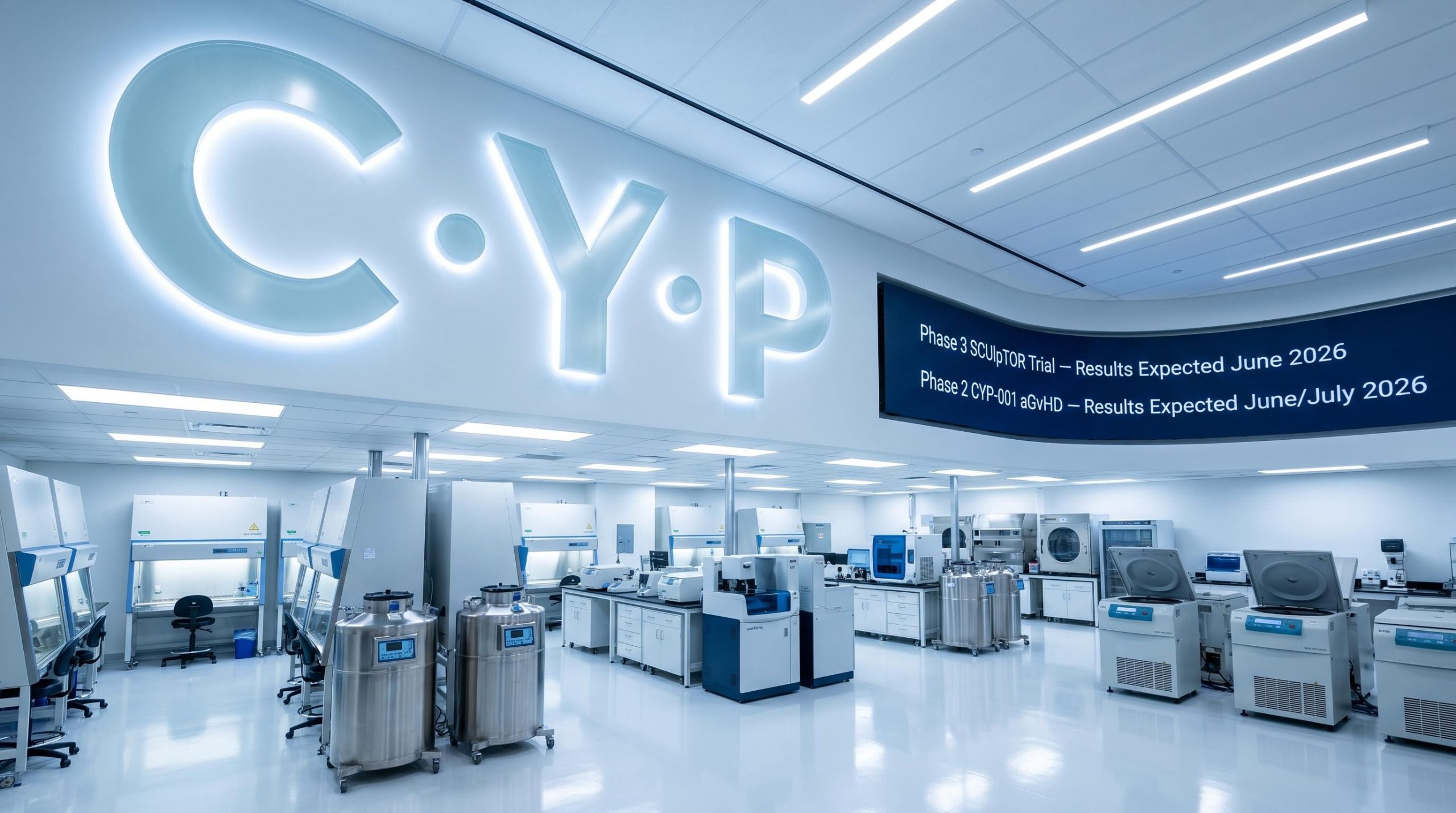
Cynata Therapeutics (ASX: CYP), an Australian clinical-stage biotechnology company, has confirmed the expected timing for results from two significant efficacy trials of its Cymerus™ iPSC-derived MSC platform. Both the Phase 3 SCUlpTOR trial (CYP-004) in osteoarthritis and the Phase 2 trial (CYP-001) in acute graft versus host disease (aGvHD) are anticipated to report during June or early July 2026.
The convergence of two independent, late-stage readouts within weeks of each other represents a material catalyst window for investors. At stake are trial outcomes that the company’s own leadership has described as potentially transformative, across two serious conditions with significant unmet medical need.
When big ASX news breaks, our subscribers know first
What’s happening and when — the dual readout timeline
Phase 3 SCUlpTOR trial (CYP-004) — osteoarthritis of the knee
CYP-004 is Cynata’s Cymerus™ iPSC-derived MSC product candidate formulated for intra-articular injection, designed to calm joint inflammation, relieve pain, and protect cartilage. The Phase 3 SCUlpTOR trial is being conducted by the University of Sydney and funded through a National Health and Medical Research Council (NHMRC) project grant.
The trial enrolled 321 patients, randomised to receive either CYP-004 or placebo. Co-primary endpoints assess change in pain and cartilage thickness. The University of Sydney has confirmed the study database has been successfully locked, with data analysis now progressing. Results are expected during June 2026.
Phase 2 trial (CYP-001) — acute graft versus host disease (aGvHD)
CYP-001 is Cynata’s Cymerus™ iPSC-derived MSC product for intravenous use, designed to modulate the immune system and improve both response rates and survival outcomes in aGvHD. The multi-national Phase 2 trial is being conducted by Cynata directly.
A total of 65 participants were enrolled across clinical centres in Australia, the USA, and Europe. Participants were randomised to receive either steroids plus CYP-001 or steroids plus placebo. The primary endpoint is Overall Response Rate at Day 28. Database lock is expected in early June 2026, with results anticipated in late June or early July 2026.
| Trial | Product | Indication | Patients Enrolled | Results Expected |
|---|---|---|---|---|
| Phase 3 SCUlpTOR (CYP-004) | Cymerus™ iPSC-derived MSC (intra-articular) | Osteoarthritis of the knee | 321 | June 2026 |
| Phase 2 (CYP-001) | Cymerus™ iPSC-derived MSC (intravenous) | Acute graft versus host disease (aGvHD) | 65 | Late June or early July 2026 |
What are iPSC-derived MSCs and why do these results matter?
Mesenchymal stem cells (MSCs) are naturally occurring cells found in the body that help regulate inflammation and support tissue repair. In therapeutic applications, they are introduced into patients to calm overactive immune responses, protect damaged tissue, and promote healing. This mechanism is relevant to both osteoarthritis, where chronic joint inflammation drives cartilage breakdown, and aGvHD, where the immune system attacks the patient’s own tissues following a bone marrow or stem cell transplant.
What distinguishes Cynata’s Cymerus™ platform is the source of its MSCs. Conventional MSC therapies require tissue donations from multiple individual donors, introducing variability in cell quality and limiting manufacturing scalability. Cymerus™ uses induced pluripotent stem cells (iPSCs) as a master starting material, allowing consistent, large-scale production from a single source without ongoing donor dependency.
For investors, understanding the significance of Phase 2 and Phase 3 readouts is important. These are the stages at which clinical viability is confirmed or refuted, directly influencing regulatory pathways, partnership prospects, and commercial potential.
Key concepts to understand ahead of these readouts:
- iPSCs (induced pluripotent stem cells): Adult cells that have been reprogrammed back into a stem cell-like state, capable of generating multiple cell types, including MSCs, at commercial scale.
- What MSCs do: They modulate immune responses, reduce inflammation, and support tissue repair, making them candidates for a range of conditions driven by immune dysfunction or tissue damage.
- Why scalable manufacturing matters: The ability to produce consistent, large batches of MSCs from a single iPSC source reduces cost and variability, both of which are prerequisites for viable commercial cell therapy products.
- Database lock: The point at which all patient data from a clinical trial is finalised and no further changes can be made, allowing independent statistical analysis to begin. It is an immediate precursor to results disclosure.
CEO perspective and the investment case
Cynata Chief Executive Officer and Managing Director Dr Kilian Kelly commented on the progress of both trials:
Dr Kilian Kelly, Chief Executive Officer and Managing Director, Cynata Therapeutics
“A great deal of progress has been made with the process of data monitoring, cleaning, quality control and analysis for these two hugely important trials. Each of these readouts in its own right has the potential to be transformative for the Company, and to set us on course to improve the lives of many patients with these serious diseases. We look forward to sharing the results with our investors as soon as possible.”
The investment case heading into this period centres on two independent, near-term binary events. A positive readout from either trial could materially alter Cynata’s commercial trajectory, strengthen its partnering position, and validate the Cymerus™ platform in a late-stage setting. The significance of each trial is compounded by the fact that they arrive almost simultaneously, compressing what is typically a multi-year wait for clinical clarity into a matter of weeks.
Cynata’s existing Phase 1 data provides important context. The company has previously demonstrated positive safety and efficacy outcomes for CYP-001 in steroid-resistant aGvHD, and for CYP-006TK in diabetic foot ulcers, establishing a credible platform foundation ahead of these more advanced readouts.
Key dates for investors to monitor:
- CYP-004 (osteoarthritis of the knee) results — June 2026
- CYP-001 (aGvHD) database lock — early June 2026
- CYP-001 (aGvHD) results — late June or early July 2026
Don’t Miss the Next ASX Healthcare Catalyst
Get FREE breaking ASX healthcare news delivered to your inbox within minutes of release, complete with in-depth analysis. Over 20,000+ subscribers are already ahead of the market. Click the “Free Alerts” button at Big News Blast to ensure the next major clinical readout lands in your inbox the moment it breaks.