

Nine outlines digital-first strategy at Macquarie Conference
In its 5 May 2026 investor presentation at the Macquarie Australia Conference, Nine Entertainment (ASX: NEC) outlined its strategic repositioning toward a high-growth, digital-first media portfolio. CEO Matt Stanton detailed how three recent M&A transactions have reshaped the company’s asset mix, with streaming, outdoor, and digital publishing segments now projected to account for approximately 70% of Group EBITDA in FY27.
The portfolio restructure comprises three key actions:
- QMS Media acquisition completed 31 March 2026
- Nine Radio sale completed 30 April 2026
- NBN/Nine Darwin restructure pending ACCC approval and shareholder vote (Extraordinary General Meeting scheduled 21 May)
Management emphasised that the post-M&A revenue composition shifts toward structurally growing digital segments: Streaming (31%), Publishing (21%), and Outdoor (14%), with traditional Broadcast accounting for 34% on a pro forma FY26 basis. The strategic thesis centres on reducing reliance on cyclical linear broadcast advertising whilst expanding exposure to subscription revenue, digital outdoor, and data-driven targeting capabilities.
When big ASX news breaks, our subscribers know first
Q3 operational momentum across digital segments
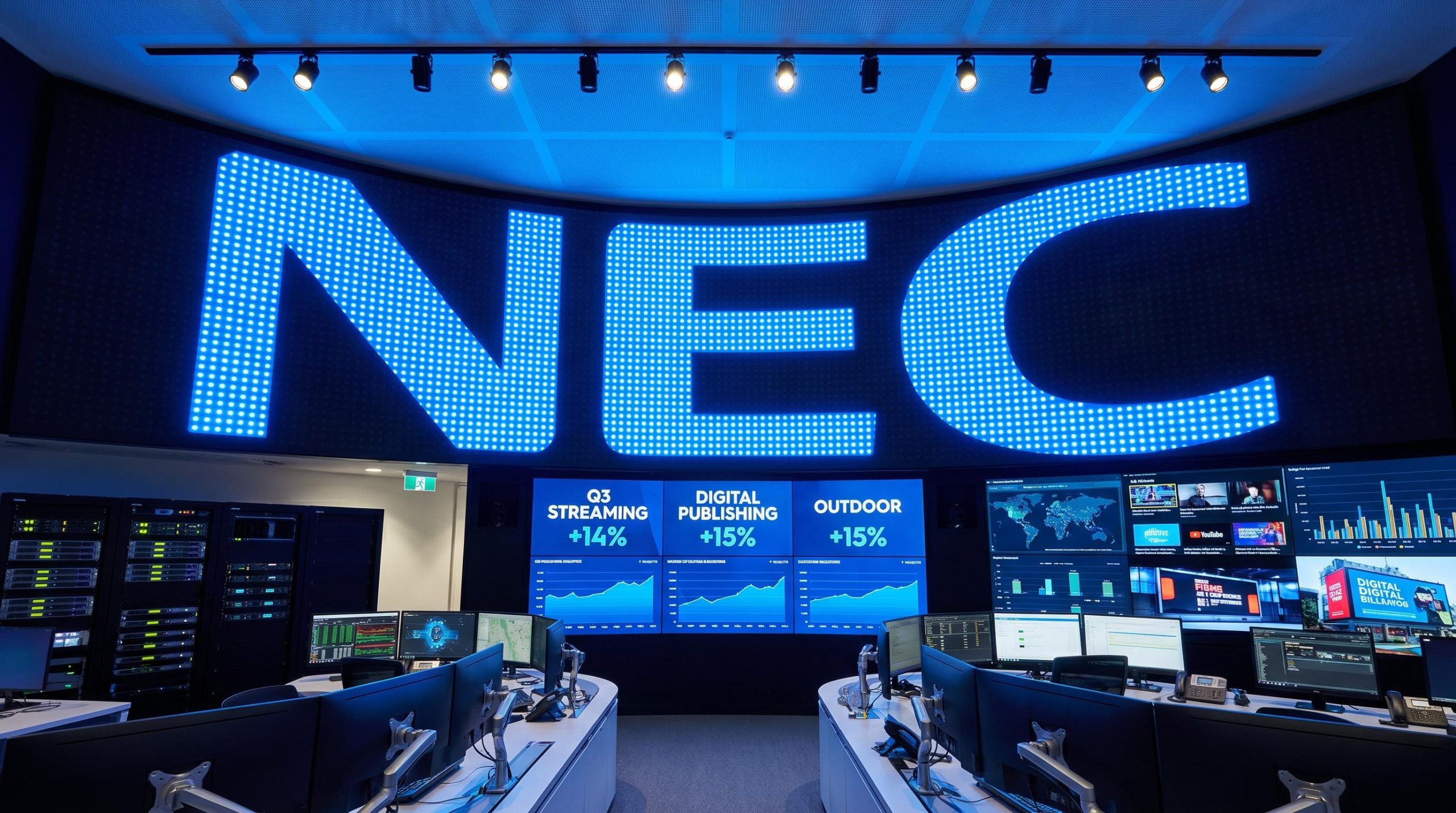
The presentation highlighted consistent double-digit percentage revenue growth across all three targeted growth engines during Q3 FY26 (January–March 2026). Management pointed to this performance as validation of the digital-first pivot strategy, with each segment delivering material year-on-year gains.
| Segment | Q3 FY26 Revenue Growth (vs pcp) |
|---|---|
| Streaming (Stan and 9Now) | +14% |
| Outdoor (QMS) | +15% |
| Digital Publishing (subscriptions) | +15% |
The company attributed the streaming performance to broadening its digital video advertising offering through Stan Sport and HBO Max, alongside consolidation of marketing and promotional functions. Publishing’s subscription revenue growth was supported by licensing opportunities for Nine’s content in proprietary large language models, with the company making progress commercialising its library through corporate AI licensing arrangements.
Total Television holding share despite softer Q4
Whilst Q3 Total Television revenue grew in the low single digits percentage against a strong prior corresponding period comparator, the presentation acknowledged near-term headwinds in the advertising market. Total TV audiences for the year to date showed strength, with overall audiences since the start of CY26 up 8% in Total People and 10% in the 25–54 demographic.
However, Q4 FY26 has started on a softer note, with advertiser uncertainty — both international and local — impacting market conditions. The company is also cycling the Federal election spending boost from April 2025, which creates a challenging comparator for the current quarter.
Management highlighted cost discipline as a key margin protection lever. On a continuing business basis, Nine now expects FY26 Total Television costs to decline in the mid-to-high single digits percentage versus FY25, reflecting ongoing efficiencies offsetting underlying inflation and targeted investment in technology and content.
What is a digital-first media transformation?
For a traditional broadcaster, a digital-first transformation means shifting the revenue mix from linear broadcast advertising toward streaming subscriptions, digital publishing subscriptions, and digital outdoor advertising. This repositioning targets segments that typically offer higher operating margins, subscription revenue stability, and data-driven targeting capabilities compared to cyclical free-to-air advertising.
Nine’s post-M&A revenue composition illustrates this shift. Digital segments now dominate the portfolio, with over 95% of QMS’s Australian revenues classified as digital, over 60% of Publishing revenues from digital channels (approximately 50% from subscriptions and licensing), and over 70% of Stan’s revenues from subscription.
The strategic rationale centres on revenue quality rather than simply revenue growth. Subscription-based models provide more predictable cash flows and higher customer lifetime value, whilst digital advertising channels enable granular audience targeting and campaign measurement. For investors, this means exposure to segments less vulnerable to disruption from global digital platforms and more aligned with structural shifts in media consumption.
QMS integration and outdoor growth drivers
The presentation detailed QMS’s strategic value proposition. The outdoor media business has grown its Australian market share from approximately 8% to approximately 15% between CY19 and CY25, delivering a three-year revenue CAGR of 15% from CY22 to CY25 with an operating margin of approximately 26% in CY25.
Key growth drivers include:
- Premium, long-term metro leases, including the City of Sydney and Auckland Transport Street Furniture contracts
- Digital screen expansion and yield optimisation across existing contracts
- Launch of Move 2.0, adding increasingly valuable location-based audience data
- Pipeline of new contract roll-outs
Management stated that over 70% of QMS’s New Zealand revenue is also digital, positioning the business to capture growth in data-driven outdoor advertising. For Q4 FY26, the company continues to expect double-digit revenue growth versus Q4 FY25.
The presentation outlined integration synergies with Nine’s existing assets, including campaign pitch alignment across screens, cross-platform targeting capabilities, unsold inventory monetisation opportunities, and integration with Nine Ad Manager. The data match opportunity between QMS’s Move 2.0 platform and Nine’s existing audience data assets (9Tribes) was highlighted as a key value driver for advertisers seeking granular audience targeting.
Forward priorities and cost initiatives
Management confirmed the Nine2028 cost programme remains on track to deliver at least $160 million in cost reductions by the end of FY27. These efficiencies are being deployed to offset underlying inflation and fund targeted investments in technology and content, rather than flow entirely to the bottom line.
The company flagged emerging revenue opportunities from corporate AI licensing arrangements for Nine’s content library, with the relaunch of nine.com.au scheduled for 1 June. However, uncertainty remains around the News Bargaining Incentive consultation process, with the outcome for FY27 commercial arrangements with Google unclear at the time of the presentation.
For Stan, management projected further strong EBITDA growth in the second half of FY26, continuing the positive momentum from the first half. The presentation noted that almost half of the audience for Married at First Couples — which averaged 2.8 million viewers per episode, up 5% year-on-year — watched on 9Now, with one-third of incremental Stan subscribers being new to the platform.
Publishing is expected to face near-term distribution cost pressures from higher fuel prices, though this is being offset by continued digital subscription revenue growth into Q4.
Stay Ahead on Media Sector News
Join 20,000+ investors receiving FREE breaking ASX news within minutes of release, complete with in-depth analysis. Click the “Free Alerts” button at StockWire X to get market-moving announcements delivered straight to your inbox the moment they break.