
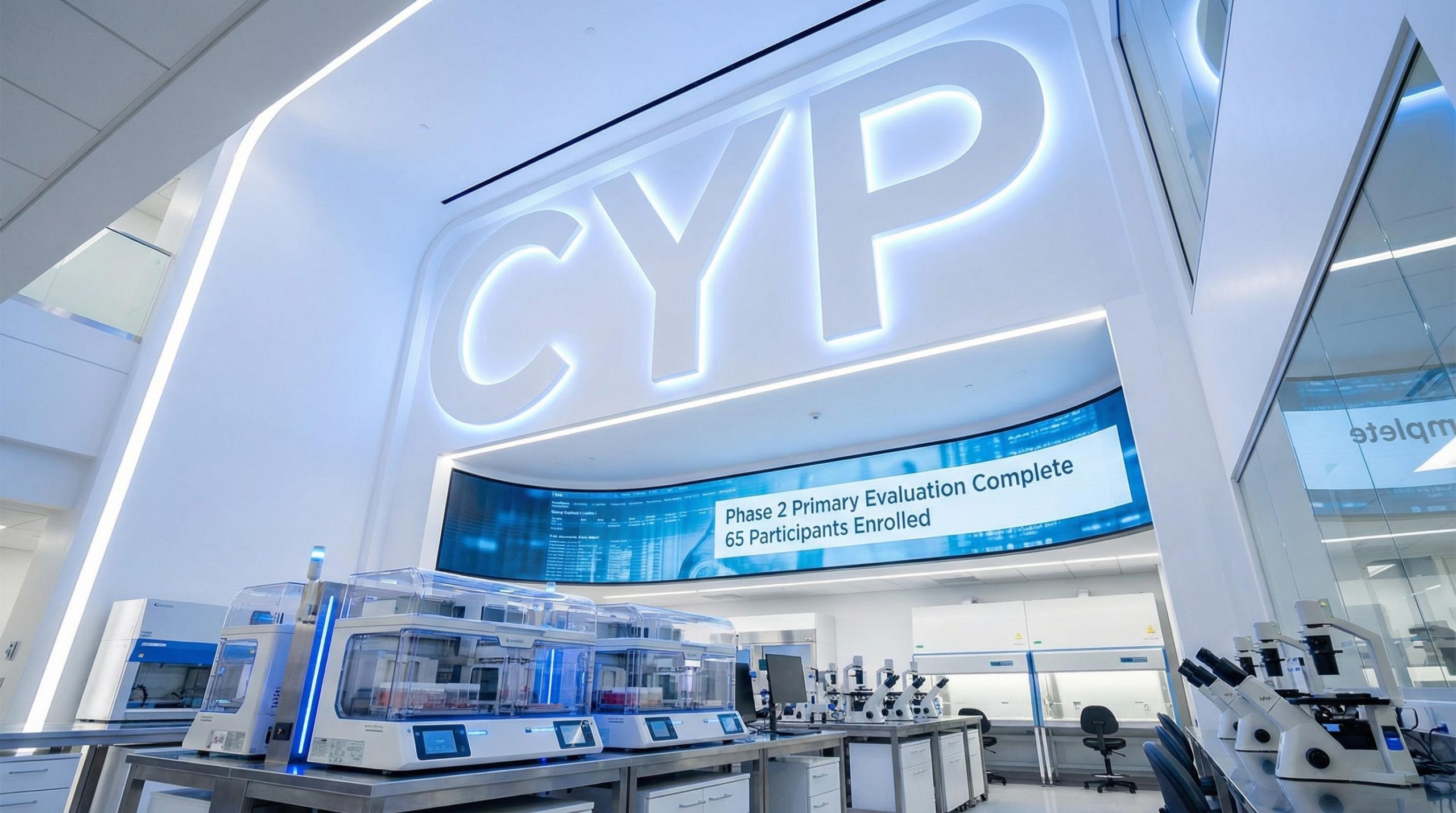
Cynata Therapeutics completes critical Phase 2 evaluation period in aGvHD trial
Cynata Therapeutics (ASX: CYP) has completed the 100-day primary evaluation period for all 65 participants enrolled in its Phase 2 clinical trial investigating CYP-001 in adults with acute graft versus host disease (aGvHD). The Cynata Therapeutics GvHD trial results are expected in June 2026.
The trial represents a gold-standard study design, conducted as a randomised, double-blind, placebo-controlled evaluation across clinical centres in Australia, the United States, and Europe. Each participant was randomised to receive either steroids plus CYP-001, or steroids plus placebo. With the primary evaluation period now complete for all participants, trial data is being compiled and analysed. The primary endpoint measures Overall Response Rate at Day 28.
Dr Kilian Kelly, Chief Executive Officer and Managing Director
“The last patient, last visit in this trial is a significant milestone for the Company. aGvHD remains a devastating condition with very limited treatment options, and we are driven by the hope that CYP-001 can make a meaningful difference to the lives of patients and their families. With the primary evaluation period now complete, we look forward to the data analysis and results readout ahead.”
The completion of this evaluation phase positions Cynata for a potential de-risking catalyst within three months, as results from the randomised, controlled trial design carry significant regulatory and commercial weight in validating therapeutic efficacy.
When big ASX news breaks, our subscribers know first
Understanding acute graft versus host disease and the treatment gap
Acute graft versus host disease occurs when donor immune cells (the graft) attack recipient tissues (the host) following bone marrow transplantation and similar procedures. The condition represents a serious and often life-threatening complication of transplant medicine, creating an urgent unmet medical need.
The severity of this condition is reflected in sobering clinical statistics:
- aGvHD affects up to 50% of patients receiving transplants from other donors
- Standard first-line steroid treatment fails in approximately 50% of cases, known as steroid-resistant or SR-aGvHD
- Historical two-year survival rates for patients with SR-aGvHD are less than 20%
When first-line treatment fails, patients face limited therapeutic options and dramatically reduced survival prospects. The stark gap between current treatment outcomes and patient needs highlights why successful new therapies in this indication could capture significant market share, particularly given the orphan drug economics applicable to rare disease treatments.
Phase 1 trial results set high bar for Phase 2 expectations
Cynata’s Phase 1 trial in patients with steroid-resistant aGvHD delivered efficacy signals that substantially exceeded historical survival benchmarks, creating elevated expectations for the Phase 2 readout.
| Phase 1 Metric | Result |
|---|---|
| Overall Response Rate | 87% |
| Complete Response Rate | 53% |
| Two-Year Survival | 60% |
| Serious Adverse Events | None related to CYP-001 |
The safety profile proved particularly compelling. No serious adverse events were related to CYP-001 treatment in the Phase 1 cohort. These results led to two publications in the prestigious journal Nature Medicine, providing peer-reviewed validation of the clinical findings.
The US Food and Drug Administration has granted Orphan Drug Designation to CYP-001 for the treatment of aGvHD. This designation provides commercial runway protection through incentives including extended marketing exclusivity, tax credits, and regulatory fee waivers.
What is Cynata’s Cymerus technology platform?
CYP-001 is manufactured using Cynata’s proprietary Cymerus technology platform, which represents a manufacturing approach designed to overcome limitations of conventional mesenchymal stem cell (MSC) production.
- Uses induced pluripotent stem cells (iPSCs) as starting material for MSC production
- Eliminates the need for ongoing tissue donation from multiple donors
- Designed for commercial-scale manufacturing with product consistency
The platform economics matter for commercial scalability. If Phase 2 succeeds, Cymerus enables production without the donor supply constraints that limit competitors using conventional MSC manufacturing approaches. The technology achieves economic manufacture of cell therapy products at commercial scale, without the complexity and product inconsistency resulting from donor-dependent methods.
Broader clinical pipeline progressing on multiple fronts
The aGvHD Phase 2 milestone sits alongside wider clinical portfolio momentum across Cynata’s pipeline, with two additional programmes tracking towards near-term catalysts.
- Phase 3 SCUlpTOR trial evaluating CYP-004 in osteoarthritis of the knee has enrolled 321 patients, with results expected Q2 CY 2026. The trial is being conducted by the University of Sydney.
- Phase 1/2 NEREID trial investigating CYP-001 in kidney transplantation is progressing at Leiden University Medical Centre in the Netherlands, following a positive independent Data Safety Monitoring Board (DSMB) review of the first cohort of patients.
The timeline alignment creates a concentrated catalyst window in the first half of 2026. Multiple data readouts reduce single-programme dependency risk, whilst demonstrating the versatility of the Cymerus platform across different therapeutic indications. Pipeline diversification strengthens the investment case by providing multiple pathways to validate the underlying technology.
What investors should watch for next
The pathway to results is clearly defined. Data analysis for the Phase 2 aGvHD trial is currently underway, with the primary endpoint of Day 28 Overall Response Rate expected to be reported in June 2026. This timeline coincides with the Phase 3 osteoarthritis results, also due Q2 CY 2026.
June 2026 represents a significant inflection point for Cynata. Positive Phase 2 data in aGvHD could validate the Cymerus platform, support partnership discussions with larger pharmaceutical companies, and potentially trigger a re-rating of the company’s valuation given the orphan drug opportunity.
Key milestones to monitor:
- Completion of data analysis for Phase 2 aGvHD trial
- Primary endpoint results (Day 28 Overall Response Rate) release in June 2026
- Phase 3 osteoarthritis results in Q2 CY 2026
- Progression of kidney transplantation trial following positive DSMB review
Success in the Phase 2 trial would validate the strong Phase 1 efficacy signals in a randomised, placebo-controlled setting. For a condition where historical two-year survival rates in steroid-resistant cases remain below 20%, even moderate improvements in response rates and survival outcomes could represent clinically meaningful progress. The double-blind, placebo-controlled design provides the highest level of clinical evidence, positioning any positive results to support regulatory discussions and potential partnership opportunities in a market with significant unmet medical need.
Want the Next Biotech Breakthrough in Your Inbox?
Join 20,000+ investors receiving FREE breaking ASX news within minutes of release, complete with in-depth analysis. Click the “Free Alerts” button at Big News Blast to get market-moving healthcare announcements delivered straight to your inbox the moment they drop.