
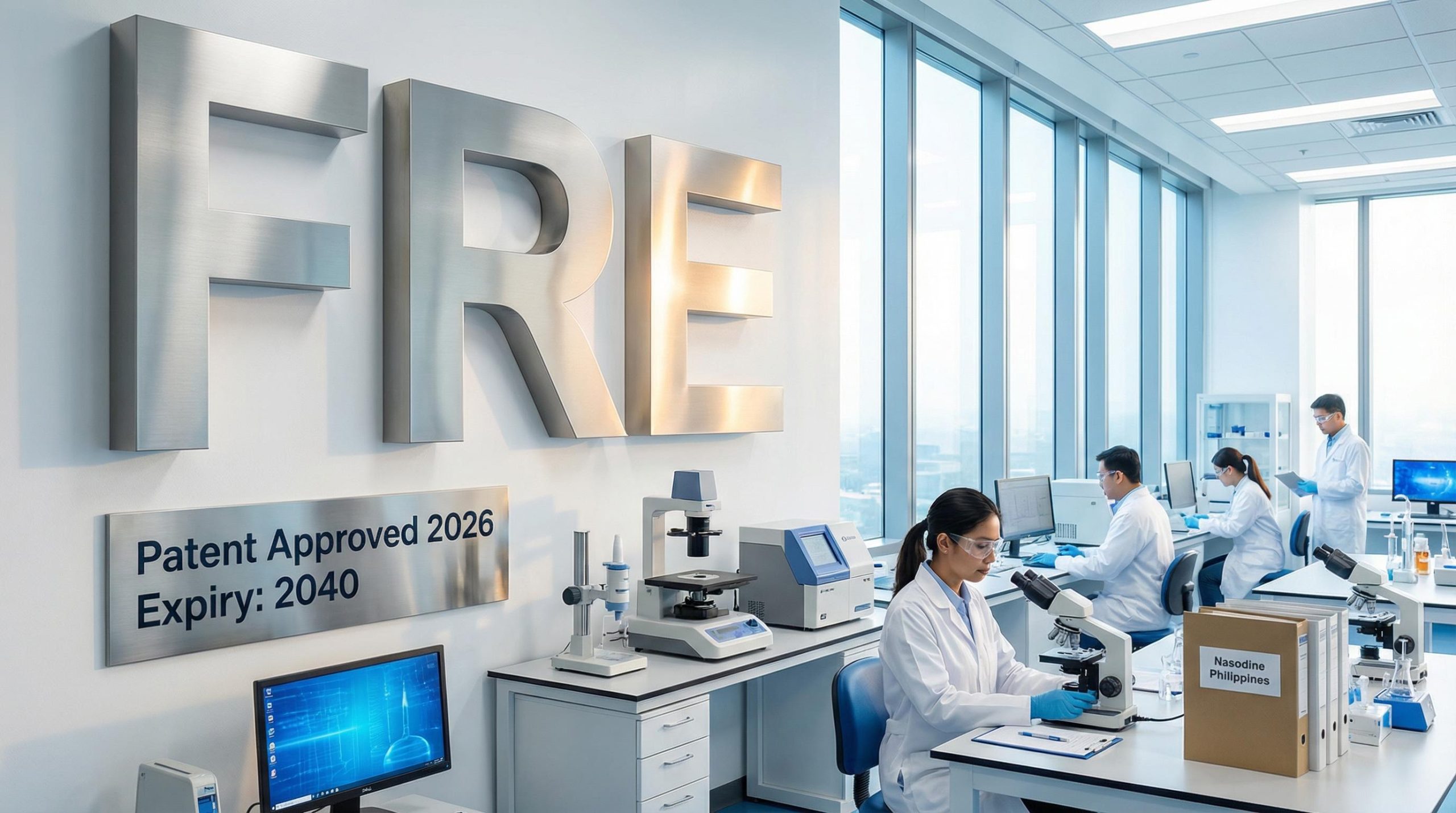
Firebrick Pharma secures Philippines patent for Nasodine ahead of market entry
Firebrick Pharma (ASX: FRE) has announced the acceptance of a patent in the Philippines covering its Nasodine product range for SARS-CoV-2 applications. The patent, titled “Prevention of infection by highly pathogenic viruses using topical application of povidone-iodine on mucous membranes”, expires in 2040 and protects both treatment and preventative uses of intranasal povidone-iodine (PVP-I) preparations. The Company anticipates regulatory approval in the Philippines during 2026, positioning the market as a strategically important territory for commercial expansion.
The patent specifically covers methods of reducing viral load in the nose and pre-exposure prophylaxis against SARS-CoV-2. It extends protection beyond the nasal spray to include gargle and throat spray applications, complementing the Company’s existing common cold patent in the same market. With intellectual property (IP) protection now secured ahead of market entry, Firebrick has de-risked the regulatory and commercial pathway in a region it considers critical for the Nasodine brand.
What the patent covers
The accepted patent protects Nasodine Nasal Spray and any intranasal PVP-I preparations for use against SARS-CoV-2. It covers both therapeutic applications, where the product reduces viral shedding in infected individuals, and preventative use, where it may be applied prior to exposure to reduce infection risk. The patent also extends to throat-based applications, including gargle and throat spray formulations targeting the same virus.
Key coverage includes:
- Intranasal PVP-I preparations, including Nasodine Nasal Spray
- Reduction of SARS-CoV-2 viral load in the nasal cavity
- Pre-exposure prophylaxis against SARS-CoV-2
- Throat applications such as gargle and throat spray
This broad scope protects the entire Nasodine product range for SARS-CoV-2 applications, not just the nasal spray. The patent strengthens the Company’s competitive position by preventing competitors from marketing similar PVP-I-based products for these specific uses in the Philippines until 2040. For investors, this provides a clear commercial runway and protects potential revenue streams across multiple product formats in a key growth market.
When big ASX news breaks, our subscribers know first
Understanding pharmaceutical patents and market protection
Pharmaceutical patents grant companies exclusive rights to manufacture, market, and sell a specific formulation or use of a treatment within a given jurisdiction. This exclusivity prevents competitors from launching identical or substantially similar products during the patent term, creating a protected market window that can support premium pricing and uncontested market share. For biotechnology and pharmaceutical companies, patents are a core valuation driver because they provide visibility on how long the company can commercially exploit a product without direct competition.
In this case, “patent acceptance” means the Philippines Intellectual Property Office has reviewed Firebrick’s application and determined the claims meet patentability requirements. The patent is now formally accepted, though final granting processes may still be underway. Once fully granted, the patent becomes enforceable, allowing Firebrick to take legal action against infringers.
Securing patents ahead of market entry is standard practice in the pharmaceutical industry. It ensures IP protection is in place before competitors become aware of a product’s commercial potential. For Firebrick, obtaining this patent before regulatory approval in the Philippines reduces the risk that another company could develop a competing PVP-I product for SARS-CoV-2 once Nasodine enters the market. The 2040 expiry provides nearly 14 years of protection from now, giving the Company a substantial period to establish market share and generate revenue before generic or biosimilar competition could emerge.
Philippines fits into broader Nasodine expansion strategy
The Philippines patent acceptance demonstrates execution on Firebrick’s stated plan to expand the Nasodine range to up to 10 markets over three years. Nasodine is currently available in the United States, Singapore, and Fiji & South Pacific, with the Company pursuing approval in additional jurisdictions. The Philippines represents a strategically important market due to its population size and growing healthcare infrastructure, making it a priority target for near-term regulatory approval.
Firebrick has announced plans to expand the Nasodine range to up to four products, with Nasodine Throat Spray already available in Singapore and Fiji. This Philippines patent complements the Company’s existing common cold patent in the same market, broadening the commercial applications for PVP-I-based treatments and strengthening the overall IP portfolio. The ability to protect multiple product formats under separate patents reduces reliance on any single revenue stream and creates optionality for tailored product launches based on local market demand.
| Region | Patent Status |
|---|---|
| Philippines | Accepted |
| United States | Accepted/Granted |
| Europe | Accepted/Granted |
| Australia | Accepted/Granted |
| Multiple other countries | Accepted/Granted |
The table illustrates Firebrick’s global IP coverage, with the SARS-CoV-2 patent now accepted or granted across major markets including the United States, Europe, and Australia. This broad protection supports the Company’s multi-market expansion strategy by ensuring competitors cannot replicate the Nasodine formulation in key territories. For investors, the accumulation of patents across multiple jurisdictions reduces geographic concentration risk and validates the scalability of the Nasodine platform.
Executive commentary
Dr Peter Molloy, Executive Chairman
“This patent is a commercially useful extension to our common cold patent in one of our most important markets, the Philippines. It covers the use of PVP-I in the nose or throat in relation to SARS-CoV-2 and therefore would protect a gargle or throat spray as well as the nasal spray for that purpose.”
Dr Molloy’s commentary highlights the commercial utility of the patent, particularly its extension beyond the existing common cold patent. The ability to protect both nasal and throat applications for SARS-CoV-2 creates flexibility for product development and market entry strategies in the Philippines. It also signals management’s prioritisation of the Philippines as a core market, underscoring the strategic value of securing IP protection ahead of regulatory approval.
What comes next for Firebrick in the Philippines
With IP protection now secured, the remaining hurdle for Firebrick in the Philippines is regulatory approval. The Company is currently progressing its submission and anticipates approval during 2026. Once regulatory clearance is obtained, Firebrick will be positioned to launch Nasodine commercially in the market, with patent protection in place to prevent competitor entry until 2040.
The pathway forward includes:
- Regulatory approval submission currently in progress
- Anticipated approval during 2026
- Commercial launch following regulatory clearance
For investors, the patent acceptance de-risks the commercial case for the Philippines market by ensuring IP protection is established before revenue generation begins. Success in obtaining regulatory approval during 2026 would unlock a new revenue-generating market for the Nasodine range, with potential to contribute meaningfully to group sales as part of the Company’s broader geographic expansion plan. The combination of patent protection and regulatory approval would provide Firebrick with a clear pathway to market penetration in one of its most strategically important territories.
Get Healthcare News Before Regulatory Approval Hits
Join 20,000+ investors receiving FREE breaking ASX healthcare announcements within minutes of release, complete with in-depth analysis. Click the “Free Alerts” button at Big News Blast to stay ahead on patent approvals, clinical updates, and market-moving biotech news the moment they break.