ION Video secures freedom to operate for tokenised video patent
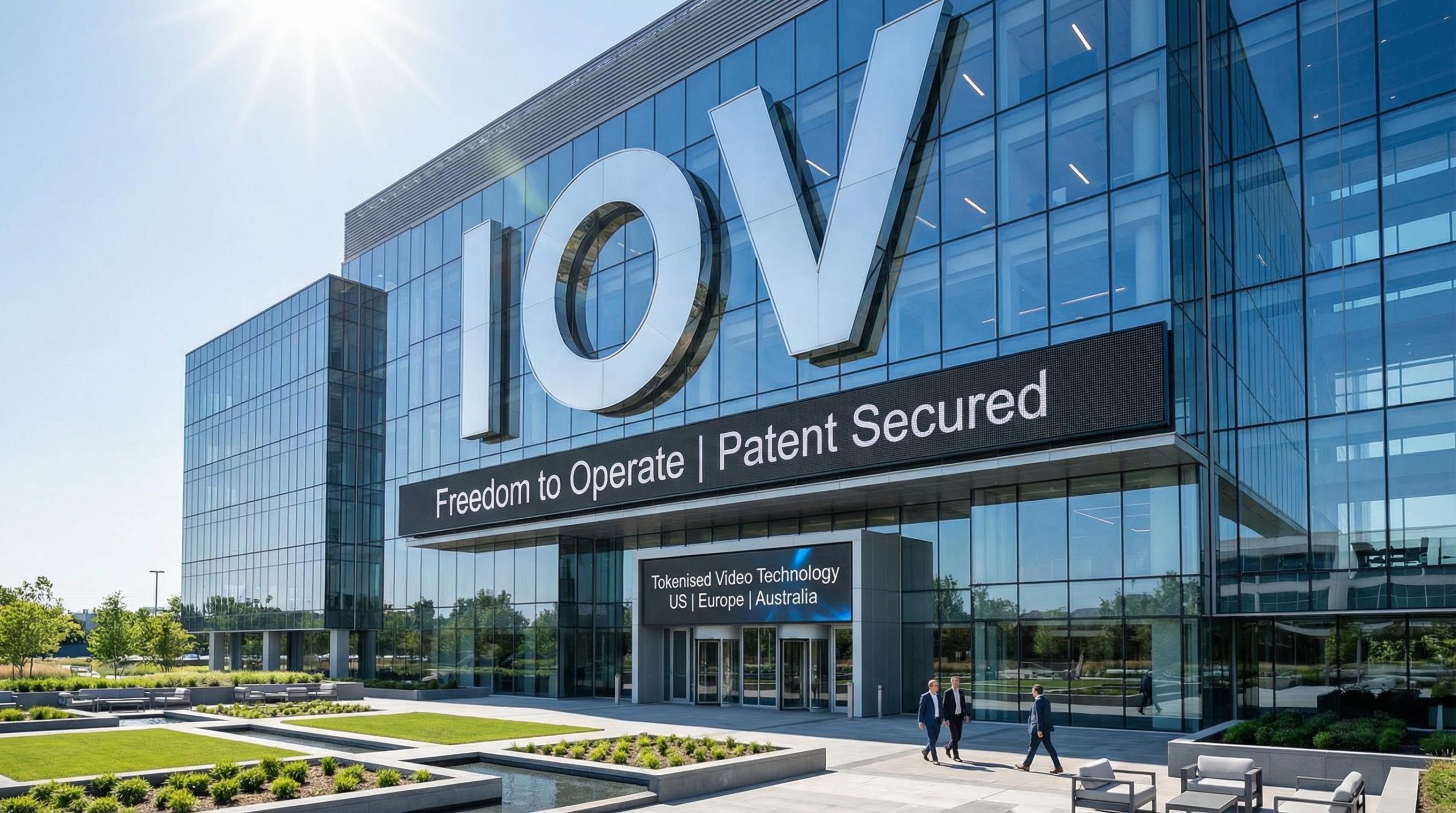
ION Video (ASX: IOV) has received independent confirmation that its Tokenised Virtual Video Delivery System can be commercialised across major jurisdictions without infringing existing patents. Alder IP completed a Freedom to Operate search covering the United States, Europe, Australia, and PCT-level applications, assessing the ION Video Patent Freedom Operate pathway as low risk for all identified prior art.
The analysis found no existing granted patent claiming the integrated architecture described in ION’s provisional filings. Patents from Netflix, Sandpiper, and Ericsson address traditional streaming and authentication problems but do not cover ION’s programmable video assembly model, cryptographic token system, or hardware-attested resolution architecture.
This assessment complements the novelty opinion ION announced on 10 March 2026, creating a dual legal foundation. The company now has independent validation that its system is both patentable and deployable, removing a significant barrier ahead of global licensing discussions with hyperscalers, chip providers, and agentic AI platforms.
When big ASX news breaks, our subscribers know first
What is a Freedom to Operate search?
A Freedom to Operate (FTO) search answers a fundamentally different question to novelty analysis. Novelty asks whether an invention is new and inventive enough to warrant patent protection. FTO asks whether making, using, or selling that invention would infringe someone else’s existing, in-force patents in target markets.
For ION’s search, Alder IP examined multiple databases including Patseer, Patentscope, USPTO, Espacenet, Free Patents Online, AusPat, and Google Patents. The search was anchored on Claim 1 of ION’s provisional specification, covering four jurisdictions: the United States, Europe, Australia, and international PCT applications filed through WIPO.
The process identifies whether any granted patent could prevent commercial deployment. For retail investors, this distinction matters. Many ASX technology companies secure novelty opinions confirming their inventions are patentable, but fewer obtain independent confirmation that deployment will not trigger infringement claims. ION now has both.
Key findings from the Alder IP analysis
Alder IP identified three main prior art families as the closest references to ION’s system. Each was assessed as presenting low infringement risk when ION implements its architecture as described in its filings.
| Patent Holder | Patent Focus | ION Differentiation | Risk Assessment | Expected Expiry |
|---|---|---|---|---|
| Netflix | Pre-fetching metadata and licences to reduce streaming startup latency | Does not disclose AI orchestration layer, cryptographic video tokens, or secure dereferencing in trusted execution environments | Low | 12 December 2032 |
| Sandpiper CDN | User authentication within content delivery networks | Relies on subscription database for authorisation; does not teach programmable token-based resolution validation | Low | 29 May 2032 |
| Ericsson | Secure over-the-top live video delivery using encryption workflows | Focuses on encryption key management, not virtualised metadata assembly or hardware-attested resolution services | Low | 25 October 2042 |
The Netflix patent addresses traditional streaming optimisation through early metadata retrieval. The Sandpiper patent covers user authentication in content delivery but relies on a subscription database to determine rights, not a cryptographic token acting as an integrated authorisation gatekeeper.
Ericsson’s patent deals with secure delivery workflows for encrypted live video but does not encompass programmable assembly of video or the use of hardware-attested trusted execution environments for dereferencing events. None of the cited patents describe ION’s approach of resolving virtualised assets in real-time using tokenised governance.
Why ION’s architecture is differentiated
Alder IP confirmed that five core elements of ION’s system are not covered by existing patents:
- Virtualisation engine removing media samples while preserving ISO Base Media File Format structures
- AI orchestration layer resequencing content without accessing raw media samples
- Cryptographic video token binding licensing, consent, and micro-payments to individual resolution events
- Secure resolution service operating in a hardware-attested trusted execution environment, logging every dereference to an auditable transaction layer
- Playback environment functioning as a content wallet, managing multiple tokens from independent content owners within a single session
This architecture operates at a different layer to traditional streaming infrastructure. Where Netflix, Sandpiper, and Ericsson focus on optimising file delivery, authentication, or encryption, ION’s system treats video as programmable data resolved on demand through tokenised permissions.
Combined position with novelty opinion strengthens IP foundation
On 10 March 2026, ION announced that Alder IP’s novelty search confirmed the Tokenised Virtual Video Delivery System meets the tests of novelty and inventive step when assessed against prior art from Ericsson, Wells Fargo, Snap, AT&T, Genetec, and PayPal across multiple patent offices.
That work established ION’s integrated architecture combining virtualisation, AI-driven sequencing, consent-governed delivery, and micro-payment settlement at the moment of resolution is not anticipated by existing disclosures. The latest FTO analysis addresses the separate question of commercial deployability.
Strategic Position
“Taken together with Alder IP’s earlier novelty and inventive-step opinion, the Freedom to Operate work provides ION with a coherent legal position: the new patent is both patentable and capable of being deployed commercially without infringing the closest known prior art.”
Together, the two opinions provide ION with independent confirmation that its system is both patentable and differentiated, an external view that no single existing patent would prevent commercial launch in target jurisdictions when implemented as described, and a detailed understanding of where older streaming and authentication patents begin and end.
This combined legal footing supports ION’s transition from architectural description to commercial integration with partners and platforms.
Strategic implications and next steps
ION positions this FTO outcome as a significant de-risking step for its tokenised Virtual Video strategy. The company has stated it will use this legal foundation to progress from provisional filings to PCT and national phase applications with greater confidence in commercial usability.
The assessment supports engagement with hyperscalers, chip providers, video platforms, agentic AI companies, and enterprise partners on pilots and licensing discussions grounded in independent legal analysis. ION aims to position its tokenised Virtual Video system as a deployable infrastructure layer for AI and agentic video experiences across the United States, Europe, Australia, and beyond.
Head of Innovation Finbar O’Hanlon and Chief Special Operations Officer AJ Palmer are planning a global roadshow across the United States, Europe, and the Asia-Pacific region to meet key decision makers. This programme is supported by ION’s work with Canaccord Genuity and ongoing technical validation and commercial engagement activities.
Further updates on patent prosecution, partner activity, and commercial milestones will be provided as material developments occur in line with continuous disclosure obligations.
What the agentic AI era means for ION’s technology
ION’s architecture is designed for the emerging agentic AI era, in which autonomous systems assemble and deliver video on behalf of users and institutions. These systems require enforcement of rights, consent, and commerce at the moment video is resolved, not at the point of file creation or initial upload.
The tokenised Virtual Video system addresses this requirement through cryptographic tokens that function as integrated authorisation gatekeepers, binding governance logic to each resolution event. This model sits outside the scope of traditional streaming patents, which contemplate user-initiated playback from pre-rendered files.
For investors, this positions ION’s technology in a market segment still forming, rather than competing against established infrastructure patents designed for mature streaming workflows.
Looking ahead
ION has confirmed it will continue progressing patent prosecution through PCT and national phase applications. The company expects to provide further updates as material developments occur in patent prosecution, partner engagement, and commercial deployment timelines.
The dual validation from independent legal analysis (novelty and Freedom to Operate) creates a foundation for ION to advance licensing discussions with greater confidence in both the patentability and commercial deployability of its tokenised Virtual Video infrastructure.
Want the Next Tech Breakthrough in Your Inbox?
Join 20,000+ investors receiving FREE breaking ASX tech news within minutes of release, complete with in-depth analysis. Click the “Free Alerts” button at Big News Blast to get market-moving announcements delivered straight to your inbox the moment they break.