JPMorgan Downgrades Corning Despite Raising Price Target to $175
Key Takeaways
- JPMorgan downgraded Corning (GLW) from Overweight to Neutral on 16 April 2026, whilst simultaneously raising its price target to $175 from $115 due to valuation concerns rather than fundamental deterioration.
- Corning shares trade at over 50x next-twelve-months earnings and above 40x 2027 earnings, effectively requiring investors to price in 2028 results with limited near-term visibility.
- GLW fell between 1.3% and 2.7% following the downgrade, with the stock sitting near its 52-week high of approximately $176.75 after gaining 81.8% year-to-date.
- UBS and Bank of America remain constructive on Corning's long-term prospects, citing AI-driven optical demand and data centre investment as multi-year tailwinds through 2030.
- Investors should monitor upcoming quarterly earnings, operating margin performance near the 24% target, and new AI-related contract announcements to assess whether current valuations are justified.
JPMorgan downgraded Corning Incorporated (GLW) from Overweight to Neutral on 16 April 2026, whilst simultaneously raising its price target to $175 from $115. The move reflects valuation concerns as the stock trades at over 50x next-twelve-months earnings and above 40x 2027 earnings, effectively requiring investors to price in 2028 results with limited visibility into that timeframe. Analyst Samik Chatterjee cited stretched valuations as the primary driver, noting that the risk-reward profile has shifted unfavorably despite the company’s long-term prospects.
The Corning stock downgrade highlights a tension between near-term valuation and long-term growth potential. Whilst JPMorgan acknowledges Corning’s strategic positioning in optical technologies and AI-driven demand, the firm believes the current share price leaves insufficient room for additional upside over the next 12 to 18 months.
JPMorgan Downgrades Corning to Neutral Whilst Raising Price Target
JPMorgan downgraded Corning to Neutral on 16 April 2026, whilst raising its price target to $175 from $115. The seemingly contradictory action stems from valuation concerns rather than fundamental deterioration. At current levels, GLW trades at over 50x next-twelve-months earnings and more than 40x 2027 earnings, forcing investors to effectively discount 2028 results into today’s price.
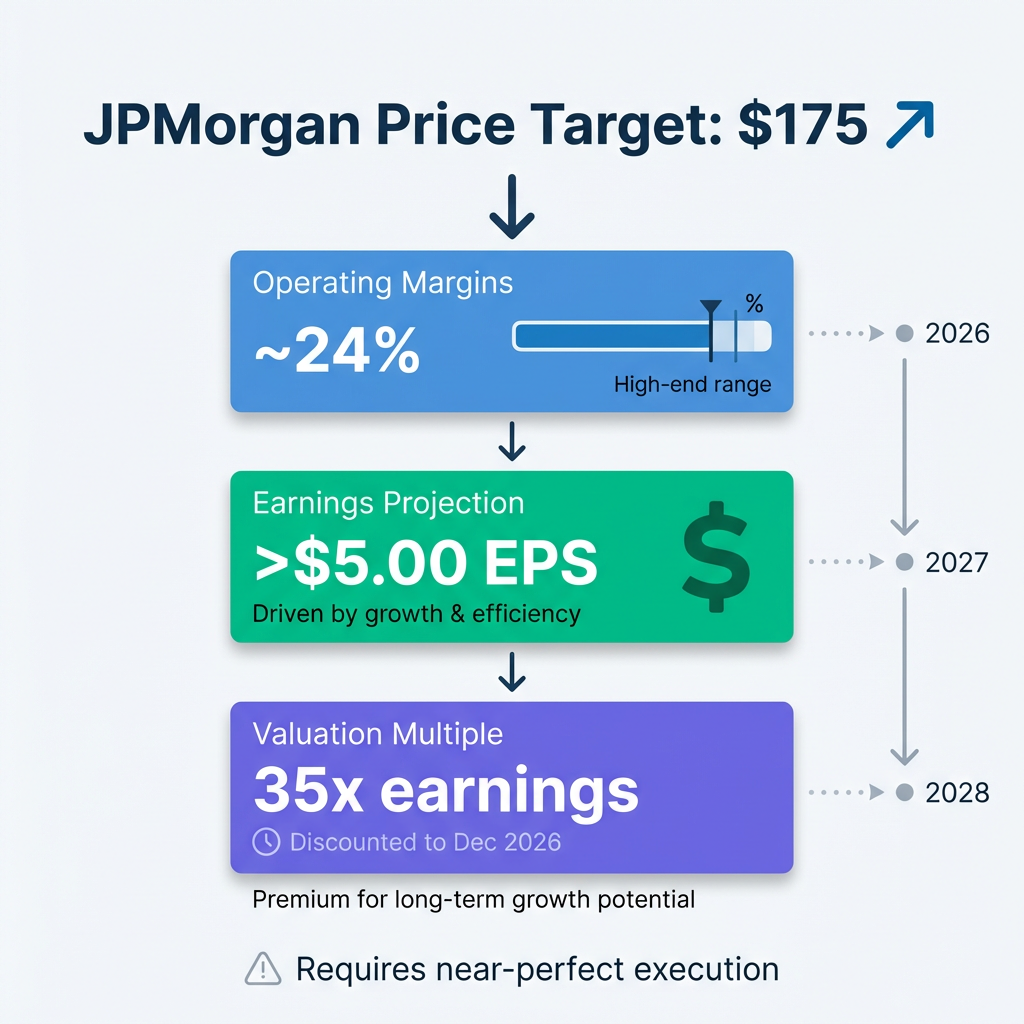
Analyst Samik Chatterjee explained that whilst the company’s growth trajectory supports a higher price target, the stock has already approached that level. This leaves minimal margin for error if execution falters or if optical market demand fails to meet elevated expectations. The $175 target assumes approximately 24% operating margins, earnings above $5, and a 35x multiple discounted to December 2026, reflecting confidence in the company’s medium-term fundamentals but caution on near-term upside.
When big ASX news breaks, our subscribers know first
Understanding Stock Downgrades and Price Targets
An analyst rating reflects the expected performance of a stock relative to its sector peers over a specified period, typically 12 to 18 months. Overweight indicates expectations of outperformance, Neutral suggests returns in line with the sector average, and Underweight signals anticipated underperformance. Importantly, a Neutral rating is not bearish. It indicates that the stock is fairly valued at current levels, with limited additional upside rather than an expectation of decline.
A price target represents an analyst’s projection of where a stock will trade based on earnings models, valuation multiples, and market conditions. A higher price target can coexist with a downgrade if the stock has already reached or exceeded that expected level. In Corning’s case, JPMorgan raised its target to reflect improved earnings visibility, but downgraded the rating because the shares have largely captured that upside, leaving the risk-reward calculus less favourable for new positions.
GLW Stock Reaction: How Markets Responded
Corning shares declined between 1.3% and 2.7% on 16 April 2026 following the JPMorgan downgrade, despite the simultaneous price target increase. On 17 April, the stock fell more than 1% even as broader technology indices rallied on ceasefire optimism and positive earnings sentiment. The muted reaction reflects investor uncertainty about whether current valuations can be sustained without near-term catalysts.
The stock’s recent volatility complicates interpretation of short-term price movements. Over the past 12 months, GLW has experienced 21 single-day swings exceeding 5%, making individual session declines difficult to contextualise in isolation. At $164.87 as of recent trading, the stock remains near its 52-week high of approximately $176.75, having gained 81.8% year-to-date. This proximity to peak levels amplifies sensitivity to valuation concerns and increases the likelihood of profit-taking on negative catalysts.
Valuation Deep Dive: Why JPMorgan Says GLW Is Stretched
Corning currently trades at a price-to-earnings ratio of 91.73, a significant premium to historical norms and sector averages. The elevated multiple reflects optimism about the company’s optical business and AI-related demand, but it also introduces execution risk. A PEG ratio of 0.42 suggests that the stock’s growth rate could justify current valuations, yet InvestingPro flags GLW as overvalued near its 52-week high, indicating limited margin for disappointment.
JPMorgan’s $175 price target is built on ambitious assumptions: approximately 24% operating margins, earnings above $5 per share, and a 35x earnings multiple discounted for time value to December 2026. Whilst these projections are achievable, they require near-perfect execution across product development, capacity expansion, and demand realisation. Any shortfall in optical segment revenue or margin compression from competitive pressures could undermine the valuation framework.
Investors can verify the company’s reported earnings, operating margins, and financial trajectory through SEC EDGAR filings for Corning, which provide audited quarterly and annual disclosures.
> Bear Case Summary
> Stretched valuations create execution risks, with overly optimistic optical market expectations leaving little margin for error. High multiples require aggressive growth assumptions that may not materialise if AI-driven demand softens or if competitive dynamics intensify.
Not Everyone Is Bearish: Bull Cases From UBS and BofA
UBS maintains a Buy rating on Corning with a $171 price target, citing positive signals from the 2026 Optical Fiber Communications conference and Nvidia’s earnings implications for optical demand. The firm views AI infrastructure buildouts as a multi-year tailwind, with Corning positioned as a key supplier of optical connectivity solutions. UBS expects the company to benefit from accelerating data centre investment through 2030, supporting sustained revenue growth in the optical segment.
The bull thesis for Corning’s optical segment relies heavily on AI-driven demand via Nvidia and other data centre customers, mirroring broader semiconductor industry trends reshaping technology supply chains across the global technology sector.
The OFC Conference industry signals serve as the optical communications sector’s premier venue for technology roadmaps and demand indicators, which UBS cited as supporting evidence for Corning’s growth trajectory.
Bank of America Securities raised its price target to $144, emphasising long-term revenue opportunities in optical technology by 2030. Whilst the target sits below current trading levels, BofA remains constructive on the company’s strategic positioning. The firm highlights partnerships with hyperscale cloud providers and telecommunications operators as critical drivers of future growth.
Key bull catalysts include:
- AI-driven optical demand via Nvidia and other data centre customers
- Long-term revenue opportunity in optical technology by 2030
- Positive industry conference signals indicating strong order pipelines
Broader Market Context: Defensive-to-Growth Rotation
The Corning downgrade occurred amid a broader market rotation from defensive and energy stocks into high-growth technology names, driven by reports of a possible U.S.-Iran ceasefire. The market’s fear index fell to a seven-week low as investors locked in gains from defensive positions and redeployed capital into growth plays. Technology stocks rallied on optimism about reduced geopolitical risk and improving earnings visibility, whilst industrial and materials names underperformed.
Geopolitical events such as the potential U.S.-Iran ceasefire have broad market implications beyond energy stocks, demonstrating how geopolitical events trigger sector-wide capital rotation as investors reassess risk premiums and growth assumptions.
As a materials and industrial play with technology exposure, Corning faced headwinds from this rotation. Capital flows favoured pure-play technology names like Broadcom and Tesla, which benefited from ceasefire-driven optimism and sector-specific catalysts. The JPMorgan downgrade amplified selling pressure at an already unfavourable moment for industrials, as traders rotated out of sectors perceived as less sensitive to AI-driven demand.
The next major ASX story will hit our subscribers first
What GLW Investors Should Watch Next
Investors should monitor several key metrics and events to assess whether valuation concerns are warranted:
Understanding how rating changes signal shifting analyst consensus on valuation can influence investor positioning is crucial, particularly when multiple analysts reassess a stock simultaneously.
- Upcoming quarterly earnings reports focusing on operating margin performance and optical segment revenue growth
- Management guidance revisions, particularly for 2027 and 2028 earnings expectations
- New AI-related contract announcements or partnerships with hyperscale cloud providers
- Broader analyst rating changes that could signal shifting consensus on valuation
The JPMorgan downgrade does not signal fundamental weakness but rather reflects a stock that may have run ahead of near-term catalysts. Execution on the firm’s approximately 24% operating margin and $5+ earnings projections will be critical to justifying current valuations. Investors should assess their time horizons and risk tolerance accordingly, recognising that long-term bulls focused on AI-driven optical demand may view pullbacks differently than short-term traders concerned with valuation multiples.
Frequently Asked Questions
Why did JPMorgan raise Corning’s price target whilst downgrading the stock?
The rating reflects an analyst’s view of risk-reward relative to the current share price, whilst the price target represents the expected value over 12 to 18 months. JPMorgan raised its target to $175 based on improved earnings visibility and growth assumptions, but downgraded the rating to Neutral because the stock has already approached that target level. This reduces upside potential from current prices, justifying a more cautious stance despite the higher target.
Is a Neutral rating the same as a sell recommendation?
No. A Neutral rating means the analyst expects the stock to perform in line with its sector over the next 12 to 18 months, not that it will decline. It signals limited additional upside rather than an expectation of losses. Investors holding the stock may choose to maintain their positions, whilst new buyers might wait for a more attractive entry point or clearer catalysts.
What would make JPMorgan upgrade Corning back to Overweight?
A meaningful pullback in the share price, better-than-expected earnings execution, or clearer visibility into 2027-2028 growth could shift the risk-reward calculus in Corning’s favour. If the stock retraces to levels that offer more attractive upside to the $175 target, or if the company demonstrates stronger-than-anticipated demand in the optical segment, JPMorgan could revisit its Neutral stance.
Should I sell my Corning shares after this downgrade?
Investment decisions depend on individual time horizons and risk tolerance. The downgrade reflects valuation concerns rather than fundamental deterioration. Long-term investors focused on AI-driven optical demand and the company’s strategic positioning may view short-term volatility as an opportunity, whilst shorter-term traders concerned with multiple compression may choose to reduce exposure. Consult with financial professionals to align decisions with your investment strategy.
—
This article is for informational purposes only and should not be considered financial advice. Investors should conduct their own research and consult with financial professionals before making investment decisions.
Frequently Asked Questions
Why did JPMorgan downgrade Corning stock if it raised the price target?
JPMorgan raised its Corning price target to $175 from $115 based on improved earnings visibility, but downgraded the rating to Neutral because the stock had already approached that target level, leaving minimal additional upside for new investors.
What does a Neutral rating mean for Corning stock?
A Neutral rating means JPMorgan expects Corning shares to perform in line with the sector average over the next 12 to 18 months — it is not a sell signal, but indicates the stock is fairly valued with limited room for further gains at current prices.
What valuation metrics make Corning stock look stretched?
Corning trades at over 50x next-twelve-months earnings and above 40x 2027 earnings, effectively requiring investors to price in 2028 results today, which JPMorgan analyst Samik Chatterjee cited as the primary driver of the downgrade.
What would cause JPMorgan to upgrade Corning back to Overweight?
A meaningful pullback in the share price, stronger-than-expected earnings execution, or improved visibility into 2027–2028 growth could shift the risk-reward profile enough for JPMorgan to revisit its Neutral rating on Corning.
Are other analysts bullish on Corning stock despite the JPMorgan downgrade?
Yes — UBS maintains a Buy rating with a $171 price target citing AI-driven optical demand and positive signals from the 2026 Optical Fiber Communications conference, while Bank of America Securities raised its target to $144, highlighting long-term optical technology revenue opportunities through 2030.