

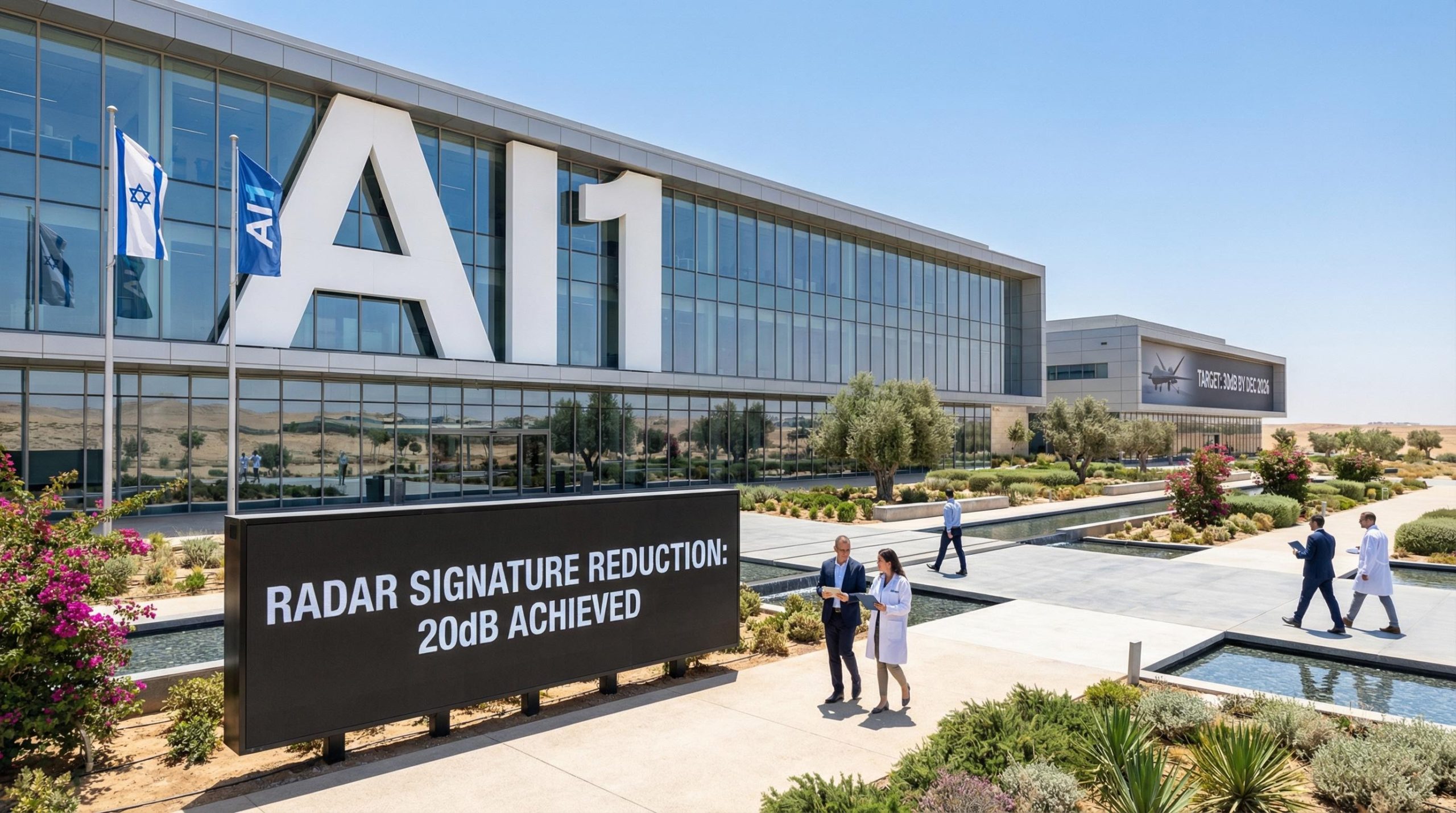
Adisyn defence tech subsidiary formation follows radar breakthrough
Adisyn (ASX: AI1) has established a new defence technology subsidiary, 2D Radar Absorbers Ltd, following successful laboratory testing that demonstrated up to 20dB radar signature reduction using graphene-enhanced composite materials. The company is now progressing a targeted development programme with Tel Aviv University aimed at achieving approximately 30dB radar reduction, equivalent to a 1,000-fold decrease in radar return signal strength.
The Adisyn defence tech subsidiary formation positions the Australian technology company to pursue a second commercial pathway for its graphene expertise alongside its core semiconductor interconnect programme. The company has initiated a structured development programme led by Professor Pavel Ginzburg, Full Professor of Electrical Engineering at Tel Aviv University and a globally recognised expert in radar physics and electromagnetic materials.
Testing conducted in collaboration with Tel Aviv University successfully demonstrated that graphene-enhanced composite materials could achieve up to 20dB radar signature reduction compared to base materials. The company is now targeting optimisation to ~30dB by December 2026, which would represent a massive reduction in radar detectability for drone and unmanned aerial vehicle (UAV) platforms.
The establishment of 2D Radar Absorbers Ltd provides a targeted platform to progress the radar absorption technology and supports potential future strategic partnerships and commercialisation pathways. Adisyn has the option to secure exclusive commercialisation rights to the technology developed under the joint research programme.
When big ASX news breaks, our subscribers know first
What is radar signature reduction and why does it matter for drone warfare?
Radar signature reduction refers to the ability to minimise how visible an object appears to radar detection systems. Radar works by sending out electromagnetic waves that bounce off objects and return to the receiver. The strength of this return signal determines how clearly the object appears on radar screens.
The measurement of radar signature reduction uses a logarithmic scale expressed in decibels (dB). This means each 10dB increment represents a tenfold reduction in radar return signal strength:
- 10dB = 10-fold reduction
- 20dB = 100-fold reduction (already achieved by Adisyn)
- 30dB = 1,000-fold reduction (optimisation target)
According to the company’s technical explanation, a drone that previously appeared as a large object on radar (approximately 1 square metre) would instead appear closer to the size of a large insect (only 10 square centimetres) with 30dB reduction. The drone would be absorbed into the ground’s background noise and identified by radar systems as a small bird or large insect rather than a military target.
For military operations, this level of stealth capability could significantly increase mission success rates and potentially reduce the number of drones required per operation. Reduced detectability allows platforms to approach targets undetected, gather intelligence without alerting adversaries, and complete missions with lower attrition rates.
The global military drone market provides substantial commercial context for this technology. According to Global Market Insights Inc., the market is valued at US$20.7 billion in 2026 and is projected to grow to US$66.5 billion by 2035, representing potential applications across defence, aerospace, and advanced materials sectors.
Development programme structure and key milestones ahead
The development programme with Tel Aviv University involves a full-time researcher engaged within Professor Ginzburg’s research team, with additional team members from Prof. Max Sokol Lab focusing on synthesis, processing, and property-driven design of advanced composites. Research will utilise specialised radar and materials laboratories at Tel Aviv University, with work focused on optimisation of graphene-enhanced composite structures.
| Milestone | Status/Timeline |
|---|---|
| 20dB radar reduction | Achieved |
| 30dB optimisation target | December 2026 |
| Israeli Ministry of Defence grant application | In preparation |
| Commercial terms with Tel Aviv University | Finalisation pending |
Professor Pavel Ginzburg’s credentials as a globally recognised radar physics expert provide technical credibility to the development programme. The engagement of a full-time researcher dedicated to this work, supported by additional team members with expertise in advanced composites, indicates a structured approach to achieving the optimisation target.
Israeli Ministry of Defence grant funding
The company is preparing an application for grant funding support from the Israeli Ministry of Defence, in collaboration with the university development team. The funding application reflects the potential strategic relevance of radar signature reduction technologies in modern drone, UAV and defence systems.
Government defence funding would provide non-dilutive capital to advance the development programme whilst validating the technology’s strategic importance to national defence priorities. Adisyn is also progressing discussions regarding the establishment of an Advisory Board for the new subsidiary, which may include individuals with significant defence and aerospace sector experience.
The potential for government funding and defence sector advisory board members suggests the technology has attracted attention from stakeholders with operational military experience. This engagement could accelerate commercialisation pathways and provide access to defence procurement channels.
How the radar initiative fits Adisyn’s broader graphene strategy
The radar signature reduction initiative represents a significant commercial application of Adisyn’s graphene materials expertise, developed alongside the company’s primary focus on its graphene semiconductor interconnect technology. The semiconductor programme aims to address the performance limitations of copper interconnects in advanced semiconductor devices using a patented low-temperature Atomic Layer Deposition (ALD) process.
The establishment of 2D Radar Absorbers Ltd as a separate subsidiary provides a targeted platform to progress the radar absorption technology without distracting resources from the core semiconductor programme. This structure enables targeted development of each technology pathway whilst maintaining the option for future spin-out or strategic partnership arrangements.
The company believes its broader graphene know-how may enable multiple high-value applications across electronics, advanced materials and defence technologies. The radar initiative demonstrates management’s ability to identify and pursue additional value creation opportunities from the core technology platform.
Arye Kohavi, Managing Director
“While our primary focus remains on graphene interconnect solutions for next-generation semiconductors, the radar absorption program represents an exciting additional opportunity emerging from our graphene expertise. I can envisage a time in the not-too-distant future where this incredible technology could be spun out into a separate vehicle for the benefit of our shareholders.”
The dual-track approach provides optionality for shareholders. If the radar absorption technology achieves commercial validation through successful testing and defence sector adoption, a spin-out structure could allow investors to participate in both technology pathways separately. This structure also enables Adisyn to attract sector-specific investment or strategic partners for each technology without requiring one pathway to subsidise the other.
Progress on the graphene interconnect programme continues in accordance with previously disclosed milestones and will be reported separately, indicating the radar initiative is being managed as an additional opportunity rather than a pivot from the core semiconductor focus.
What to watch for in the months ahead
Key upcoming milestones investors should monitor include:
- Finalisation of commercial terms with Tel Aviv University regarding exclusive commercialisation rights
- Expansion of the development programme and continued materials optimisation towards the 30dB target
- Submission of the Israeli Ministry of Defence grant funding application and subsequent funding decision
- Further technical testing results on graphene-enhanced composite structures
Each milestone represents a potential catalyst for re-rating the technology’s commercial prospects. The finalisation of commercial terms with Tel Aviv University would clarify Adisyn’s ability to exclusively commercialise the technology developed under the research programme. Successful grant funding approval would provide non-dilutive capital whilst validating the technology’s strategic relevance to defence priorities.
Progress updates on materials optimisation towards the 30dB target will indicate whether the development programme is on track to achieve the December 2026 timeline. Further technical testing results, particularly if they demonstrate progress beyond the current 20dB achievement, would provide evidence of the technology’s feasibility and potential commercial applications.
The company has stated it plans to continually update shareholders as key milestones are achieved, suggesting investors can expect regular progress reports throughout the development programme timeline.
Want the Next Defence Tech Breakthrough in Your Inbox?
Join 20,000+ investors receiving FREE ASX tech alerts delivered within minutes of release, complete with in-depth analysis. Click the “Free Alerts” button at StockWire X to get breaking news and expert coverage the moment market-moving announcements drop.