
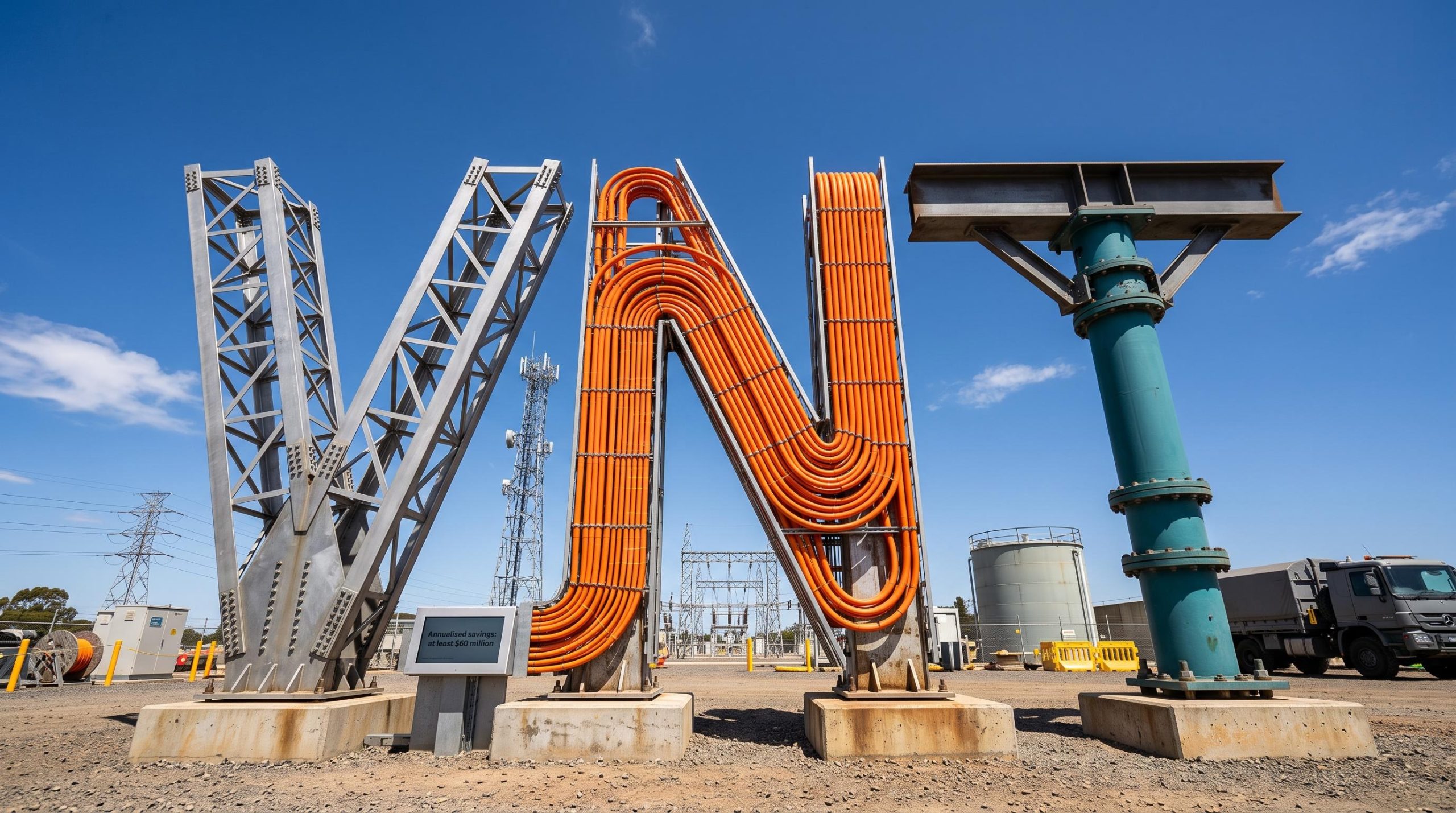
Ventia outlines strategy evolution and at least $60 million in annualised cost savings
On its 9 November 2026 investor call (11.00am AEDT), Ventia management outlined a simplification program targeting at least $60 million in annualised cost savings, with a full run rate expected from December 2027. Managing Director and Group Chief Executive Officer Mark Ralston, about 10 weeks into the role, described the changes as an evolution of strategy rather than a change of direction.
Management said one-off costs are currently estimated at approximately $30 million and will be recognised through the statutory result. FY26 underlying NPATA guidance of 7% to 10% growth was retained, excluding those one-off costs, for a company with a workforce of approximately 35,000 people.
Mark Ralston, Managing Director and Group Chief Executive Officer
“…this is an evolution of our strategy, not a change in direction.”
What is being simplified
Management outlined three elements of the simplification:
- Fewer operating sectors.
- Simplified corporate functions and shared services.
- Reduced duplication and standardised processes across the Group.
The company said the changes follow the delivery of its major SAP upgrade on time and on budget in the previous month. The four stated growth areas remain Defence, Digital Infrastructure, Energy & Renewables and Water. Management plans to invest in areas such as digital security, network resiliency and enhanced data capabilities.
A recent Defence maintenance contract extension of $107 million, built on a 36-year relationship with the Department of Defence, shows the stability of the Defence work Ventia is prioritising for growth.
Chief Financial Officer Mark Fleming said the savings figure is gross, so the company is not necessarily expecting the full $60 million to flow to margin. Some investment and sharing with customers will occur, and the key focus is revenue growth supported by sustainable EBITDA margins.
When big ASX news breaks, our subscribers know first
Telecommunications and Energy trading conditions
Management said Group revenue is expected to reduce in the second half compared with the prior corresponding period. The company pointed to conditions in two sectors.
In Telecommunications, customers are focused on productivity and cost discipline, capital allocation is selective, and planning delays are constraining the pace of network investment. Management said it remains confident in the medium-term opportunity given data demand and AI adoption, although the timing of growth will be influenced by the pace of built programs and customer volumes.
In Energy, project movement has been slower than anticipated. Management cited transmission constraints, grid collection delays, planning approvals and higher-than-expected capital costs.
Management described the effect as deferral rather than lost opportunities. Fleming said the deferred work is mostly with existing customers under existing contracts, and it is fully expected to happen next year. The earnings impact is being mitigated by productivity and cost efficiency initiatives already underway.
In Water, the nine-year, $405 million Yarra Valley Water renewal commencing October 2026 gives Ventia long-dated contracted work that sits outside the Telecommunications and Energy delays.
Fleming called FY26 “a bit of a reset year” for revenue, citing the Defence Base Services contract, which was a significant reduction versus FY25. He said FY27 would grow off a new base. Management expects revenue growth in FY27 and said the FY27 budget process is underway, with no FY27 guidance given.
Understanding the cost-out program
A cost-out program reduces a company’s ongoing operating expenses. Companies often pair one-off costs, such as redundancy payments, with ongoing savings, so the upfront outlay is recovered over time. Ventia’s figures are set out below.
| Item | Detail |
|---|---|
| Annualised savings | At least $60 million |
| Full run rate | December 2027 |
| One-off cost | Approximately $30 million (statutory result) |
| Workforce impact | Circa 1% of workforce |
| Cost-to-benefit | Roughly one to two, per analyst question; mostly redundancy costs |
Fleming said savings arrive progressively, with a portion in FY27 and the full run rate in FY28. They are incremental to efficiencies already supporting FY26, which he said have largely come from controlling discretionary spend.
He added there is a prospect of finding savings greater than $60 million, in which case the one-off costs would also increase.
Ralston said the discontinued projects include small non-core operational projects and paused corporate and digital programs. The focus is back-office overhead.
Capital, dividend and market outlook
On capital management, management said:
- Underlying leverage is not expected to change materially from current levels.
- The buyback is live and ongoing, and is expected to continue through the rest of the year, with no numbers given.
- The capital allocation framework is unchanged, and bolt-on acquisitions are still considered.
Fleming said the dividend is a payout ratio of NPATA. If revenue grows 5 to 10% and margins are broadly maintained, he expects bottom-line growth and the ability to grow the dividend, with no FY27 guidance.
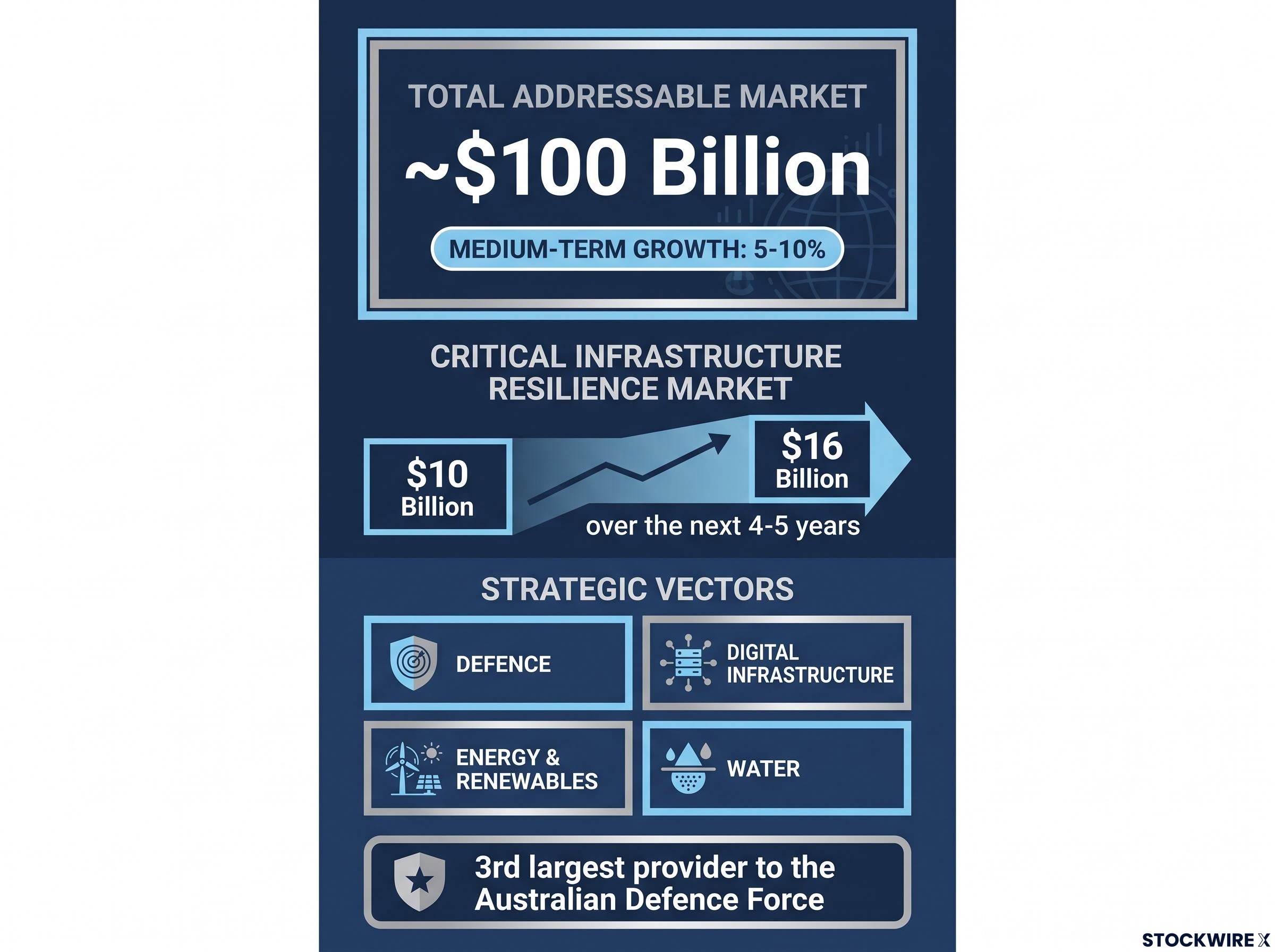
On the market, Ralston cited a total addressable market of around $100 billion and medium-term market growth of 5 to 10%. The critical infrastructure resilience market is estimated at $10 billion, growing to $16 billion over the next four to five years. Ventia described itself as the third largest provider to the Australian Defence Force.
On reporting, Fleming said the aim is for statutory results to equal underlying, with the $30 million one-off treated as an exception.
What happens next for Ventia
- The FY27 budget process is underway now, according to management.
- Cost savings are expected to ramp progressively through to a full run rate from December 2027.
- The buyback is expected to continue through the rest of the year.
- The FY26 result is expected to show underlying NPATA growth of 7% to 10%, excluding the one-off costs, which are to be recognised in the statutory result.
Want Alerts Like This on the Industrials Stocks You Follow?
StockWire X Market Intelligence scores every announcement in our coverage for how significant it’s likely to be for investors, and which way it points, then alerts you on the stocks you follow. The first 1,000 founding members lock in 50% off for life: A$247 a year instead of the standard A$495. Join the founding waitlist today.