
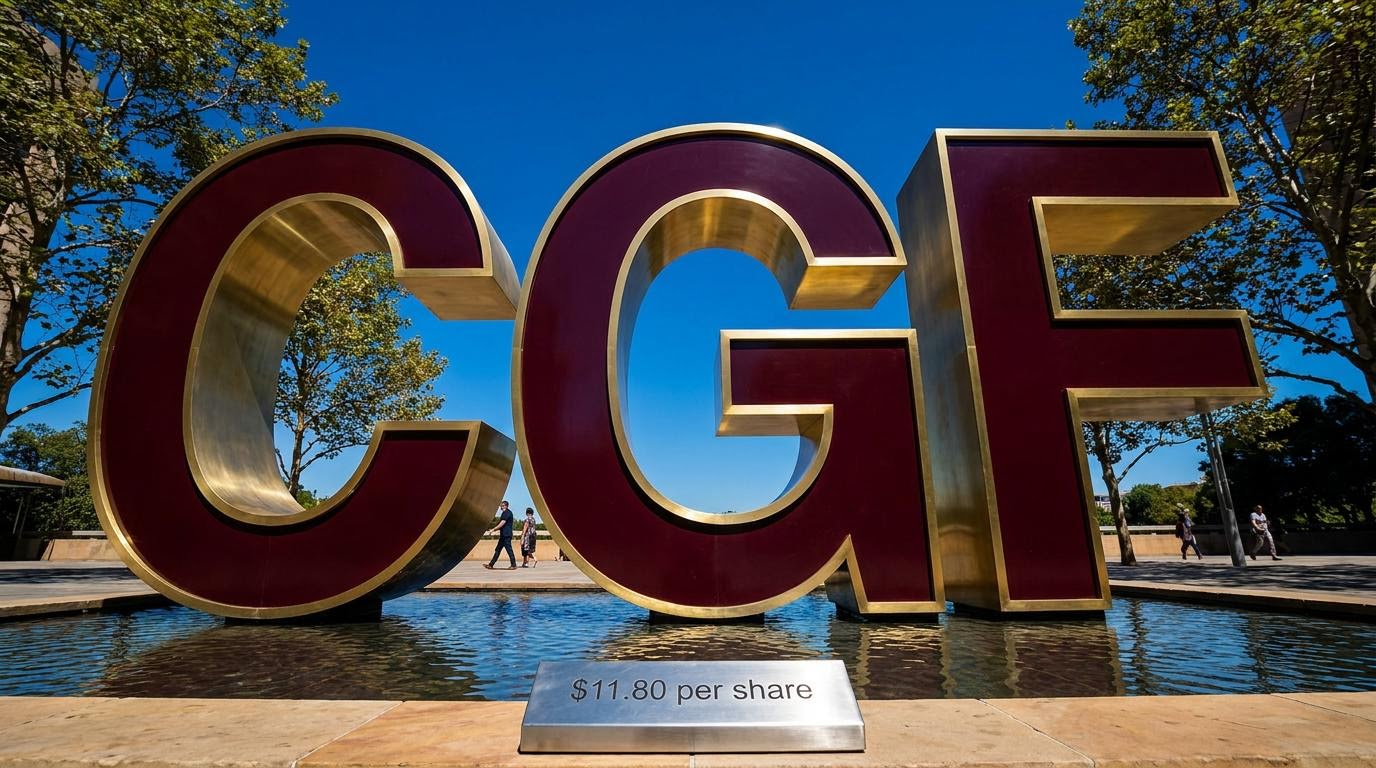
Challenger Board rejects $11.80 per share indicative offer from TAL Daiichi Life Australia
The Board of Challenger Limited (ASX: CGF) has concluded that the non-binding and conditional indicative offer from TAL Daiichi Life Australia Pty Limited (TDA) “is not at a level it could recommend to shareholders.” The offer is to acquire the remaining ordinary shares in Challenger that TDA does not already own, by way of a scheme of arrangement, at $11.80 per share.
The offer was first referred to in Challenger’s announcement on 19 October 2026. In its update dated 26 October 2026, the Board said it has met and carefully considered the offer, “having regard to Challenger’s value and prospects.”
The $11.80 price represented a 17.7% premium to Challenger’s one-month VWAP of $10.03, and TDA’s approach covers the roughly 79.5% of the company it does not already own.
The Board’s conclusion signals it sees value above the offer price, which leaves room for TDA to return with a different proposal.
Key points at a glance
- Offer: $11.80 per share, non-binding and conditional
- Structure: scheme of arrangement
- Bidder: TDA, Challenger’s largest shareholder
- Board position: not at a level it could recommend to shareholders
- Shareholder action: none required at this time
When big ASX news breaks, our subscribers know first
Board to engage with its largest shareholder
Challenger said it “highly values TDA as its largest shareholder and a commercial partner.” The Board intends to engage with TDA to see whether a proposal can be reached that the Board could recommend.
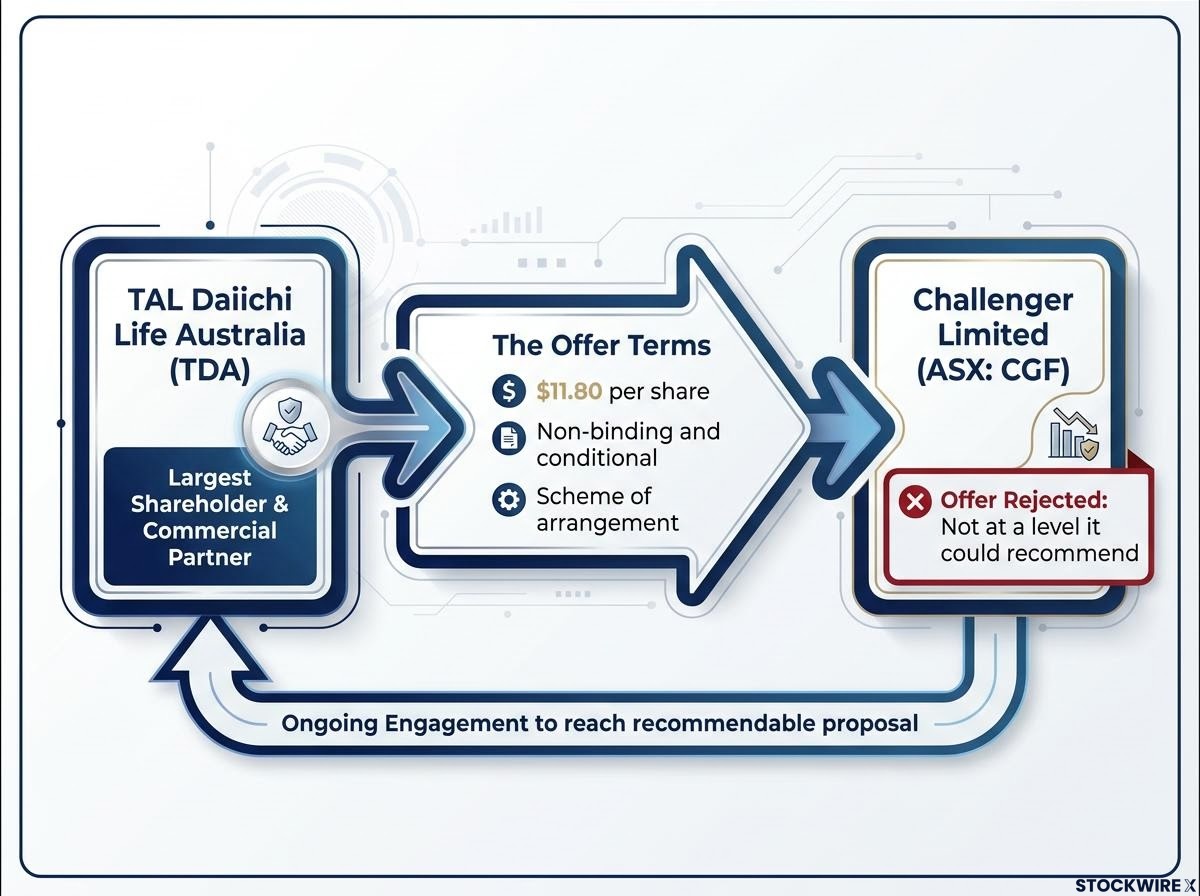
The tone is constructive, with the relationship framed as a partnership rather than a contest.
Caution remains. According to Challenger, there is no certainty that the proposal will result in a binding offer or that any transaction will eventuate.
Challenger shareholders do not need to take any action at this time.
What is a scheme of arrangement?
A scheme of arrangement is a court-approved process commonly used in Australia for one party to acquire all the shares in a company. It typically requires approval from both shareholders and the court.
That is why the Board’s recommendation matters. A recommendation from the Board is generally an important signal for shareholders when they are asked to vote.
The TDA offer is described as “non-binding and conditional.” In plain terms, TDA is not yet committed to the deal, and the offer can change or lapse.
This is why the Board’s view on price is the critical step at this early stage.
Challenger at a glance
Established in 1985, Challenger describes itself as Australia’s leading retirement income business. It helps Australians convert their accumulated savings into reliable and sustainable retirement income.
The company also provides income solutions for institutional investors through its leading credit origination capabilities. Challenger runs an APRA-regulated life company and is listed on the ASX.
For investors, that means a well-established franchise with an engaged, strategic largest shareholder in TDA.
For readers wanting to understand the growth case behind the Board’s valuation stance, our deep-dive into Challenger’s retirement growth strategy covers its dominant annuities market share, the Calix Re platform and the new earnings reporting framework from FY27.
Don’t Miss the Next Financials Move Before the Market Does
Get FREE breaking ASX news on financials and other non-resource sectors delivered to your inbox within minutes of release, complete with in-depth analysis. Join 20,000+ subscribers already using Big News Blast to stay ahead. Click the “Free Alerts” button to start receiving alerts the moment news breaks.