


Australian Vintage offloads Adelaide Hills cellar door site for $5 million
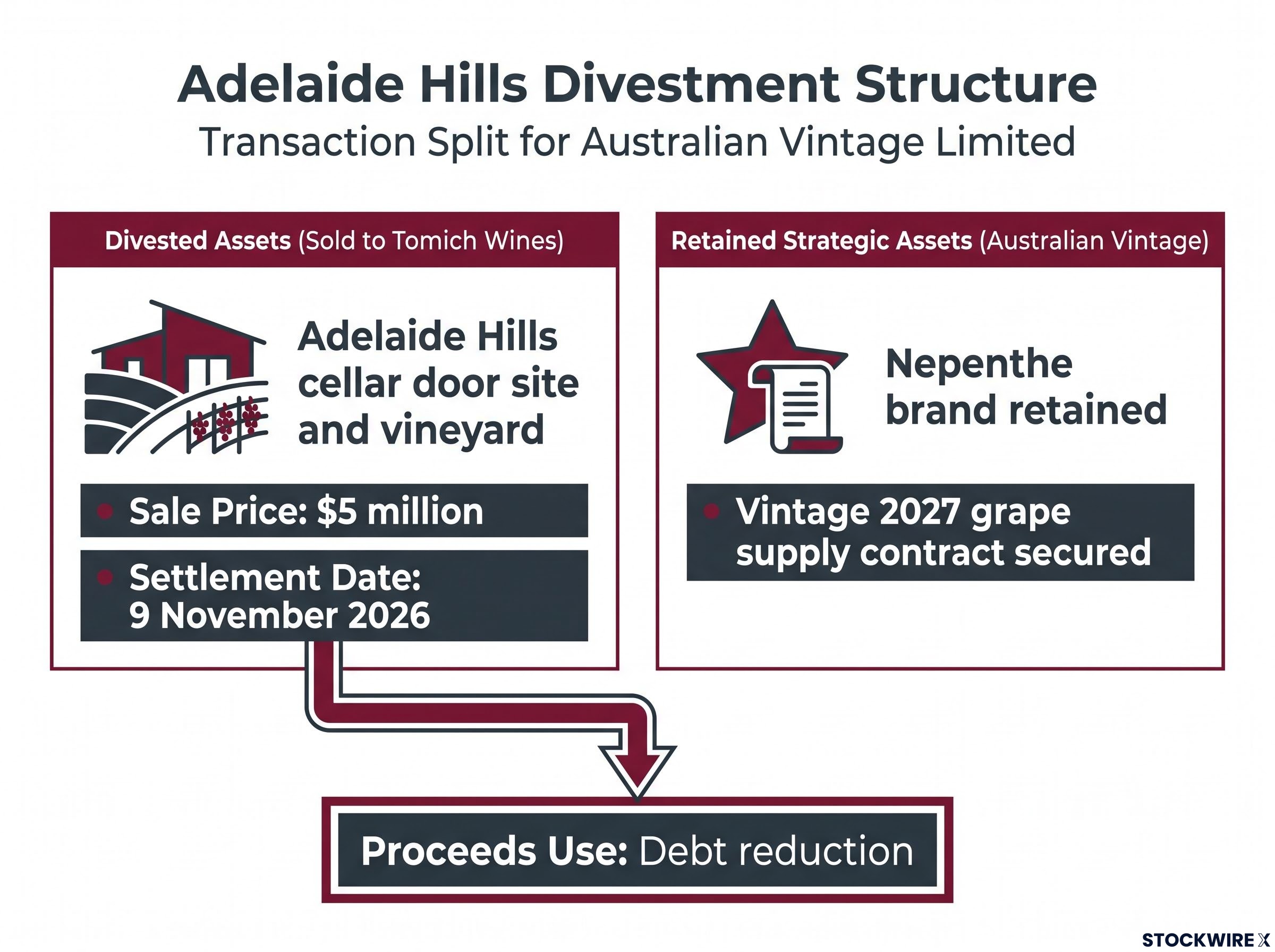
Australian Vintage Limited (ASX: AVG) has signed binding agreements to sell its Adelaide Hills cellar door site and vineyard to Woodthall Pty Ltd and Adelaide Wine Co Pty Ltd, trading as Tomich Wines, for $5 million, with settlement scheduled for 9 November 2026.
Tomich Wines is described in the announcement as a respected multi-generational winemaking family with a rich history of viticulture in the Adelaide Hills region. The asset is transferring to buyers with established credentials in the area.
Net proceeds from the sale, less any transaction costs, will be directed toward debt reduction.
When big ASX news breaks, our subscribers know first
Nepenthe brand retained — grape supply secured for vintage 2027
The transaction does not include the Nepenthe brand. Australian Vintage retains full ownership of the Nepenthe label, meaning the sale represents a divestment of a physical operational asset rather than any transfer of brand equity.
To maintain continuity of premium fruit supply, a grape supply contract has been established with Tomich Wines covering vintage 2027. The announcement also notes that comprehensive quality assurance measures will be put in place to ensure continuity of SWA certification, while preserving the quality of the grapes and wine produced under the Nepenthe name.
For investors, this distinction is material. The brand value is preserved while a loss-making operational asset is removed from the balance sheet.
What is an asset-light, brand-focused wine business model?
Australian Vintage has framed this sale as consistent with a broader strategic shift toward an asset-light, brand-focused business model. Understanding what this means helps investors contextualise the transaction.
In a traditional wine business, the company owns and operates vineyards, cellar doors, and production infrastructure. These assets carry significant capital costs, fixed overheads, and operational complexity. In an asset-light model, the company retains ownership of its brands and manages sales and marketing, while outsourcing or divesting the physical production and land assets that sit on the balance sheet.
This model has become increasingly attractive across the wine sector, particularly as consumer behaviour shifts and wine tourism declines. The key advantages include:
- Frees capital previously tied up in property and infrastructure
- Reduces the fixed cost base and operational complexity
- Allows greater investment in brand building and marketing
- Strengthens the balance sheet through debt reduction
- Provides flexibility to source premium fruit from best-in-class growers
In AVG’s case, the cellar door was characterised as a loss-making business unit. Shedding it generates immediate proceeds for debt reduction while the company retains the brand assets that underpin its long-term commercial position.
Strategic fit: debt reduction and the path to shareholder value
This sale is positioned by management as a deliberate step in AVG’s broader strategic direction, not a standalone transaction. The company has explicitly linked the disposal to the removal of loss-making business units, ongoing debt reduction, and a continued focus on enhancing shareholder value.
CEO Tom Dusseldorp outlined the rationale directly:
Tom Dusseldorp, CEO, Australian Vintage
“As wine tourism continues to decline, loss making cellar doors do not add the value they once did. The sale of this asset can return cash to the business so the Company can pay down debt and generate long-term shareholder value whilst maintaining high-quality standards. We will still be sourcing great quality wine from the premium Adelaide Hills region for Nepenthe…”
The logic is straightforward: removing a loss-making operation reduces drag on earnings, while the debt repayment improves the company’s financial position. Critically, because the Nepenthe brand is retained and a grape supply contract for vintage 2027 is already in place with Tomich Wines, the quality and provenance of the product is expected to be maintained as the business model evolves.
AVG’s FY26 turnaround delivered the company’s first positive free cash flow since FY22, a $35 million swing from FY23’s low point, with debt reduction explicitly flagged as a central priority alongside Poco Vino’s international expansion.
Key transaction details at a glance
| Detail | Information |
|---|---|
| Buyer | Tomich Wines (Woodthall Pty Ltd / Adelaide Wine Co Pty Ltd) |
| Sale Price | $5 million |
| Settlement Date | 9 November 2026 |
| Proceeds Use | Debt reduction |
| Nepenthe Brand | Retained by AVG |
| Grape Supply Contract | Vintage 2027 secured with Tomich Wines |
Don’t Miss the Next Consumer Sector Move
Get FREE breaking ASX news delivered to your inbox within minutes of release, complete with in-depth analysis already done for you. Join 20,000+ investors who stay ahead of the market the moment announcements drop. Click the “Free Alerts” button at Big News Blast to start receiving alerts across ASX consumer, tech, healthcare, and more.