
FY26 results in focus: earnings surge as turnaround gains traction
In its FY26 results presentation delivered on 24 August 2026, City Chic Collective outlined a full-year turnaround underpinned by sharply higher earnings, with CEO Phil Ryan and CFO James Plummer walking investors through the plus-size fashion retailer’s return to profitability momentum.
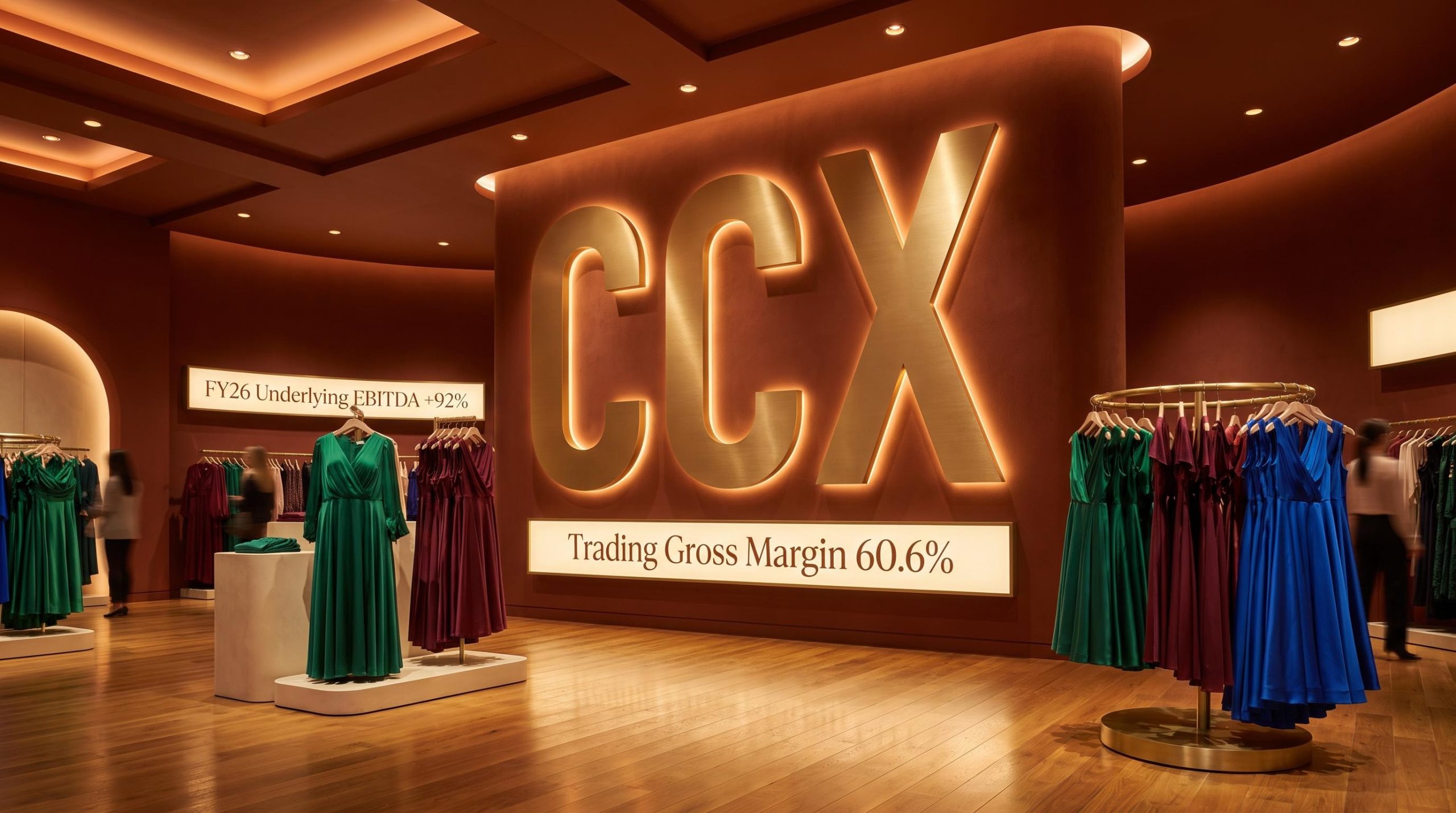
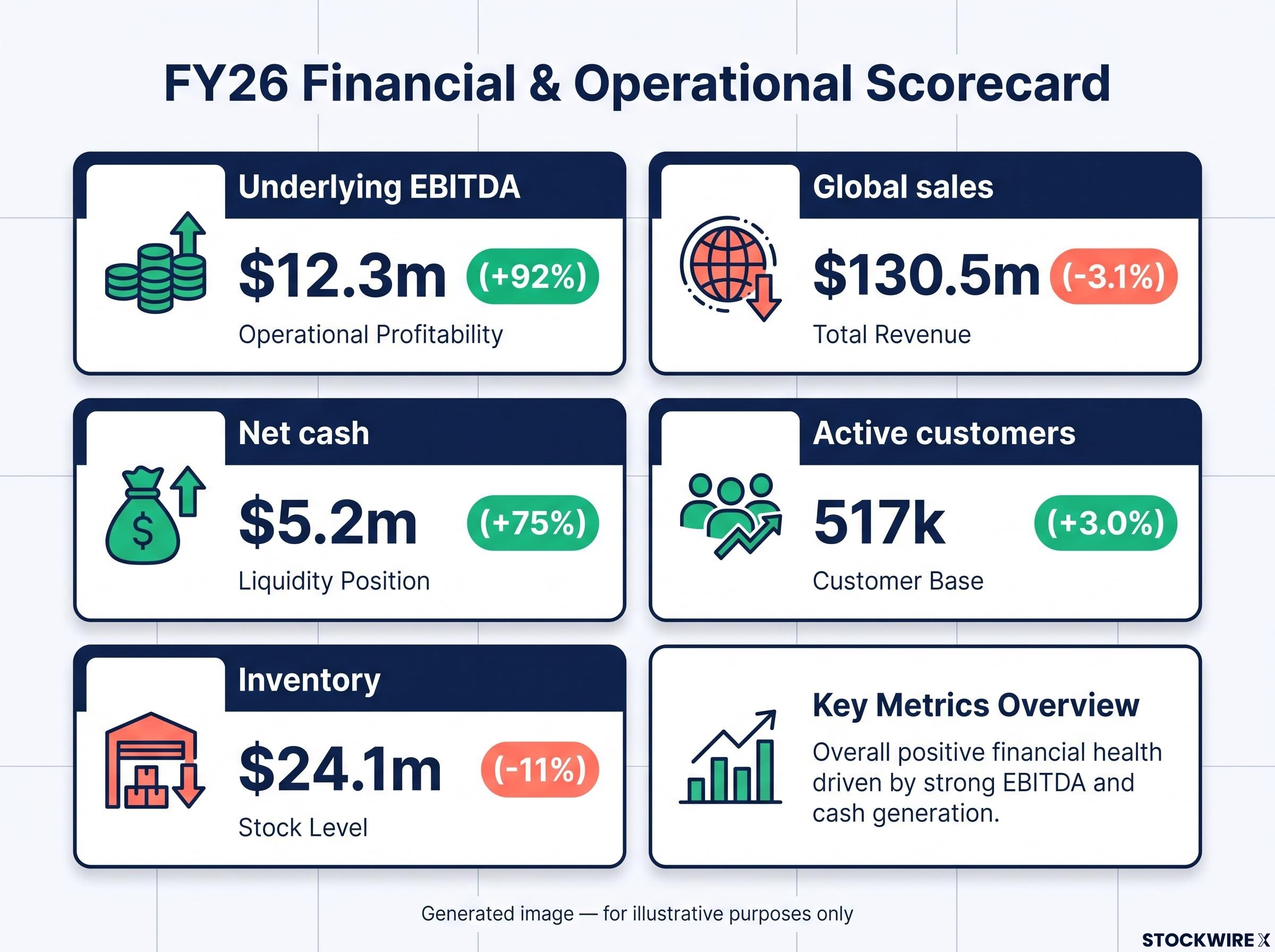
Management led with the headline figure: Underlying EBITDA of $12.3m, up 92% on the prior year, driven by higher gross margin and disciplined cost management in a challenging retail environment.
The narrative was clear across three fronts. The Australia and New Zealand (ANZ) business is back on track, the United States (USA) operation has completed its reset and is now scaling, and the balance sheet has strengthened. Global sales came in at $130.5m (-3.1%), net cash rose to $5.2m (+75%), and trading gross margin lifted to 60.6% (+209bps).
When big ASX news breaks, our subscribers know first
FY26 results overview: earnings up sharply despite softer sales
The full-year scorecard showed how margin gains and cost reductions drove earnings growth even as revenue eased. Underlying EBITDA reached $12.3m (+92%), while statutory net profit after tax (NPAT) came in at ($6.6m), an improvement of 25.5% on FY25.
The confirmed figures landed squarely within the range management had flagged in its preliminary FY26 earnings update in July, when it guided Underlying EBITDA of $11.5m-$12.5m on the back of margin expansion and cost discipline rather than revenue volume.
Cost of doing business (CODB) fell $7.1m (-9.7%) to 50.5% of sales, reflecting annualised savings and operational marketing efficiencies. Active customers grew to a record 517k (+3.0%), and inventory was tightly managed at $24.1m (-11%).
The regional split told two distinct stories. ANZ revenue rose 7.6% with comparable sales up 5.6%, while USA revenue was $16.7m (-42.1%). Management emphasised that the USA decline reflected a deliberate reduction in purchasing in response to tariff-related volatility, not a failure of underlying demand.
| Metric | FY26 | FY25 | Change | What it signals |
|---|---|---|---|---|
| Global sales | $130.5m | $134.7m | -3.1% | Softer revenue on deliberate USA reset |
| Underlying EBITDA | $12.3m | $6.4m | +92% | Margin and cost discipline driving earnings |
| Trading GM% | 60.6% | N/A | +209bps | Higher-quality sales mix |
| CODB | $66.1m | $73.2m | -9.7% | Leaner operating base |
| Net cash | $5.2m | $3.0m | +75% | Strengthened balance sheet |
| Active customers | 517k | N/A | +3.0% | Growing, engaged customer base |
“We are not just selling dresses. We are building the dress community for curves – with our digital advertising at its heart – and letting growth follow belief.”
The three-pillar strategy driving the turnaround
Management framed the turnaround around a strategic framework anchored in the company’s stated fit advantage, which it presented as the core driver of ongoing EBITDA improvement.
Her First
The first pillar centres on deepening emotional connection with customers while targeting higher average selling price, retention and profitability. Average selling price (ASP) rose 4.5%, and the company’s Net Promoter Score (NPS), a measure of customer loyalty, climbed to 76.
Cut for Curves
Management preserved the framing that “Cut for Curves is our Fit Promise.” This pillar focuses on the company’s fit-and-quality product advantage, with a target of 62% Gross Margin and a reduced returns rate.
Simpler Business
The final pillar targets cost efficiencies and a CODB of 50%. Notably, digital advertising spend was maintained while overall marketing costs were cut, reflecting operational efficiencies rather than a pullback in demand generation.
Summarising the strategic position, management noted the company has:
- Successfully right-sized the business
- Placed the right product in market
- Now shifted focus to revenue growth to deliver operating leverage
ANZ momentum and the USA dress-authority reset
The two regional stories management presented reflected different stages of the same playbook. In ANZ, the company recorded record customer numbers and is extending its CCX value range to drive purchase frequency. It is also expanding sizes 10 and 12 that are “Cut for Curves” to capture greater market share.
The USA story was framed as “reset complete, now scaling,” with a strategy to become the dress authority for curves through fit expertise. Management noted the USA curve dress market is materially larger than the whole ANZ curve market, supporting reinvestment in dress inventory and expansion via the Global-E international shipping platform.
The scale of the opportunity was underscored by market sizing: the ANZ curve market is estimated at US$740m, against a USA market of US$54b.
What the GLP-1 shift means for apparel demand
A distinctive element of the presentation was management’s thesis on GLP-1 medications, the class of weight-loss and diabetes treatments that has seen rapid consumer adoption. As body shapes and sizes evolve, fit and quality become more important during transitions, which management argued plays directly to City Chic’s core strength.
The company cited several data points on the trend:
- 21% of US households now include a current GLP-1 user, with adoption more than doubling in the past 16 months
- 9.9% apparel spending increase after 6 to 8 months on treatment, with 73% of users experiencing a meaningful size change
- On clothing considerations, 72% rate fit as most important, 61% quality, and 52% stretch or adjustability
City Chic’s response involves broadening size coverage so its “Cut for Curves” fit now extends to smaller sizes, alongside a transitional-wardrobe focus and fit-led customer support. In FY26, more customers moved down a size (36.9% versus 32.1% the prior year), though the vast majority remained within the company’s specialty size range.
For investors, management reframed what could be viewed as a risk, customers shrinking out of plus-size ranges, into a retention and reach opportunity anchored in fit expertise.
Balance sheet strength and returns initiatives
The strengthened financial position was a recurring theme. Net cash stood at $5.2m (+75% versus June 2025), after the repayment of $5.0m in borrowings during the period. A $10m facility remained undrawn at year-end, and the debt facility was extended, under the same terms, to 31 March 2028. The first of two FY27 covenant clean-down requirements has already been met, with positive cash flow of $2.2m net of borrowings.
On returns, a new partnership with Mys Tyler, which integrates creator-generated fit content via its FitCheck tool, showed preliminary results with returns down 10% in the USA and 7% in ANZ.
Management also detailed its AI capability, including the SeeStone platform, which converts product images into sales forecasts, alongside Claude, Copilot and Jasper deployed across the business. The company was recognised as a finalist for the Australian Fashion Industry Awards’ Gamechanger Award.
FY27 outlook: momentum carrying into the new year
Management presented a trading update for the first seven weeks of FY27, while retaining the caveat that retail conditions remain challenging.
In ANZ, comparable store sales were up 11.4% and store traffic up 14%, with total trading revenue flat. Online was down 8%, reflecting a deliberate reduction in promotional activity. The company closed 4 loss-making stores and plans 1 new store as part of continued network optimisation.
In the USA, a return to revenue and margin growth is expected in the first half (excluding wholesale), in line with the revised strategy. Management noted the tariff environment has stabilised, new customer acquisition has been positive, and there has been strong sell-through of new-season dresses.
The investment thesis management closed on was that of a leaner, higher-margin platform positioned for operating leverage as revenue growth returns, supported by a structural GLP-1 demand tailwind that aligns with the company’s fit expertise.
Don’t Miss the Next Consumer Discretionary Turnaround
Big News Blast delivers FREE breaking ASX news straight to your inbox within minutes of release, complete with in-depth analysis already done. Join 20,000+ investors who stay ahead of market-moving announcements across retail, consumer, and beyond. Click the “Free Alerts” button at Big News Blast to start receiving alerts the moment news breaks.