

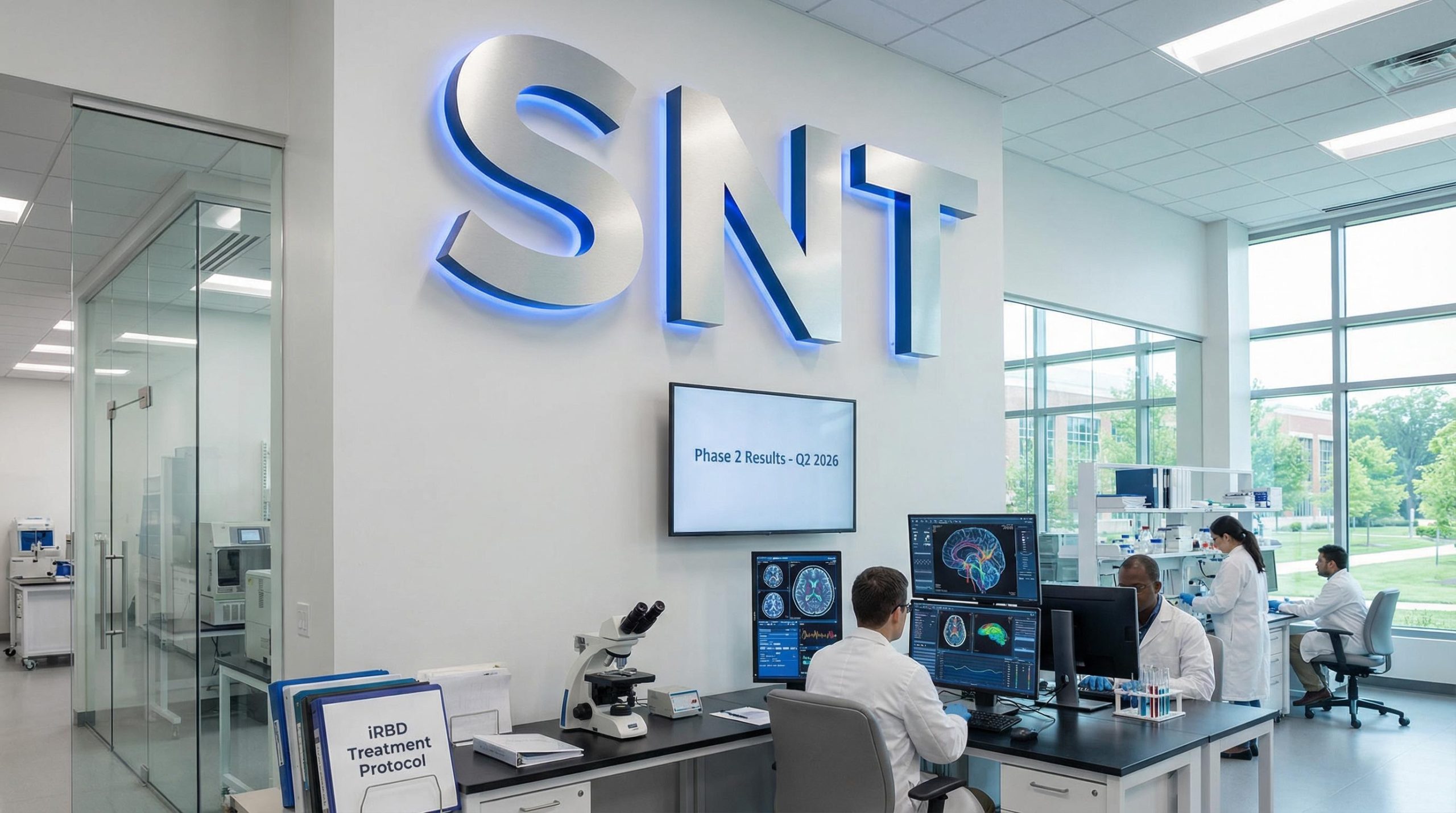
Syntara receives A$1.7m milestone as Parkinson’s trial hits final patient
Syntara (ASX: SNT) has received a milestone payment of approximately A$1.7 million (£900,000) from Parkinson’s UK, triggered by dosing of the final patient in its Phase 2 clinical trial of SNT-4728. The non-dilutive funding validates external confidence in the programme whilst de-risking the near-term catalyst timeline, with top-line results expected in Q2 CY26.
The payment forms part of Parkinson’s UK’s funding commitment to support the development of SNT-4728 as a potential treatment targeting neuroinflammation associated with early-stage Parkinson’s disease. Upon project completion, Syntara (ASX: SNT) will be eligible to receive a further A$0.45 million (£250,000) milestone payment from Parkinson’s UK.
The Phase 2 trial evaluates SNT-4728 in individuals diagnosed with isolated REM sleep behaviour disorder (iRBD), a condition recognised as one of the strongest known early indicators of future Parkinson’s disease and related neurodegenerative disorders.
When big ASX news breaks, our subscribers know first
What is iRBD and why target it for Parkinson’s?
Isolated REM sleep behaviour disorder (iRBD) is a sleep condition where patients physically act out their dreams during REM sleep, a stage typically characterised by muscle paralysis. The significance extends beyond sleep disruption, iRBD represents a critical window for early intervention in neurodegenerative disease.
Early Intervention Opportunity
More than 80% of iRBD patients go on to develop Parkinson’s disease and the related disorders dementia with Lewy bodies and multiple system atrophy.
SNT-4728 operates as a best-in-class SSAO/MAO-B inhibitor, a dual-action mechanism designed to reduce neuroinflammation, the inflammatory process believed to contribute to neuronal damage in Parkinson’s disease. By targeting patients at the iRBD stage, the therapy aims to intervene before full Parkinson’s diagnosis, addressing a currently unmet medical need where no approved disease-modifying treatments exist.
This early intervention approach differentiates SNT-4728 from treatments targeting established Parkinson’s disease. If successful, the therapy could capture patients before irreversible neurological damage occurs, potentially slowing or preventing progression to Parkinson’s disease.
Market opportunity and upcoming catalysts
The addressable market for SNT-4728 spans both the immediate iRBD indication and the broader Parkinson’s disease population. The global addressable market for iRBD is estimated at US$1.6 billion, whilst the Parkinson’s disease market is projected to reach US$9.2 billion by 2030.
| Indication | Market Size | Timeframe |
|---|---|---|
| iRBD (global) | US$1.6b | Current |
| Parkinson’s disease | US$9.2b | By 2030 |
The iRBD-to-Parkinson’s pipeline provides strategic optionality. Success in the smaller iRBD indication establishes proof-of-concept for the therapy’s mechanism, potentially opening pathways to the substantially larger Parkinson’s disease market where neuroinflammation remains a validated therapeutic target.
Near-term catalysts include Q2 CY26 top-line results covering both safety and efficacy endpoints, followed by the A$0.45 million project completion milestone. The upcoming data readout represents a defined timeline for potential re-rating, as results will inform next development steps and potential partnering discussions for broader indications.
Syntara’s broader pipeline context
SNT-4728 sits within Syntara’s diversified clinical-stage portfolio targeting extracellular matrix dysfunction across multiple disease areas. The company’s development programmes span blood cancers, fibrotic conditions, and neurodegenerative disorders, providing risk diversification across therapeutic categories.
Key pipeline assets include:
- Amsulostat (SNT-5505) for myelofibrosis, a bone marrow cancer causing scar tissue build-up, granted FDA Fast Track Designation
- SNT-9465 in Phase 1a/b study for hypertrophic scars as a topical pan-LOX inhibitor
- SNT-6302 in ongoing collaboration with Professor Fiona Wood and the University of Western Australia for keloid scars
The SNT-4728 milestone demonstrates execution capability across Syntara’s portfolio, with multiple clinical-stage assets advancing simultaneously. This multi-programme approach reduces single-asset dependency whilst maintaining focus on the company’s core expertise in amine oxidase chemistry and extracellular matrix modulation.
What’s next for Syntara and SNT-4728
The path forward for SNT-4728 centres on the Q2 CY26 data readout, which will provide the first comprehensive view of the therapy’s safety profile and efficacy in the iRBD patient population. Both endpoints are critical for determining the therapy’s competitive positioning and commercial viability.
Upcoming milestones include:
- Top-line Phase 2 results (safety and efficacy) reported in Q2 CY26
- Project completion milestone payment of A$0.45 million upon trial finalisation
The near-term catalyst timeline provides investors with a defined inflection point for assessing the programme’s progress. Positive results would support advancement discussions, whether through internal development, partnerships, or potential licensing arrangements for broader Parkinson’s disease indications.
The partnership structure with Parkinson’s UK de-risks development costs through non-dilutive funding whilst maintaining Syntara’s control over the asset. This funding model preserves shareholder value by avoiding dilution during clinical development phases, a consideration particularly relevant for biotechnology companies advancing multiple programmes simultaneously.
Don’t Miss the Next Biotech Breakthrough
Join 20,000+ investors getting FREE breaking ASX news delivered to your inbox within minutes of release, complete with in-depth analysis. Click the “Free Alerts” button at StockWire X to start receiving real-time alerts the moment market-moving healthcare announcements break.