

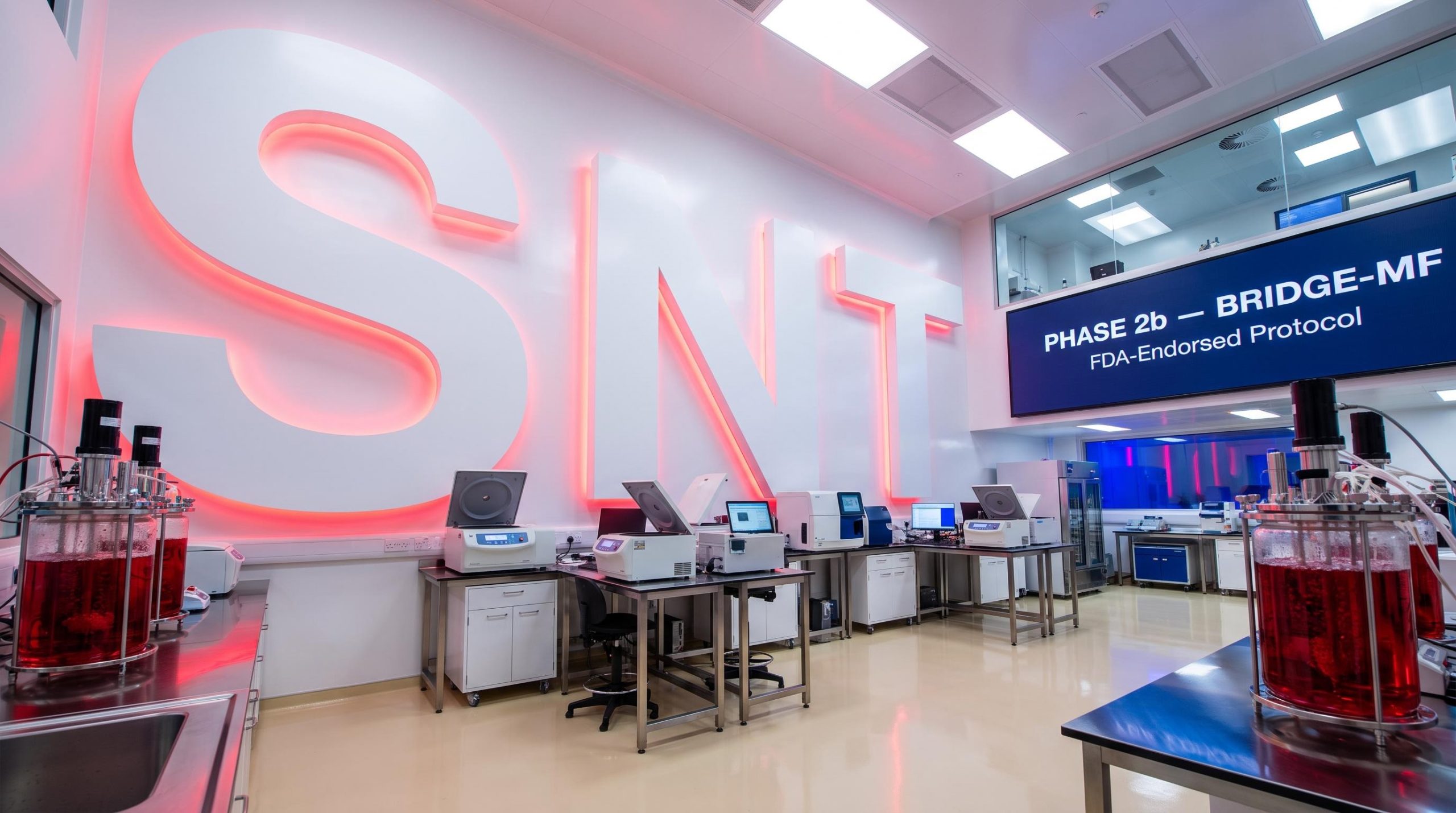
Syntara caps Q4 FY26 with FDA-backed myelofibrosis pathway and $8.0m raise
In its June Quarterly Shareholder Update covering Q4 FY26 (April–June 2026), Syntara Limited (ASX: SNT) reported positive US FDA feedback supporting the proposed Phase 2b development pathway for its lead asset amsulostat in myelofibrosis, alongside an $8.0 million institutional placement.
The clinical-stage biotechnology company noted the placement extended its expected cash runway into FY28. Management highlighted that multiple clinical catalysts are anticipated across the pipeline in H2 2026, spanning blood cancers, fibrosis and neurodegenerative disease.
When big ASX news breaks, our subscribers know first
Q4 FY26 highlights and post-quarter clinical progress
The update separated activity completed during the June quarter from several developments flagged as occurring subsequent to 30 June 2026.
During the quarter:
- Positive US FDA feedback on the proposed Phase 2b amsulostat development pathway in myelofibrosis
- $8.0 million institutional placement, with expected cash runway extended into FY28
Subsequent to quarter-end (post 30 June 2026):
- SNT-4728 preliminary Phase 2 results showed a statistically significant reduction in inflammation within a key Parkinson’s disease-related brain region
- SNT-9465 Phase 1b hypertrophic scar trial reached 60% treatment commencement, with recruitment completion targeted for Q3 2026
- AZALOX myelodysplastic syndrome (MDS) study advanced to its final Phase 1b dose cohort
Financial position and cash at 30 June 2026
Syntara ended the reporting period with a cash balance of A$13.5 million at 30 June 2026, supporting the runway extension into FY28. The balance sheet snapshot below reflects the position disclosed in the update.
| Metric | Value |
|---|---|
| Share price (23 July 2026) | $0.024 |
| Market capitalisation | A$47m |
| Cash balance (30 Jun 2026) | A$13.5m |
| Enterprise value | A$33.5m |
The company noted institutional ownership above 44% and sell-side research coverage as points of external validation.
- D&A Income Limited held 18% and Platinum Investment Management held 12%, contributing to total institutional ownership of >44%
- Research coverage was provided by Canaccord Genuity, Euroz Hartleys, Bell Potter and Evolution Capital
Amsulostat — the value driver across myelofibrosis and MDS
Syntara positioned amsulostat as its lead asset, differentiated by a “first in class pan-LOX mechanism.” The drug works through pan-lysyl oxidase (pan-LOX) inhibition, targeting the fibrosis biology and bone marrow microenvironment underlying myelofibrosis, a blood cancer that causes scarring of the bone marrow.
The company reported that its Phase 2a proof-of-concept study in myelofibrosis is complete. Management stated that the positive FDA review of the Phase 2b protocol clears the next stage of clinical development, with the named next-stage trial designated BRIDGE-MF.
Amsulostat enters BRIDGE-MF with regulatory tailwinds already in place: FDA Fast Track and Orphan Drug Designation for myelofibrosis provide a foundation for accelerated review and seven years of potential market exclusivity upon approval.
| Measure | Result |
|---|---|
| TSS50 (≥50% total symptom score improvement) | 73% (8/11) achieved at Week 24 or beyond |
| SVR25 (spleen volume reduction) | 44% (4/9) achieved at Week 24 or beyond |
| Of 7 patients completing 52 weeks | 6 continued via named patient supply; 3 minor anaemia response; 2 achieved complete (100%) symptom resolution |
Lifecycle opportunity in MF
The update outlined three positioning opportunities for amsulostat across the myelofibrosis treatment paradigm:
- As an add-on for patients with sub-optimal response to JAK inhibitors (JAKi), a market opportunity of approximately $1b
- In frontline combination with JAKi, an opportunity of approximately $1.8b
- To slow progression in newly diagnosed MF, an opportunity of approximately $2.8b
CEO Commentary
The next phase of development and study design for BRIDGE-MF was guided by the company’s clinical advisory board and aligned with recent FDA feedback.
Why myelofibrosis dealmaking matters for the Syntara thesis
Myelofibrosis is a haematological malignancy, a type of blood cancer that causes progressive scarring of the bone marrow, impairing the body’s ability to produce healthy blood cells. The addressable markets are substantial, with myelofibrosis estimated at approximately US$2.8b per annum and myelodysplastic syndrome at approximately US$3.2b per annum.
For investors, the strategic significance lies in demonstrated big-pharma appetite for myelofibrosis assets carrying Phase 2 and Phase 3 data. Recent acquisitions and licensing transactions across the sector suggest strong commercial interest, which the company indicated could support interest in amsulostat as it generates further data. These are comparable industry transactions only; no deal involving Syntara or amsulostat has been disclosed.
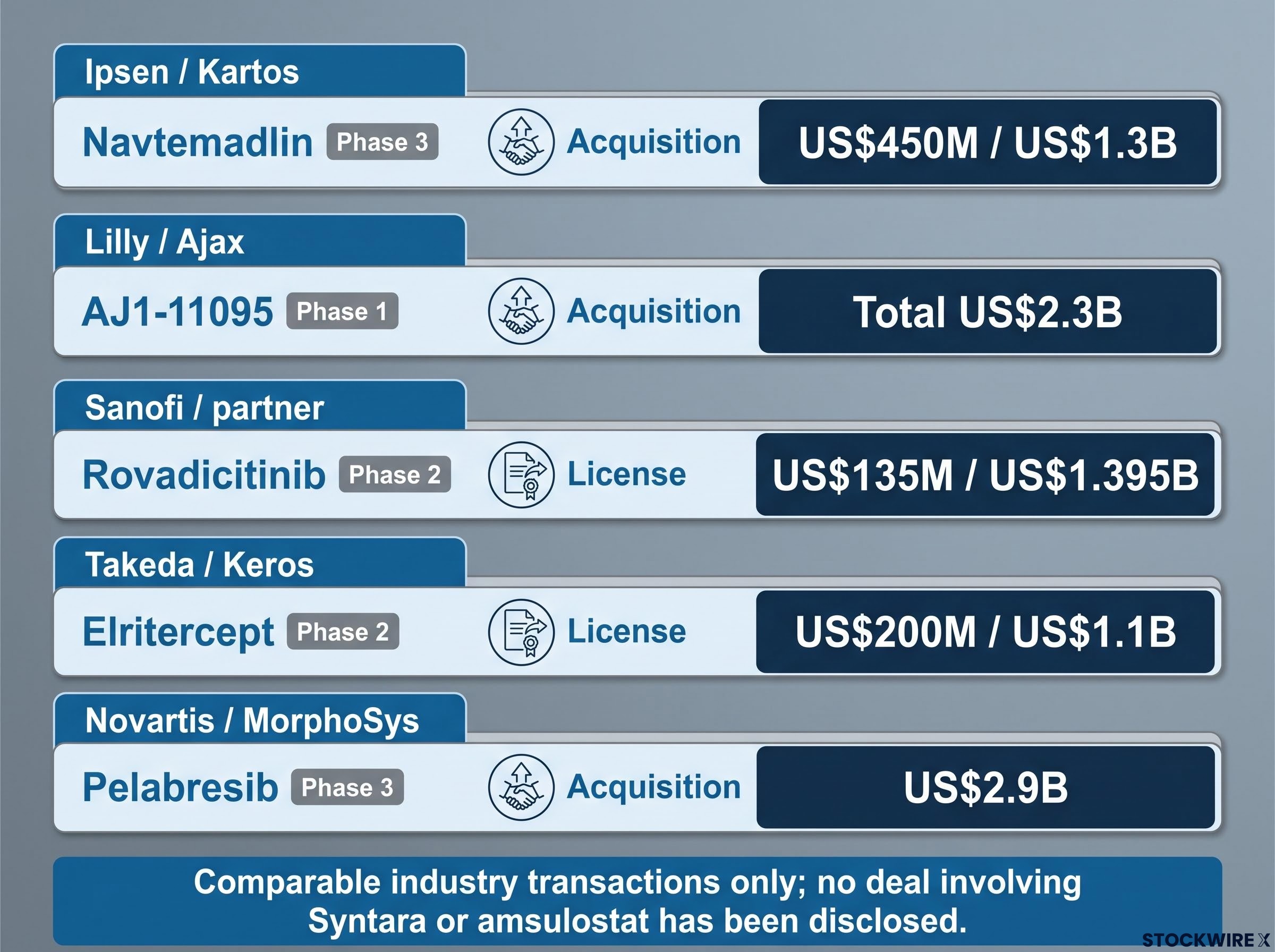
| Acquiror / Target | Drug | Phase at deal | Deal type | Upfront / Milestones (US$) |
|---|---|---|---|---|
| Ipsen / Kartos | Navtemadlin | Phase 3 | Acquisition | US$450M / US$1.3B |
| Lilly / Ajax | AJ1-11095 | Phase 1 | Acquisition | Total US$2.3B |
| Sanofi / partner | Rovadicitinib | Phase 2 | License | US$135M / US$1.395B |
| Takeda / Keros | Elritercept | Phase 2 | License | US$200M / US$1.1B |
| Novartis / MorphoSys | Pelabresib | Phase 3 | Acquisition | US$2.9B |
Pipeline diversification — Parkinson’s and scarring add optionality
Beyond amsulostat, two post-quarter readouts added further potential value catalysts across neurodegenerative disease and skin scarring.
SNT-4728 signal in Parkinson’s disease
Preliminary Phase 2 results for SNT-4728 showed a statistically significant reduction in brain inflammation in the putamen (right side), with a p-value of 0.0145. The putamen is a key brain region underlying the hallmark motor symptoms of Parkinson’s disease.
Of the patients on active treatment, 20 of 30 recorded a reduction in inflammation from baseline, while no significant change was detected in the placebo group. The measurement metric was binding potential (BPND), with final Phase 2 results due in Q3 2026.
The statistically significant putamen signal emerged from a high-conviction patient cohort: 95% of enrolled participants showed misfolded alpha-synuclein in cerebrospinal fluid and 90% experienced smell loss, strengthening the biological relevance of the inflammation reduction to actual Parkinson’s progression risk.
SNT-9465 hypertrophic scar programme
The global scar-treatment market is projected to reach US$50–55b by 2030. Syntara’s Phase 1b hypertrophic scar study is a randomised, double-blinded, placebo-controlled split-scar trial in adult participants (N=20).
The study reached 60% treatment commencement, with recruitment completion targeted for Q3 2026 and top-line safety and efficacy data anticipated in H2 2026.
The year ahead — multiple catalysts loaded into H2 2026
The update outlined a series of anticipated newsflow events across the pipeline for the second half of 2026:
- Complete SNT-4728 Phase 2 full results (Q3 2026)
- Amsulostat MDS interim safety and efficacy data (AZALOX and MESSAGE trials, with preliminary data anticipated Q4 2026)
- SNT-9465 top-line hypertrophic scar data (H2 2026)
- Amsulostat Phase 2b (BRIDGE-MF) trial progression
The company framed its investment thesis around three clinical-stage assets spanning blood cancers, fibrosis and neurodegenerative disease, creating multiple potential paths to value, with expected cash runway extended into FY28.
Don’t Miss the Next ASX Biotech Breakout
Big News Blast delivers FREE breaking ASX healthcare and biotech announcements directly to your inbox within minutes of release, complete with in-depth analysis. Join 20,000+ subscribers already getting the news before the market moves. Click the “Free Alerts” button at Big News Blast to stay ahead on every major ASX healthcare update.