
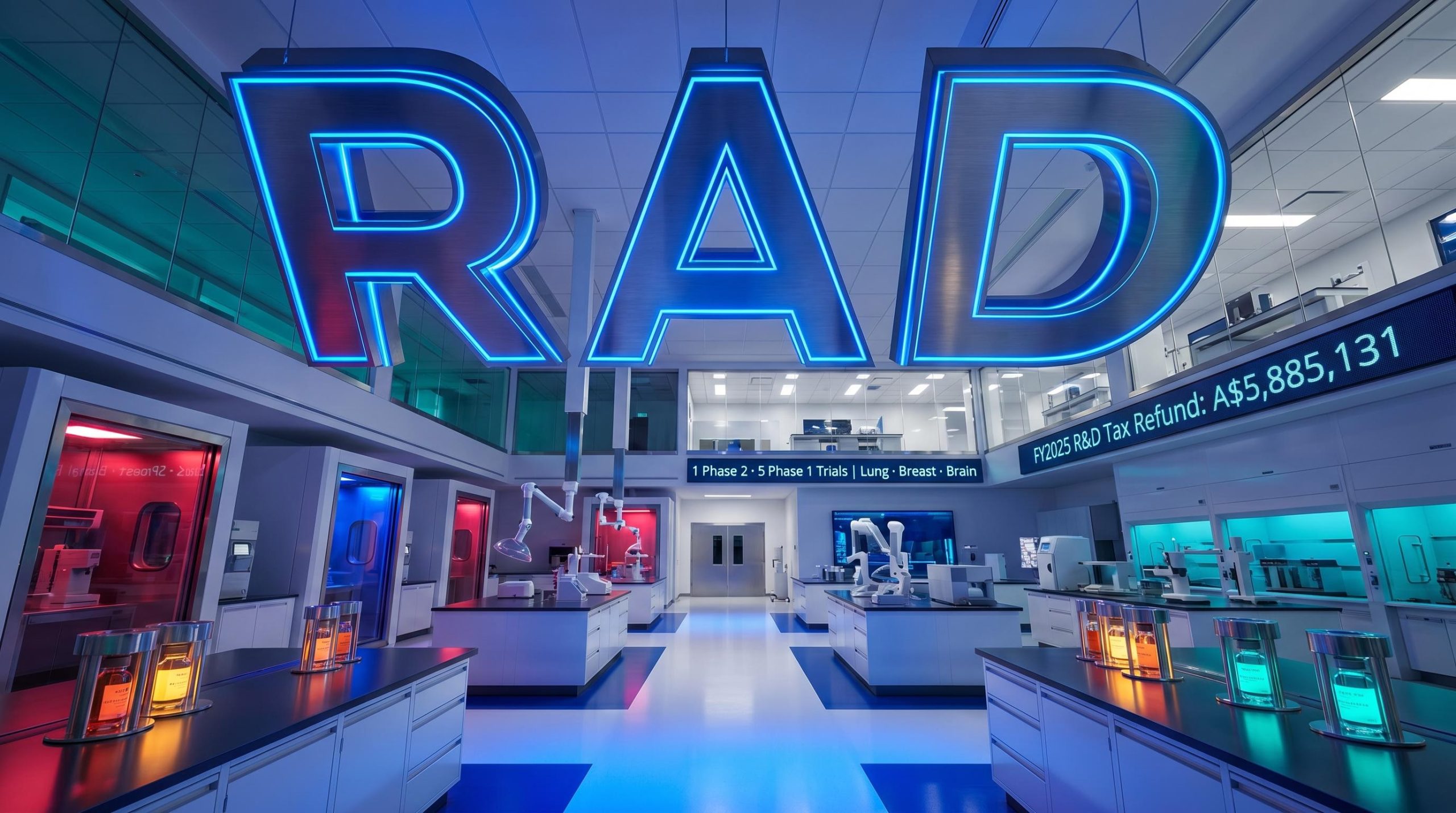
Radiopharm banks $5.9M R&D tax refund to fuel oncology pipeline
Radiopharm Theranostics (ASX: RAD, Nasdaq: RADX) has received its research and development (R&D) tax refund for the 2025 financial year, totalling A$5,885,131. The clinical-stage biopharmaceutical company will direct the funds towards continued development of its portfolio of radiopharmaceutical products for diagnostic and therapeutic applications.
The refund, which included A$104,475 in interest, was received under the Australian Government’s R&D Tax Incentive. That scheme provides eligible companies with a refundable tax offset of up to 43.5% on qualifying research activity.
When big ASX news breaks, our subscribers know first
What the refund means for Radiopharm’s funding position
The funds are earmarked for continued development of the product portfolio across both diagnostic and therapeutic applications. No cash balance, runway figure, or burn rate was disclosed in the announcement.
Board Authorisation
The announcement was authorised on behalf of the Radiopharm Theranostics Board of Directors by Executive Chairman Paul Hopper.
How the R&D Tax Incentive works (and why it matters to biotech investors)
The Australian Government’s R&D Tax Incentive allows eligible companies conducting qualifying research to claim a refundable tax offset of up to 43.5%. In practice, a portion of what a company spends on R&D can be returned as a cash refund.
Inside Radiopharm’s clinical pipeline
The refund ultimately supports Radiopharm’s radiopharmaceutical platform. The company develops radiopharmaceutical products for diagnostic and therapeutic use in cancers of high unmet medical need.
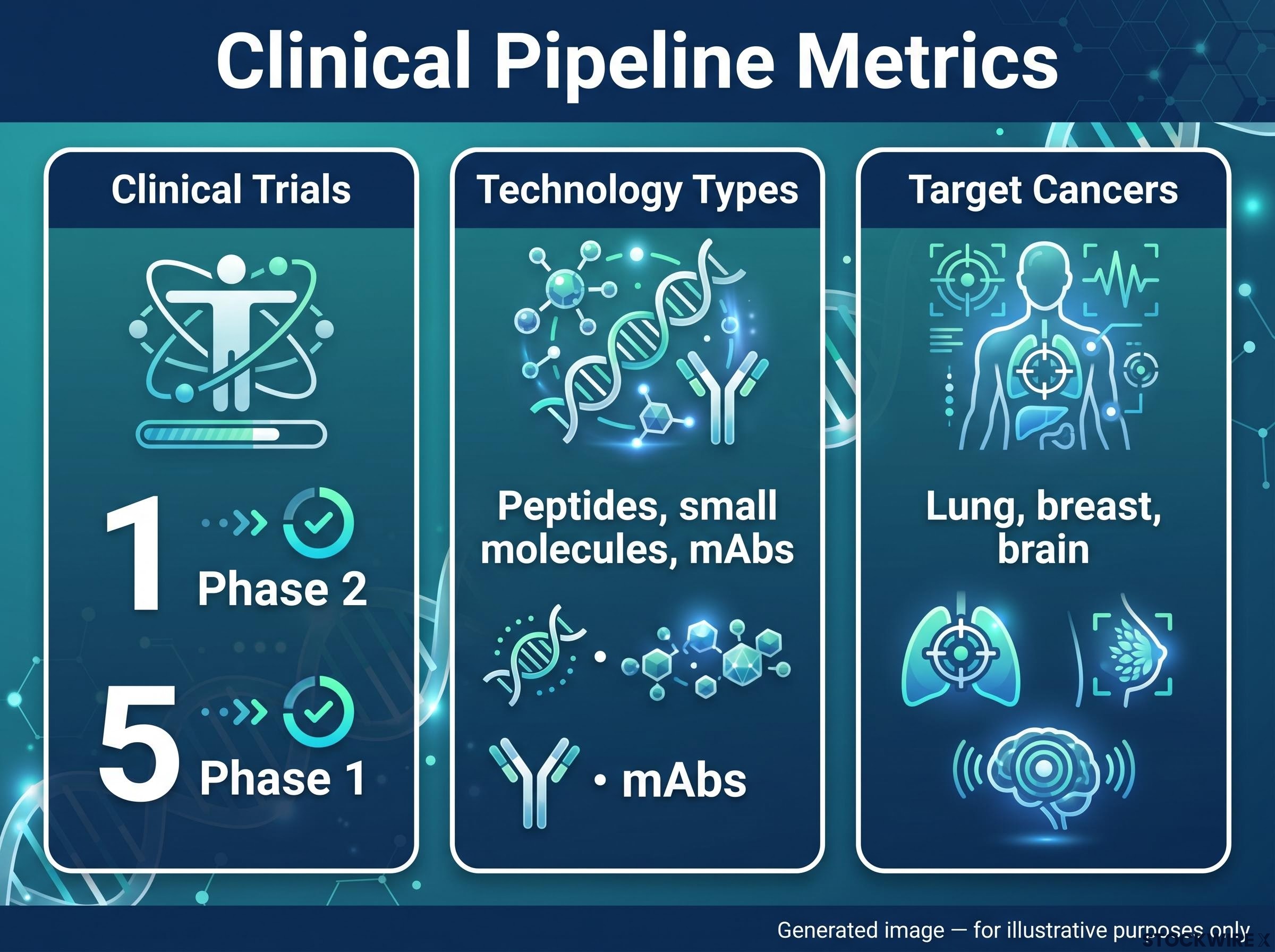
Its pipeline spans distinct and highly differentiated platform technologies, including peptides, small molecules, and monoclonal antibodies. The clinical program comprises one Phase 2 and five Phase 1 trials across a range of solid tumour cancers.
The RAD101 Phase 2b program is among the most advanced assets the refund supports, with interim data showing 90% concordance with MRI in brain metastases patients and a Siemens Healthineers supply agreement already in place for the planned Phase 3 registrational trial.
| Metric | Detail | Investor takeaway |
|---|---|---|
| Clinical trials | 1 Phase 2, 5 Phase 1 | Diversified pipeline |
| Technology types | Peptides, small molecules, mAbs | Spans distinct platform technologies |
| Target cancers | Lung, breast, brain | Large unmet-need markets |
What comes next
The refund supports ongoing advancement of Radiopharm’s pipeline across its diagnostic and therapeutic programs. No specific timelines, milestones, or catalysts were disclosed in the announcement.
Investors exploring the therapeutic pipeline that this funding supports will find our detailed coverage of the RAD202 HEAT trial cohort progression covers the DSMC safety clearance, dose escalation timeline through end of 2026, and the potential Phase 2 pathway into 2027.
Don’t Miss the Next Healthcare Breakthrough
Big News Blast delivers FREE breaking ASX healthcare and biotech news to your inbox within minutes of release, complete with in-depth analysis. Join 20,000+ investors already staying ahead of the market. Click the “Free Alerts” button at StockWire X to get the next market-moving announcement the moment it drops.