
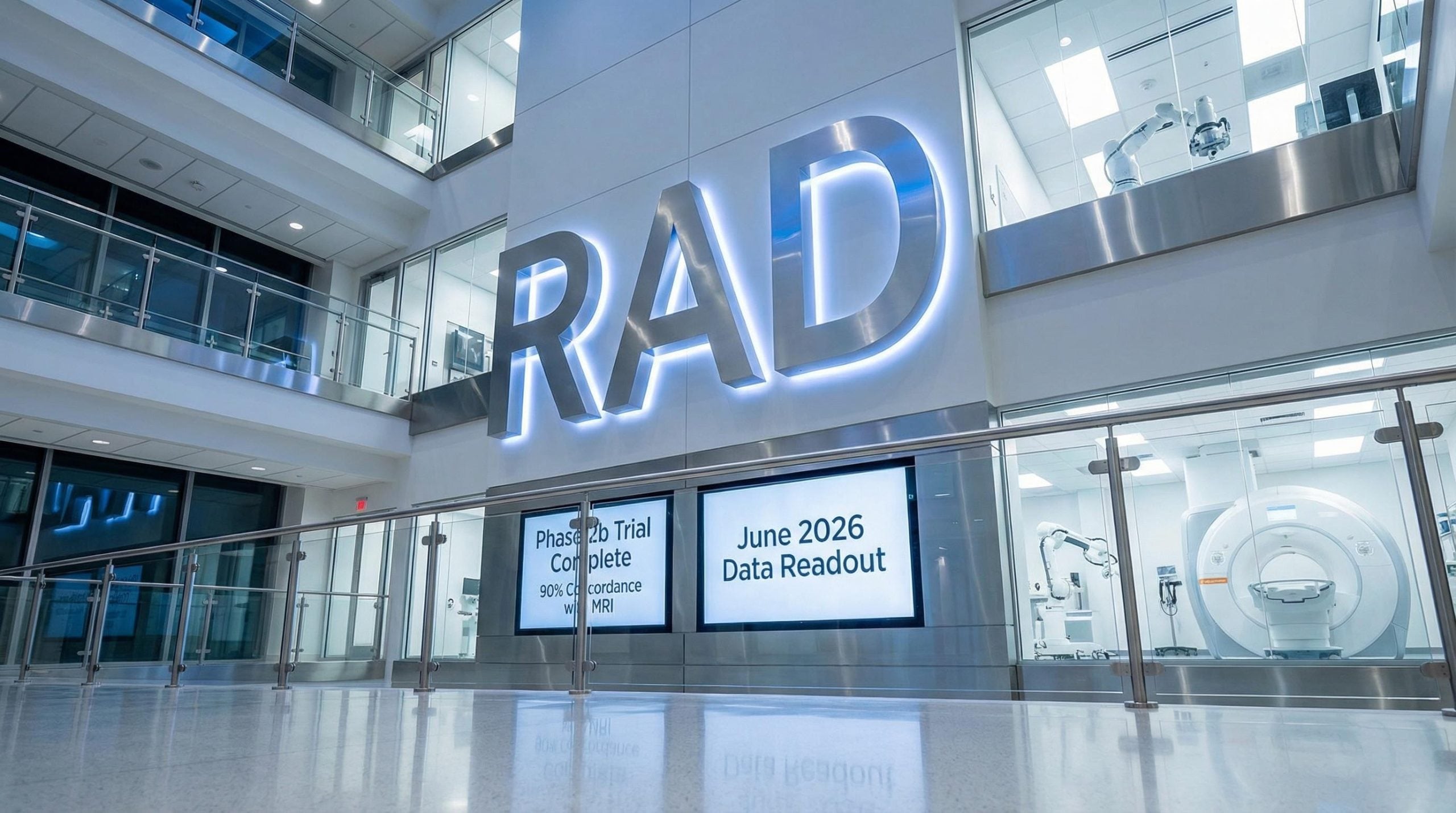
Radiopharm completes enrollment in Phase 2b brain metastases imaging trial
Radiopharm Theranostics (ASX: RAD) has completed patient enrollment in its U.S. Phase 2b clinical trial evaluating RAD 101 for the diagnosis of recurrent brain metastases, with interim data showing 90% concordance with MRI against the primary endpoint. The 30-patient trial is expected to deliver full results in June 2026, positioning the company to advance into a pivotal Phase 3 programme shortly thereafter.
RAD 101 has already secured FDA Fast Track Designation for distinguishing recurrent disease from treatment effects in brain metastases originating from solid tumours, including leptomeningeal disease. The designation typically accelerates regulatory review timelines and reflects the FDA’s recognition of RAD 101’s potential to address an area of high unmet medical need.
Riccardo Canevari, CEO and Managing Director
“Dosing the final patient in our most advanced diagnostic programme represents an important milestone for Radiopharm and underscores the continued momentum of our radiopharmaceutical pipeline. The interim results we have seen to date, demonstrating a high level of concordance with MRI, reinforce our confidence in RAD 101’s potential to address a critical unmet need in the accurate detection of recurrent brain metastases.”
The completion of enrollment removes recruitment risk from the trial and establishes a clear timeline for the primary endpoint readout. This June catalyst represents a binary event for investors, with positive results likely to trigger Phase 3 planning and potential partnership discussions across Radiopharm’s broader diagnostic platform.
When big ASX news breaks, our subscribers know first
What is RAD 101 and why does brain metastases imaging matter
RAD 101 is a novel imaging small molecule that targets fatty acid synthase (FASN), a multi-enzyme protein that catalyses fatty acid synthesis. FASN is overexpressed in many solid tumours, including brain metastases, making it a clinically relevant biomarker for cancer detection. By targeting FASN activity, RAD 101 aims to enable more accurate identification of cancer cells compared to current imaging methods.
Brain metastases occur when cancer spreads to the brain from primary tumours in other organs such as the lung, breast, or melanoma. In the U.S. alone, more than 300,000 patients are diagnosed annually with cerebral metastases. The incidence of intracranial metastatic disease continues to rise, driven in part by improvements in systemic therapies that provide more durable control of primary tumours, allowing patients to live longer but also increasing the likelihood of brain metastases developing.
The current standard of care for imaging brain metastases is contrast-enhanced magnetic resonance imaging (CE-MRI) with gadolinium. Whilst MRI remains the preferred method for initial diagnosis, it has notable limitations in follow-up surveillance scans:
- Difficulty distinguishing recurrent cancer from treatment effects: Post-treatment changes such as radiation necrosis can appear similar to active tumour on MRI, complicating clinical decision-making.
- Limited specificity in certain presentations: Leptomeningeal disease, where cancer cells spread to the membranes surrounding the brain and spinal cord, can be particularly challenging to visualise accurately.
- Constraints in optimising patient care: Inaccurate imaging can lead to delayed treatment changes, unnecessary interventions, or missed opportunities for effective therapy.
RAD 101’s ability to target metabolic activity specific to cancer cells offers a potential solution to these challenges. By providing complementary or superior diagnostic information to MRI, the imaging agent could improve the accuracy of surveillance scans and support more informed treatment decisions for patients with brain metastases.
The large and growing patient population, combined with the clinical limitations of existing imaging modalities, creates a substantial commercial opportunity if RAD 101 demonstrates clinical utility in the ongoing trial.
Trial design and pathway to Phase 3
The U.S. Phase 2b trial (NCT06777433) is a multicentre, open-label, single-arm study evaluating the diagnostic performance of 18F-RAD101 in 30 participants with confirmed recurrent brain metastases from solid tumours of different origins. The primary objective is to assess concordance between 18F-RAD101 positive lesions and those detected by conventional MRI with gadolinium.
Interim data to date has shown 90% concordance with MRI, an early validation signal that the imaging agent is detecting brain metastases at a level consistent with the current standard of care. The full primary endpoint readout is expected in June 2026, at which point Radiopharm plans to initiate dialogue with the FDA to define the optimal regulatory pathway for advancing RAD 101 into a U.S. Phase 3 pivotal trial.
| Element | Detail |
|---|---|
| Trial Phase | Phase 2b |
| Location | United States (multicentre) |
| Enrollment | 30 patients (complete) |
| Primary Endpoint | Concordance with MRI |
| Data Readout | June 2026 |
| Trial Identifier | NCT06777433 |
| FDA Designation | Fast Track |
The FDA Fast Track Designation applies specifically to RAD 101’s use in distinguishing recurrent disease from treatment effects in brain metastases originating from solid tumours, including leptomeningeal disease. This designation is granted to therapies and diagnostics that address unmet medical needs in serious conditions and can facilitate more frequent interactions with the FDA during development, potentially accelerating the path to approval.
Advancement to Phase 3 would represent significant clinical progress for Radiopharm’s most advanced diagnostic asset. A pivotal trial would aim to generate the evidence required for regulatory submission and, if successful, commercial approval in the U.S. market.
What comes next for Radiopharm
The June 2026 data readout represents the primary near-term catalyst for Radiopharm Theranostics. Positive results demonstrating high concordance with MRI, combined with any evidence of superior diagnostic performance in challenging cases such as leptomeningeal disease or treatment effect differentiation, would likely support the advancement of RAD 101 into Phase 3. Such an outcome could also attract partnership interest from larger pharmaceutical or diagnostic imaging companies seeking to access novel oncology imaging agents.
Beyond RAD 101, Radiopharm maintains a broader pipeline spanning diagnostic and therapeutic applications. The company is conducting one Phase 2 trial and five Phase 1 trials across a range of solid tumour cancers, including lung, breast, and brain metastases. The platform technologies in development include peptides, small molecules, and monoclonal antibodies, providing multiple shots on goal for both near-term commercial opportunities and longer-term value creation.
Key upcoming milestones and pipeline highlights include:
- June 2026: RAD 101 Phase 2b primary endpoint readout
- Regulatory dialogue: FDA discussions to define Phase 3 trial design and regulatory pathway
- Pipeline breadth: Six active clinical trials across diagnostic and therapeutic modalities
- Dual listing: ASX (RAD) and NASDAQ (RADX), providing access to both Australian and U.S. capital markets
The completion of enrollment in the RAD 101 trial removes execution risk from the recruitment phase and sets a defined timeline for the next value inflection point. Investors will be watching the June readout closely, as it will determine whether RAD 101 progresses to pivotal development and moves closer to potential commercialisation in a market with over 300,000 U.S. patients diagnosed with brain metastases annually.
Get Healthcare Breakthroughs Before the Market Moves
Join 20,000+ investors receiving FREE breaking ASX healthcare news delivered within minutes of release, complete with in-depth analysis. Click the “Free Alerts” button at Big News Blast to get real-time alerts the moment market-moving announcements break.