
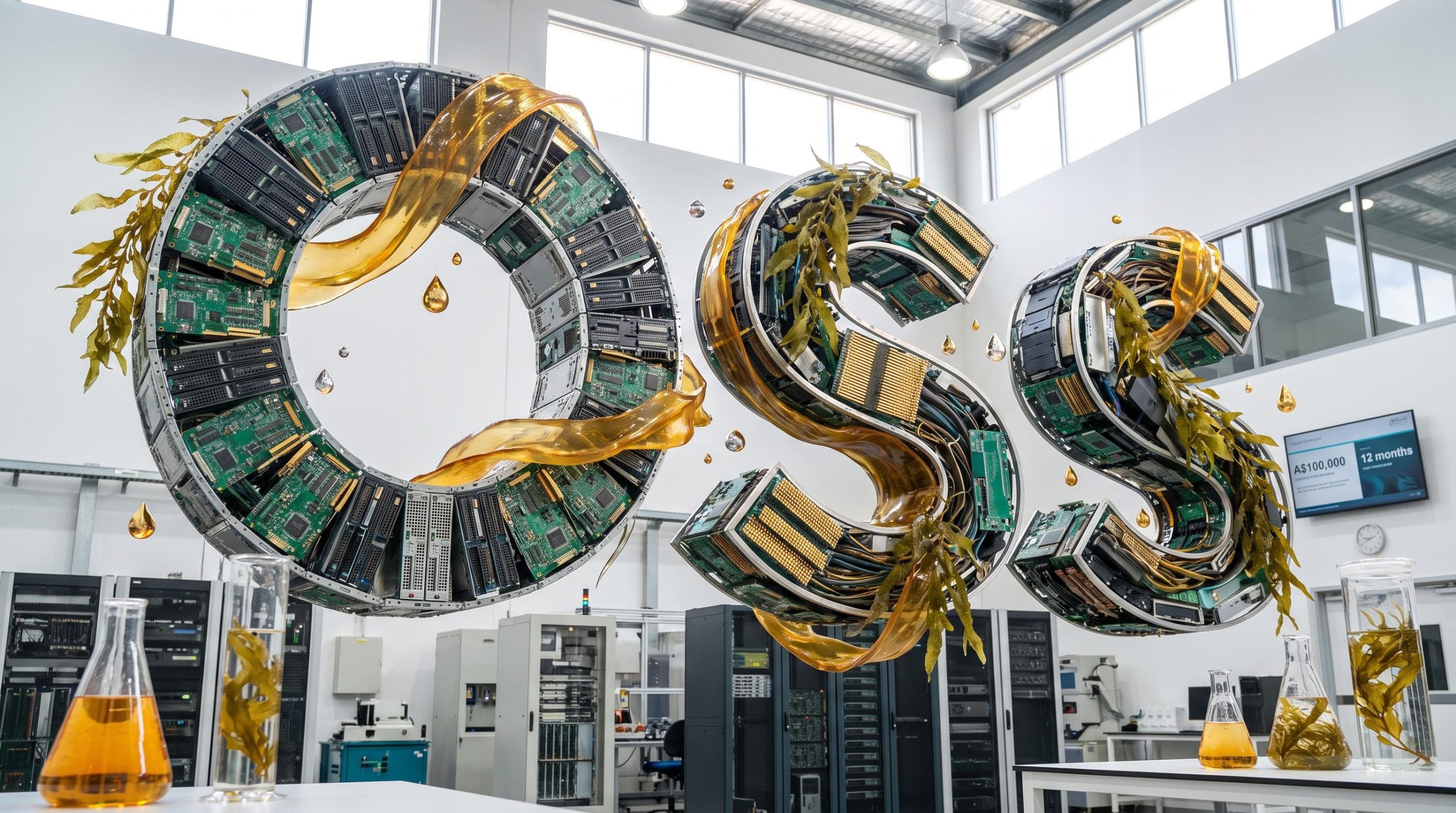
Ocean Sciences launches R&D program targeting gold and silver from retired data centre hardware
Ocean Sciences Ltd (ASX: OSS) is set to commence an R&D program investigating Sargassum-derived alginate to recover precious metals and rare earth elements from retired data centre hardware and other electronic waste. The Board has approved the program and authorised an initial funding allocation of A$100,000.
The program is anticipated to run for at least 12 months, with gold and silver the initial focus and rare earth elements also under investigation. For a commercial seaweed supply, research and development company, the initiative targets higher-value industrial applications for seaweed-derived materials.
When big ASX news breaks, our subscribers know first
Why retired data centre hardware is the target
Rapid expansion of data centre infrastructure, particularly in response to rising demand for artificial intelligence and cloud computing services, is creating a growing market for recycling and recovering valuable materials from retired hardware. Target materials include those recovered from servers and related equipment.
Data centre hardware is subject to regular replacement cycles, typically ranging from three to seven years depending on equipment type and operational requirements. These cycles generate a recurring supply of electronic waste containing recoverable gold and silver, as well as certain rare earth elements.
The composition of data centre hardware categories is well characterised, which allows precious metal content to be estimated. Actual content is confirmed by sampling and assay.
Frank Cannavo, Chairman
“Having spent much of my career in the mining industry, I recognise the significance of developing new technologies to recover valuable metals and minerals from alternative sources. The rapid growth of the data centre industry, together with the regular replacement of its hardware, presents an emerging opportunity to recover gold, silver and potentially rare earth elements from electronic waste.”
How seaweed alginate could recover precious metals
Alginate explained
Alginate is a naturally occurring compound extracted from brown seaweed, including Sargassum. Its chemical properties enable it to bind certain dissolved metal ions, providing a potential basis for selective capture and recovery of valuable metals.
The approach builds on peer-reviewed research demonstrating the potential of alginate-based materials to capture precious metals under laboratory conditions. The company’s objective is a seaweed-based recovery process with the potential to reduce energy and reagent use compared with conventional methods, and these potential benefits are yet to be assessed during the R&D program.
The three-stage research process
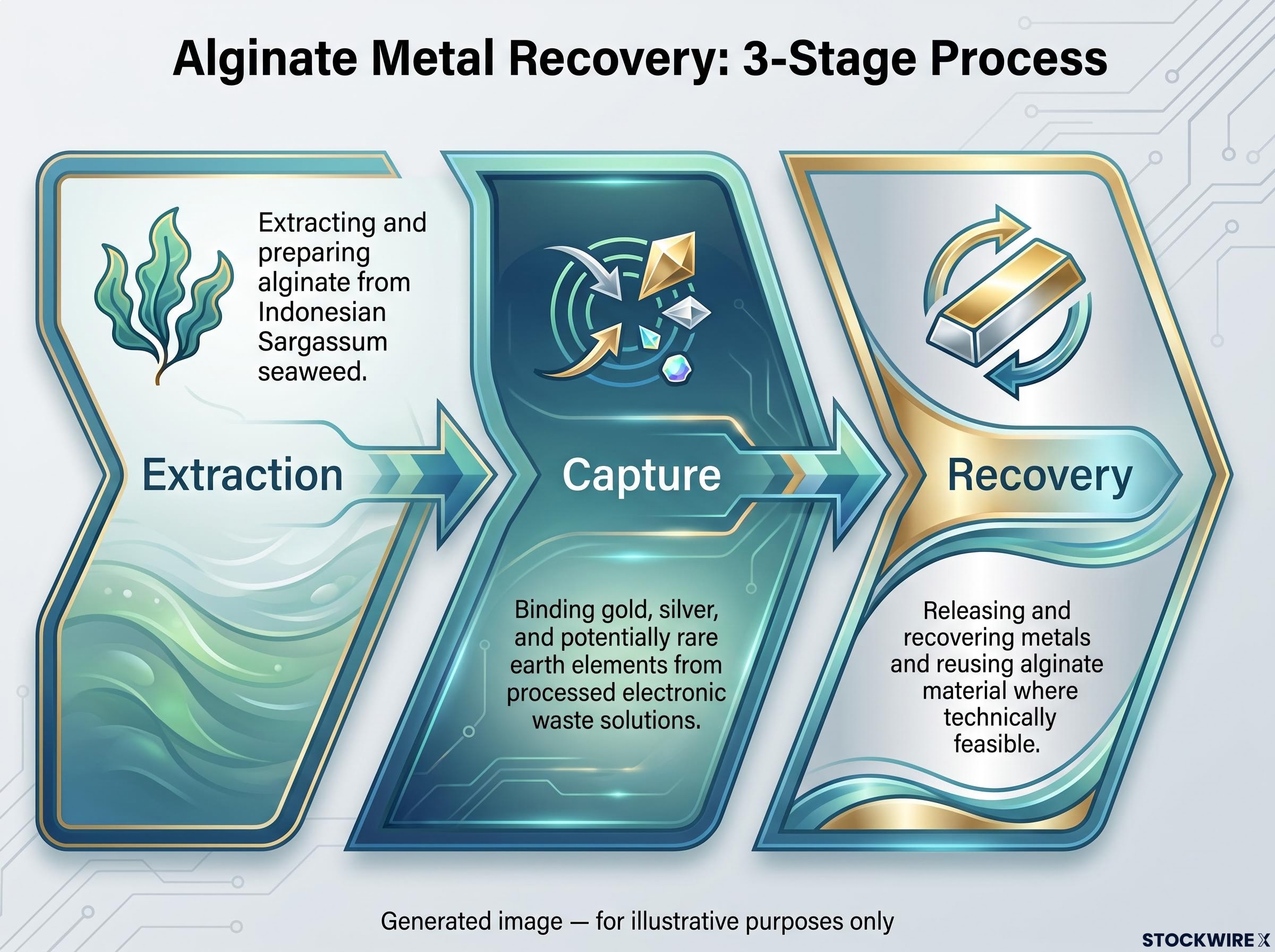
The program will investigate a three-stage process:
- Extraction: extracting and preparing alginate from Indonesian Sargassum seaweed for use in metal recovery applications.
- Capture: developing an alginate-based material capable of selectively binding gold and silver, and potentially rare earth elements, from solutions derived from processed electronic waste.
- Recovery: developing methods to release and recover the captured metals and elements and, where technically feasible, reuse the alginate-based material.
Commercial pathway and IP strategy
The company’s strategic objectives include:
- Data centre market: targeting the growing volume of retired data centre hardware containing identifiable and recoverable quantities of gold and silver, alongside potential opportunities for rare earth elements.
- Commercialisation: subject to successful research outcomes, developing a proprietary alginate-based metal recovery solution for commercial electronic waste recyclers and metal refiners.
- Industry collaboration: exploring partnerships with data centre operators, electronic waste recyclers and metal refiners.
- Existing capabilities: leveraging its Indonesian seaweed sourcing network and its Seaweed Innovation and Application Centre in Takalar Regency, South Sulawesi.
- Research collaboration: progressing preliminary discussions with Indonesia’s National Research and Innovation Agency (BRIN) regarding Sargassum alginate extraction, and exploring other research partnerships.
The Takalar Seaweed Innovation Centre is being developed in staged workstreams, and the company intends to bring selected outsourced R&D activities in-house there over time, which could support work such as alginate extraction.
Ocean Sciences intends to pursue intellectual property protection for proprietary developments, including the formulation of the alginate-based recovery material and associated metal capture and recovery processes. It proposes to lodge an initial patent application in Singapore, subject to appropriate intellectual property and patentability assessments.
| Item | Detail |
|---|---|
| Initial funding | A$100,000, authorised by the Board |
| Anticipated duration | At least 12 months |
| Initial metals | Gold and silver, with rare earth elements also investigated |
| IP plan | Proposed initial patent application in Singapore, subject to IP and patentability assessments |
The initiative remains at an early research and development stage. The company states there can be no assurance the proposed technology will achieve the technical performance, commercial scalability or economic viability necessary for commercial deployment.
What happens next for Ocean Sciences
- The R&D program is anticipated to run for at least 12 months, with Ocean Sciences to report progress as key technical milestones are achieved.
- Subject to successful laboratory results, the company intends to explore pilot-scale testing and potential collaboration with commercial electronic waste processors.
- Ocean Sciences proposes to lodge an initial patent application in Singapore, subject to appropriate intellectual property and patentability assessments.
For readers wanting to see how Ocean Sciences runs another seaweed R&D effort, our full explainer on the seaweed bio-fertiliser program covers the extraction and yield testing across red, green and brown seaweed formulations and the path to crop efficacy trials.
Don’t Miss the Next Biotech Breakthrough
Join 20,000+ investors getting FREE breaking ASX news delivered to their inbox within minutes of release, complete with in-depth analysis. Click the “Free Alerts” button at Big News Blast to receive market-moving updates the moment news breaks and stay ahead of the market.