
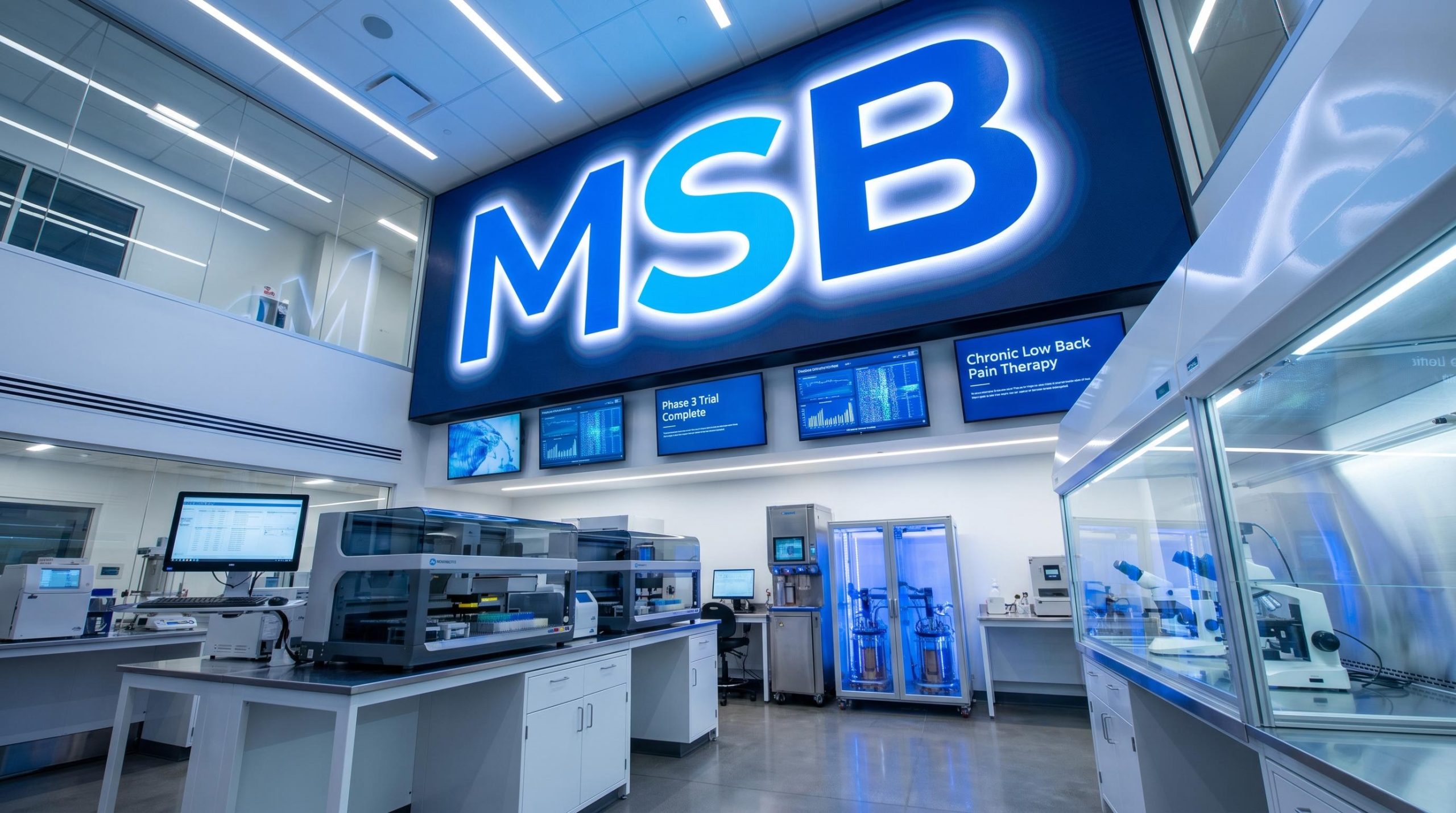
Mesoblast hits recruitment target in pivotal Phase 3 chronic low back pain trial
Mesoblast Limited (ASX: MSB) has achieved its patient recruitment target in the pivotal Phase 3 trial (MSB-DR004) evaluating rexlemestrocel-L for chronic low back pain associated with degenerative disc disease. This marks a significant milestone toward commercialisation of the therapy, which targets inflammatory processes underlying disc degeneration.
The placebo-controlled study will follow at least 300 patients randomised to receive either a single intra-discal injection of rexlemestrocel-L or sham control for 12 months. Top-line results are expected in mid-CY2027 following completion of patient follow-up, with an FDA filing targeted for Q3 CY2027.
Recruitment completion de-risks the timeline to regulatory filing and removes a key execution hurdle for the company’s largest commercial opportunity. Rexlemestrocel-L holds Regenerative Medicine Advanced Therapy (RMAT) designation from the FDA, providing eligibility for priority review once the Biologics License Application is submitted.
When big ASX news breaks, our subscribers know first
What is rexlemestrocel-L and how does it work?
Rexlemestrocel-L is a proprietary allogeneic stromal cell therapy targeting inflammatory processes underlying disc degeneration. The treatment involves a single intra-discal injection administered in combination with hyaluronic acid as a delivery agent.
The term “allogeneic” means the therapy is manufactured as an off-the-shelf product at industrial scale, rather than requiring patient-specific cell harvesting. This is Mesoblast’s second generation STRO3-immunoselected, industrially manufactured stromal cell product candidate.
The allogeneic approach enables scalable manufacturing and commercial distribution, unlike autologous cell therapies that require individualised production. This positions rexlemestrocel-L for broader market deployment if regulatory approval is secured.

Building on prior Phase 3 success
The MSB-DR004 trial seeks to confirm results from the earlier MSB-DR003 trial, where a single intra-discal injection of rexlemestrocel-L resulted in clinically meaningful reductions in pain and opioid usage for up to three years.
The primary endpoint is powered to demonstrate a significant difference in reduction of low back pain at 12 months between rexlemestrocel-L and sham controls.
Secondary endpoints include:
- Improvements in function
- Quality of life improvements
- Cessation of pain medication, including opioids
The confirmatory trial design with FDA-agreed endpoints positions rexlemestrocel-L for regulatory approval if results replicate prior success. The focus on opioid cessation addresses a critical unmet need, given discogenic back pain accounts for approximately 50% of prescription opioid usage in the US.
Regulatory advantages through RMAT designation
Rexlemestrocel-L holds Regenerative Medicine Advanced Therapy (RMAT) designation from the FDA for treatment of chronic low back pain due to degenerative disc disease. RMAT designation provides all benefits of Breakthrough and Fast Track designations, including rolling review and eligibility for priority review once the Biologics License Application is filed.
The FDA has previously agreed on the trial design, including the 300-patient randomised, placebo-controlled structure and the 12-month pain reduction primary endpoint as an approvable indication.
RMAT designation and FDA-agreed trial design reduce regulatory risk and may accelerate time to market approval. The alignment with regulatory requirements established during prior trial discussions provides a clear pathway to potential commercialisation.
Addressing the chronic low back pain market
Chronic low back pain caused by inflammation and degenerative disc disease is a leading cause of disability. The condition affects over 7 million people in the US alone, with an annual prevalence in the general US adult population of 10-30%.
Discogenic back pain accounts for approximately 50% of prescription opioid usage in the US, positioning rexlemestrocel-L as a potential non-opioid, disease-modifying therapy for a condition with significant unmet medical need.
| Metric | Value |
|---|---|
| US prevalence | Over 7 million people |
| Annual prevalence in US adults | 10-30% |
| Share of prescription opioid usage | ~50% |
| Potential peak year revenue | >US$10 billion |
| Market penetration assumed | Single digit |
The large addressable market with clear unmet need and opioid epidemic tailwinds creates substantial revenue potential even at modest penetration rates. A potential blockbuster indication with peak year revenue exceeding US$10 billion at single digit market penetration represents a significant commercial opportunity for Mesoblast.
CEO commentary
Silviu Itescu, Chief Executive, Mesoblast
“This is a major milestone toward delivering on our corporate goal of bringing to market a non-opioid, disease-modifying therapy for patients suffering from chronic low back pain, a condition with significant unmet medical need.”
Key milestones and timeline ahead
The pathway forward provides clear visibility to potential FDA approval with the de-risked recruitment phase now complete:
- Patient recruitment target achieved (April 2026)
- 12-month patient follow-up period ongoing
- Top-line results expected mid-CY2027
- FDA filing targeted Q3 CY2027
- Priority review eligibility upon BLA submission due to RMAT designation
A positive readout in mid-CY2027 would trigger regulatory filing within approximately three months. The RMAT designation provides eligibility for priority review, potentially accelerating the approval timeline once the Biologics License Application is submitted.
Mesoblast’s broader platform comprises remestemcel-L and rexlemestrocel-L allogeneic stromal cell technology platforms. Ryoncil (remestemcel-L-rknd) is the first FDA-approved mesenchymal stromal cell therapy for steroid-refractory acute graft versus host disease in paediatric patients.
Rexlemestrocel-L is also being developed for heart failure, providing multiple development pathways for the technology platform. The company has established commercial partnerships in Japan, Europe and China.
Mesoblast holds a strong intellectual property portfolio with over 1,000 granted patents or patent applications covering mesenchymal stromal cell compositions of matter, methods of manufacturing and indications. These granted patents and patent applications provide commercial protection extending through to at least 2044 in all major markets.
Chronic low back pain represents the largest near-term commercial opportunity within a broader platform of validated cell therapy technologies. Successful trial completion and regulatory approval would position Mesoblast to address a significant unmet medical need whilst establishing a substantial revenue stream to support the company’s broader development programmes.
Want the Next Healthcare Breakthrough in Your Inbox?
Join 20,000+ investors getting FREE breaking ASX news delivered within minutes of release, complete with in-depth analysis. Click the “Free Alerts” button at Big News Blast to receive real-time alerts the moment market-moving announcements drop across Healthcare, Tech, Finance and more.