
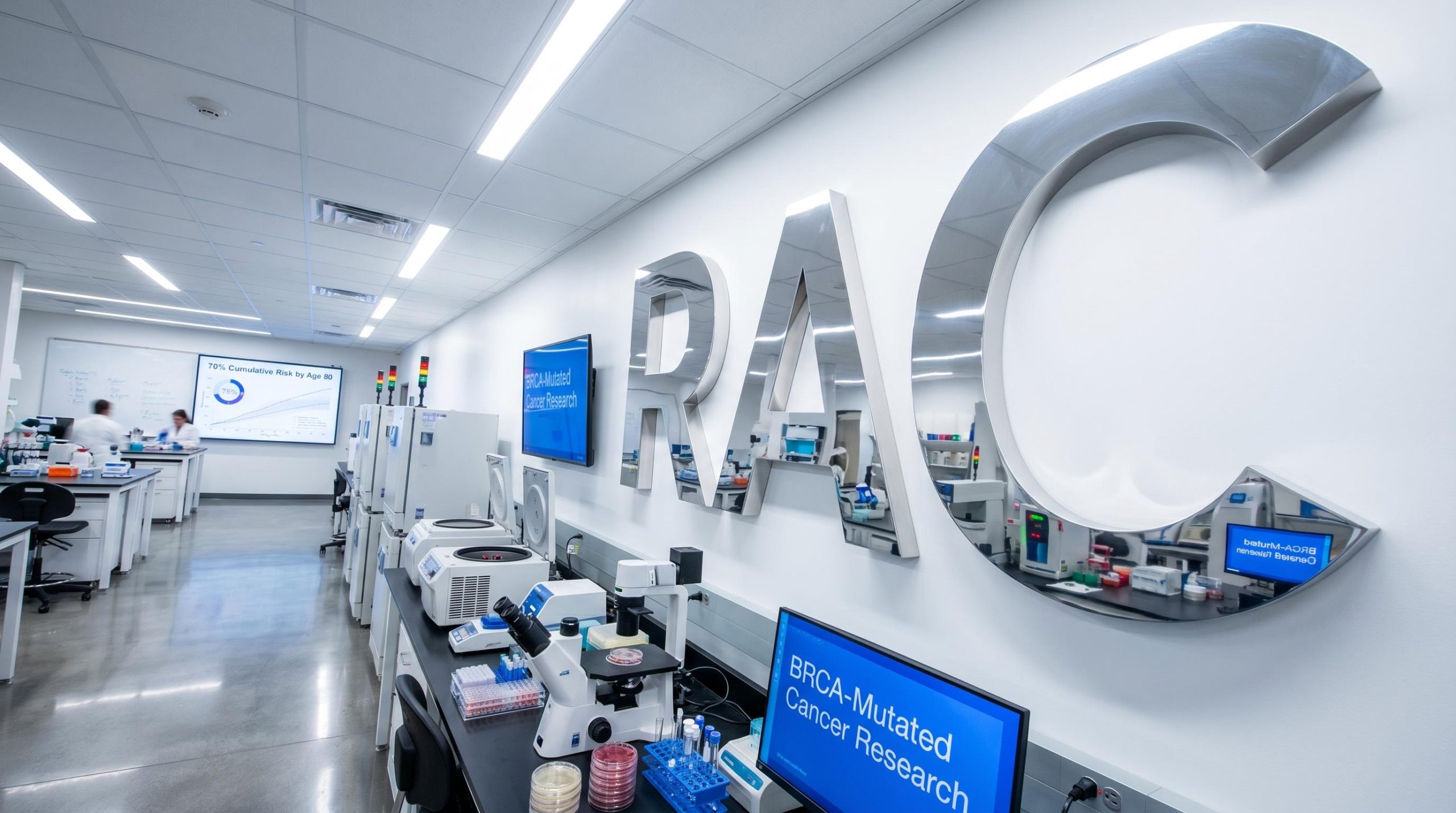
Racura secures NSW Government funding to study bisantrene in BRCA-mutated cancers
The University of Wollongong and Racura Oncology have been awarded funding under the NSW Government TechVouchers programme for a project titled “Efficacy of (E,E)-bisantrene (RCDS1) in BRCA-Mutated Cancers.” The collaboration aims to evaluate (E,E)-bisantrene’s anticancer activity in preclinical BRCA-mutated breast and ovarian cancer models, with results expected over the next 12 months and publication in high-impact scientific journals anticipated.
Race Oncology (ASX: RAC) is leveraging external validation to advance its pipeline beyond current clinical programmes. The research will be led by Dr Saurabh Satija at the University of Wollongong.
BRCA mutation carriers face a 70% cumulative risk of developing breast cancer by age 80. BRCA mutations are responsible for up to 25% of all cancers in patients with a family history of breast or ovarian cancer, representing a significant patient population with inherited genetic predisposition.
The government-backed funding reduces capital burden whilst advancing pipeline optionality beyond Racura’s current clinical programmes in acute myeloid leukaemia (AML) and non-small cell lung cancer (NSCLC).
When big ASX news breaks, our subscribers know first
What are BRCA mutations and why do they matter for cancer treatment?
BRCA1 and BRCA2 are breast cancer susceptibility genes. Loss-of-function mutations in these genes predispose individuals to breast and ovarian cancer, creating a high-risk patient group with significant unmet medical need.
The patient population size highlights the therapeutic opportunity:
- 70% cumulative breast cancer risk by age 80 for mutation carriers
- Up to 25% of hereditary breast and ovarian cancers linked to BRCA mutations
| Statistic | Figure | Source |
|---|---|---|
| Cumulative breast cancer risk by age 80 (BRCA carriers) | 70% | Kuchenbaecker et al. JAMA 2017 |
| Proportion of hereditary breast/ovarian cancers from BRCA mutations | Up to 25% | Armstrong et al. Clin Epidemiol 2019 |
This large addressable patient population with inherited genetic predisposition represents a defined market opportunity for targeted therapies.

How bisantrene’s mechanism may target BRCA-mutated tumours
G-quadruplex stabilisation is the primary mechanism of action of (E,E)-bisantrene. Studies undertaken by Racura and collaborators have established this mechanism through research announced on 2 October 2025 and 22 April 2026.
G-quadruplex-stabilising agents have been found to have heightened efficacy in BRCA-mutated tumours, according to research published in Nature Communications in 2017 on the compound CX-5461. The preclinical collaboration is designed to generate evidence supporting RC220’s development as a targeted therapy for BRCA-mutated cancers.
The scientific rationale linking an established mechanism to a specific tumour type strengthens the case for indication expansion beyond current AML and NSCLC programmes.
Dr Saurabh Satija to lead research collaboration
Dr Satija brings substantial credentials to the collaboration. He has published over 50 peer-reviewed articles, secured multiple patents, and been recognised among the world’s top 2% most cited researchers from 2022 to 2025. His specialisation centres on translational biomedical research.
Dr Saurabh Satija
“I’m really excited to work with Racura on this project. It’s a great opportunity to contribute to the development of new anti-cancer strategies and be part of work that has real potential to improve patient outcomes.”
Racura’s broadening clinical pipeline
The BRCA-mutated cancer collaboration expands Racura’s existing clinical and preclinical programmes across multiple oncology indications:
- Phase 3 clinical programme in acute myeloid leukaemia (AML)
- Phase 1a/b programme in mutant epidermal growth factor receptor non-small cell lung cancer (EGFRm NSCLC)
- Phase 1a/b combination programme with doxorubicin targeting cardioprotection and enhanced anticancer activity in solid tumours
- Preclinical evaluation in BRCA-mutated breast and ovarian cancers (this collaboration)
Racura’s existing academic collaborations include Astex, Emory University, Purdue University, MD Anderson, Sheba City of Health, UNC School of Medicine, University of Wollongong, and University of Newcastle. The company is actively exploring partnerships, licence agreements, or commercial merger and acquisition to accelerate patient access to RC220.
The government grant validates external interest in Racura’s platform. Multiple clinical and preclinical programmes across oncology indications provide diversified development pathways.
CEO and Managing Director Dr Daniel Tillett
“Racura is grateful to the NSW Government for supporting this important research collaboration with the University of Wollongong. Individuals who have inherited BRCA mutations are at an extremely high risk of developing breast or ovarian cancer and there is a pressing need for improved treatment options.”
Want the Next Biotech Breakthrough in Your Inbox?
Join 20,000+ investors getting FREE breaking ASX healthcare news delivered within minutes of release, complete with in-depth analysis. Click the “Free Alerts” button at Big News Blast to start receiving real-time alerts the moment market-moving announcements drop.