
Invion and Percheron launch preclinical Photosoft and VISTA combination research
Invion Limited (ASX: IVX) has entered a preclinical research collaboration with Percheron Therapeutics Limited (ASX: PER) to evaluate HMBD-002, an anti-VISTA monoclonal antibody, in combination with its Photosoft™ INV043 next-generation photodynamic therapy platform. The agreement is a non-exclusive research collaboration, effective 20 October 2026.
Both HMBD-002 and INV043 are at clinical trial stage and have completed Phase 1 studies as monotherapies. According to Invion, the Company could initiate a combination approach in humans relatively swiftly upon receipt of promising data. The announcement does not disclose any study timelines.
Prof Thian Chew, Executive Chair and CEO, Invion
“This collaboration brings together two highly complementary technologies with the potential to reshape how solid tumours are treated…”
Prof Chew also said that positive preclinical data could allow the company to “move swiftly toward clinical evaluation.”
When big ASX news breaks, our subscribers know first
Why the combination makes scientific sense
Photodynamic therapy and VISTA explained
Photodynamic therapy (PDT) uses a photosensitising compound that, when activated by a specific wavelength of light, produces cytotoxic reactive oxygen species and destroys tumour cells. VISTA is described in the announcement as a novel immune checkpoint, a pathway targeted by immunotherapy, and HMBD-002 is a monoclonal antibody that blocks it.
The stated biological rationale is that Photosoft-initiated tumour destruction may create an environment in which an immune-directed therapy could generate additional anti-tumour activity. Photosoft-driven elimination of tumour cells can trigger an immune response, and blocking VISTA may enhance it further.
Invion’s Photosoft platform is a portfolio of a few hundred patent protected novel photosensitiser compounds, being developed as a next-generation approach.
Invion has also brought in PDT specialist Dr Colin Hopper as Clinical Advisor, with a remit to prioritise indications across the Photosoft compound library.
The Peter Mac precedent
An in vivo study at the Peter MaCallum Cancer Centre (Peter Mac) in 2024 found that INV043, combined with an FDA-approved immune checkpoint inhibitor (ICI), resulted in ~80% control of anal squamous cell carcinoma. ICI therapy alone achieved ~12% control.
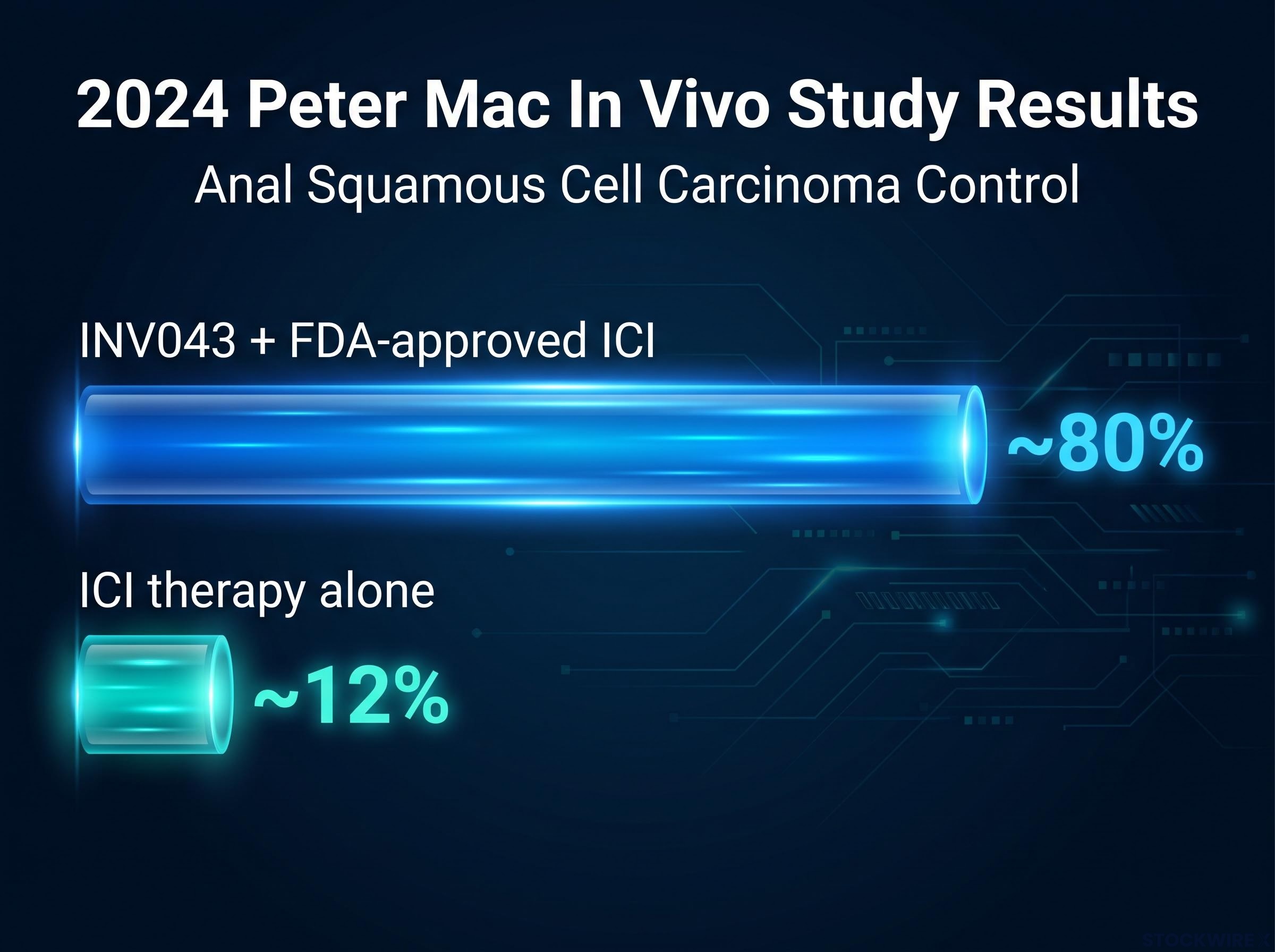
This has led to preparations for a combination INV043 and ICI clinical trial in anogenital cancers with Peter Mac. That result relates to INV043 with an anti-PD-1 inhibitor, not to HMBD-002.
The two mechanisms in the new collaboration are:
- INV043: designed to destroy tumour tissue and prime the immune system.
- HMBD-002: designed to modulate the immunosuppressive tumour microenvironment by blocking VISTA.
Dr Michael Baker, Managing Director and CEO, Percheron
“We believe there is a strong scientific rationale for investigating whether these distinct mechanisms can work together to generate enhanced anti-tumour activity…”
Where the two assets stand
The table below summarises the clinical position of each asset as described in the announcement.
| Item | INV043 (Invion) | HMBD-002 (Percheron) |
|---|---|---|
| Type | Next-generation photodynamic therapy (Photosoft™ platform) | Anti-VISTA monoclonal antibody (minperstobart) |
| Stage | Clinical-stage; **Phase 1** completed as a monotherapy | Clinical-stage; **Phase 1** completed as a monotherapy |
| Clinical history | Evaluated clinically in prostate cancer and non-melanoma skin cancers; being developed across several solid tumour indications | Final Phase 1 data in **48 patients** presented **April 2026**, showing the drug was safe and well tolerated, with signals of potential clinical efficacy |
On market context, the announcement cites third-party sources stating that solid tumours represent more than 90% of newly diagnosed cancer cases. It also cites Data Bridge Market Research as valuing the solid tumour market at $362 billion as of 2024.
Invion’s INV043 skin cancer trial closed recruitment with no serious adverse events and a 79% disease control rate across 14 patient readouts, although the results remain preliminary and unaudited.
Agreement terms and what investors should watch
Key terms
The key terms of the agreement are:
- Each party supplies its respective therapeutic technology and bears its own internal costs.
- Approved external study costs are shared equally between the parties.
- Each party retains full ownership of its existing intellectual property.
- If new intellectual property is created jointly, the parties will discuss appropriate commercial arrangements “in good faith (but without obligation)”.
- The agreement is subject to standard termination clauses.
The collaboration does not provide either party with commercial rights to the other party’s technology. If results support further development, the parties may discuss a potential future collaboration or commercial arrangement in good faith (but without obligation), with any commercial rights subject to a separate definitive agreement. The announcement does not disclose financial payments, milestones or study timelines.
Investment thesis and next steps
The announcement states that positive preclinical findings could provide scientific rationale for further development of the combination and broaden the potential opportunities for HMBD-002 in solid tumours. For Invion, the work would test Photosoft alongside an immunotherapy beyond the anogenital cancer programme with Peter Mac, with external study costs shared equally.
The next development to watch is the commencement of the preclinical studies and the data they generate. Dr Baker said Percheron looks forward to “commencing the studies and generating the data.” Clinical evaluation of the combination would depend on promising findings, and no start dates are given.
This remains an early-stage preclinical collaboration, and the announcement does not report any efficacy data for the HMBD-002 and Photosoft combination.
Don’t Miss the Next Biotech Breakout
Join 20,000+ investors getting FREE breaking ASX news delivered within minutes of release, complete with in-depth analysis and the full announcement. Click the “Free Alerts” button at Big News Blast to receive healthcare and biotech updates the moment market-moving news breaks.