
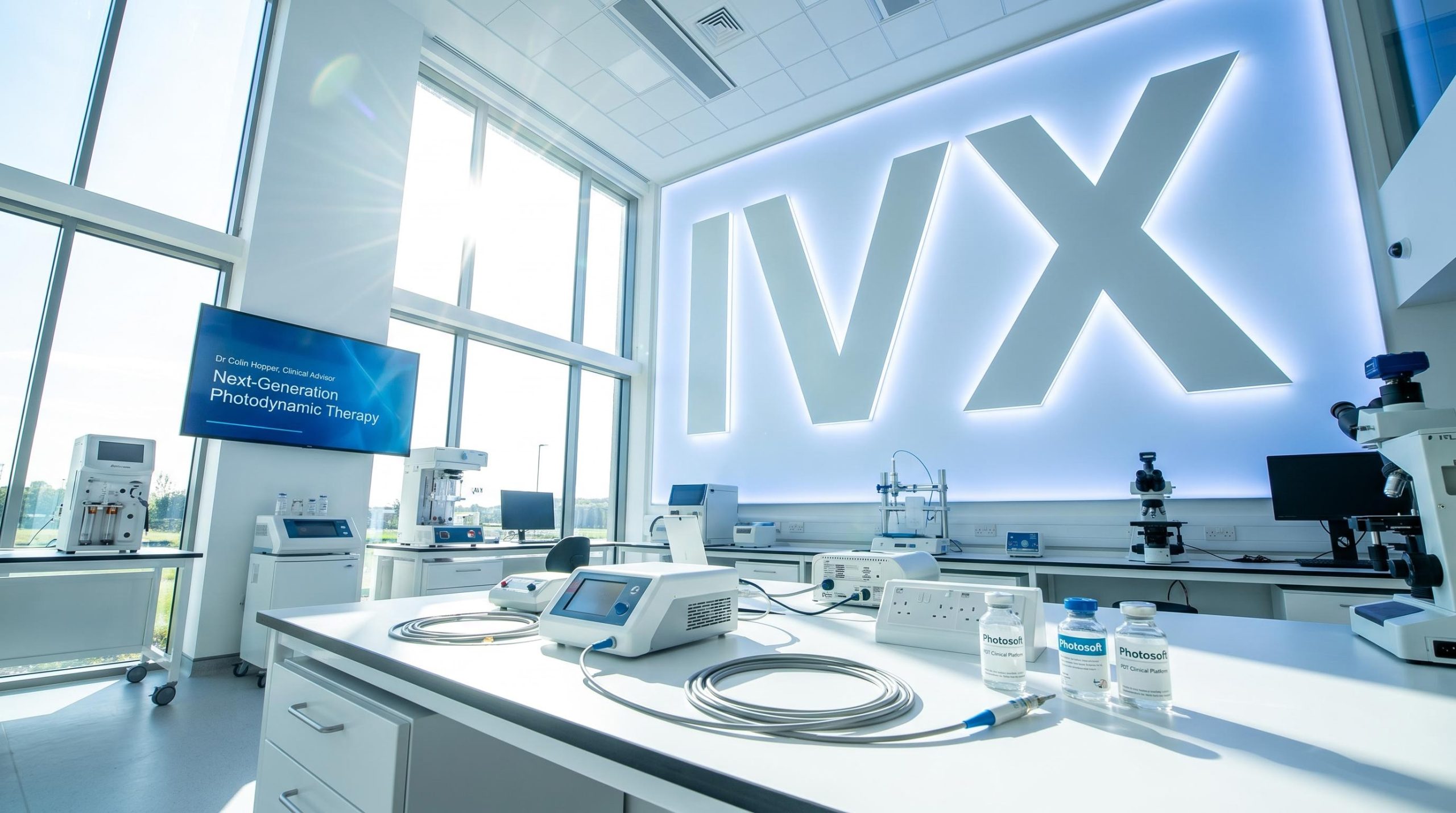
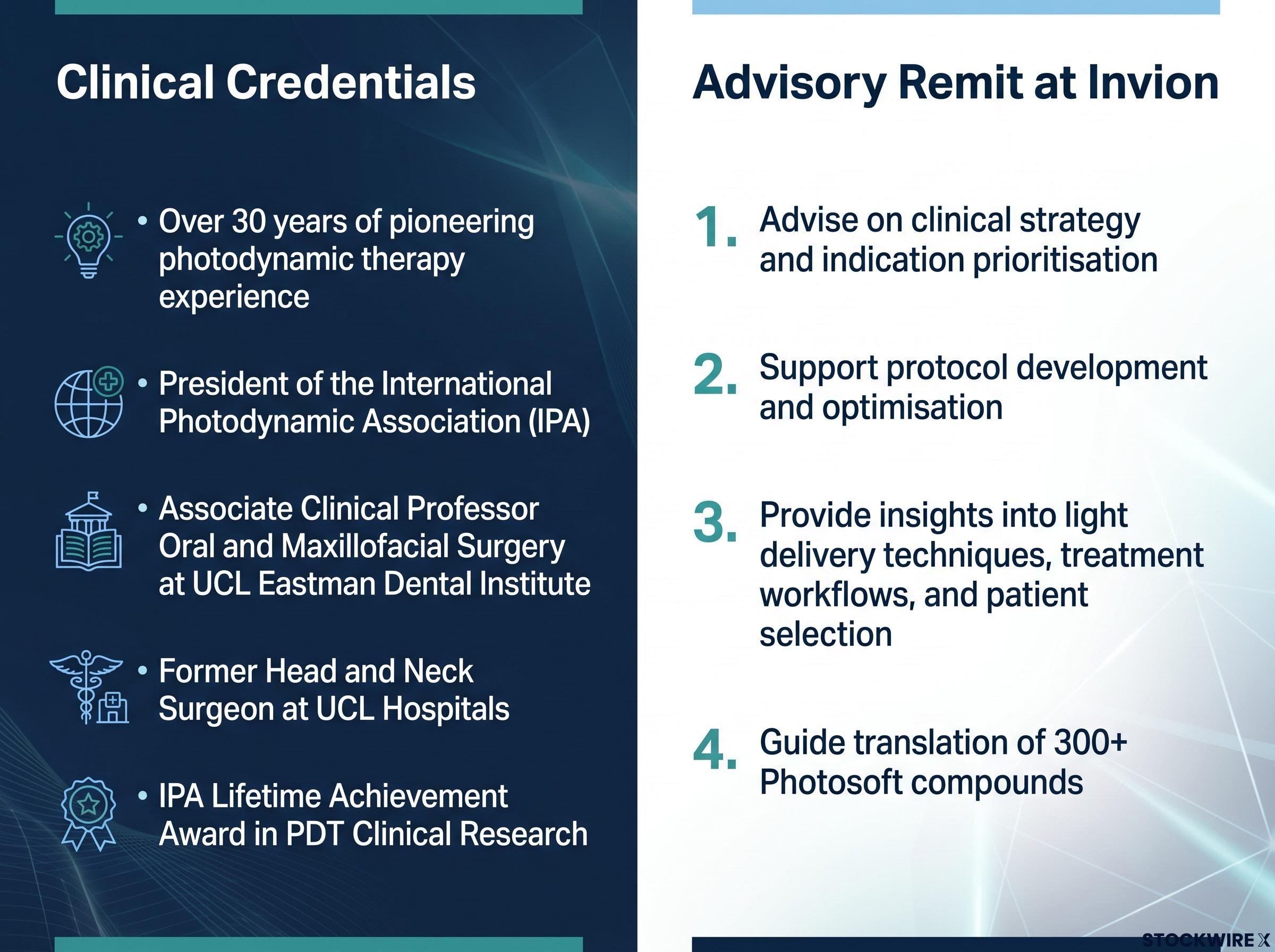
Invion has appointed Dr Colin Hopper, President of the International Photodynamic Association, as Clinical Advisor to support the clinical development of its Photosoft platform. Dr Hopper brings over 30 years of pioneering photodynamic therapy experience and holds senior academic appointments at University College London, including Associate Clinical Professor Oral and Maxillofacial Surgery at UCL Eastman Dental Institute and former Head and Neck Surgeon at UCL Hospitals.
The appointment positions Invion to leverage world-leading clinical expertise as it progresses its library of 300+ proprietary Photosoft compounds across oncology, infectious disease, and other therapeutic areas. Dr Hopper’s role centres on clinical strategy, indication prioritisation, and protocol optimisation for the company’s next-generation PDT platform.
Invion appoints global PDT leader Dr Colin Hopper as Clinical Advisor
Dr Hopper’s credentials extend beyond his IPA presidency. He has led one of the world’s largest and longest-running clinical PDT programmes, documenting hundreds of treatments and establishing PDT as a validated therapeutic option for head and neck cancers and other neoplastic conditions. His contributions to the field earned him the IPA Lifetime Achievement Award in PDT Clinical Research.
The appointment signals a strategic capability uplift as Invion translates laboratory research into clinical pathways. Dr Hopper’s three decades of clinical experience in oncology, antimicrobial applications, fluorescence diagnostics, and image-guided interstitial PDT provides Invion with technical depth critical for protocol design and regulatory engagement.
His advisory remit targets key decision points in the development pathway. Access to this expertise could de-risk indication selection, where prioritising the wrong therapeutic area can consume years of development time and capital without generating viable commercial outcomes.
When big ASX news breaks, our subscribers know first
What is photodynamic therapy and why does it matter?
Photodynamic therapy uses light-activated compounds called photosensitisers to selectively destroy diseased cells. The photosensitiser accumulates in target tissue, and when exposed to specific wavelengths of light, generates reactive oxygen species that trigger cell death.
Invion’s Photosoft technology represents what the company describes as next-generation PDT. The platform uses non-toxic photosensitisers designed to minimise side effects whilst maintaining therapeutic efficacy. This approach offers a less invasive alternative to surgery for certain conditions.
The technology’s therapeutic breadth extends across oncology, infectious diseases (including antibiotic-resistant bacteria), and other indications such as atherosclerosis. Clinical expertise proves essential in PDT deployment because treatment success depends on precise light delivery techniques, patient selection criteria, and protocol design specific to each indication.
Despite clinical validation, PDT remains underutilised in mainstream medicine. Expert guidance from practitioners who have implemented PDT at scale could accelerate both clinical adoption and commercial pathways for Photosoft-based therapies.
The INV043 skin cancer trial has already generated early clinical signals supporting this approach, with statistically significant lesion size reductions recorded across 12 treated SCC lesions and no pain reported during or after treatment, a profile that distinguishes Photosoft from currently approved PDT options.
Dr Hopper’s advisory scope
The announcement outlined four key responsibilities for Dr Hopper’s advisory role:
- Advise on clinical strategy and indication prioritisation across Invion’s therapeutic pipeline
- Support protocol development and optimisation for Photosoft-based therapies to enhance treatment efficacy and patient outcomes
- Provide insights into light delivery techniques, treatment workflows, and patient selection criteria drawn from decades of clinical implementation
- Guide the translation of 300+ Photosoft compounds across oncology, infectious disease, and other therapeutic areas
This structured remit focuses on high-value clinical decisions rather than general consultation. Indication prioritisation directly impacts capital allocation, as selecting optimal therapeutic targets determines which development programmes receive funding and management focus.
Protocol optimisation similarly influences both timelines and costs. Well-designed clinical protocols can reduce patient recruitment challenges, improve data quality, and strengthen regulatory submissions.
Leadership commentary
Dr Colin Hopper, Clinical Advisor
“The opportunity to work closely with Invion resonates with my lifetime mission to bring PDT into mainstream clinical practice. Invion’s Photosoft provides a compelling next step in this journey, offering a new generation of potentially safer and more efficacious PDT compounds that could reach more patients and indications than ever before. I am pleased to join Invion at this pivotal stage and look forward to helping shape the clinical pathways that will bring this technology to patients who stand to benefit most.”
Prof Thian Chew, Executive Chair and CEO
“Dr Hopper’s appointment represents a significant strengthening of Invion’s clinical and strategic capabilities. His unparalleled clinical experience in PDT will help us sharpen our development strategy, identify high-impact indications and ensure our platform technology is optimised for real-world patient care. On behalf of the Board, I would like to welcome Dr Hopper. His appointment strengthens our leadership in next-generation PDT and supports our ambition to translate the extensive Photosoft™ platform of proprietary compounds into multiple therapeutic and commercial opportunities.”
Management framed the appointment as supporting both clinical execution and commercial translation, with emphasis on converting platform technology into market-ready therapies across multiple indications.
Invion’s Photosoft platform at a glance
The Photosoft platform represents Invion’s core technology asset, comprising a library of proprietary compounds designed for next-generation photodynamic therapy applications. The company holds global exclusive licensing rights to Photosoft technology across multiple cancer and non-cancer disease indications.
| Platform Element | Detail |
|---|---|
| Technology | Photosoft (Next-Generation PDT) |
| Compound Library | 300+ proprietary compounds |
| Target Areas | Oncology, infectious diseases, atherosclerosis |
| Mechanism | Light-activated, non-toxic photosensitisers |
| Development Stage | Clinical-stage |
The breadth of the compound library and multi-indication potential underpins the platform’s value proposition. Dr Hopper’s clinical advisory role supports prioritisation across this pipeline, helping determine which compounds and indications warrant accelerated development investment.
Photosoft has demonstrated potential in non-cancer disease areas, including broad-spectrum activity against bacteria, fungi, and viruses. The platform could address antibiotic-resistant “superbugs”, a global healthcare challenge where conventional treatments show declining efficacy.
The Photosoft ophthalmology partnership with South Korean firm SANGMYUNG Innovation illustrates how this multi-indication breadth is already translating into funded external collaborations, with proof-of-concept preclinical studies targeting wet AMD now underway at no direct cost to Invion.
What this means for investors
The appointment delivers three strategic implications for Invion’s clinical development pathway:
-
Enhanced credibility with partners and regulators. Access to world-leading clinical PDT expertise strengthens Invion’s position in partnership discussions and regulatory interactions, where demonstrable clinical knowledge reduces perceived execution risk.
-
Capital-efficient indication prioritisation. Clinical guidance on highest-probability commercial pathways could focus resources on indications with optimal risk-adjusted returns, avoiding capital allocation to lower-probability targets.
-
Reduced development timelines and costs. Protocol optimisation support from a practitioner who has implemented PDT at scale may shorten clinical trial durations and improve data quality, both of which influence total development expenditure.
Invion remains positioned to translate its platform technology toward multiple therapeutic and commercial opportunities. The clinical advisor appointment provides technical depth as the company progresses from compound library to clinical-stage development programmes.
Want the Next Biotech Breakthrough in Your Inbox?
Join 20,000+ investors receiving FREE breaking ASX news within minutes of release, complete with in-depth analysis. Click the “Free Alerts” button at Big News Blast to get real-time alerts on market-moving biotech developments the moment they drop.