
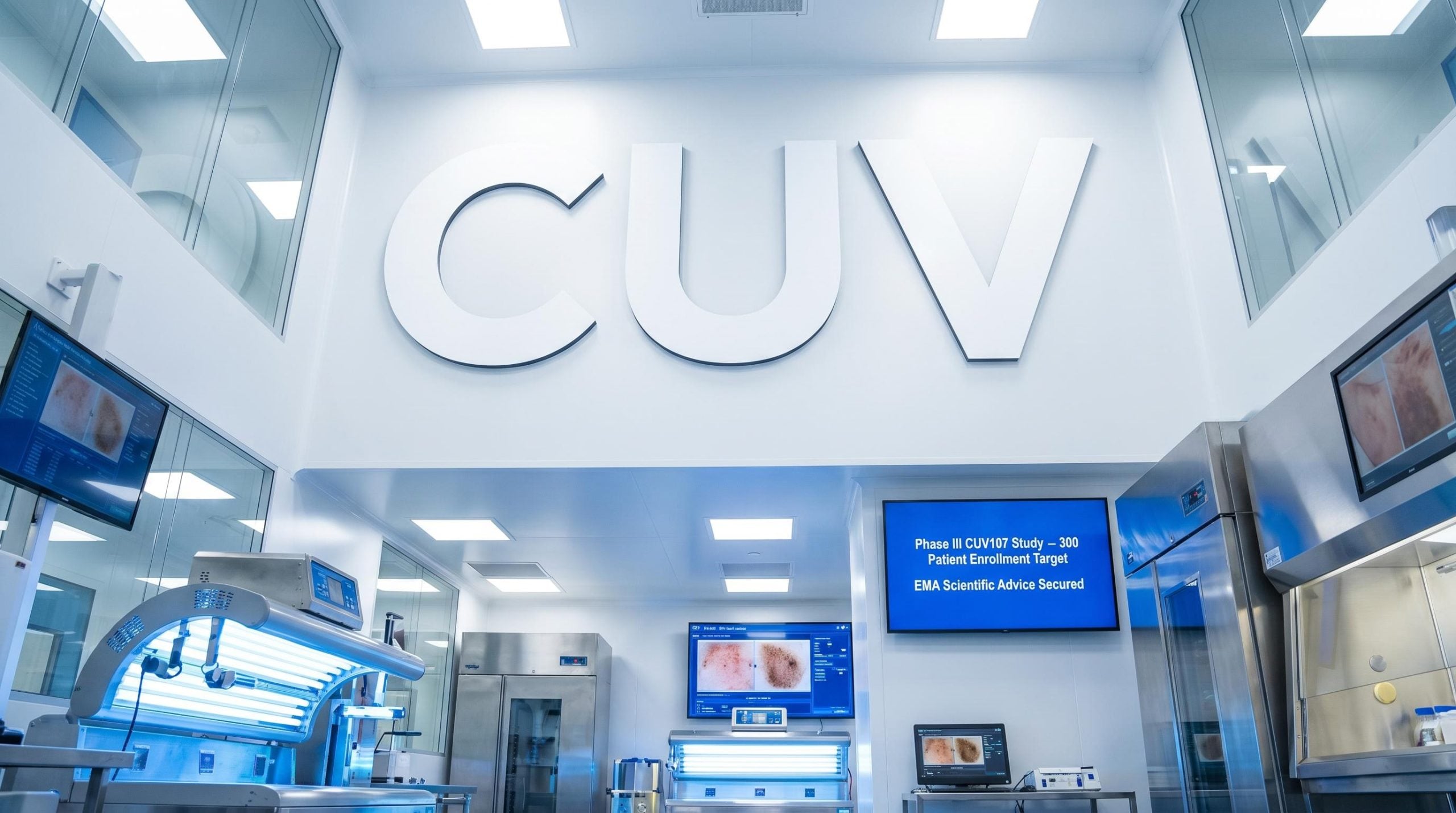
Clinuvel secures EMA green light for pivotal vitiligo trial
Clinuvel Pharmaceuticals has received final scientific advice from the European Medicines Agency (EMA) for its pivotal Phase III CUV107 study evaluating SCENESSE (afamelanotide) as a systemic vitiligo treatment. The regulatory milestone follows over 12 months of dialogue with the EMA, including two formal submissions and a Discussion Meeting with the Scientific Advice Working Party.
The Committee for Medicinal Products for Human Use (CHMP) has now formally advised on the study design and evaluation approach for the 300-patient trial, which is scheduled to commence in 2H 2026. The study will target adults and adolescents with non-segmental vitiligo, a condition affecting an estimated 0.5% to 2% of the global population.
Regulatory alignment with the EMA de-risks the pathway to European marketing authorisation. Final scientific advice, while non-binding, establishes the evidentiary standard Clinuvel must meet. This positions the company to execute the pivotal study with confidence in what the regulator expects to see for approval.
When big ASX news breaks, our subscribers know first
What is vitiligo and why does it lack treatment options?
Vitiligo is a disorder causing progressive loss of skin pigment (melanin), resulting in visible depigmentation across affected areas. The condition affects an estimated 0.5% to 2% of the general population, with visibility and severity varying significantly depending on the patient’s baseline skin tone.
No approved therapies currently exist for patients with extensive depigmentation affecting more than 10% of total body surface area. This represents a significant unmet medical need and potential commercial opportunity for a first systemic treatment capable of addressing widespread disease.

The “totality of evidence” approach explained
The EMA will evaluate SCENESSE efficacy using a “totality of evidence” regulatory approach rather than relying on a single endpoint. This allows Clinuvel to integrate data from multiple prior vitiligo studies alongside CUV107, potentially strengthening the overall submission package.
The primary endpoint is T-VASI50, defined as the proportion of patients achieving 50% or more repigmentation of the total body excluding hands and feet. The key secondary endpoint is F-VASI75, measuring the proportion of patients achieving 75% or more repigmentation of the head and neck (excluding lips, hands and feet). Both endpoints are described as “indicative but not determinative” for efficacy, meaning they will inform but not solely determine the final regulatory decision.
| Endpoint | Definition | Role in Evaluation |
|---|---|---|
| T-VASI50 (Primary) | 50%+ repigmentation of total body (excluding hands and feet) | Indicative but not determinative for efficacy |
| F-VASI75 (Secondary) | 75%+ repigmentation of head and neck (excluding lips, hands and feet) | Indicative but not determinative for efficacy |
Patient-reported outcomes will play an important role in the final evaluation. Five patient and physician surveys are integrated into the study to record these outcomes, whilst photographic evidence of change from baseline will be used to assess both endpoints. The EMA’s Scientific Advice Working Party specifically requested access to photographic changes demonstrating visual improvement in pigmentation, underscoring the regulator’s focus on visible, patient-relevant outcomes.
Study design and target population
CUV107 will compare SCENESSE with adjunct NB-UVB (narrowband ultraviolet B phototherapy) versus NB-UVB monotherapy. The EMA advised that patients with darker skin colours (Fitzpatrick skin types IV-V-VI) would benefit from systemic treatment first. The visibility of vitiligo is most pronounced in these patients due to the contrast between unaffected skin and depigmented lesions.
Central photographic review and validated disease assessment tools have been agreed with the regulator, providing a standardised methodology to evaluate treatment response across sites.
Key study parameters:
- Treatment arms: SCENESSE + NB-UVB versus NB-UVB alone
- Assessment methodology: Central photographic review with validated tools
- Priority population: Fitzpatrick skin types IV-V-VI (darker skin tones)
Management perspective on regulatory progress
Dr Emilie Rodenburger, Clinuvel’s Director of Global Clinical Affairs, outlined the significance of the EMA dialogue. She highlighted that the Discussion Meetings provided clarity on the patient population positioned to benefit first, the study design, and the totality of evidence approach that will be applied during final evaluation.
Dr Emilie Rodenburger, Director of Global Clinical Affairs
“The Discussion Meetings provided three take aways: the patient population of darker skin complexion will be the first to benefit from a systemic treatment, the design of the study and, significantly, the ‘totality of evidence’ approach which will be taken during final evaluation of evidence submitted to the EMA.”
Dr Rodenburger noted that a major step forward was the SAWP’s request to access photographic changes of vitiligo patients receiving treatment, which demonstrated visual improvement in pigmentation. She concluded that the company could only be appreciative of the extensive work the Agency had done to understand the SCENESSE programme.
What comes next for Clinuvel
The CUV107 study is planned to commence in the second half of 2026, with a target enrolment of 300 patients. Scientific advice, whilst non-binding, is documented in the final European Public Assessment Report issued at the conclusion of a marketing authorisation evaluation. This positions Clinuvel to pursue European approval with regulatory expectations clearly established.
With the regulatory pathway now clarified, Clinuvel can proceed to execute the pivotal study with confidence in what the EMA expects to see for approval. The totality of evidence framework allows the company to leverage data from its broader SCENESSE vitiligo programme, creating multiple lines of evidence to support the submission.
Ready to learn more about Clinuvel’s Phase III vitiligo programme?
SCENESSE represents a potential first-in-class systemic treatment for an underserved patient population with extensive depigmentation. With EMA scientific advice now secured, Clinuvel is positioned to execute a pivotal trial addressing a significant unmet medical need.
For comprehensive details on the company’s regulatory strategy and vitiligo pipeline, visit the Clinuvel investor centre. Full study protocols, timelines, and commercial opportunity assessments are available for review.