
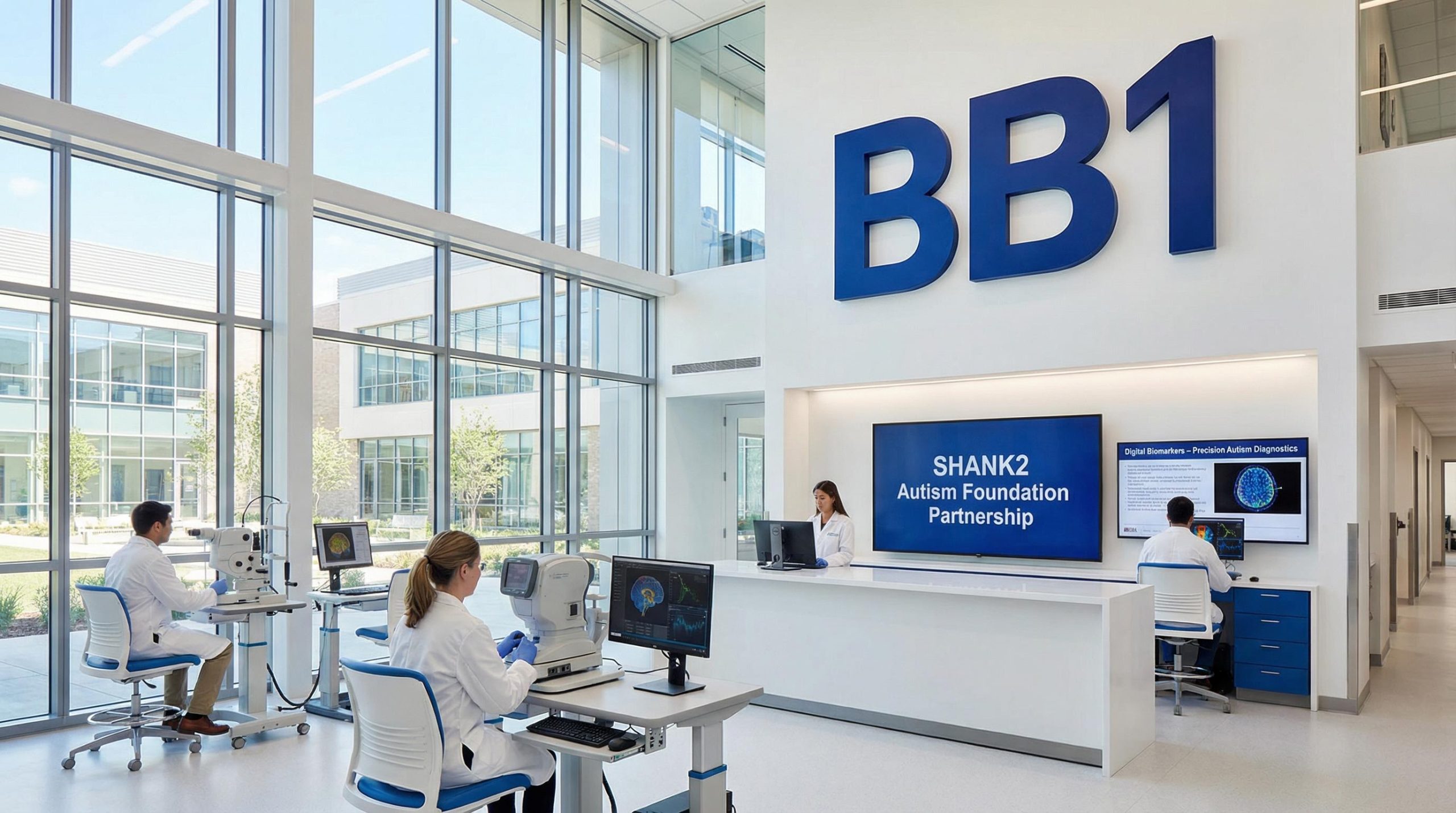
BlinkLab has announced the BlinkLab SHANK2 Foundation Partnership, entering a collaboration with the U.S.-based SHANK2 Autism Foundation to validate its digital diagnostic platform in genetically defined neurodevelopmental disorders. The partnership provides access to a patient population with known SHANK2 gene mutations, and testing has already commenced with the first children successfully assessed.
BlinkLab partners with U.S. rare disease foundation to advance autism diagnostics
The collaboration with the SHANK2 Autism Foundation positions BlinkLab to validate its smartphone-based diagnostic technology in a biologically well-characterised patient population. The SHANK2 Foundation is a non-profit organisation focused on rare neurodevelopmental conditions caused by mutations or deletions in the SHANK2 gene.
The SHANK2 gene plays a critical role in how brain cells form and maintain synaptic connections involved in learning, memory and behaviour. When mutated, these neural signalling pathways are disrupted, leading to developmental delays, communication difficulties and sensory processing challenges commonly associated with autism spectrum disorder.
Access to genetically confirmed patients represents a strategic advantage for digital biomarker validation. Unlike broader autism populations where diagnosis relies on behavioural assessment, SHANK2-related disorders arise from a well-defined genetic cause, creating what researchers refer to as “ground truth” for diagnostic tool development.
When big ASX news breaks, our subscribers know first
What is the SHANK2 gene and why does it matter for autism research?
The SHANK2 gene provides instructions for producing proteins that help brain cells form connections at synapses, the junctions where neurons communicate. These synaptic connections are fundamental to learning, memory formation and behavioural regulation.
When SHANK2 is mutated or deleted, the resulting protein dysfunction disrupts normal brain development. This manifests clinically as autism spectrum disorder, intellectual disability, developmental delay and epilepsy. Because the genetic cause is known and measurable, SHANK2-related disorders provide a cleaner research model than heterogeneous autism populations where underlying biology varies significantly between individuals.
For BlinkLab’s digital diagnostic platform, this biological clarity reduces diagnostic uncertainty. The technology can be tested against a population where the neurological basis of symptoms is molecularly defined, strengthening the validity of any digital biomarkers the platform identifies.
Strategic value of rare disease partnerships for BlinkLab’s platform
The SHANK2 Foundation collaboration delivers three distinct strategic benefits:
-
Access to genetically confirmed patient populations: SHANK2-related disorders are molecularly defined, creating a biologically characterised cohort that can be used to evaluate BlinkLab’s digital behavioural biomarkers with greater precision than in broader autism screening applications.
-
Cleaner signal-to-noise ratio for AI/ML model training: Genetically defined patient groups provide stronger datasets for artificial intelligence and machine learning model development. The known biological basis reduces confounding variables that complicate algorithm training in heterogeneous populations.
-
Regulatory relevance for biomarker validation: For regulators such as the FDA, genetically defined disorders provide attractive settings for digital endpoint development. If BlinkLab demonstrates measurable digital signatures in individuals with SHANK2 mutations, the technology may support future clinical trial applications.
The collaboration supports BlinkLab’s broader strategy to expand its platform beyond autism screening into additional neurodevelopmental and neurological conditions. This includes potential commercial applications supporting pharmaceutical and biotechnology companies developing therapies for rare neurodevelopmental and synaptic disorders.
If validated in SHANK2 populations, BlinkLab’s technology could serve multiple commercial functions: digital endpoints in clinical trials, patient stratification tools, treatment monitoring platforms, and partnership opportunities with companies developing targeted therapies for rare genetic disorders.
FDA approval signals growing regulatory focus on precision neurodevelopmental therapies
In March 2026, the FDA approved leucovorin (folinic acid) for the treatment of cerebral folate transport deficiency associated with FOLR1 gene mutations, a rare genetic disorder that can present with developmental delays and autistic features. While the approval is limited to this specific genetic condition, it reflects a broader regulatory shift toward identifying biologically defined patient subgroups and developing precision approaches to neurodevelopmental disorders.
This regulatory development is material for digital diagnostic platforms. As more targeted therapies emerge for genetically defined conditions, demand grows for objective tools capable of identifying patient subtypes, supporting clinical trials and monitoring treatment responses. Traditional autism diagnostic methods rely on behavioural observation and questionnaires, limiting their utility in stratifying patients by underlying biology.
BlinkLab’s collaboration with the SHANK2 Foundation positions the company within this evolving ecosystem. The partnership may enable the company to benefit from an increasingly favourable regulatory and clinical landscape, where digital biomarkers and precision diagnostic tools are expected to play an important role in supporting therapeutic development.
Director quote
Dr Henk-Jan Boele, Managing Director & CEO
“It’s a great honor to work with Ben Hutz and the SHANK2 Foundation. The first children have already been successfully tested, and we are deeply grateful to the SHANK2 children and families worldwide participating in this important study. In the autism field, it is essential to work with well-defined patient groups, since establishing ground truth in autism research can be challenging due to misdiagnosis, heterogeneous populations, and diagnostic uncertainty.”
Dr Boele also noted that BlinkLab will test mouse models carrying the same SHANK2 mutation through the SCANNER consortium and his role as Assistant Professor at Erasmus MC to evaluate treatment effectiveness, providing translational research capabilities spanning preclinical and clinical populations.
What’s next for BlinkLab
The SHANK2 collaboration provides a proof-of-concept for BlinkLab’s strategy to expand beyond autism screening into precision diagnostics for rare neurological diseases. Forward-looking elements include continued testing with SHANK2 patient populations, potential expansion into additional genetically defined neurodevelopmental conditions, and possible pharmaceutical and biotechnology partnership opportunities for rare disease clinical trials.
Potential commercial applications emerging from this partnership include:
- Clinical trial digital endpoints
- Patient stratification tools for targeted therapies
- Treatment monitoring platforms for rare genetic disorders
- Pharmaceutical partnerships for rare synaptic disorder therapies
The collaboration accelerates research and data generation through engagement with patient registries, families and specialist researchers connected to the SHANK2 Foundation, supporting efficient data collection and collaborative research initiatives in a molecularly defined patient population.
Want the Next Healthcare Breakthrough in Your Inbox?
Join 20,000+ investors getting FREE breaking ASX news delivered within minutes of release, complete with in-depth analysis. Click the “Free Alerts” button at Big News Blast to start receiving alerts the moment market-moving healthcare announcements hit the ASX.