
AFT Pharmaceuticals maps a multi-billion-dollar R&D roadmap for investors
In its July 2026 investor presentation in Auckland, AFT Pharmaceuticals (NZX: AFT; ASX: AFP) outlined a research and development portfolio it says holds the potential to extend the company’s two-decade growth record.
Management detailed a pipeline spanning 8 patented projects, 24 off-patent injectables, and a range of other early-stage projects. According to the company, the portfolio offers multi-billion-dollar addressable markets.
The presentation positioned this portfolio as a driver capable of extending AFT’s 17% compound annual growth rate (CAGR) in revenue across two decades. The company framed the update as a strategic overview of current and future upside rather than a single new development.
When big ASX news breaks, our subscribers know first
Inside the portfolio: four projects targeting billion-dollar markets
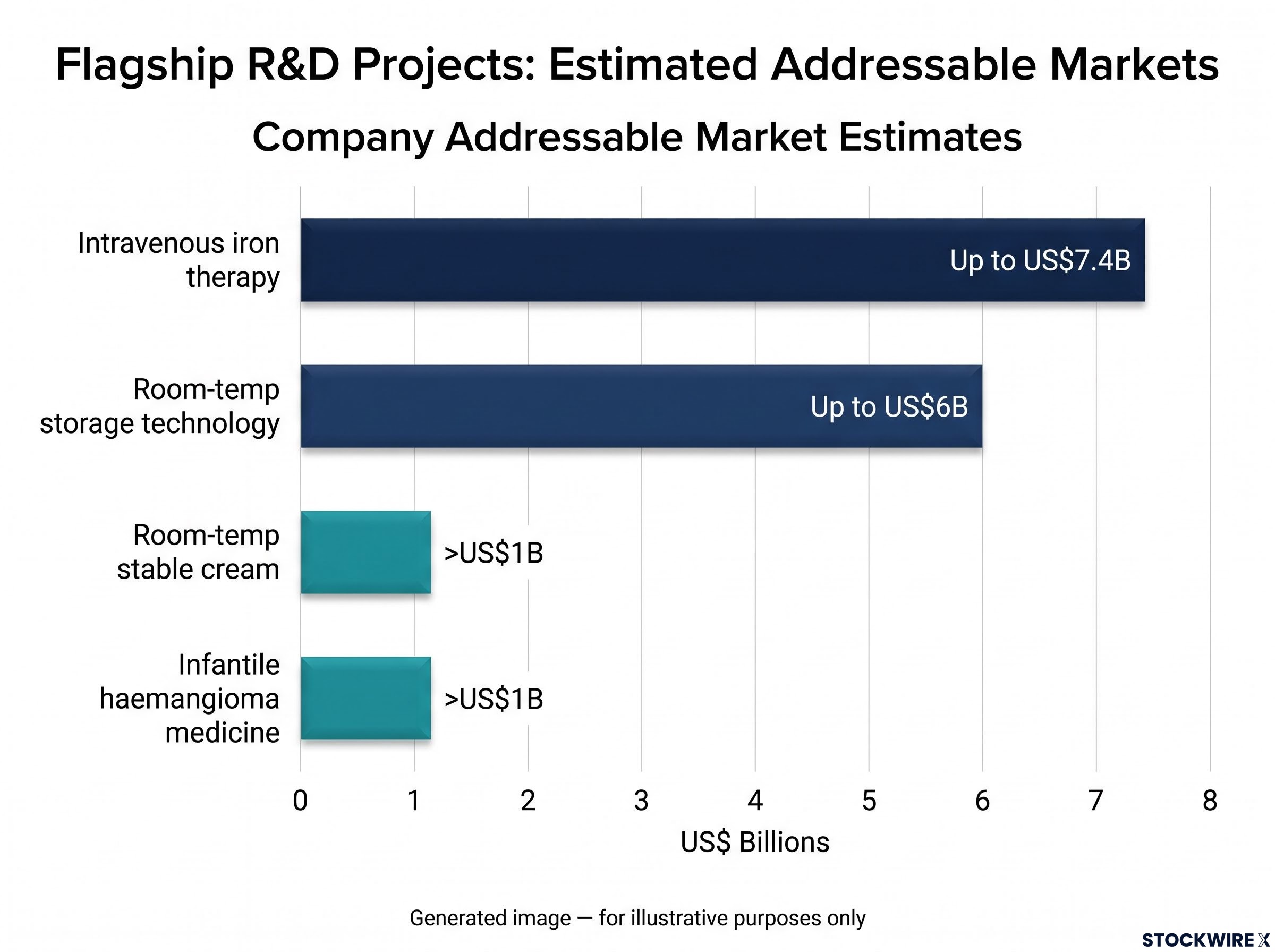
AFT highlighted four flagship projects during the presentation, each targeting markets the company estimates at over US$1 billion. All figures below are company estimates and represent potential addressable markets, not secured revenue.
| Project | Description | Estimated Addressable Market |
|---|---|---|
| Intravenous iron therapy | Designed to address shortcomings of existing iron infusions, potentially allowing treatment in a single dose rather than multiple appointments, with improvements in tolerability. | Up to US$7.4 billion |
| Room-temperature stable cream | For Port Wine Stains birthmarks and Facial Angiofibromas associated with Tuberous Sclerosis Complex. The FDA gave tentative approval for the latter indication earlier this month. | Greater than US$1 billion (combined indications) |
| Room-temperature storage technology | Allows intravenous medicines that currently require refrigeration to be stored at room temperature. | Up to US$6 billion (initial products under consideration) |
| Infantile haemangioma medicine | A treatment for strawberry birthmarks that, if successfully developed, opens a potential market. | In excess of US$1 billion |
The company stressed that these are addressable market estimates rather than guaranteed revenue. Several projects, including the infantile haemangioma medicine, remain conditional on successful development.
A third FDA approval — a New Zealand record
Management highlighted the tentative FDA approval of the room-temperature stable cream for Facial Angiofibromas associated with Tuberous Sclerosis Complex, granted earlier this month. AFT described this as the third FDA approval it has received for a patented medicine it developed, a record the company states is unmatched in New Zealand.
Why R&D matters: how AFT turns development into shareholder returns
AFT operates a dual model. It develops intellectual property while also commercialising specialty medicines, with growth funded largely from internally generated cashflows. In simple terms, the company both creates new medicines and sells them, reinvesting the proceeds to fund the next wave of development.
To illustrate the model, the presentation used the intravenous form of AFT’s patented Maxigesic pain relief medicine as a case study. The company detailed the returns generated from that investment to date:
-
$21 million from licensing the intellectual property to markets where AFT does not operate.
-
$5.5 million in royalties on sales by those licensees.
-
Multiple millions in margin from sales across many markets.
For investors, the Maxigesic IV example serves as evidence that AFT’s research and development spending can translate into tangible returns.
The FY26 revenue result of NZ$254.7M represented 22% growth and beat operating profit guidance, with licensing revenue jumping to NZ$3.0M from NZ$0.7M as nine new licensing agreements were closed across the year, demonstrating the commercial traction the internal cashflow model produces.
Dr Hartley Atkinson, Managing Director
“AFT’s long-standing and unbroken record of growth is founded on a highly successful record of identifying unmet clinical needs and then in licensing or developing the right medicines to meet that need. We are now successfully taking these products to multiple markets around the world.”
Global reach: business hubs positioning AFT to capture market share
The presentation also covered AFT’s geographic footprint. The company is developing and strengthening business hubs across Australia, New Zealand, Singapore, Hong Kong, USA, Canada and the United Kingdom.
For selected parts of the R&D portfolio, management indicated this direct presence could allow AFT to cover up to 50% of the global market directly. Beyond these hubs, AFT operates a broader distribution model, out-licensing its products to local licensees and distributors across over 125 countries.
What comes next for AFT investors
The roadmap management outlined centres on progressing the patented pipeline toward commercialisation while extending the company’s 17% CAGR track record. AFT did not disclose specific trial dates or commercialisation timelines during the presentation.
The company positioned its combination of intellectual property development and specialty medicine commercialisation, funded largely from internal cashflows, as the foundation for continued growth.
Dr Hartley Atkinson, Managing Director
“Few pharmaceutical companies in New Zealand or Australia straddle both the development of intellectual property and the commercialisation of speciality medicines. Fewer still fund this growth largely from internally generated cashflows. AFT does both. We are proud of our record, and excited by the growing potential which we are delighted to set out to investors at today’s presentation.”
Don’t Miss the Next Healthcare Breakout
Big News Blast delivers FREE breaking ASX healthcare news directly to your inbox within minutes of release, complete with in-depth analysis. Join 20,000+ subscribers already getting the edge on market-moving announcements. Click the “Free Alerts” button to stay ahead of the next major healthcare development before the broader market catches on.