
In its AGM 2026 presentation, management at Imugene Limited outlined progress for azer-cel, with 140 patients treated across Phase 1 and Phase 1b trials and a 77% response rate in 56 patients with B-cell cancers in Phase 1b.
The presentation also described a single-asset focus and a cost base cut of approximately 40%.
What azer-cel has achieved to date
The slides summarised clinical, safety and regulatory milestones. The headline metrics are set out below.
| Metric | Figure | Context |
|---|---|---|
| Patients treated | 140 | Total treated with azer-cel in Phase 1 and Phase 1b clinical trials |
| Response rate | 77% | Phase 1b, 56 patients across B-cell cancers |
| ORR | 86% | Early BTKi combination data (6 of 7 patients) |
Clinical results and safety
Management positioned the safety profile alongside efficacy. The key points were:
- No graft-versus-host disease (GvHD) and no grade ≥3 cytokine release syndrome (CRS) in Phase 1b.
- A 77% response rate in 56 patients in Phase 1b.
- An overall response rate (ORR) of 86% in early Bruton tyrosine kinase inhibitor (BTKi) combination data, from 6 of 7 patients.
The BTKi figure comes from a small sample and is described by the company as early data.
Combination strategy for BTKi failures
The presentation framed a combination dosing strategy for BTKi failures against a BTK inhibitor market of approximately US$12bn globally (2025). On the regulatory path, management described data from BTKi combinations as “encouraging”.
Recognition and regulatory engagement
The presentation listed the following:
- Oral presentations at the American Society of Hematology (ASH) in 2025 and the American Society of Clinical Oncology (ASCO) in 2026.
- Selection for a Poster presentation at ASH in December 2026.
- A positive US Food and Drug Administration (FDA) Type C meeting in November 2025.
Results in CAR T-naive patients across six blood cancer subtypes were the basis for the ASCO oral presentation, with four indications reaching 100% response rates in smaller subgroups.
Clinical doses are secured to complete Phase 1b and commence the Phase 2 pivotal study.
When big ASX news breaks, our subscribers know first
Understanding BTK inhibitor failures and why combination data matters
BTK inhibitors are medicines used in B-cell cancers, which affect the white blood cells that help fight infection. They work by blocking a protein called Bruton tyrosine kinase, which these cancer cells rely on.
When patients stop responding to a BTK inhibitor, this is described as BTKi failure. A combination approach tests whether adding azer-cel to a BTK inhibitor can help these patients.
The early result of 6 of 7 patients responding is a small sample. It is set against a BTK inhibitor market of approximately US$12bn globally.
What happens next for azer-cel
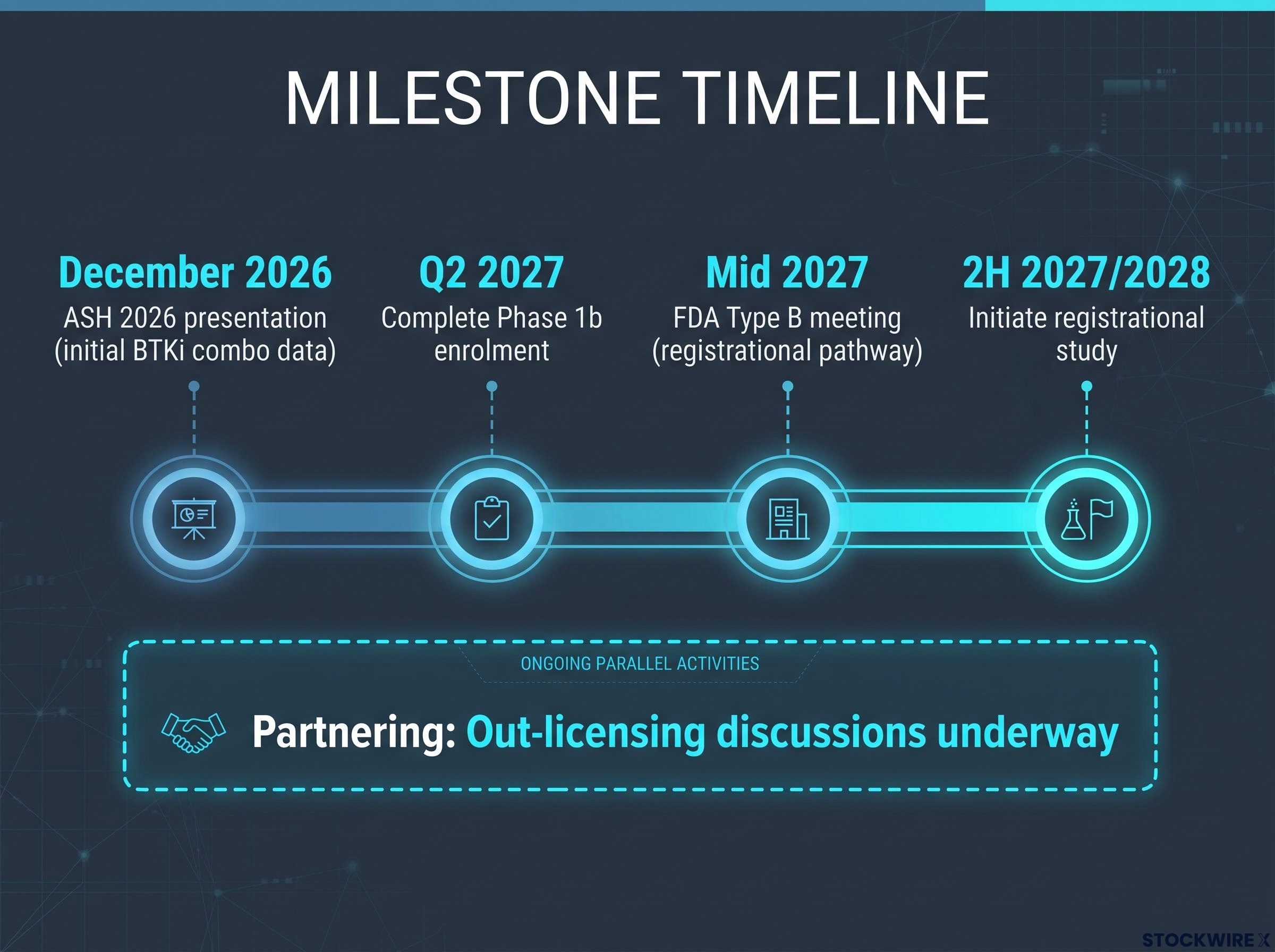
The presentation set out the following timeline:
- December 2026: ASH 2026 presentation of initial BTKi combination data.
- Q2 2027: Complete Phase 1b enrolment.
- Mid 2027: FDA Type B meeting to confirm the registrational pathway for BTKi combination therapy.
- 2H 2027/2028: Initiate registrational study.
- Partnering: Out-licensing discussions are underway.
Remuneration restraint and cost discipline
Management also addressed remuneration, noting the following:
- No equity allocations have been granted to Directors and Leadership this year.
- No salary increases for the CEO or Executive Chair in the past 12 months.
- No increases to non-Executive Director fees.
Remuneration costs fell by $4.2m following a substantial workforce reduction this calendar year and the departure of high compensation individuals.
Senior positions (for example, the CMO) are covered by fractional consultants. Any future hires for senior positions will be at a compensation level commensurate with the company’s market cap and established pay levels and structure for ASX listed companies in the sector.
Investors weighing the cost reductions against funding needs can read our detailed coverage of Imugene’s quarterly cash position, which sets out the September-end balance, the recent share sale and the runway warning in the company’s report.
Ready to Explore Imugene’s Azer-Cel Pipeline?
Azer-cel has been given to 140 patients, delivering a 77% response rate in Phase 1b and a clear path towards a registrational study in 2H 2027/2028. With a single-asset focus and a cost base cut by approximately 40%, Imugene is positioning the therapy for BTKi-failure combination data at ASH in December 2026.
Investors wanting the full detail behind these milestones can view Imugene’s official ASX announcements on the company’s investor page. Review the latest disclosures to assess the company’s clinical progress, regulatory pathway and partnering discussions.