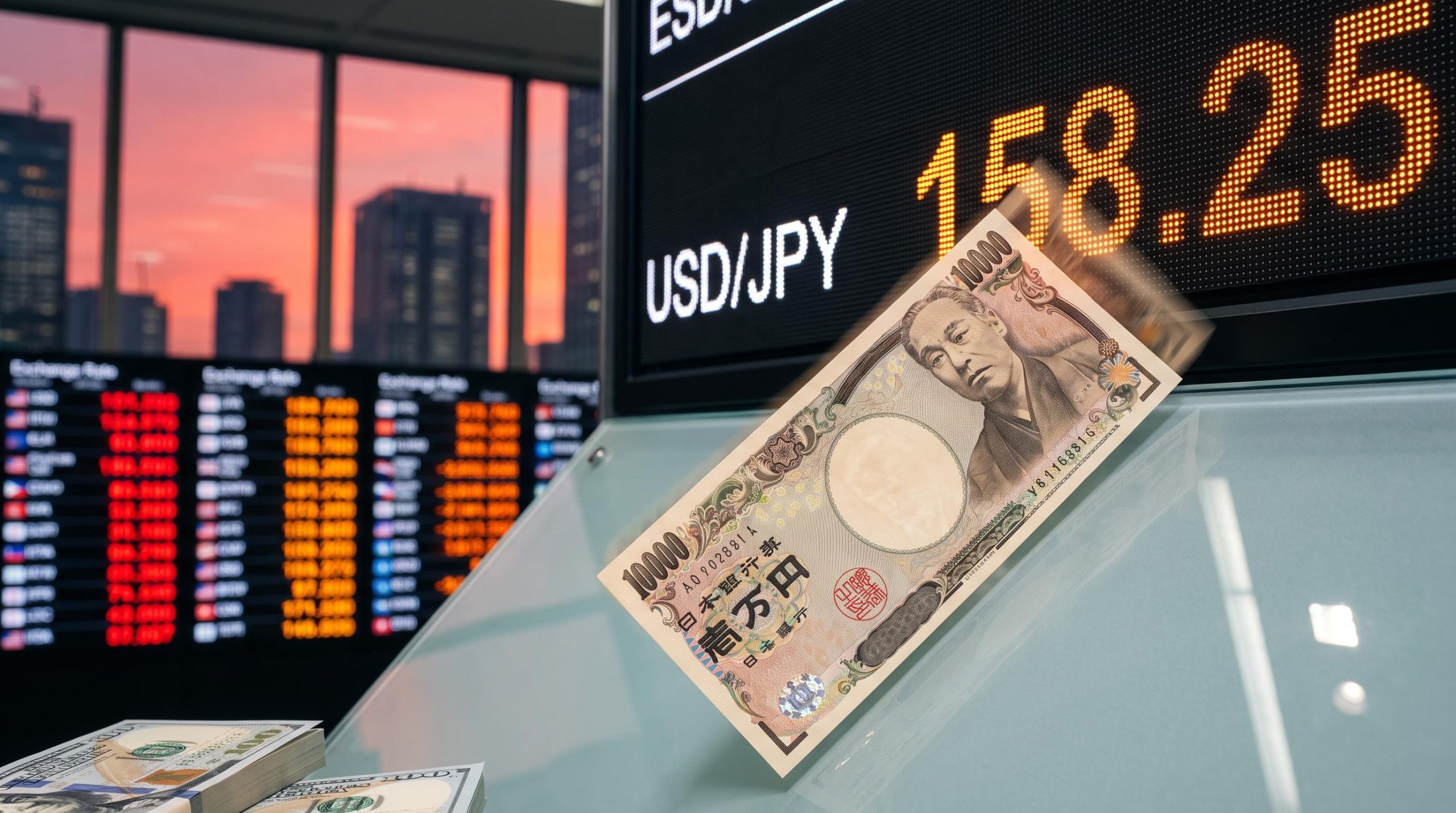
The dollar pushed about 0.3% higher against the yen on Friday, lifting USD/JPY to near 158.25. The catalyst traders had been circling, a meeting between US Treasury Secretary Scott Bessent and Japanese Finance Minister Satsuki Katayama, now looks unlikely to happen at principal level, and the outlook for the pair is shifting with it.
The yen has handed back most of the gains it made after the joint intervention in late July. Traders are now weighing whether Tokyo and Washington will step in again.
The International Monetary Fund (IMF) meetings run from 12-18 October 2026, and until this week they looked like the obvious venue for that conversation.
After reading this, you will know what is driving the pair, which levels and signals matter most, and what would have to change for the yen to turn.
Why is the yen sliding again after record intervention?
The weakness on Friday was broad. The yen lost ground against every major currency, and the Australian dollar did the most damage.
| Currency | Approximate yen move | Comment |
|---|---|---|
| AUD | -0.60% | Weakest yen showing of the session |
| NZD | -0.46% | Commodity currencies led the move |
| CHF | -0.36% | Yen lost ground even against another low-rate currency |
| USD, EUR, GBP, CAD | -0.24% to -0.27% | Steady, broad-based softness |
That pattern only looks ordinary until you remember what happened ten weeks ago.
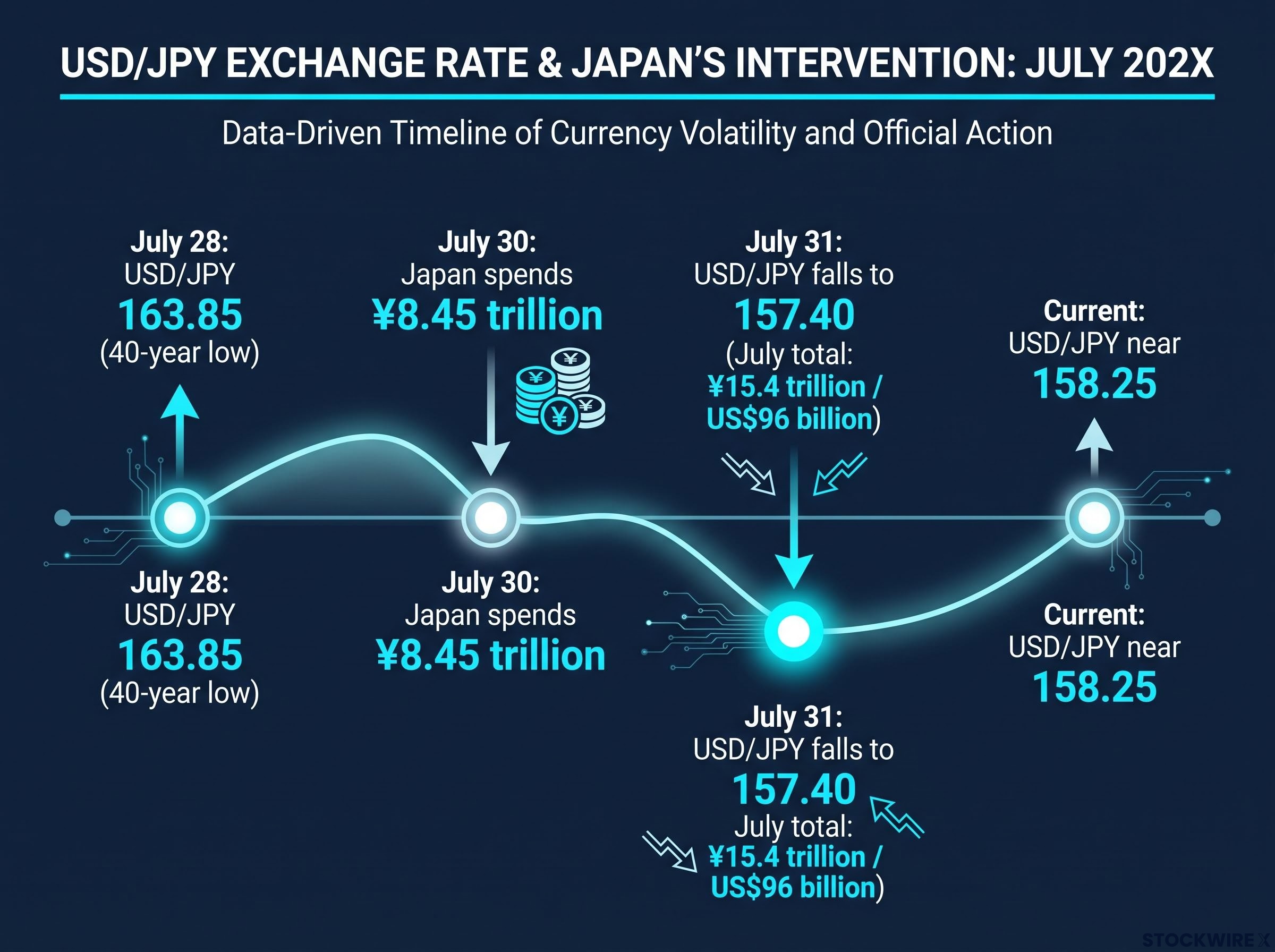
On 28 July, USD/JPY hit about 163.85 as the yen fell to a 40-year low. Japan acted alone on 30 July, spending about ¥8.45 trillion. The next day, Tokyo and Washington moved together for the first time since 1998, and Japan’s spending for the month reached a record of about ¥15.4 trillion (roughly US$96 billion).
According to Union Bancaire Privée (UBP), the pair fell to 157.40 by 31 July. It now sits near 158.25, so most of that ground has been lost again.
UBP’s verdict in September was blunt: the intervention “cannot beat fundamentals.” The retracement shows that official action has bought time rather than changed direction, so you should treat any yen rally driven by intervention alone as fragile.
The retracement reflects carry trade mechanics that keep generating yen selling whenever Japanese borrowing costs sit far below US levels, which is why the July rally faded so quickly once intervention flows stopped.
What the US actually did in July
The US acted through the Exchange Stabilization Fund (ESF), a Treasury pool of foreign-currency reserves, with the New York Fed carrying out the trades. Bessent said the US swapped assets the ESF already held, including euros, for yen rather than selling newly acquired dollars. The amount was not disclosed.
It was the first official US currency intervention since 2011. Bessent framed it around financial stability and the risk of spillovers into global markets, not around defending a particular exchange rate.
Will Japan and the US act again at the IMF meetings?
The setup looked tidy. Bessent and Katayama would meet on the sidelines of the IMF gatherings, and the original FXStreet report suggested they might discuss further support for the yen.
Then the attendance list changed.
Conflicting reports FXStreet described Bessent as a confirmed attendee. Later reporting from Reuters and Nikkei says he will skip the Bangkok meetings because of domestic commitments, with Deputy Treasury Secretary Francis Brooke and Under Secretary Erin Browne leading the US delegation.
If the later reports hold, the principal-level bilateral is off. Even without that problem, the bar for another joint operation is high, because the July action was the first of its kind in nearly three decades.
History also argues against expecting much from Tokyo alone. Japan’s unilateral interventions in 2022 and 2024 produced only temporary rallies before the rate gap reasserted itself, and the Bank of Japan (BoJ) rate of 1% after its June hike still leaves Japanese yields far below US levels.
Official action is more likely in response to disorderly moves than to any specific level. These are the signals that would raise the odds:
- A sharp one-day drop in the yen
- USD/JPY approaching the 160-164 zone, where an opinion piece in The Hill argues markets may test official resolve
- Escalating verbal warnings from Tokyo
You should price a lower chance of fresh joint action this month. Japan’s Ministry of Finance can still act alone if the moves turn disorderly.
For readers wanting to see how the IMF free-floating rules cap Japan’s room to act, our full explainer on the IMF intervention episode limit shows how episodes are counted.
What does the USD/JPY forecast look like from here?
Start with the chart. An AI-assisted FXStreet technical read shows the pair above its key short-term support, with momentum positive but not stretched.
| Indicator | Reading | What it signals |
|---|---|---|
| Spot USD/JPY | 158.25 | Trading above short-term trend |
| 20-day EMA | 157.58 | Buyers in control while price holds above |
| RSI | 55.39 | Mildly positive, not overbought |
| Nearby resistance | None identified | Upside depends on momentum |
| DXY | 102.14 | Dollar pausing, not reversing |
The 20-day EMA (exponential moving average) is the average closing price over 20 sessions, weighted towards recent days. The RSI (relative strength index) measures momentum on a 0-100 scale, with readings above 70 usually seen as overbought. A daily close below 157.58 would signal fading buying pressure.
The fundamentals point the same way. Mitrade says the wide US-Japan yield gap keeps the bias firm or higher, and UBP sees upside risk once the effects of intervention fade.
Brown Brothers Harriman (BBH) reckons that cheaper energy calmed the worldwide bond rout and cooled the dollar’s rally on Friday. Even so, its strategists expect the lull to be short-lived, since resilient American growth and heavy overseas buying of US assets leave the balance of dollar risks tilted upwards.
No explicit current forecasts were found from other major banks.
How Fed policy moves the dollar
The Federal Reserve raises rates when inflation runs above its 2% target, which tends to support the dollar, and cuts weigh on it. Quantitative tightening, where the Fed stops buying bonds and reinvesting maturing ones, is generally dollar-positive. Because the BoJ moves slowly, a shift at the Fed is the main outside force that could narrow the gap quickly.
The reversal risks are real: crowded short-yen positioning, a decisive BoJ move, falling US yields or a risk-off shock could all trigger a fast yen rebound. The path of least resistance is mildly higher while 157.58 holds, but a sudden policy-driven reversal is the bigger danger, so levels and stops matter more than conviction.
Three things to watch:
- A daily close relative to the 20-day EMA at 157.58
- Official rhetoric from Tokyo and Washington
- Shifts in Fed and BoJ rate expectations
Past performance does not guarantee future results. Forward-looking views are speculative and subject to change with market conditions.
What to watch before the next move in USD/JPY
The IMF calendar matters less than it looked a week ago. The yield gap remains the main driver, and July showed that even record spending struggles against it.
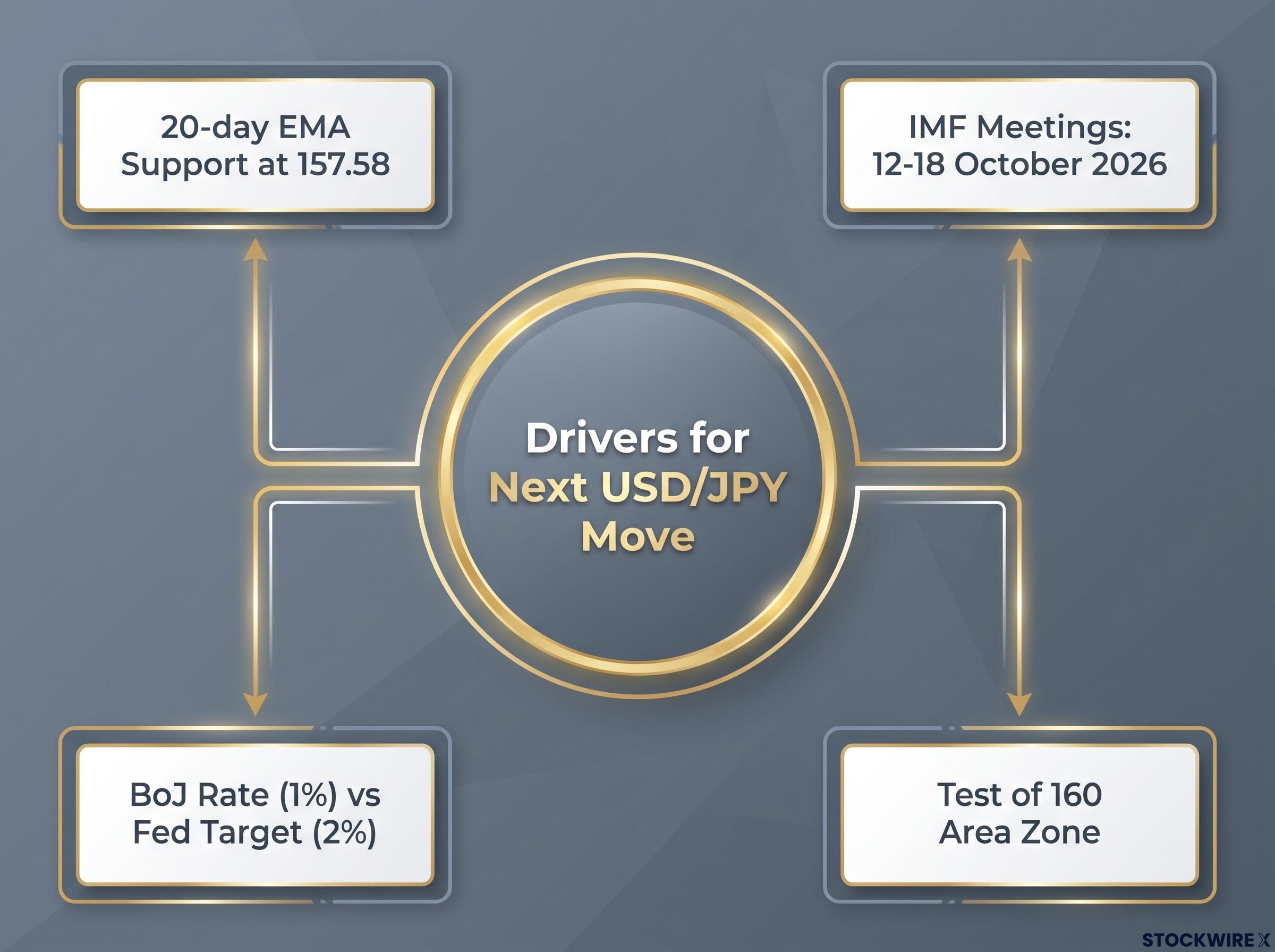
Your decision points are the 20-day EMA, any verbal warnings from Tokyo, comments from the US delegation in Bangkok, and changes in Fed or BoJ expectations. The real contest is between fundamentals and official resolve.
Commentators, including The Hill, point to the 160 area as the zone where that resolve is most likely to be tested.
This article is for informational purposes only and should not be considered financial advice. Investors should conduct their own research and consult with financial professionals before making investment decisions.
—