Jefferies is doing something that looks like a contradiction. Analyst Janardan Menon is warning clients that valuation multiples across European semiconductors are set to compress as the cycle peaks, and in the same breath he is naming three stocks he wants to own: Nokia, Infineon Technologies, and ams OSRAM.
That tension is the puzzle worth solving. If the sector is about to de-rate, why single out any names to buy at all?
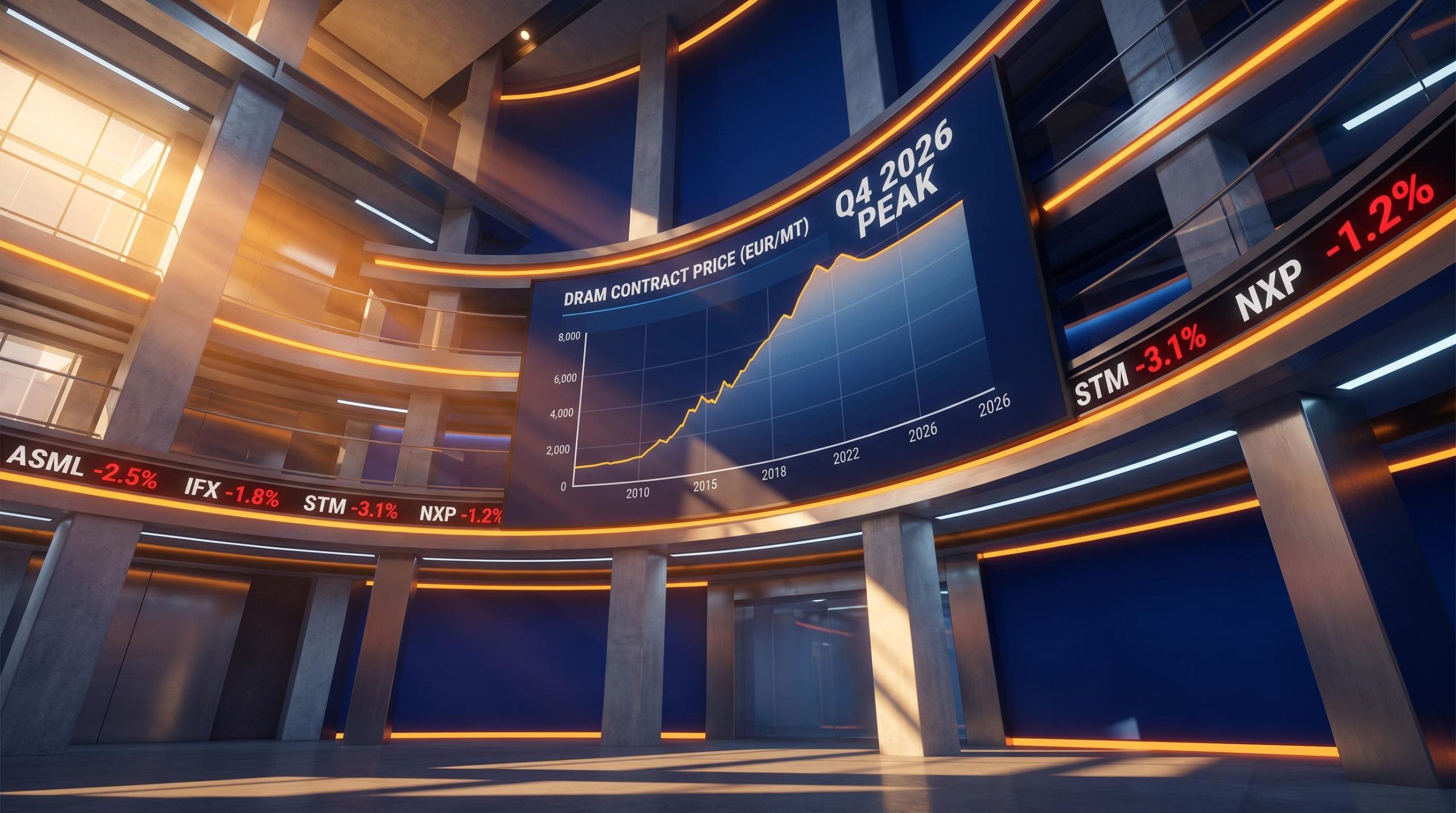
The answer sits in the mechanics of what Menon is actually forecasting. His Q3 2026 earnings preview expects a cycle peak in Q4 2026, which means earnings are running high but the upward revisions that fuelled the rally are stalling. High earnings, plateauing revisions: that is the exact condition under which multiples compress even when profits themselves are not falling. Here is what the Jefferies analysis really tells you about positioning in a sector that is peaking rather than collapsing, and whether these three names make that case convincingly.
What Jefferies is actually warning about, and what it is not
The Jefferies note runs on two tracks at once, and confusing them is the fastest way to misread it. One track is a macro warning about the whole sector. The other is a micro argument about a handful of specific stocks.
The macro warning is narrower than it sounds. Jefferies is not calling for an earnings collapse. Menon expects most European chip companies to at least meet Q3 expectations, and underlying demand remains strong. The problem is momentum: consensus earnings forecasts are unlikely to rise materially from here.
That distinction matters more than any single number in the note. A plateau in revisions, not a drop in earnings, is what compresses multiples. When investors stop getting upgrades to feed on, they stop paying a premium, and the multiple contracts even while profits hold. If you are evaluating European semiconductor exposure right now, that is the pivot: the headline earnings strength is no longer, on its own, a reliable buy signal.
Multiple compression can erase share-price gains even when earnings forecasts are rising, a dynamic documented in detail across ASX growth cohorts where forward P/E ratios contracted by more than half while analyst EPS estimates were simultaneously revised upward.
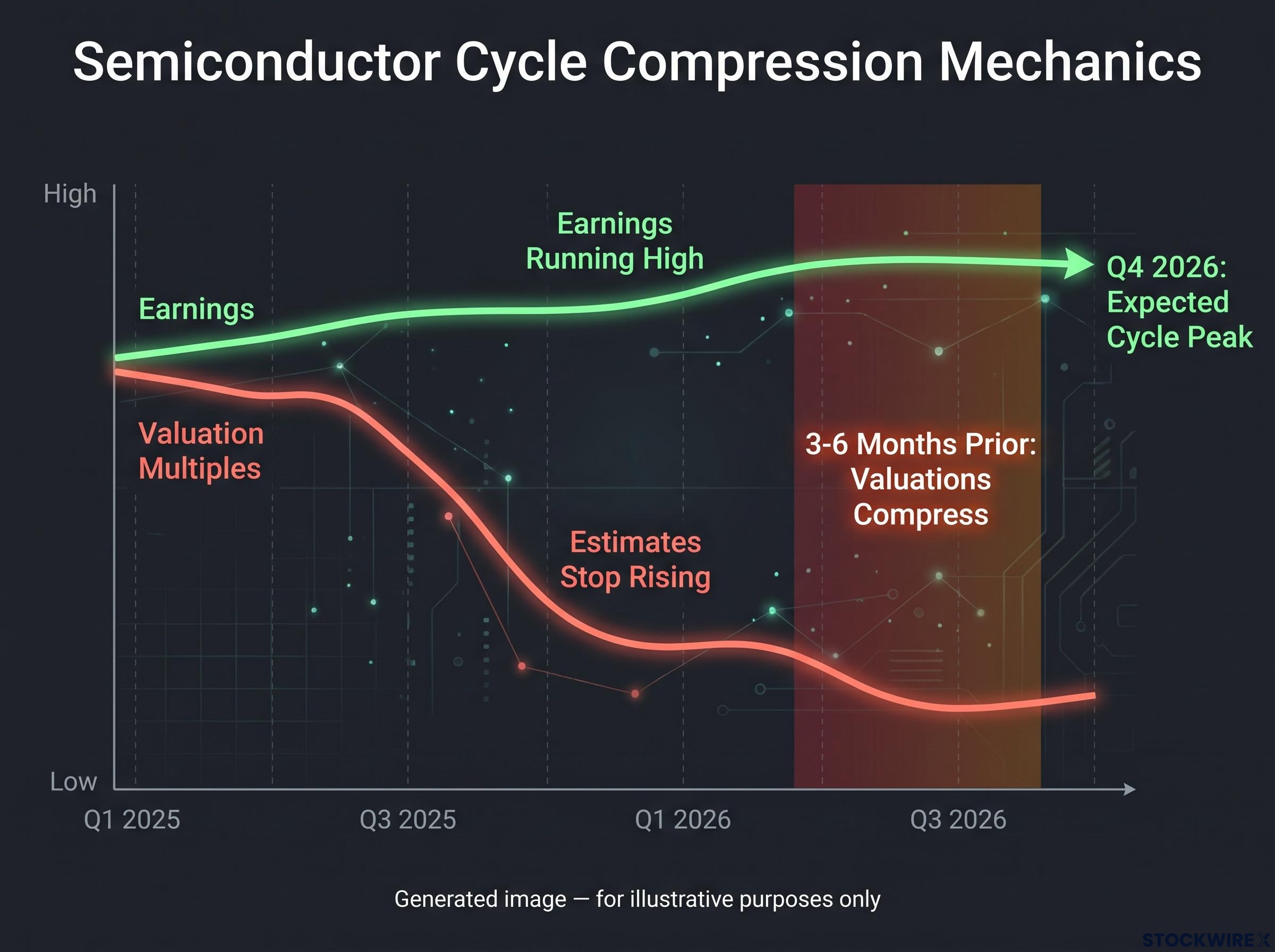
The timing is the trigger. Menon’s expected Q4 2026 cycle peak is significant because valuations historically compress three to six months ahead of a peak, as investors rotate out of peak-cycle names before the numbers actually turn.
Jefferies identifies three conditions driving the compression thesis:
- The cycle is peaking, with Q4 2026 flagged as the likely top
- Consensus estimates have limited room left to rise, removing the revision momentum that supported high multiples
- Semiconductor capital equipment valuations are already stretched, with Jefferies cautioning that 2027 semicap forecasts have become too bullish to leave meaningful room for further upside
Why the stock picks are a separate argument
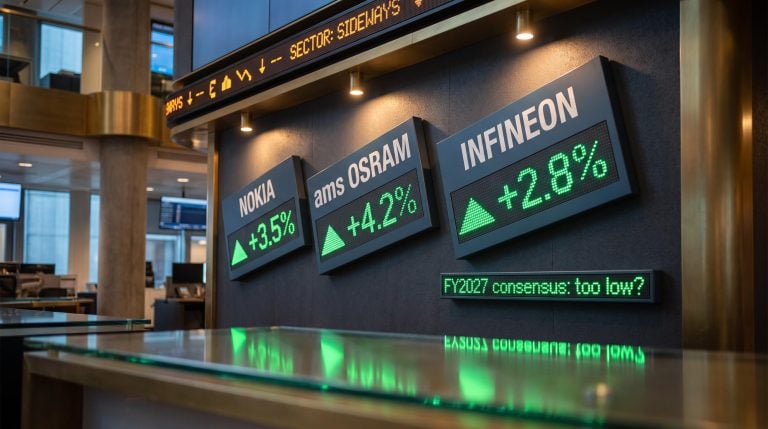
Against that backdrop, the second track makes sense. Jefferies is arguing that certain names have FY2027 earnings the market is underestimating, so they can outperform even as the sector’s multiple contracts around them. The sector call is a timing and valuation argument. The stock call is a mispricing argument. They coexist, and reading one as a rebuttal of the other misses the whole structure of the note.
When big ASX news breaks, our subscribers know first
Nokia, Infineon, ams OSRAM: the earnings-mispricing thesis for each
Each of the three picks expresses a different version of the same core bet: that consensus has FY2027 earnings too low. What differs is the reason each name is supposedly mispriced.
For Nokia, Jefferies treats FY2027 consensus estimates as insufficiently low, anchored to a network infrastructure recovery the market has not yet fully credited. The likely levers are continued 5G and fibre-to-the-home (FTTx) investment, tighter cost discipline, and early positioning in the 6G research pipeline, though the accessible summaries keep those specifics light. Jefferies maintains a Buy rating with a price target of €13.80, reported by dpa-AFX on 30 September 2026.
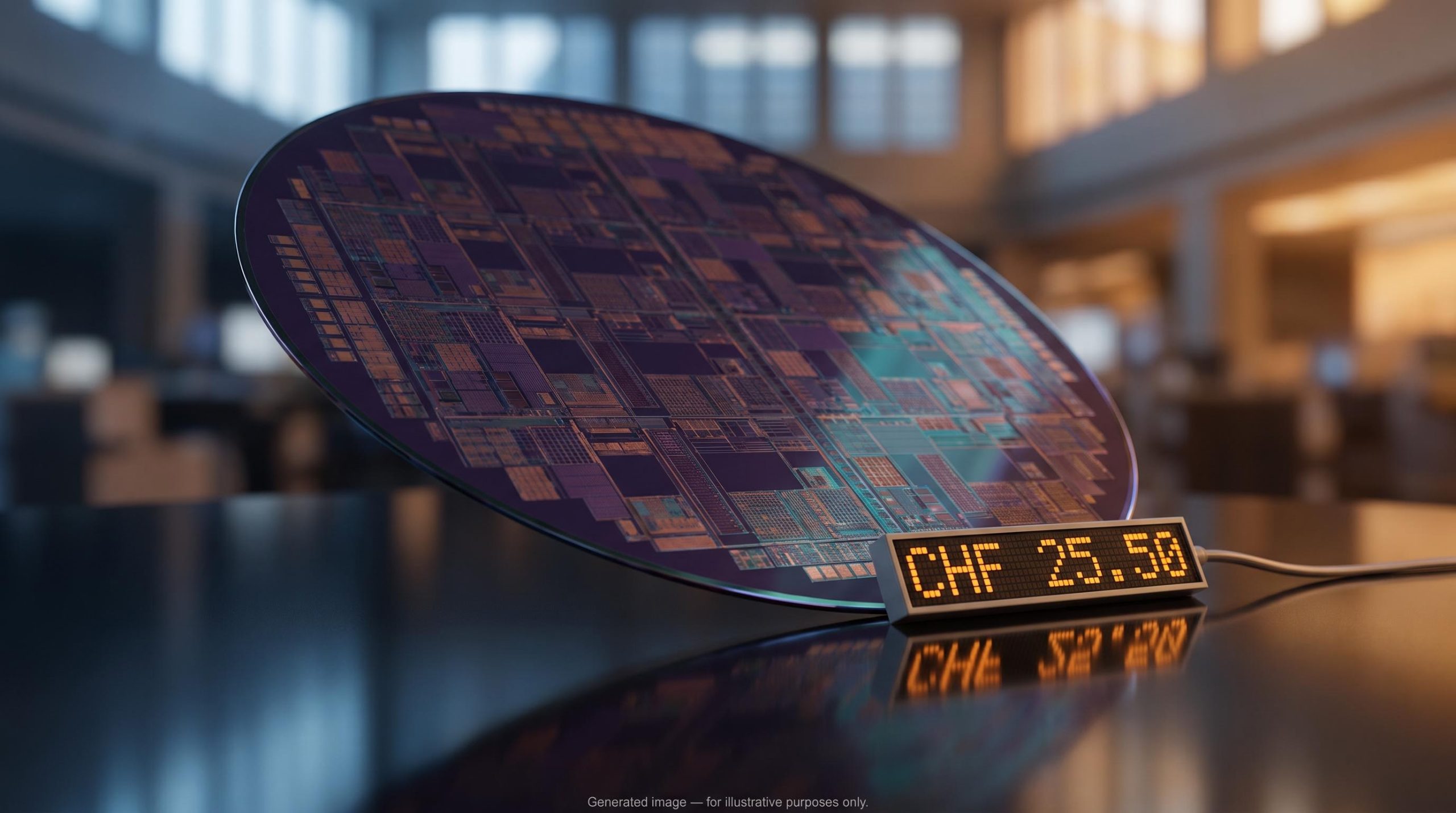
For ams OSRAM, the case is a turnaround story with a technology catalyst attached. Jefferies expects strategic repositioning into microVCSEL and optical connectivity for AI and data centres to deliver better-than-consensus FY2027 margins. The clearest signal of its conviction is the price target increase.
Jefferies raised its ams OSRAM price target to CHF 25.50 from CHF 21, according to MarketScreener (23 September 2026), the sharpest quantitative expression of confidence anywhere in the note.
For Infineon, the picture is deliberately incomplete. No accessible summary states a Jefferies price target or rating change for Infineon in this specific note. The thesis rests on automotive pricing strength and content growth in electric vehicles (EVs) and advanced driver-assistance systems (ADAS). That gap, combined with Infineon’s status as both a top pick and the most compression-exposed name, makes it the most complex of the three.
| Stock | Jefferies Rating | Price Target | FY2027 Earnings Driver | Key Risk |
|---|---|---|---|---|
| Nokia | Buy | €13.80 | Network recovery; 5G/FTTx, cost discipline, early 6G | Telecom capex cyclicality; competition |
| Infineon | Not stated in this note | Not stated in this note | Automotive pricing; EV and ADAS content growth | Dual earnings and multiple-compression exposure |
| ams OSRAM | Buy | CHF 25.50 (from CHF 21) | Restructuring; optical/sensing margin gains | Execution and technology-ramp risk |
There is an important calibration point here. None of the accessible sources provide explicit numeric FY2027 consensus EPS or revenue figures for any of the three names from major aggregators. The earnings-upside argument is qualitative across the board.
That should shape how much weight you give it. Without hard consensus numbers, you cannot independently stress-test the mispricing thesis, which raises the bar before acting. Nokia is a recovery play, ams OSRAM is a turnaround with a specific technology hook, and Infineon is a cycle-acceleration bet carrying the most risk. Matching the right one to your own risk appetite is the actual decision.
Analyst consensus estimates carry more uncertainty than a single midpoint figure suggests, and the absence of hard FY2027 EPS numbers for Nokia, Infineon, and ams OSRAM in accessible summaries illustrates why the spread around any consensus midpoint can be wide enough to make the mispricing argument difficult to independently verify.
Why Infineon is simultaneously the best idea and the biggest risk
Infineon is where the whole note turns on itself. Jefferies is most bullish on the one name most exposed to the very theme it is warning about, and sitting with that paradox is the point.
The bull case for automotive semiconductors
The opportunity starts with content per vehicle. According to Investing.com’s coverage of the note, Jefferies anticipates that Infineon will benefit through 2027 from firming automotive prices and a potential uplift from an accelerating car cycle.
- Rising EV penetration lifts semiconductor content per vehicle
- ADAS adoption adds further chips to each car
- Tight supply in analog and power segments supports pricing firmness
Put together, an accelerating car cycle acts as a direct earnings lever, potentially lifting revenues and margins into FY2027 as production and EV adoption climb.
Mordor Intelligence automotive semiconductor content per vehicle forecasts project chip density in battery electric vehicles continuing to climb through 2031, providing an independent demand floor beneath Infineon’s automotive revenue thesis even as sector-wide multiple compression applies pressure from above.
Where the compression risk concentrates
Then the other side arrives. The Yahoo Finance Hong Kong summary of the note describes Infineon as the stock most directly impacted by the multiple-compression theme, given its central role in European automotive semiconductors.
That centrality is exactly what makes it fragile. Infineon’s valuation multiple reflects both the auto-cycle optimism and broader sector sentiment, so it is doubly sensitive to a negative surprise in either.
- A slower automotive volume recovery would dent earnings
- OEM inventory adjustments could pressure pricing
- Sector-wide de-rating would compress the multiple regardless of company performance
The double-jeopardy scenario is specific: if auto-linked pricing softens or inventory corrections bite, Infineon faces pressure from earnings revisions and sector de-rating at the same time.
For anyone weighing an Infineon position, this is not a clean buy signal. It is a conditional argument where bull and bear cases are in direct tension, and the outcome hinges on whether automotive demand proves strong enough to outrun the valuation headwind. That is the core challenge of buying semiconductors at a cycle peak: a sound long-term thesis can still deliver near-term underperformance if timing and valuation go against you.
The strategy behind the stock picks, and what the ASML data tells you about the broader sector
Step back and the approach Jefferies is applying becomes clear. It is a cycle-peak stock-picking method: find names where forward earnings are underestimated by consensus, so the stock can outperform even as the sector’s multiple contracts. The bet is on mispricing, not on the cycle.
The obvious test of that logic is where valuations are already too high to work. ASML offers a useful reality check. According to the company’s Q2 2026 earnings call, ASML expects to ship around 65 Low-NA EUV systems in 2026, at least 80 in 2027 (a roughly 30% capacity increase, close to fully booked), and is investigating a further 30% lift toward around 110 systems in 2028.
| Year | ASML Low-NA EUV Target | Order Status | Jefferies / JPMorgan View |
|---|---|---|---|
| 2026 | ~65 systems | Ramp in progress | Semicap valuations stretched (Jefferies) |
| 2027 | At least 80 systems | Close to fully booked | Nearly sold out (JPMorgan, Reuters) |
| 2028 | ~110 systems (under review) | Most new orders now for 2028 | Demand “very very strong” (JPMorgan) |
The two houses diverge here, and that divergence is the useful part.
JPMorgan analysts stressed that ASML’s demand remains “very very strong,” with most orders now for EUV machines delivering in 2028, per Reuters (14 September 2026), a structurally bullish read that sits against Jefferies’ sector-wide caution.
Tom’s Hardware (17 July 2026) also reported an ASML order backlog of €38.8 billion as of late Q4 2025, though that figure is flagged as unverified in the source material. What the contrast tells you is that not every European chip name faces the same valuation ceiling. The most strategically critical supply-chain nodes, like ASML, may be better supported than the broader group, even as Jefferies warns that optimistic 2027 semicap forecasts already leave limited upside. For ASM International, a comparable picture applies: DRAM-related revenues are projected to bounce back following a weak opening half of 2026, with the A14 node identified as a central pillar of its 2027 growth outlook.
The structural demand floor in AI semiconductors complicates the compression thesis at the sector level; even as Jefferies warns that 2027 semicap forecasts are too bullish, hyperscaler capex commitments tracked by Bank of America point to a decade-long spending cycle that may sustain earnings at nodes critical to AI infrastructure.
That leaves four risks to the strategy, running from broadest to most specific:
- Forecast risk: the consensus-underestimate thesis simply proves wrong
- Cyclical correlation: the top picks compress alongside peers regardless of earnings strength
- Execution risk: turnarounds like ams OSRAM carry project-specific delivery risk
- Macro and policy risk: export controls and legislative moves, including the MATCH Act flagged by Jefferies for the equipment segment, can override company fundamentals
The practical takeaway is that you should be deliberate about which part of the supply chain you are expressing a view on. The stretch is concentrated in broad sector names, not necessarily the irreplaceable nodes.
Positioning in a sector that is peaking but not broken
The two tracks of the Jefferies note resolve into a single framework. Sector-wide multiple compression is the base case, but selective outperformance is achievable where forward earnings are genuinely mispriced. The note is most useful for differentiating within European semiconductors, not for a directional call on the whole sector.
The three picks map to three distinct conviction types. Nokia is a recovery play anchored to a €13.80 target. ams OSRAM is a turnaround with a technology catalyst, backed by the raised CHF 25.50 target. Infineon is a cycle-acceleration bet that carries the highest dual risk. Which fits depends on your own portfolio needs and risk appetite.
As Q4 2026 approaches, four variables are worth watching:
- Automotive cycle data, the swing factor for Infineon
- ams OSRAM restructuring milestones
- Nokia network equipment order trends
- Any shift in semicap order trajectories that would update the ASML and ASM International picture, alongside MATCH Act developments
Selectivity is what the analysis rewards. Readers who can separate genuinely mispriced earnings from names simply carried by cycle momentum are best positioned as the peak nears.
For investors wanting a structured exit framework to apply alongside the Jefferies stock-selection logic, our comprehensive walkthrough of graduated de-risking in semiconductor cycles maps the five-indicator sequence for reducing exposure before the cycle turns, including which supply-chain segments to exit first as revision momentum fades.
This article is for informational purposes only and should not be considered financial advice. Investors should conduct their own research and consult with financial professionals before making investment decisions. Past performance does not guarantee future results. Financial projections are subject to market conditions and various risk factors, and forward-looking statements are speculative and subject to change based on market developments and company performance.