#
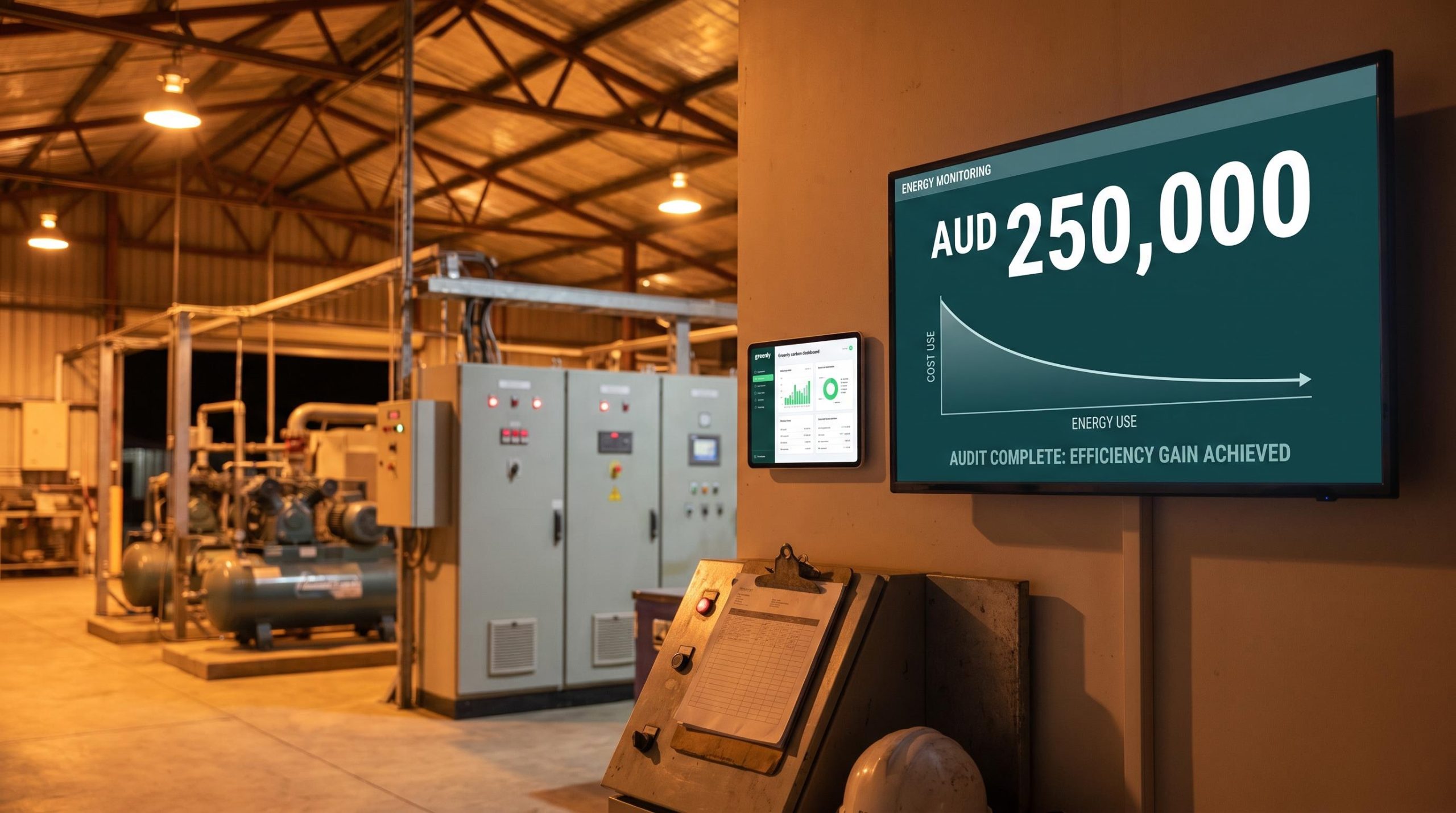
A single audit at a Queensland manufacturing company turned up over AUD 250,000 in potential annual savings. That number, not a sustainability slogan, is now the reason small and medium-sized businesses in Schneider Electric‘s supply chain are being asked to act.
The pressure is structural. Large enterprises now face mandatory climate disclosure rules that reach into their supply chains, yet most of the smaller firms in those chains have neither the tools nor the time to respond. A partnership between Schneider Electric and carbon management platform Greenly, formally announced today on 28 September 2026, is built to close that gap.
Here is what the programme actually offers, what its pilots have returned, and the regulatory clock driving the urgency, so you can judge whether an SME decarbonisation programme like this is relevant to your business or your clients.
What Schneider Electric and Greenly are offering SME partners
The programme is designed as a sequence, not a shopping list. It walks a partner from having no emissions data to being able to report it, in four defined steps.
- Team training through the Schneider Electric Sustainability School to build a working knowledge of sustainability fundamentals.
- Baseline measurement on the Greenly platform, which lets partners measure, monitor, and report their Scope 1 and Scope 2 emissions and generate a reduction roadmap.
- Advisory support from SE Advisory Services, Schneider Electric’s internal consulting practice, delivering remote audits and roadmap workshops, plus access to vouchers or rebates for eligible decarbonisation solutions.
- Ongoing monitoring and reporting of progress for compliance and transparency.
What separates this from a straightforward software resale is the integration itself. Greenly’s carbon accounting technology sits alongside Schneider Electric’s own consultancy, so the data a partner collects is paired with human advice on what to do with it. Zeigo Activate, Schneider Electric’s carbon-reduction platform, is bundled in as well.
Programme value Schneider Electric estimates the offering delivers more than USD 34,000 (over EUR 30,000) in annual value per channel partner.
When big ASX news breaks, our subscribers know first
Who it is for
This is not aimed at the entire SME universe. The target is specific: panel builders, contractors, system integrators, and IT channel partners within Schneider Electric’s electrical value chain and ecosystem. The programme has been open for channel partner enrolment since at least April 2025, with today’s announcement marking its formal launch.
The bundled structure carries a message of its own. By removing the entry cost and the complexity upfront, Schneider Electric is betting that most small businesses will not engage with decarbonisation otherwise. That bet is itself a statement about how far most SMEs currently sit from being ready to answer a large customer’s Scope 3 data request.
What the Pacific region pilots found
Start with the numbers. A Queensland-based manufacturing company identified over USD 178,000 (approximately AUD 250,000) in potential savings. A Pacific-region contractor uncovered more than USD 28,500 (approximately AUD 40,000) in potential yearly savings after initial audits by SE Advisory Services.
| Participant type | Savings identified (USD) | Savings identified (local) |
|---|---|---|
| Queensland manufacturer | Over $178,000 | ~AUD 250,000 |
| Pacific-region contractor | Over $28,500 | ~AUD 40,000 |
The Queensland result did not come from a single lever. According to Schneider Electric, the savings were spread across air system efficiency upgrades, load shifting, and equipment optimisation, the kind of operational adjustments that surface only once a business measures where its energy actually goes.
AUD 250,000 The potential annual savings a single audit identified for one Queensland manufacturer.
Here is the reframe that matters. For a small business, AUD 250,000 in identified savings is not a sustainability line item. It is a profitability number, the sort that changes what a year looks like on the bottom line.
One caveat belongs on the table. These figures originate from Schneider Electric and SE Advisory Services programme materials and have not been independently corroborated in public sources. They are the strongest evidence on offer that the advisory component produces real returns, but they are the vendor’s own evidence.
The regulatory backdrop pushing SMEs toward action now
The pressure starts at the top of the supply chain. Australia’s mandatory climate-related financial disclosure regime commenced on 1 January 2025 under the Corporations Act, following royal assent to the enabling legislation on 17 September 2024.
The first wave, Group 1 entities with more than 500 employees and more than AUD 500 million in revenue, must now publish climate disclosures for financial years starting from that date. Those obligations include Scope 3 emissions, meaning the greenhouse gases produced across their suppliers and customers.
Australia’s mandatory climate disclosures under the Corporations Act took effect for Group 1 entities from 1 January 2025, covering Scope 3 emissions across supplier and customer networks and creating the upstream data demand that programmes like this one are designed to satisfy.
That is where the obligation travels downward. SMEs sit inside those value chains, and while they carry no direct duty to report, they can be asked to hand over the data their large customers need.
Where the pressure lands
The Australian Small Business and Family Enterprise Ombudsman (ASBFEO) made this explicit in an October 2025 media release, warning that SMEs in the supply chains of large businesses or government may be asked for emissions information, particularly in high-emitting sectors:
A 2025 EarthCheck summary of ASIC-related guidance points the same way, noting that reporting entities may now request sustainability data from the small businesses, service providers, and primary producers they work with. Schneider Electric also cites the EU Corporate Sustainability Reporting Directive (CSRD) as a parallel driver, though specific SME-facing thresholds under that directive were not verified here.
There is no direct SME obligation under the Australian regime today. But the absence of a legal duty does not shield a small business from commercial fallout. A major customer asking for emissions data you cannot supply is, in practice, a contract at risk. The Minister also retains the power to lower the entity thresholds in future, which means today’s indirect pressure could become tomorrow’s direct mandate.
What the Schneider Electric launch signals about where SME compliance is heading
This launch is one data point in a larger shift. Major corporations are starting to build decarbonisation capability directly into their partner ecosystems, because their own regulatory obligations now depend on the data those partners can produce.
The extension of the programme into Lenovo’s 360 Circle IT channel community confirms the point. The pressure Schneider Electric is responding to is not confined to the electrical trade; it runs supply-chain-wide. Any SME acting as a vendor to a large enterprise, in any sector, should treat this as relevant.
The risks are worth naming. In a supply-chain relationship, a “voluntary” data request from a customer you depend on may not feel voluntary at all. The National Farmers’ Federation raised exactly this in 2025.
Scope 3 litigation exposure has already materialised at the large-enterprise level, with the ACCR greenwashing appeal against Santos still active and ASIC introducing limited assurance requirements on Scope 3 figures from year two of the mandatory regime, raising the evidentiary bar on supplier data that large entities rely on.
A de facto obligation The NFF has warned that voluntary data requests from large entities risk imposing effective compliance duties on SMEs without corresponding regulatory protections or support.
Reliance on a single vendor’s tools also carries dependency risk. That said, Schneider Electric frames its own offer as more than a compliance cost, positioning early emissions capability as a source of business resilience and a differentiator with regulated customers.
For an SME, the practical choice comes down to this: prepare now on structured terms, or wait and field ad hoc requests later with less time, fewer resources, and less leverage.
This article is for informational purposes only and should not be considered financial advice. Investors should conduct their own research and consult with financial professionals before making investment decisions.
The pilot savings figures are forward-looking estimates from Schneider Electric’s own materials and have not been independently verified. Past results do not guarantee future outcomes.
One programme, two signals: what Schneider Electric and Greenly are really telling the market
The launch sends two messages at once. First, supply-chain decarbonisation compliance is moving from aspiration to infrastructure: large corporates are now embedding it into partner programmes rather than leaving smaller firms to organise themselves. Second, the returns visible in the Pacific pilot data suggest the business case for early movers is genuine, not merely a regulatory hedge.
Three variables will tell you which way this trend runs next. Watch whether Australia lowers its climate disclosure thresholds through Ministerial decision, whether the EU CSRD prompts parallel programmes from other major vendors, and whether independent verification finally emerges to substantiate figures that, for now, rest on a single company’s word.
For readers wanting to understand exactly where large entities fell short in their first mandatory filings, our full explainer on ASIC REP 839 covers the eight specific action items ASIC published and what they mean for Group 2 entities now entering the regime.