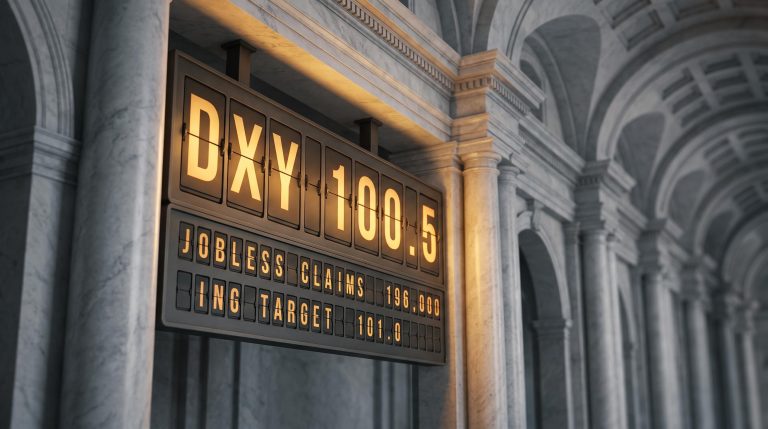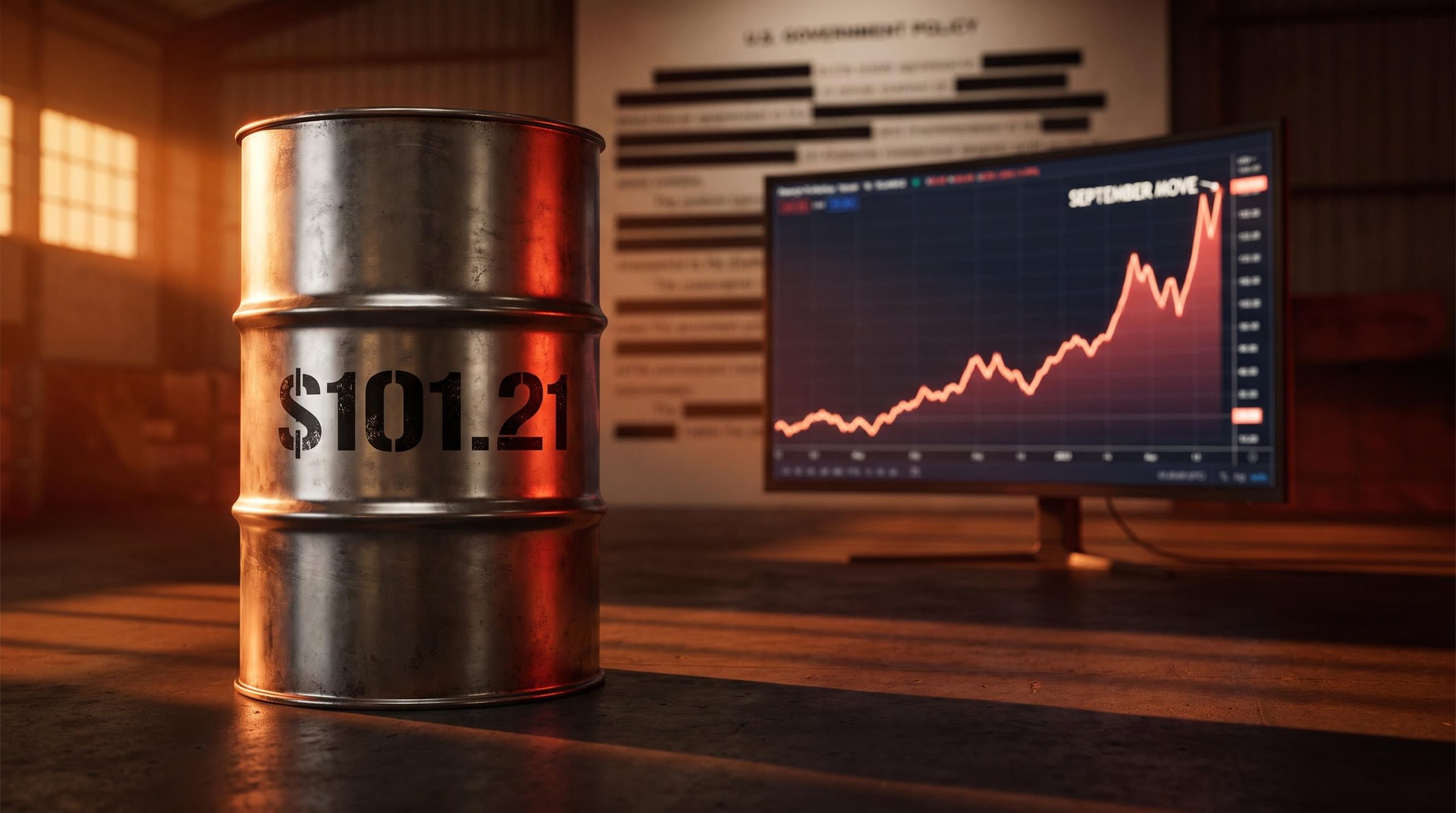
On 9 September 2026, Brent crude crossed $100 per barrel in a single session. There was no scheduled data release behind it, no central bank decision, no policy signal. There was a war escalating between the United States and Iran, and the oil market repriced accordingly.
That gap matters. Energy markets can move by double digits in hours when a chokepoint like the Strait of Hormuz comes into play, but central bank forward guidance runs on a slower, model-dependent rhythm calibrated to scheduled meetings and baseline forecasts.
The Iran-US standoff, simultaneous Russian refinery strikes, and persistent Hormuz risk are live variables, not abstract tail scenarios. The inflation-targeting frameworks that shape rate guidance were not built to absorb shocks at this velocity.
The question this raises for anyone positioning a portfolio is direct: is the forward guidance you are relying on built on assumptions that geopolitical reality may already have overtaken? What follows treats central banks energy price risk not as a policy curiosity but as a practical diagnostic, showing you how to read guidance as a conditional input rather than a guarantee.
When oil moves $10 in a session, what does forward guidance actually tell you?
Start with what the market actually did. On 4 September 2026, Brent traded at $95.67 and WTI at $91.56 at 01:00 GMT, both on course for their strongest weekly gains since mid-July. By the close on 9 September, Brent had pushed above $100 to settle at $101.21, with WTI at $96.05, driven by escalating fighting between the United States and Iran and fears over Middle Eastern supply.
| Date | Brent (USD/bbl) | WTI (USD/bbl) |
|---|---|---|
| 4 September 2026 | $95.67 | $91.56 |
| Start of week (early Sept) | $95.29 | $90.76 |
| 9 September 2026 | $101.21 | $96.05 |
That is a move of roughly 6-8% in days, not weeks. Commentary from EBC at the start of the month had already flagged that oil’s climb was raising the risk of a Federal Reserve rate hike, reversing the easing narrative that had dominated market pricing.
Here is why the velocity matters. Rabobank strategist Michael Every argues that central bank forward guidance is calibrated to baseline scenarios that quietly assume no major war, no embargo, and no snap-back in sanctions. When those assumptions fail, the guidance is obsolete before officials can formally revise it at their next meeting.
The abandonment of Fed forward guidance under Kevin Warsh, formalised at the June 2026 FOMC press conference, means every CPI print and jobs report now carries greater market-pricing weight than at any point in the prior two decades, removing the volatility buffer that investors had built positioning assumptions around.
The Iran-US situation makes that assumption especially fragile because it runs on two tracks at once. In the same period, President Trump issued annihilation threats toward Tehran while consulting Arab nations as potential partners in military action, even as indirect talks resumed in Geneva and Hormuz tensions simmered.
Investors who anchor on central bank guidance may believe they are positioned ahead of the market. In Every’s read, they are in fact lagging geopolitical and geoeconomic realities that have already moved energy prices.
The read for you is uncomfortable but clear. If you were positioning for October 2026 rate cuts on the strength of a published path, the oil market had already overridden the inflation assumption underneath that path before the central bank could say a word. The anomaly is not a one-off. It is the recurring pattern.
When big ASX news breaks, our subscribers know first
Why inflation-targeting frameworks were not built for this kind of shock
To see the blind spot, you have to look at the architecture. Standard New Keynesian models, the workhorse framework behind inflation targeting, assume a stable energy supply and a smooth transmission from policy rates to inflation and output. Supply shocks in these models are treated as exogenous noise, temporary disturbances to look through, rather than central drivers of the macro picture.
That assumption holds until a sanctions snap-back or a military strike reprices energy by double digits in a session. At that point the “noise” is the signal, and the framework is reacting on the fly rather than following its own published path.
Critics versus defenders of existing frameworks
The critics, Every among them, argue that frameworks systematically understate the speed and scale at which conflict or sanctions can reprice energy. In their view, this forces central banks to abandon previously signalled paths, which corrodes the usefulness of forward guidance.
The defenders answer that guidance is conditional by design. It is meant to evolve with data and risk, and the remedy is better stress-testing and clearer scenario communication, not a wholesale redesign of monetary frameworks.
Hold that disagreement open for now. What matters is that the major institutions themselves have moved toward acknowledging the problem, even without resolving it.
- BIS: Claudio Borio and colleagues argue that repeated supply shocks may require longer adjustment periods and more frequent deviations from announced paths, and that geoeconomic fragmentation can make inflation more volatile.
- IMF: Economists including Gita Gopinath frame geoeconomic risk as a structural factor in inflation dynamics, warning that monetary policy cannot offset persistent supply-side shocks without severe output costs.
- Fed: After the Russia-Ukraine episode, officials acknowledged that global energy and geopolitical developments can materially affect the outlook, making guidance conditional on the absence of large disruptions.
- ECB: Isabel Schnabel has described a “new age of energy inflation” where relative price shifts may be more frequent and persistent, with policy able to prevent second-round effects but not manage energy supply directly.
The consensus across BIS, IMF, and ECB is not that the frameworks are broken. It is that they are only partially adapted.
That distinction changes how you should read the word “data-dependent.” In an environment of live military conflict, the data can change faster than the guidance cycle can process it. A published rate path is a conditional projection built on baseline assumptions, not a commitment that survives geopolitical discontinuity, and knowing where institutions concede their own limits gives you a calibrated view of what guidance can and cannot promise.
How geopolitical energy shocks actually move from oil markets to policy reversals
The mechanism is not one shock but a cascade. When a geopolitical energy shock hits, it moves through three connected channels, and the trouble for central banks is that they can fire simultaneously.
- Headline inflation spike. A strike, embargo, or sanctions snap-back drives oil and gas sharply higher, lifting headline inflation immediately and often feeding expectations.
- Real income and growth squeeze. Higher energy costs cut household purchasing power and corporate margins, weakening growth and worsening the terms of trade for energy-importing economies.
- Financial-stability stress. Rapid repricing across commodities, FX, and rates strains leveraged positions and energy-sensitive credit, forcing central banks to weigh stability against inflation control.
The stagflation threat that Barclays identified at $97 Brent in late July 2026 sits precisely in the middle channel of the transmission cascade: higher energy costs compressing corporate margins and household purchasing power simultaneously, creating the growth-inflation conflict that leaves central banks with no clean policy tool.
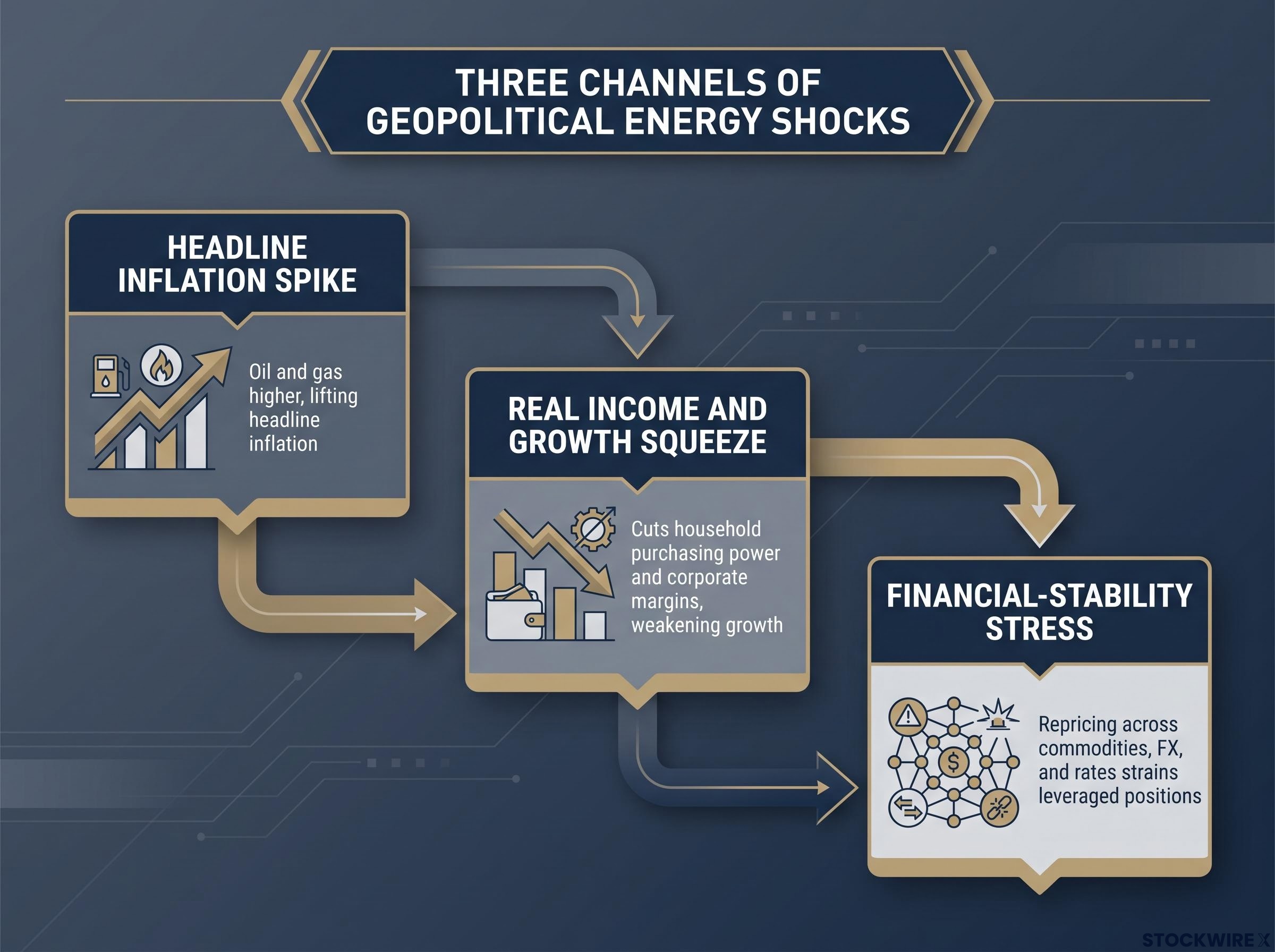
When all three operate at once, a central bank can be pushed to delay planned cuts, or even hike into a weakening economy, precisely to protect its credibility.
Four episodes that show the pattern
1973-74 Arab oil embargo. A geopolitical shock quadrupled oil prices and produced stagflation; the policy consequence was the breakdown of the then-dominant monetary frameworks.
1979 Iranian revolution. Persistent inflation followed the second oil shock; the policy consequence was the aggressive Volcker tightening in the United States.
1990-91 Gulf War. A pre-war price spike reversed once the conflict’s outcome became clearer; the policy consequence was a whipsaw, with central banks facing tightening and easing pressure in rapid sequence.
2022 Russia sanctions and European gas shock. Cuts to Russian gas supply repriced European energy overnight; the policy consequence was that the ECB and Bank of England shifted from gradual normalisation to faster tightening while simultaneously adding liquidity support, stretching their frameworks to balance inflation control against energy security.
That 2022 pivot is the closest precedent for what an Iran escalation could trigger globally. The ECB’s forced U-turn is the template for how quickly a published rate path can become obsolete, and it should tell you that these shocks do not simply add inflation risk. They can weaken growth and destabilise credit at the same time, leaving every available policy tool with a meaningful cost.
A closure or serious incident at the Strait of Hormuz could rapidly reprice oil above prior assumptions and invalidate the rate paths embedded in guidance and market pricing, triggering all three channels at once.
The Iran-US standoff as a live stress test for policy credibility
This is where the framework critique stops being theoretical. The Iran-US standoff is not a resolved case study; it is an ongoing test of whether guidance can adapt in real time, and it carries a formal peace framework and live military escalation in the same calendar.
The framework exists on paper. Under the Islamabad Memorandum, the US Treasury confirmed a 60-day waiver on sanctions covering Iranian oil, petrochemical, and petroleum products through 21 August 2026, alongside four working groups on sanctions termination, nuclear affairs, reconstruction, and monitoring.
| Date | Development | Energy market implication |
|---|---|---|
| 17 February 2026 | Iran and US agree “guiding principles” at talks in Switzerland. | Early de-escalation signal, but no binding supply commitment. |
| 26 February 2026 | Geneva indirect talks conclude with no deal. | War risk stays elevated, keeping a geopolitical premium in oil. |
| 15 June 2026 | US-Iran peace framework announced with limited sanctions relief. | Prospect of restored Iranian exports eases some supply fear. |
| 22 June 2026 | Iran agrees to UN inspectors; Treasury prepares 60-day oil waiver. | Temporary path to more Iranian barrels reaching market. |
| 21 August 2026 | 60-day sanctions waiver window elapses. | Uncertainty returns over whether relief is extended. |
| 9 September 2026 | Brent tops $100 amid escalating US-Iran fighting. | Market reprices energy risk sharply higher within days. |
| 20 September 2026 | Third round of indirect Geneva talks begins under Omani mediation. | Bifurcated outlook: deal or breakdown, each with large price gaps. |
The negotiating track is genuinely active. A third round of indirect talks opened in Geneva on 20 September 2026, mediated by Omani foreign minister Badr al-Busaidi, and Iranian foreign ministry spokesman Esmaeil Baqaei described the 17 September session as “intensive and very serious.”
Where the fault lines sit as of late September 2026
The core disagreements remain unresolved. Iran and the US are still divided on nuclear limits and the disposition of frozen assets, with President Pezeshkian insisting on 14 September 2026 on full sanctions termination and an end to negotiating “through force.”
At the same time, the escalation signals are visible. US financial pressure has continued, tensions around the Strait of Hormuz have persisted, a US military buildup is in place, and Iran has reportedly stiffened its conditions for ending hostilities.
A second energy risk vector is running in parallel. Two additional Russian oil refineries sustained strike damage in the same period, adding a further source of potential supply disruption alongside the Iran situation.
This is precisely the live test Every’s argument predicts: a scenario with multiple plausible outcomes, deal, breakdown, or escalation, each carrying dramatically different energy price implications, none fully captured in current central bank baselines. The coexistence of a formal peace framework and open military escalation in the same week tells you that structured diplomacy does not insulate energy markets from sudden repricing, and any position built on a “deal is imminent” baseline carries tail risk that guidance cannot hedge.
For investors wanting to understand the physical market reality behind the geopolitical headlines, our full explainer on the Hormuz shipping crisis details the war-risk insurance collapse, actual transit volumes, and the specific conditions required before commercial flows can genuinely normalise.
What investors who rely on forward guidance should actually be asking
Shift the lens to your own book. The practical distinction is between treating guidance as a firm commitment and treating it as a conditional projection. A commitment survives the next meeting; a conditional projection built on a “no major war, no sanctions snap-back” baseline does not, and it becomes obsolete the moment that baseline is violated.
When that happens, the repricing is not gentle. Markets scramble from a smooth-path assumption to an emergency stance, and specific parts of a portfolio take the strain first.
- Bond yields: Forced reversals from an expected cutting path to holds or hikes can move yields violently, hitting duration-heavy positions.
- FX in energy-importing economies: Currencies of net oil importers can weaken sharply as the terms of trade deteriorate under a supply shock.
- Rate-sensitive equities: Banks, utilities, and housing-linked names are exposed when the assumed rate path is torn up.
The optimistic counterargument deserves a fair hearing. Since 2022, central banks have shifted toward shorter guidance horizons, meeting-by-meeting framing, and scenario analysis that explicitly includes adverse geopolitical outcomes, with a clearer separation between baseline projections and risk narratives. That is a genuine improvement on the 1970s model.
Even relatively optimistic voices acknowledge that in a high-uncertainty geoeconomic environment, forward guidance cannot fully insure investors against sudden reversals prompted by large energy shocks.
So the useful question is not whether to trust guidance, but how to use it. Treat it as one conditional input among several, and hold a specific view on how an Iran escalation or a Hormuz closure would alter the assumptions the guidance is resting on. That is the scenario sensitivity central banks acknowledge but do not fully price into their published paths.
Positioning for a framework that hasn’t caught up yet
Pull the threads together and they point the same way. The September 2026 move above $100, the structural blind spot in inflation-targeting models, the three-channel transmission cascade, and the live Iran test all expose the same gap: geopolitical velocity outruns institutional response speed.
The improvement since 2022 is real. Conditional guidance, scenario analysis, and meeting-by-meeting framing are meaningful upgrades, but they are not yet sufficient in a high-escalation environment where BIS and IMF research both warn that geoeconomic fragmentation can keep inflation volatile even when long-run expectations stay anchored.
Investors who anchor on central bank forward guidance are dangerously mispositioned when a geopolitical shock forces an abrupt policy U-turn, in Michael Every’s framing.
Here is the specific variable to track. Not whether an Iran deal is reached, but whether the next guidance cycle from the Fed, ECB, or other major central banks explicitly scenarios a Hormuz closure or an Iran escalation path. The absence of that scenario in published guidance is itself the signal, because it tells you what assumptions the path is quietly resting on.
Apply one question to the next central bank statement you read: does this guidance scenario an energy shock of the magnitude the Iran-US situation could produce? If it does not, you are looking at a projection, not a commitment.
For investors wanting to stress-test whether the Fed’s institutional shift toward silence actually improves or worsens positioning in a high-escalation environment, our deep-dive into the Warsh communication regime examines the bond-market reaction data and the historical precedents from prior guidance reversals under Bernanke, Yellen, and Powell.
This article is for informational purposes only and should not be considered financial advice. Investors should conduct their own research and consult with financial professionals before making investment decisions. Past performance does not guarantee future results, and these statements are speculative and subject to change based on market developments.