

Patrys reaches clinical milestone as first participants dosed in RLS-2202 Phase 1a trial
Patrys Limited (ASX: PAB) has dosed the first participants in Cohort 1 of the Phase 1a clinical trial of RLS-2202, marking the commencement of human clinical evaluation of the company’s proprietary intravenous (IV) formulation of quetiapine. RLS-2202 is being developed as a potential IV treatment option for delirium in acute care settings.
This milestone represents the transition from formulation development and clinical preparation into active human data generation, with the study now producing clinical results intended to inform the next stage of the programme.
CEO Dr Samantha South
“We are delighted to announce the dosing of the first participants in our Phase 1a clinical trial. This is a major milestone for RLS-2202 and for Patrys. We have now moved from developing the formulation and preparing for the clinic to generating human clinical data. We look forward to evaluating the clinical data, as these results will inform the strategy for advancement into later-stage development.”
When big ASX news breaks, our subscribers know first
Understanding the Phase 1a trial design
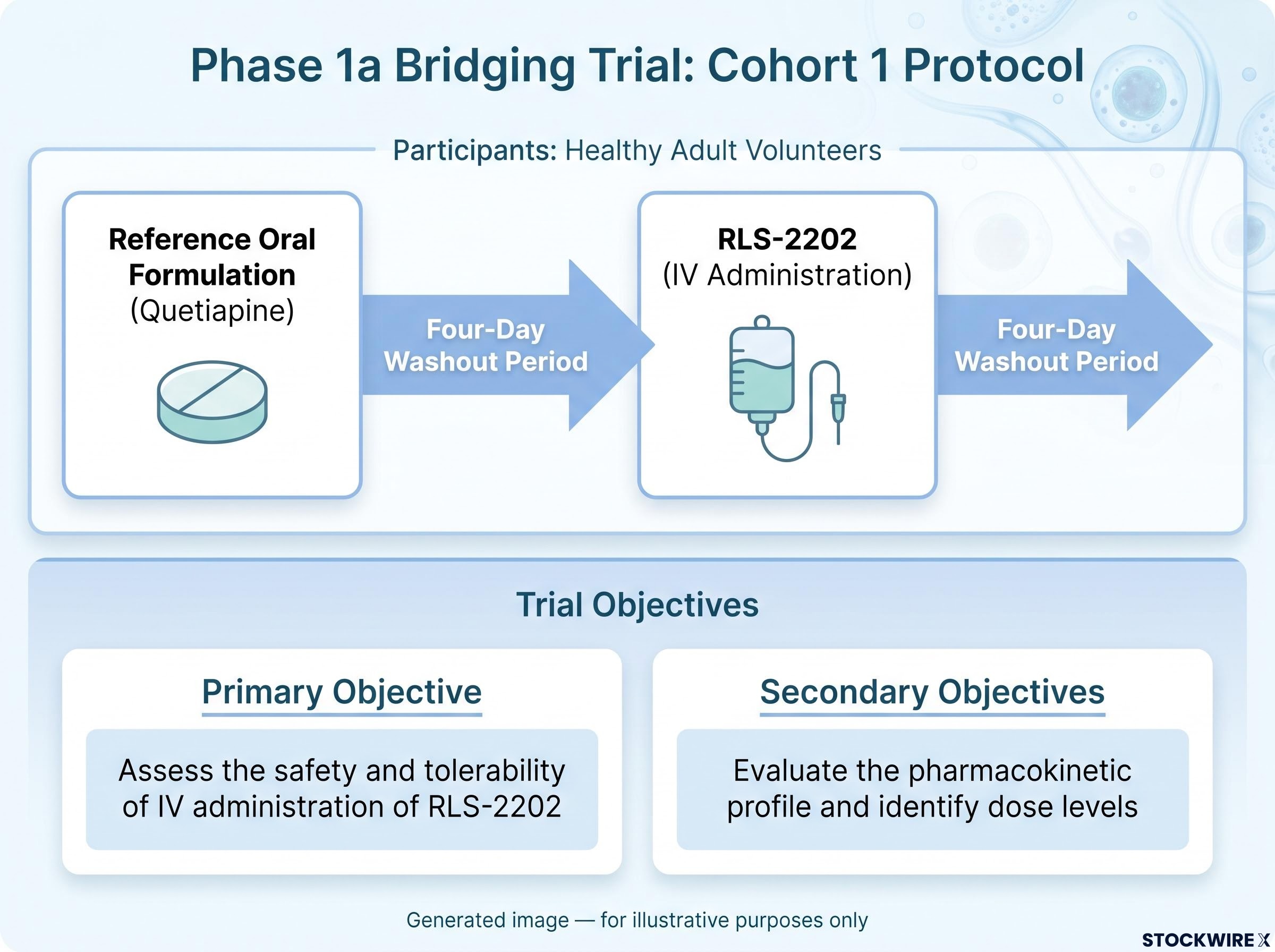
The Phase 1a study is a bridging trial designed to evaluate the safety, tolerability, and pharmacokinetic (PK) profile of RLS-2202 in healthy adult volunteers. In Cohort 1, each participant receives both the reference oral formulation of quetiapine and RLS-2202, separated by a four-day washout period.
HREC approval from Bellberry was granted on 27 August 2026, clearing the primary ethics hurdle and enabling TGA notification and site initiation at CMAX in South Australia ahead of enrolment.
The study employs a dose-escalation design. Progression from Cohort 1 to Cohort 2 is subject to review by an independent Safety Review Committee, in accordance with the study protocol.
The trial’s objectives are structured as follows:
- Primary objective: Assess the safety and tolerability of IV administration of RLS-2202
- Secondary objectives: Evaluate the pharmacokinetic profile and identify dose levels to support subsequent clinical development
Why IV quetiapine matters for delirium
Quetiapine has an extensive history of oral use in the treatment of schizophrenia and bipolar disorder, meaning it is not a new compound. RLS-2202 is being developed as an IV formulation with the objective of providing an alternate, faster and safer route of administration for patients with delirium in acute care settings.
As a bridging trial, the Phase 1a study is designed to assess whether the safety and PK profile of IV-administered RLS-2202 presents any clinically meaningful differences from the established profile of oral quetiapine. Subject to positive results, the findings are also expected to inform regulatory discussions regarding the extent to which the established oral quetiapine safety information may be relevant to the RLS-2202 development programme.
The practical significance for investors is that RLS-2202 is not being developed in isolation from existing knowledge. It builds upon decades of quetiapine clinical data, which could support the regulatory pathway if the Phase 1a data aligns with the oral safety record.
Manufacturing on track ahead of Cohort 2
Patrys has completed GMP manufacturing and filling of the RLS-2202 clinical trial material required for Cohort 2. The manufactured product is currently undergoing required quality control (QC) testing prior to release for clinical use.
Subject to successful completion of this QC testing and release of the material, the company expects to have sufficient clinical trial material to support dosing of Cohort 2 and all associated planned trial activities. No manufacturing risk to the timeline has been flagged.
The table below summarises the key milestones for the RLS-2202 Phase 1a study:
| Milestone | Timing | Status | Significance |
|---|---|---|---|
| Cohort 1 dosing commences | September 2026 | Complete | First human data generation for RLS-2202 |
| Safety Review Committee meeting | October 2026 | Upcoming | Gate to Cohort 2 progression |
| Cohort 2 dosing commences | Q4 CY26 | Subject to safety review and QC release | Dose escalation stage |
| Final participant dosed (Cohort 2) | Q4 CY26 | Targeted | Trial completion trigger |
What this milestone means for Patrys investors
The commencement of Phase 1a dosing removes a key execution risk from the RLS-2202 programme. The asset is now in the clinic and actively generating human clinical data, having successfully progressed from formulation development through to first-in-human evaluation.
The groundwork for reaching this stage was laid in May 2026, when Patrys confirmed CMAX as its Phase 1A clinical trial site and appointed Alithia Life Sciences as its CRO, completing the operational framework needed to bring the programme into the clinic.
Results from this study are expected to serve three functions for the programme’s advancement:
- Inform dose selection for future trials
- Guide the design of subsequent efficacy studies in the target patient population
- Support regulatory pathway discussions regarding the relevance of oral quetiapine’s established safety profile to RLS-2202
The near-term catalyst for investors to monitor is the independent Safety Review Committee meeting scheduled for October 2026, at which available Cohort 1 safety data will be reviewed prior to any progression to Cohort 2. Subject to a satisfactory safety review and successful QC release of Cohort 2 material, the company expects to commence Cohort 2 dosing and complete final participant dosing, both targeted for Q4 CY26.
Patrys has stated its intention to provide further updates as key clinical milestones are achieved and data from the study become available.
Don’t Miss the Next ASX Healthcare Milestone
Get FREE breaking ASX healthcare news delivered to your inbox within minutes of release, complete with in-depth analysis already done for you. Join 20,000+ subscribers staying ahead of the market on clinical developments and biotech breakthroughs. Click the “Free Alerts” button at Big News Blast to start receiving alerts the moment news breaks.