
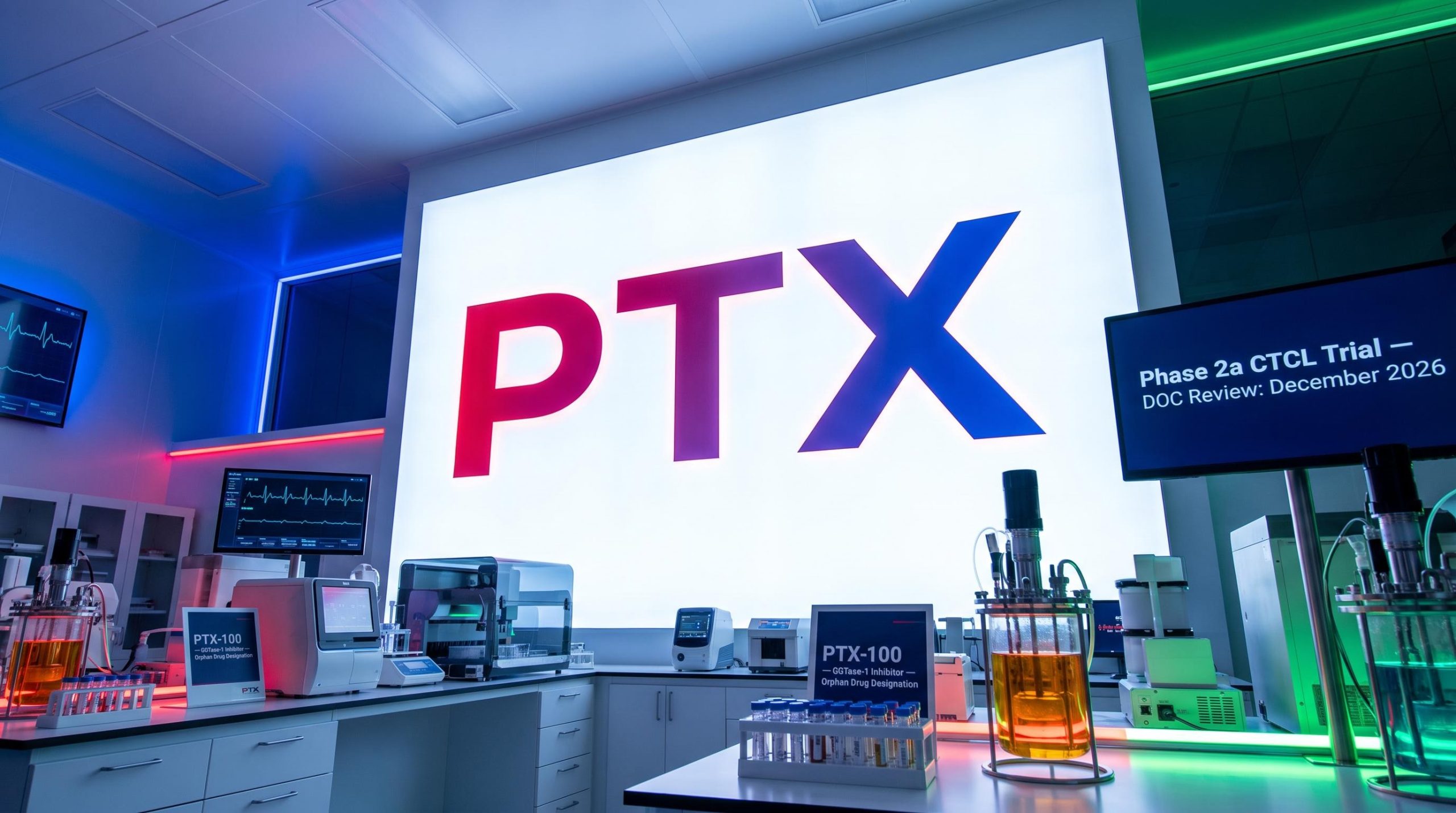
Prescient Therapeutics (ASX: PTX) has reached the pre-specified enrolment threshold triggering the first planned Dose Optimisation Committee (DOC) review in its Phase 2a study of PTX-100 in relapsed/refractory cutaneous T-cell lymphoma (CTCL).
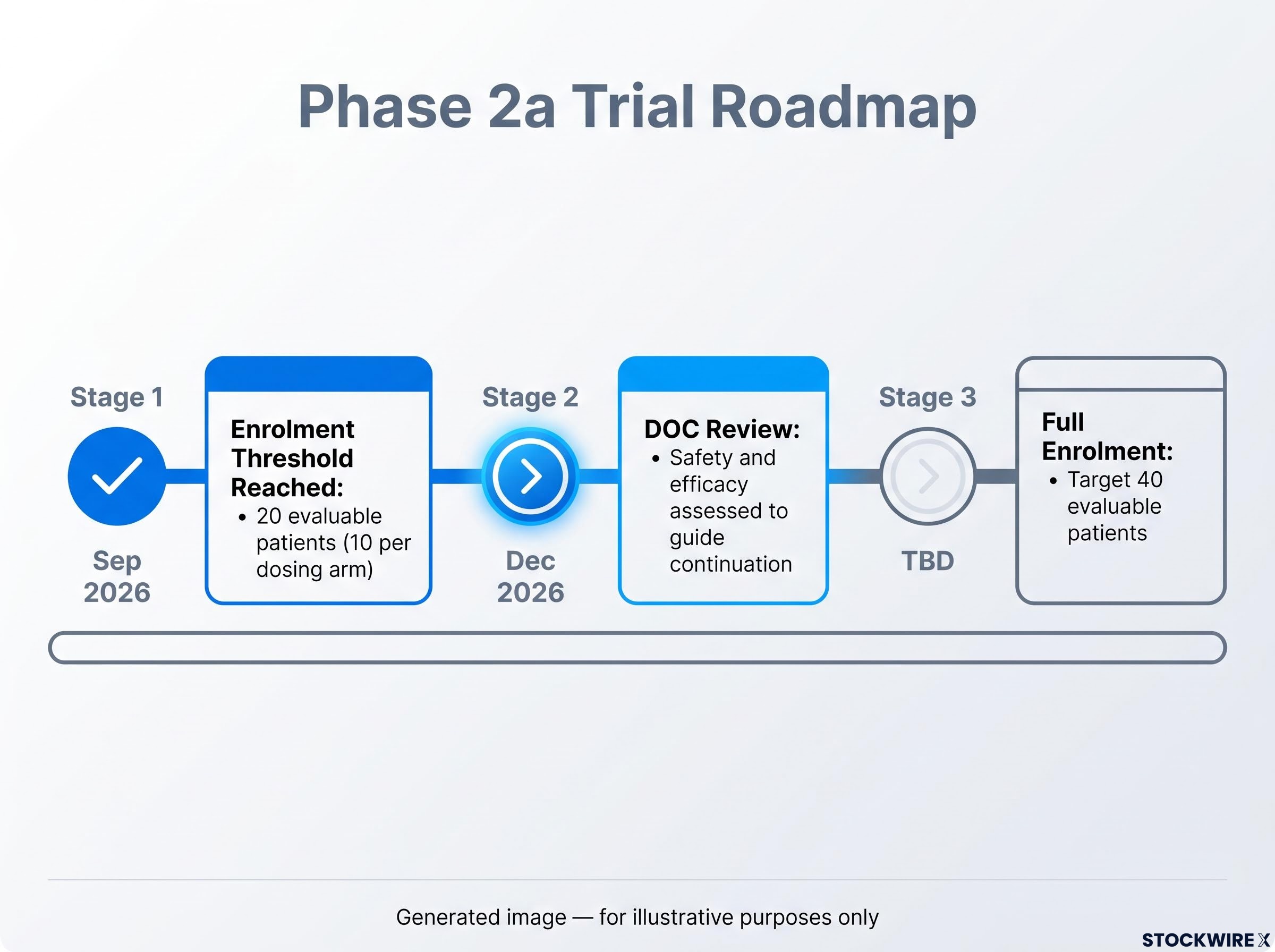
The clinical-stage oncology company confirmed 20 evaluable patients are now enrolled, with 10 in each of the study’s two dosing arms. Patients are considered evaluable on completion of four cycles of treatment.
The DOC review remains on track to convene in December 2026, consistent with the company’s previously stated timeline. Reaching the threshold reinforces disciplined execution against a clearly defined clinical roadmap, a factor investors often weigh when assessing early-stage biotech developers.
The milestone: enrolment threshold triggers first DOC review
The enrolment of 10 evaluable patients per dosing arm represents the pre-specified threshold for the study’s first planned DOC review. This is a scheduled checkpoint within the study’s dose optimisation design, not completion of the trial itself.
Key details of the milestone include:
- 20 evaluable patients enrolled in total, split evenly across the two dosing arms
- The DOC comprises clinical and biostatistical experts
- The committee will review safety and efficacy data from both dosing arms to provide guidance on continuation of the study for further development
- A market update is expected to follow the DOC’s recommendation
- Enrolment continues internationally towards the full target of 40 evaluable patients
The December meeting represents the study’s first planned DOC review. Its purpose is to guide continuation, not to deliver definitive trial results.
James McDonnell, CEO
“Reaching this first dose optimisation committee meeting reflects strong execution by our clinical team and the sites supporting this study. We look forward to the Dose Optimisation Committee’s review in December as we advance PTX-100 towards its next stage of development.”
When big ASX news breaks, our subscribers know first
Understanding PTX-100 and CTCL
PTX-100 is a first-in-class compound that blocks an important cancer growth enzyme known as geranylgeranyl transferase-1 (GGTase-1). By inhibiting this enzyme, it disrupts oncogenic Ras pathways in cancer cells, triggering apoptosis, the process by which cancer cells die.
According to the company, PTX-100 is “understood to be the only GGTase-1 inhibitor in the world in clinical development.”
CTCL, or cutaneous T-cell lymphoma, is a form of cancer affecting the T cells of the immune system, with mycosis fungoides being the most common subtype. The US FDA has granted PTX-100 Orphan Drug Designation for all T-cell lymphomas and Fast Track Designation for the treatment of adults with relapsed or refractory mycosis fungoides.
For investors, these designations carry weight. Orphan Drug status is granted to therapies targeting rare diseases and can bring development incentives, while Fast Track Designation is intended to expedite the review of drugs addressing serious conditions with unmet medical need. Both can support a smoother regulatory and commercial pathway.
Why this matters for investors
Delivering a milestone on schedule reinforces confidence in management’s stated development timeline, a meaningful de-risking signal in early-stage oncology where slippage is common.
The clinical team executing this study was also recently strengthened at the leadership level, with Prescient’s CMO appointment in June 2026 bringing Dr Rosalind Wilson aboard, an oncology drug developer with over 30 years of experience including senior roles at Telix Pharmaceuticals and Roche.
PTX-100 also carries prior clinical support. It demonstrated safety and early clinical activity in a previous Phase 1 study and a PK/PD basket study across haematological and solid malignancies. More recently, it completed a Phase 1b expansion cohort in T-cell lymphomas, where it showed encouraging efficacy and safety.
Beyond PTX-100, the company retains pipeline optionality through its cell therapy platforms, reducing dependence on a single asset.
| Milestone | Status | Detail | Next Step | Timeline |
|---|---|---|---|---|
| Enrolment threshold | Reached | 20 evaluable patients | Triggers DOC review | Sep 2026 |
| DOC review | Upcoming | Both dosing arms assessed | Guidance on continuation | Dec 2026 |
| Full enrolment | In progress | Target 40 evaluable patients | Ongoing internationally | TBD |
The broader pipeline: cell therapy platforms
Prescient’s cell therapy platforms provide diversification beyond PTX-100:
-
OmniCAR: a universal immune receptor platform enabling controllable T-cell activity and multi-antigen targeting; currently in pre-clinical development
-
CellPryme-A: an adjuvant therapy administered alongside cellular immunotherapy to help patients overcome a suppressive tumour microenvironment
-
CellPryme-M: a 24-hour manufacturing process that shifts T cells towards a central memory phenotype to improve persistence and tumour penetration
These multiple programmes give the company several potential value drivers, reducing single-asset dependency.
What’s next and how to follow along
Enrolment in the Phase 2a study continues internationally towards the full target of 40 evaluable patients. The DOC’s recommendation and a subsequent market update are expected to follow the December 2026 review.
CEO James McDonnell will host an online investor briefing on Friday, 4 September 2026 at 11am (AEST). Registration is available at: https://prescienttherapeutics.investorportal.com.au/investor-briefing/
Don’t Miss the Next Healthcare Breakout
Get FREE breaking ASX healthcare and biotech alerts delivered to your inbox within minutes of release, complete with in-depth analysis already done for you. Join 20,000+ investors who rely on Big News Blast for real-time coverage the moment news breaks. Click the “Free Alerts” button to start receiving alerts today.