
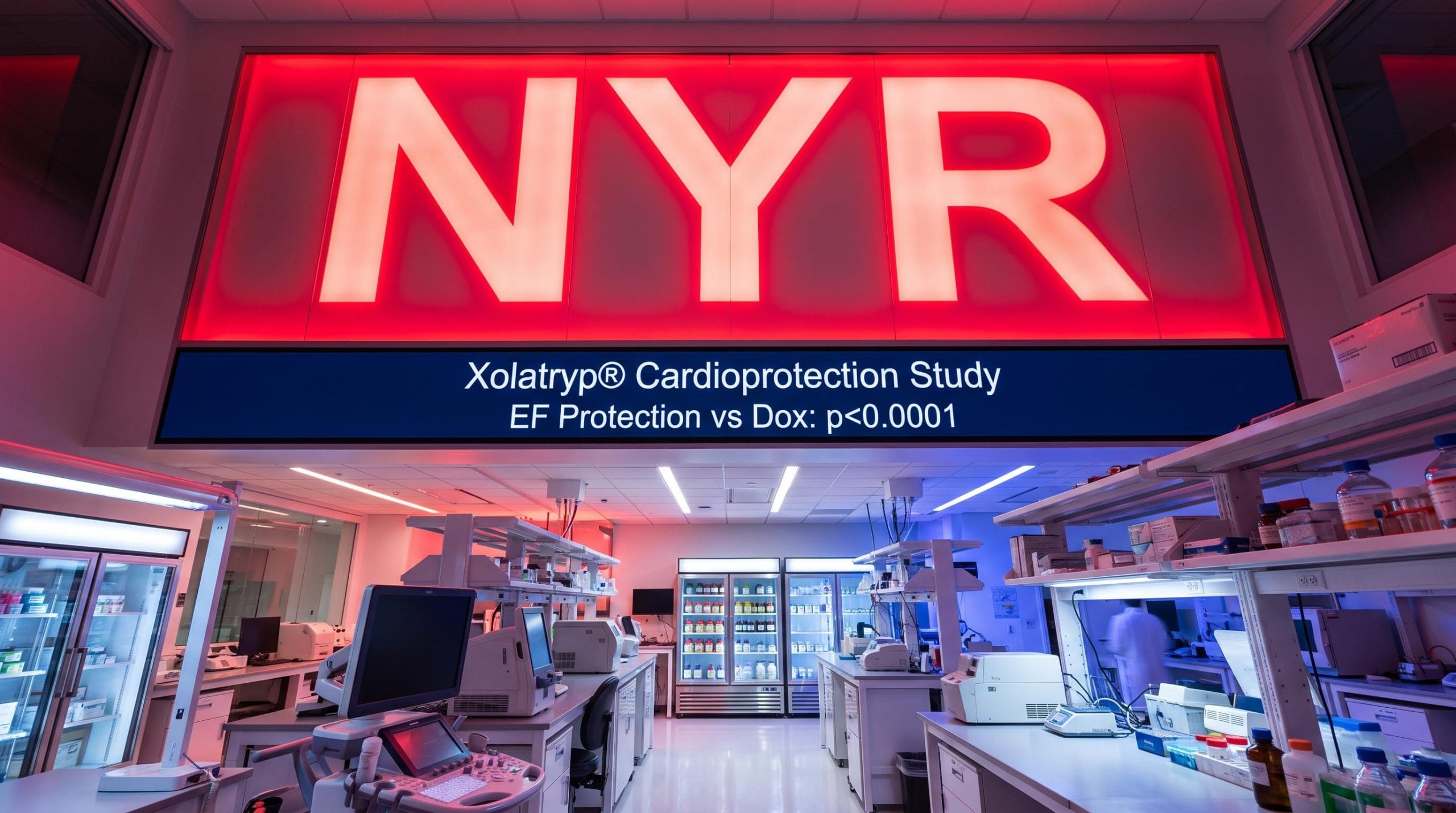
Xolatryp delivers significant, sustained cardioprotection in doxorubicin study
Nyrada Inc (ASX:NYR), a clinical-stage biotechnology company developing Transient Receptor Potential Canonical (TRPC) ion channel inhibitors, has reported preclinical results showing its lead candidate Xolatryp® significantly protected cardiac function against progressive doxorubicin-induced cardiotoxicity across four key measures of heart performance.
The magnitude of functional protection was comparable to dexrazoxane, the only approved cardioprotective agent. Benefits were evident at Week 3 and sustained through Week 5, demonstrating a longitudinal treatment effect rather than an isolated terminal finding.
Combined with earlier tumour-model data, the company states the findings support Xolatryp’s potential as a differentiated adjunct to anthracycline therapy, an area of significant unmet clinical need.
When big ASX news breaks, our subscribers know first
Why anthracycline cardiotoxicity is a critical unmet need
Doxorubicin is a potent anthracycline chemotherapy that has been in use since the 1970s and is considered a “backbone drug” in oncology. It forms part of standard treatment regimens across a broad range of cancers, including:
- Breast, liver, lung, ovarian and bladder cancers
- Leukaemias
- Lymphomas (Hodgkin and non-Hodgkin)
- Sarcomas (bone and soft tissue)
The core problem lies in the drug’s effect on the heart. Cardiac injury from anthracyclines is dose-dependent and cumulative, meaning damage accumulates as treatment progresses. This can ultimately necessitate dose reduction, treatment interruption, or discontinuation of otherwise effective anticancer therapy.
Dexrazoxane is an established cardioprotective agent, but its use is not routine across the broader patient population. Historically, clinical use has been relatively restricted, reflecting limitations in approved indications, concerns regarding potential effects on anticancer efficacy and secondary malignancies, and additional haematological toxicity.
For investors, the significance is clear. A cardioprotective agent that could be deployed more broadly alongside anthracycline therapy, while preserving anticancer efficacy, would address a large and persistent gap in the cardio-oncology market.
Study results: protection across four measures of heart function
In the preclinical study, doxorubicin weakened the heart’s ability to pump and empty blood effectively. The heart squeezed less strongly, shown by lower ejection fraction (EF) and fractional shortening (FS), while more blood remained in the heart after each beat, shown by increased end-systolic volume (ESV) and a larger chamber size during contraction (LVIDs).
Xolatryp significantly attenuated all four components of this phenotype. Protection was statistically significant across each parameter at Week 3 and was sustained through Week 5, by which point doxorubicin-induced dysfunction had progressed substantially. This longitudinal pattern is consistent with sustained cardioprotection rather than an effect confined to a single timepoint.
Functional cardioprotection with Xolatryp was comparable to that observed with dexrazoxane, with mean changes numerically favouring Xolatryp across all four systolic parameters. The study was not designed or powered to establish superiority over dexrazoxane, and no such conclusion should be drawn.
| Parameter | Timepoint | Doxorubicin alone | Xolatryp + Dox | Protection vs Dox (p-value) |
|---|---|---|---|---|
| EF (↑ better) | Week 3 | -35.9% | -21.2% | 41% less decline (p=0.0014) |
| EF (↑ better) | Week 5 | -46.0% | -30.3% | 34% less decline (p<0.0001) |
| FS (↑ better) | Week 3 | -45.3% | -28.6% | 37% less decline (p=0.0024) |
| FS (↑ better) | Week 5 | -55.5% | -38.8% | 30% less decline (p=0.0013) |
| ESV (↓ better) | Week 3 | +196.5% | +123.6% | 37% less increase (p=0.0022) |
| ESV (↓ better) | Week 5 | +233.4% | +160.6% | 31% less increase (p=0.0007) |
| LVIDs (↓ better) | Week 3 | +48.5% | +33.8% | 30% less increase (p=0.0248) |
| LVIDs (↓ better) | Week 5 | +57.4% | +41.9% | 27% less increase (p=0.0193) |
Supporting biomarker and histopathology findings
Additional endpoints reinforced the functional results:
-
cTnI: Xolatryp was associated with an approximately 19% reduction in cardiac troponin I at Week 5 relative to doxorubicin alone, a difference that approached but did not reach statistical significance (p = 0.0535). This comparatively modest effect, despite significant preservation of cardiac function, may indicate a cardioprotective profile distinct from dexrazoxane.
-
Heart rate: Heart rate remained comparable across treatment groups, indicating the preservation of cardiac function with Xolatryp was not attributable to a compensatory increase in heart rate.
-
Blinded histopathology: An independent contract research organisation (CRO) performed blinded analysis, with overall injury severity in Xolatryp-treated animals reduced from predominantly moderate focal myocardial injury to predominantly mild focal injury, the same characterisation applied to the dexrazoxane positive-control group.
-
Myocardial collagen: Mean collagen content was reduced from 17.4% with doxorubicin alone to 13.2% with Xolatryp, a numerical reduction of approximately 24% that did not reach statistical significance and is therefore regarded as supportive rather than confirmatory.
Targeting both sides of the therapeutic index
The strategic significance lies in the combination of two separate preclinical studies. This cardiac study and Nyrada’s previously reported tumour study address both sides of the anthracycline therapeutic-index equation: preserving cardiac function during doxorubicin exposure, while also enhancing anti-tumour activity.
The anti-tumour data referenced here comes from a separate liver cancer tumour model in which Xolatryp combined with doxorubicin achieved a 57% tumour volume reduction at Day 14, versus 41% for doxorubicin alone, with Nyrada subsequently filing a provisional patent for Xolatryp as an anti-cancer agent.
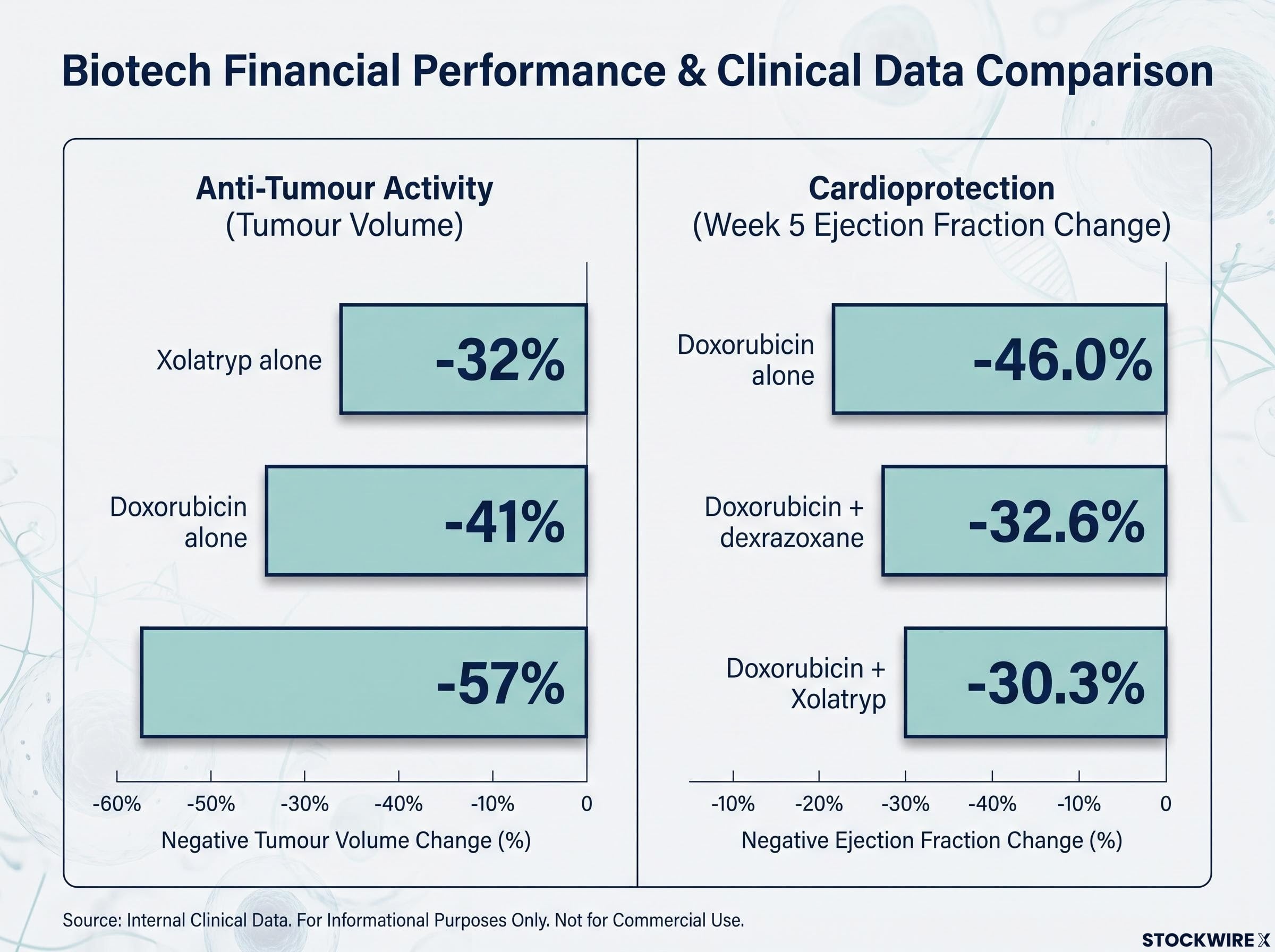
Anti-tumour activity (separate tumour model):
- Xolatryp alone: -32% tumour volume
- Doxorubicin alone: -41%
- Doxorubicin + Xolatryp: -57% (approximately 39% improvement versus doxorubicin alone)
Cardioprotection (Week 5 EF change from baseline):
- Doxorubicin: -46.0%
- Doxorubicin + Xolatryp: -30.3%
- Doxorubicin + dexrazoxane: -32.6%
- Xolatryp versus doxorubicin: p<0.0001
A single agent that could both protect the heart and potentially enhance the anticancer effect represents a genuinely differentiated proposition in a large market.
CEO Commentary
“These results significantly strengthen the rationale for developing Xolatryp in the oncology setting. Xolatryp provided sustained protection against doxorubicin-induced cardiac dysfunction across multiple measures of heart function, with functional protection broadly comparable to dexrazoxane.
“Combined with our previous finding that Xolatryp has anti-tumour activity and enhances the response to doxorubicin in a tumour model, we believe Xolatryp has the potential to offer an important new approach to anthracycline therapy, protecting cardiac function while preserving, and potentially enhancing, the anti-cancer effect,” said James Bonnar, Chief Executive Officer.
What’s next: assessing a potential Phase Ib oncology trial
Nyrada will now assess the design and feasibility of a potential Phase Ib clinical trial of Xolatryp in the oncology setting. The company noted that preclinical results may not translate to humans.
The development pathway sits within a broader pipeline. A Phase I clinical trial assessing safety, tolerability and pharmacokinetics has been successfully completed, and a Phase IIa trial (PROTECT-MI) has commenced to assess Xolatryp in reducing cardiac reperfusion injury in patients with ST-Elevation Myocardial Infarction (STEMI) undergoing PCI.
The PROTECT-MI Phase IIa trial, which dosed its first patient in July 2026 and is targeting cardiac reperfusion injury in STEMI patients undergoing PCI, represents the cardiovascular arm of Xolatryp’s development pathway running in parallel to the emerging oncology programme.
Xolatryp is a small-molecule selective inhibitor of TRPC3/6/7 ion channels, designed to limit excessive calcium (Ca²⁺) entry related to multiple disease pathologies.
For investors, the study opens a second major therapeutic avenue in oncology alongside the existing cardiovascular programme, broadening the potential application of the company’s lead candidate.
Don’t Miss the Next Healthcare Breakthrough
Big News Blast delivers FREE breaking ASX healthcare news directly to your inbox within minutes of release, complete with in-depth analysis. Join 20,000+ subscribers already getting the edge on market-moving announcements the moment they drop. Click the “Free Alerts” button at Big News Blast to start receiving alerts today.