
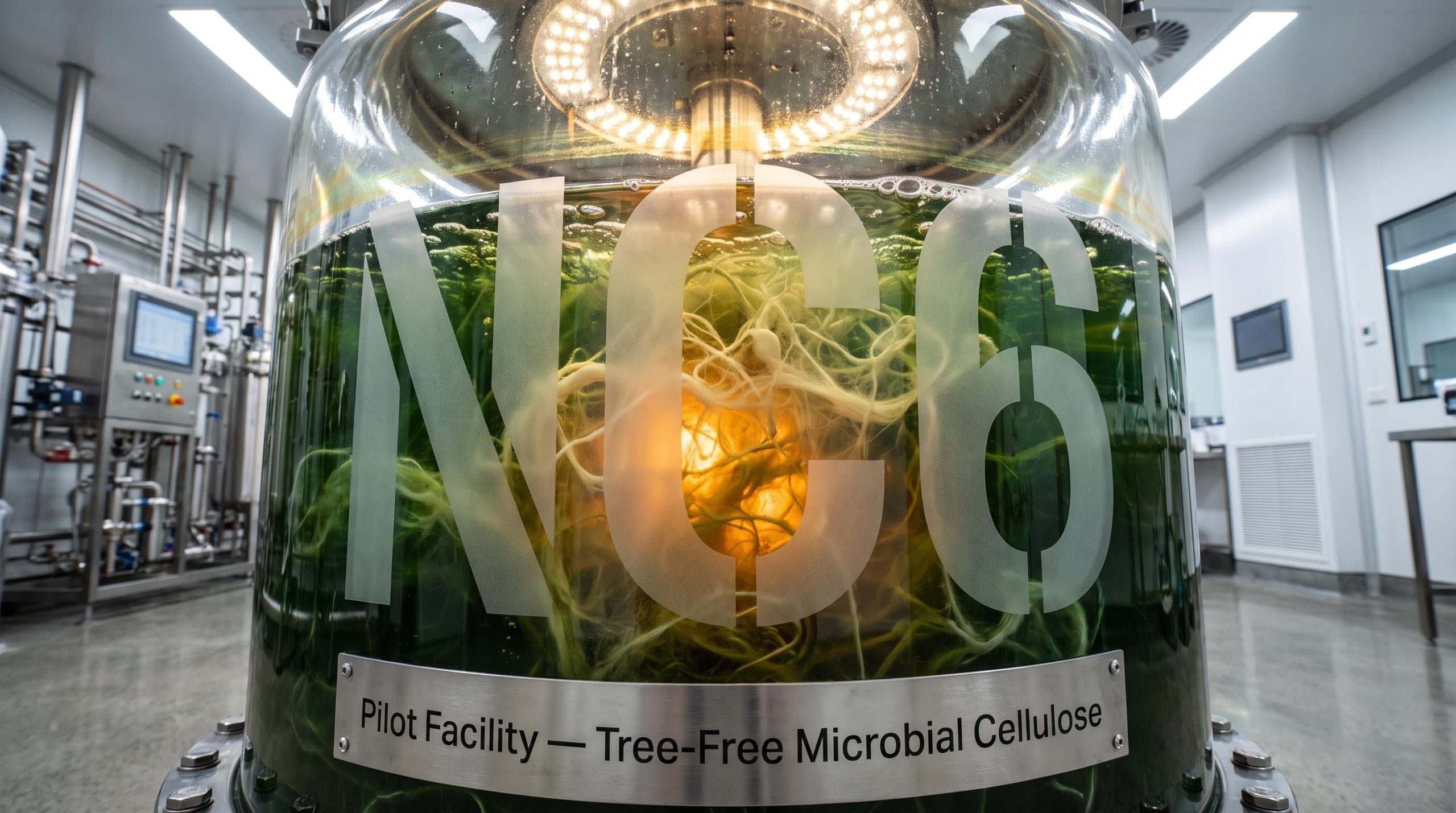
Nanollose refines development pathway to single Pilot Facility
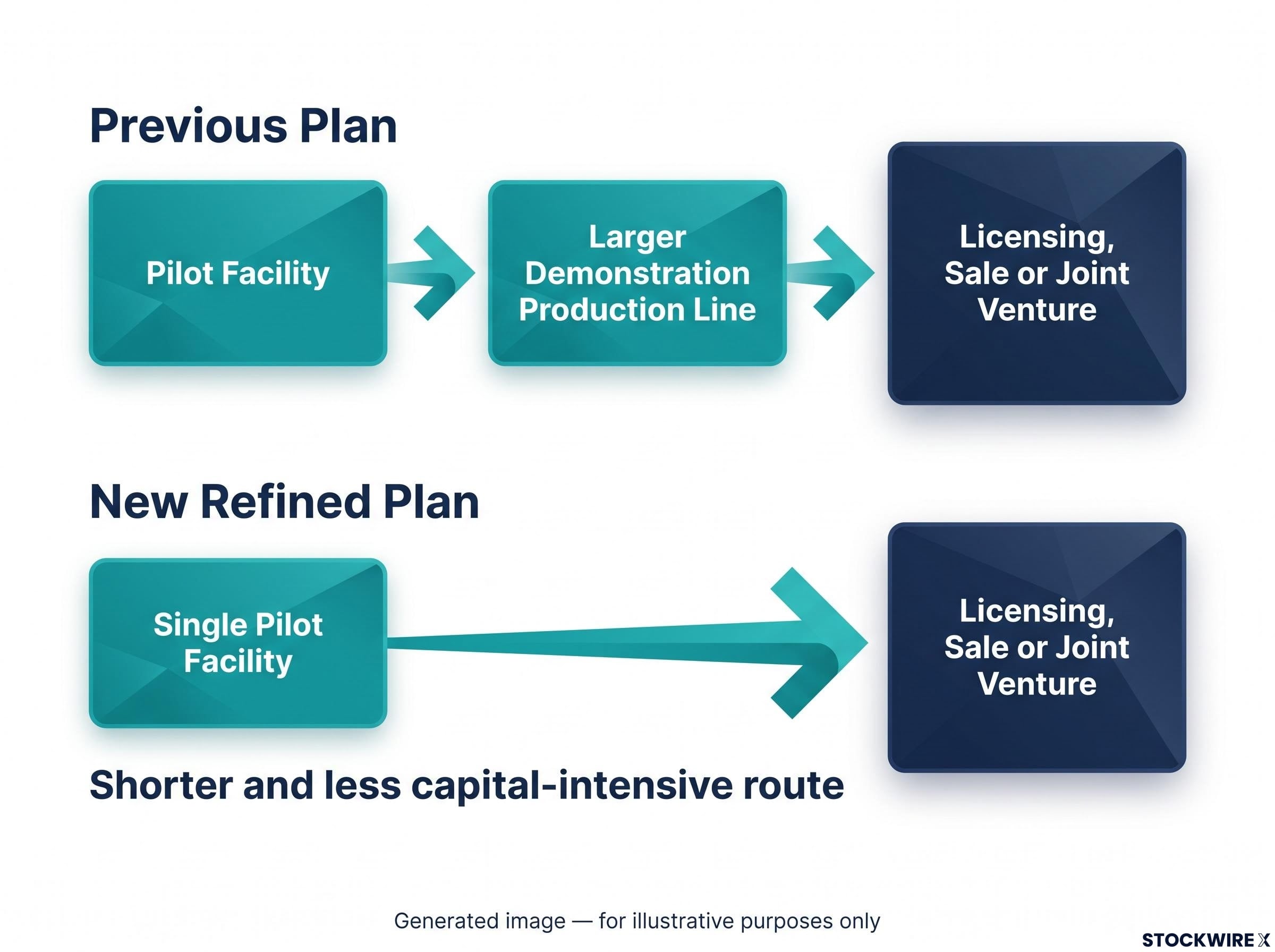
Nanollose (ASX: NC6) has refined its development pathway to a single Pilot Facility, removing the previously anticipated requirement for a subsequent larger demonstration production line. The update, released on 21 August 2026, signals a significantly shorter and less capital-intensive route to commercial partnering.
Nanollose is an advanced biomaterials company scaling technology to create fibres, fabrics and other materials from microbial cellulose. The refined single Pilot Facility approach is designed to generate the production data and material volumes required for meaningful customer engagement while reducing the capital burden of the earlier two-stage plan.
When big ASX news breaks, our subscribers know first
Why a single Pilot Facility changes the investment case
Under the revised approach, Nanollose now expects one Pilot Facility to produce the data and volumes needed to support future licensing, sale or joint venture discussions. Equipment is being selected so that the data generated at the Pilot Facility can be extrapolated to industrial scale.
The company’s core strategy remains industrial-scale deployment through “licensing, sale or joint venture” rather than building industrial production capacity itself. That framing matters for investors: it keeps Nanollose asset-light while positioning the Pilot Facility as the key value-generating milestone.
The Pilot Facility will be funded by the Company in the near term, with its cost and configuration being established through the equipment tender process. Removing the second demonstration line offers a shorter route to value and faster iteration from controlling the facility and process directly.
The R&D tax rebate of $311,000 received earlier in 2026 more than doubled the company’s prior cash position, providing a non-dilutive funding buffer as the Pilot Facility tender and costing work now accelerates.
CEO Commentary
“We previously expected that a larger demonstration line would be necessary after a pilot line to fully derisk and prove our technology with equipment recognisable by future partners. We now expect a single Pilot Facility will give us the production data and the material volumes to engage customers properly and gives a future partner or purchaser the data and comfort they will require. Equipment is being selected so that the Pilot Facility data can be extrapolated to industrial scale. That is a shorter path than the one we described earlier this year. We are costing that now, and we are tendering for equipment,” said Andrew Moullin, CEO and Managing Director.
Expanded engineering capability adds scale-up expertise
Nanollose has engaged two consultants with scale-up expertise to support the design and delivery of the Pilot Facility. Both are partly remunerated with Options that vest against Pilot Facility milestones, aligning their return directly with shareholder outcomes.
The newly engaged consultants and existing management include:
-
Peter Hillier — founder and lead process engineer with more than 15 years of process engineering and scaling experience across large multinationals and start-ups.
-
Dr Jacob Brown — holds a PhD in chemical engineering from the University of Cambridge; previously a senior chemical engineer at Tesla developing manufacturing processes for electrode active materials, and founder of a company scaling a novel metal extraction process.
-
Danielle Nardini — Operations and Engineering Manager (appointed during the June quarter); brings over 16 years of engineering and operations experience, including scaling battery-electric mining systems from prototype to field-ready deployment at Sandvik.
Mr Hillier and Dr Brown have each agreed to reduce their fees in return for the grant of Options. The Options vest against milestone and market conditions, including the design, costing and commissioning of the Pilot Facility, and carry an exercise price of $0.08.
Pilot Facility development milestones
Nanollose reported tangible progress across several workstreams, while noting that no commitment has been made to any supplier. The company continues to evaluate alternative equipment as a redundancy measure alongside design option reviews.
Development progress to date includes:
-
Equipment tendering is underway, with costing of the initial stages in progress.
-
A dewatering pathway has been established via a local consultant, described as scalable and economic, with further trials planned to validate throughput.
-
Washing at scale testing with a European supplier returned high confidence that laboratory results will scale to pilot and then industrial equipment, with a test unit obtainable in reasonably short order.
-
Site selection is advanced for larger, fit-for-purpose premises in Western Australia.
-
An improved lab process continues to deliver a minimum 80% efficiency uplift over previous methods, producing a more uniform product.
These milestones build on the washing, dewatering and drying pathways previously flagged in ASX Announcements dated 8 April 2026 and 22 April 2026, reinforcing continuity in the development programme.
What is microbial cellulose and why it matters
Cellulose is a versatile raw material traditionally produced from trees via the wood-pulping process. Nanollose uses an eco-friendly fermentation process that can draw on agricultural waste and by-products to produce cellulose instead, creating what the company describes as ‘Tree-Free’ material.
This ‘Tree-Free’ cellulose serves as the input for Nanollose’s range of biomaterials, including its Nullarbor™ fibres, MicroGel™ horticultural medium, and emerging animal-free and plastic-free leather-like materials.
The 580kg Nullarbor fibre production run completed with strategic partner Birla Cellulose earlier this year validated microbial cellulose as a fungible feedstock within existing industrial lyocell processes, establishing the manufacturing consistency benchmarks the Pilot Facility programme now aims to surpass at controlled scale.
For investors, the relevance ties to growing demand for sustainable materials. By consolidating to a single Pilot Facility, Nanollose aims to de-risk the commercialisation pathway while reducing capital requirements.
| Attribute | Traditional cellulose | Nanollose approach |
|---|---|---|
| Raw material source | Trees | Agricultural waste and by-products |
| Environmental impact | Wood pulping | Low-impact fermentation |
| End products | Versatile raw material | Nullarbor™ fibres, MicroGel™, leather-like materials |
What comes next for Nanollose
The Company expects to provide further detail on facility cost and configuration as the tender and costing work progresses. The equipment tender process will establish the final configuration of the Pilot Facility.
The end-goal remains clear: Pilot Facility data is intended to underpin customer engagement and support future licensing, sale or joint venture discussions. This positions the facility as the central milestone in the company’s value-creation pathway.
Continued partnership with existing international partners remains unchanged. Building internal engineering capability, according to management, simply gives Nanollose direct control over the pace and direction of its development at this stage of the project.
Don’t Miss the Next Biotech Breakthrough on ASX
Big News Blast delivers FREE breaking ASX healthcare and biotech news to your inbox within minutes of release, complete with in-depth analysis. Over 20,000 subscribers already rely on it to stay ahead of the market. Click the “Free Alerts” button at Big News Blast to get the next market-moving announcement the moment it drops.