
Biotron’s BIT-HBV001 matches up against approved drug, targets human trials in 2027
New cell-based studies conducted at The Scripps Research Institute in San Diego have confirmed and extended the antiviral activity of Biotron Limited’s lead candidate, Biotron BIT-HBV001, against Hepatitis B Virus (HBV) and associated Hepatitis Delta Virus (HDV) infections.
In head-to-head testing, BIT-HBV001 matched or exceeded the approved drug Myrcludex-B on some key viral markers. Biotron is now targeting first-in-human studies in the second half of 2027.
When big ASX news breaks, our subscribers know first
New Scripps studies deliver standout head-to-head data
In the first study, BIT-HBV001 was directly compared against Myrcludex-B (Myr-B), a recently approved drug marketed as Hepcludex, for the treatment of chronic hepatitis delta infection in people co-infected with HBV and HDV.
Cells infected with both HBV and HDV were treated with either compound across a range of concentrations. After several days of incubation, levels of virus-specific markers were measured to gauge each drug’s effectiveness. Both drugs showed strong antiviral activity.
BIT-HBV001 led on two of the three markers measured, while Myr-B showed the stronger result on the third.
| Viral Marker | BIT-HBV001 | Myrcludex-B | Advantage |
|---|---|---|---|
| HBsAg | 98.1% | 93.8% | BIT-HBV001 |
| HBV-DNA | 99.7% | 93.0% | BIT-HBV001 |
| HDAg | 81.0% | 94.8% | Myrcludex-B |
Combination study shows synergy
A second study tested the two drugs in combination in cells infected with HBV and HDV, aiming to determine whether they work better together than individually. Synergism scores were calculated in R-statistical software using four different statistical models.
The scores indicated significant synergistic antiviral activity for the BIT-HBV001 and Myr-B combination across three HBV and HDV replication endpoints.
For investors, the significance lies in the practical implication. The data suggests lower amounts of each drug may be used in combination to achieve the same level of HBV/HDV inhibition.
Why HBV and HDV co-infection matters to investors
HBV is a chronic liver virus that affects a large global population. HDV is a satellite virus that only infects people already carrying HBV. When the two occur together, the result is the most severe form of viral hepatitis, often leading to rapid progression to cirrhosis, liver failure or hepatocellular carcinoma.
The scale of the underlying market is substantial:
-
2+ billion people infected with HBV worldwide
-
250+ million chronically infected (WHO estimate)
-
HBV/HDV co-infection represents the most severe form of viral hepatitis
A functional cure for chronic HBV infection remains one of the most important unmet needs in antiviral medicine. That unmet need defines the scale of the opportunity Biotron is pursuing.
The investment case and road to human trials
The latest Scripps results build on a steady progression of data. BIT-HBV001 first demonstrated strong antiviral activity against HBV in a range of cell-based assays, reducing key replication markers including HBV DNA, HBsAg, HBeAg, pregenomic RNA and cccDNA, a marker of the persistent viral reservoir that underpins chronic infection.
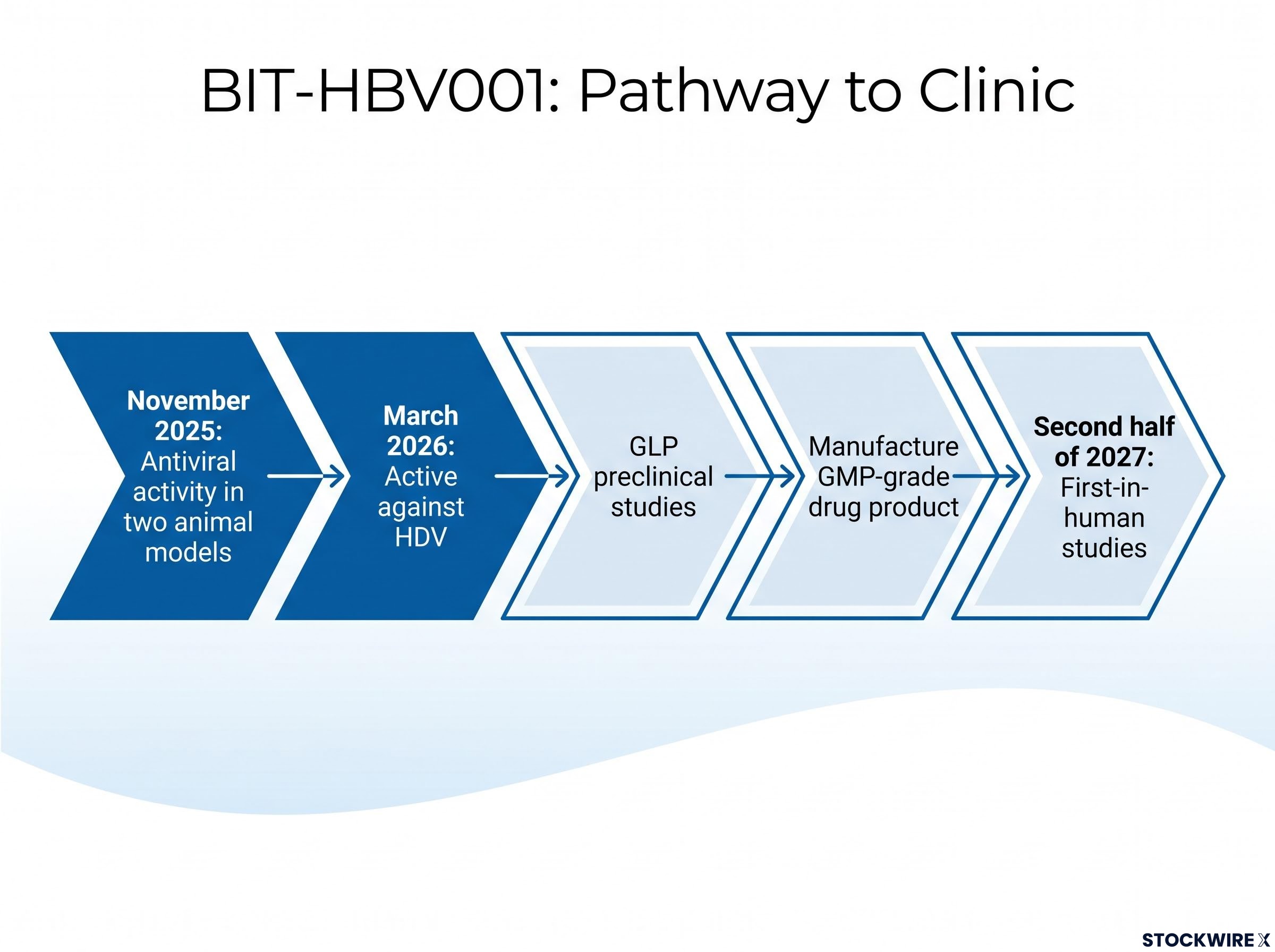
In November 2025, the candidate showed antiviral activity in two different animal models of hepatitis liver disease and infection. In March 2026, Biotron reported that BIT-HBV001 is also active against HDV. The new head-to-head and synergy data now extend that record.
BIT-HBV001 HDV activity was first confirmed in March 2026, when Scripps studies recorded approximately 85% inhibition of HDAg production in co-infected cells, establishing the antiviral case against Hepatitis Delta before the more extensive head-to-head testing reported here.
Taken together, this sequence represents a de-risking pathway toward the clinic. A notable feature of BIT-HBV001 is its breadth, with reported activity across HBV, HDV and co-infection settings.
Next steps and timeline
In coming months, Biotron plans to advance the candidate along the following pathway:
-
Progress BIT-HBV001 through formal GLP preclinical studies
-
Manufacture GMP-grade drug product
-
Commence first-in-human studies in the second half of 2027
Dr Michelle Miller, Managing Director
“The ongoing positive results from Biotron’s Hepatitis B program support the progression of BIT-HBV001 to human clinical trials. Over two billion people worldwide have been infected with HBV, and the World Health Organization estimates that more than 250 million people are chronically infected. A functional cure for chronic HBV infection remains one of the most important unmet needs in antiviral medicine. These latest results underline the broad potential of BIT-HBV001, including in treatment of high- risk HBV/HDV coinfections.”
BIT-HBV001 remains a preclinical candidate, and its progression depends on the successful completion of GLP studies and GMP manufacturing. For investors tracking the program, the key watch-point ahead is the targeted commencement of first-in-human studies in the second half of 2027.
Don’t Miss the Next Healthcare Breakthrough
Get FREE breaking ASX healthcare news delivered to your inbox within minutes of release, complete with in-depth analysis. Join 20,000+ investors already staying ahead of the market with Big News Blast. Click the “Free Alerts” button to receive the moment market-moving biotech and healthcare announcements hit the ASX.