
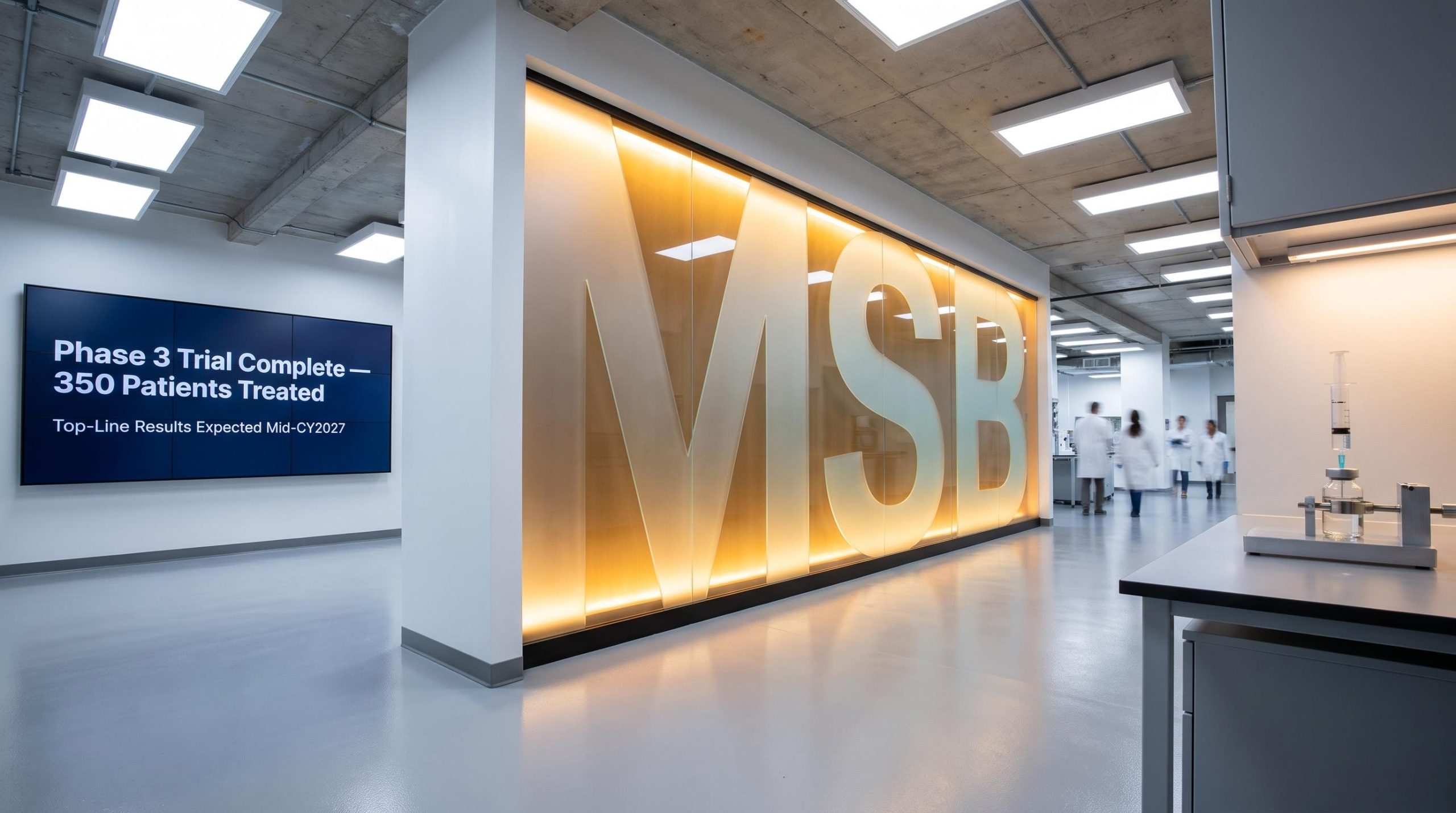
Mesoblast completes patient treatment in pivotal Phase 3 low back pain trial
Mesoblast (ASX:MSB; Nasdaq:MESO) has completed patient treatment in the MSB-DR004 pivotal randomised controlled Phase 3 trial of rexlemestrocel-L for chronic low back pain (CLBP) associated with degenerative disc disease (DDD).
The milestone was reached with 350 patients randomised and treated, each receiving either a single intra-discal injection of rexlemestrocel-L or a sham injection. Total patient numbers rose from an original target of 300 to 350 following strong demand from trial investigators to enrol their patients.
Top-line results are expected in mid-CY2027, giving the company a defined near-term catalyst for what it describes as a potential first blockbuster product.
When big ASX news breaks, our subscribers know first
Why the 350-patient milestone matters
The decision to over-enrol from 300 to 350 patients was driven by demand from trial investigators seeking to include their patients in the programme. According to the company, the larger cohort leaves the trial well-powered to demonstrate a greater treatment benefit in patients receiving rexlemestrocel-L compared with controls.
The trial’s primary endpoint aims to confirm the durable pain reduction at 12 months from a single intra-discal injection, replicating the result previously seen in the earlier MSB-DR003 Phase 3 trial.
The MSB-DR003 Phase 3 trial previously demonstrated clinically meaningful pain reductions and opioid usage decreases lasting up to three years, providing the prior positive signal that MSB-DR004 is now designed to replicate and confirm at a larger scale.
Secondary endpoints focus on broader patient outcomes, including:
-
Improvements in function
-
Improvements in quality of life
-
Cessation of pain medication, including opioids
Silviu Itescu, Chief Executive of Mesoblast
“Completing treatment of 350 patients in our pivotal low back pain trial is a momentous milestone for the company as we now count down to the 12-month read-out for what we hope will be the basis of our first blockbuster product.”
Understanding chronic low back pain and degenerative disc disease
Chronic low back pain caused by inflammation and degenerative disc disease is a serious condition. The trial targets patients with CLBP due to DDD of less than five years’ duration.
The condition represents a large unmet medical need in the United States:
-
Prevalence of over 7 million people in the U.S. with CLBP due to DDD
-
Back pain is the leading cause of disability in Americans under 45 years, with an annual prevalence of 10–30% in the general US adult population
-
CLBP accounts for approximately 50% of prescription opioid usage in the US, making the condition a significant contributor to the opioid epidemic
Rexlemestrocel-L is an allogeneic, or “off-the-shelf,” cell therapy.
A single-injection therapy addressing a condition tied directly to the opioid crisis carries both commercial and public-health relevance for investors weighing the opportunity.
The commercial and regulatory opportunity
The investment case rests on the scale of the addressable market alongside a series of regulatory and intellectual property supports. The table below summarises the key factors disclosed by the company.
| Factor | Detail | Investor Impact |
|---|---|---|
| Peak revenue potential | Potential peak-year revenue of >US$10 billion, even at single-digit market penetration | Blockbuster-scale opportunity |
| RMAT designation | FDA Regenerative Medicine Advanced Therapy (RMAT) designation for CLBP due to DDD | Eligibility for priority review once BLA is filed |
| IP portfolio | Over 1,000 granted patents or patent applications, with protection to at least 2044 | Long-dated commercial protection |
| Existing approval | Ryoncil®, the first FDA-approved MSC therapy | Demonstrated commercialisation capability |
| Partnerships | Established in Japan, Europe and China | Global distribution pathway |
Rexlemestrocel-L holds Regenerative Medicine Advanced Therapy (RMAT) designation from the U.S. Food and Drug Administration (FDA) for the treatment of CLBP due to degenerative disc disease. This provides eligibility for priority review once a Biologics License Application (BLA) has been filed.
The company’s mesenchymal stromal cell (MSC) technology is protected by a global intellectual property portfolio, while its approved product Ryoncil® demonstrates prior commercialisation of an MSC therapy.
Ryoncil real-world outcomes have reinforced confidence in Mesoblast’s MSC platform, with an 84% survival rate reported in the first commercial patient cohort and reimbursement infrastructure now covering over 260 million US lives across 45 transplant centres.
What comes next for Mesoblast
Attention now turns to the countdown to data. The company has outlined a clear near-term sequence:
-
Last treated patient completes 12-month follow-up
-
Top-line results expected mid-CY2027
-
Potential BLA filing, with eligibility for FDA priority review under the RMAT designation
Beyond this single readout, the company is developing a broader pipeline. Rexlemestrocel-L is also being developed for heart failure, while its remestemcel-L platform, marketed as Ryoncil®, targets additional inflammatory indications including SR-aGvHD in adults and biologic-resistant inflammatory bowel disease.
For investors, the completion of treatment establishes a defined timeline to a material clinical readout, supported by a diversified development programme extending beyond the low back pain indication.
Don’t Miss the Next Healthcare Breakthrough on ASX
Big News Blast delivers FREE breaking ASX healthcare news directly to your inbox within minutes of release, complete with in-depth analysis. Over 20,000 subscribers already rely on it to stay ahead of market-moving announcements. Click the “Free Alerts” button at StockWire X to start receiving alerts the moment news breaks.