
Spark New Zealand Flags Policy Uncertainty as Government Reshapes Spectrum Rules

Spark responds to Government spectrum policy signal
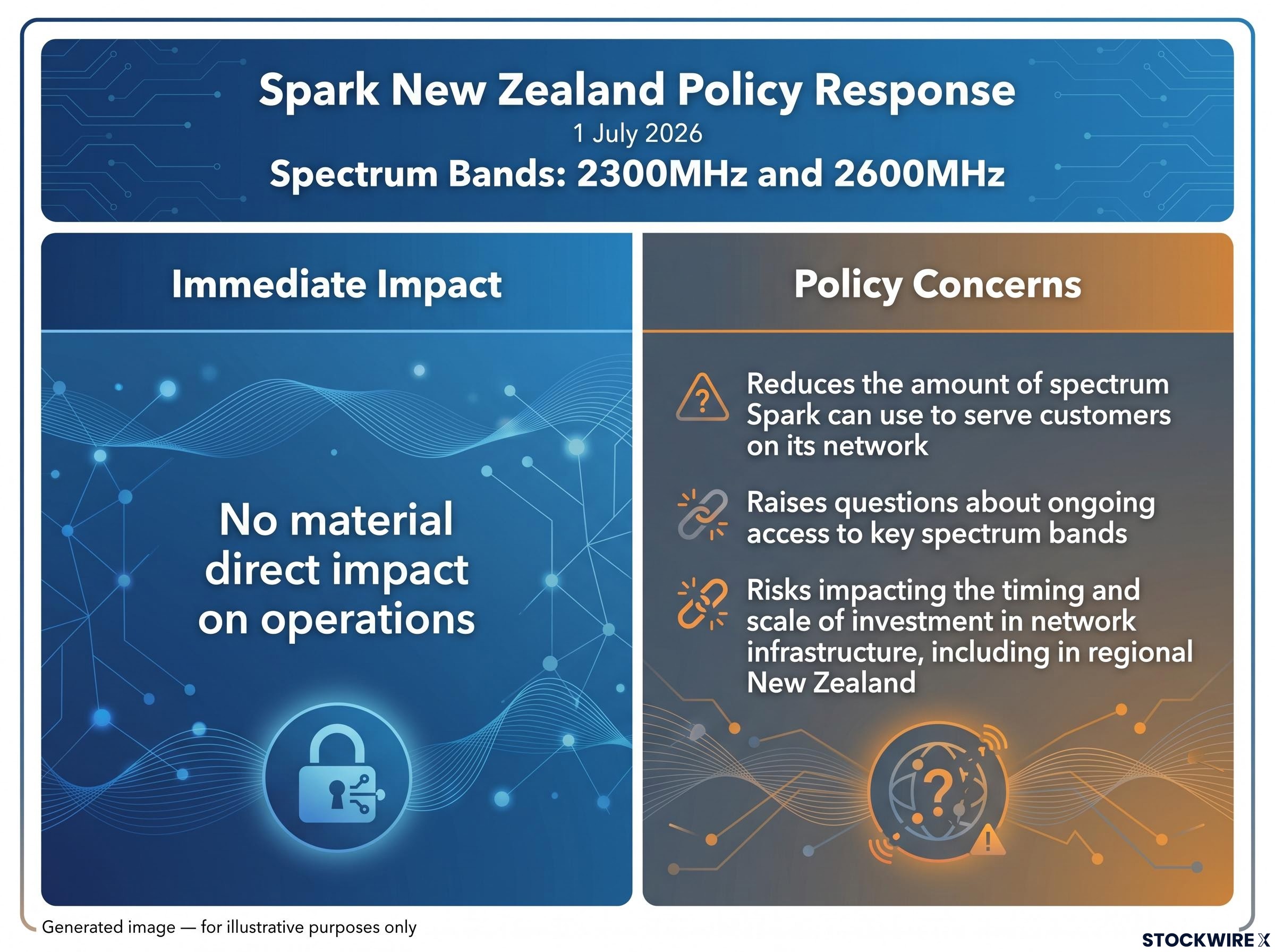
Spark New Zealand (ASX/NZX: SPK) has responded, as of 1 July 2026, to the New Zealand Government’s announcement regarding its intended policy approach for the renewal of spectrum in the 2300MHz and 2600MHz bands.
The telecommunications provider stated it does not expect the proposed changes to have a material direct impact on its operations.
Spark noted a concern alongside that reassurance, stating the policy direction introduces “an unwelcome level of uncertainty” for the telecommunications sector at a time when sustained, long-term investment is considered critical to New Zealand’s digital and economic future. The release is a measured policy-response statement rather than a financial or operational event.
When big ASX news breaks, our subscribers know first
Why spectrum matters to Spark’s business
Spectrum is a foundational input that enables connectivity services. These services are relied on by households, businesses, and public services across the country.
For investors, the relevance lies in timing. Investment decisions in network capability and coverage are made over multi-year horizons and require a stable, predictable policy environment. The specific bands under review are the 2300MHz and 2600MHz bands.
Spark’s strategic profile has shifted considerably over the past year, with the data centre divestment to Pacific Equity Partners in January 2026 crystallising $453 million upfront and concentrating the company’s focus on its core connectivity business.
Spark outlined several concerns about the policy as currently framed:
-
Reduces the amount of spectrum Spark can use to serve customers on its network
-
Raises questions about ongoing access to key spectrum bands
-
Risks impacting the timing and scale of investment in network infrastructure, including in regional New Zealand
The next major ASX story will hit our subscribers first
Investor takeaway and next steps
Spark stated it supports settings that promote “competition, innovation, and efficient use of spectrum,” but believes these outcomes are best achieved through clear, consistent policy that provides confidence for ongoing investment.
The company added that it “will continue to engage constructively with Government as the policy process progresses.”
For investors, the immediate read is balanced. The company does not anticipate a material operational impact, but the policy uncertainty stands as a watch-item for the timing and scale of future network investment.
Spark New Zealand
“Spark does not expect the proposed changes to have a material direct impact on its operations,” while remaining “concerned that this policy direction introduces an unwelcome level of uncertainty for the telecommunications sector.”
The statement was authorised by Rodney Deacon, Finance Lead Partner – Investor Relations & Commercial.
Stay Ahead on Telco News Before the Market Moves
Get FREE breaking ASX telecommunications news delivered to your inbox within minutes of release, complete with in-depth analysis. Over 20,000+ subscribers already rely on Big News Blast to stay ahead of market-moving developments. Click the “Free Alerts” button to start receiving alerts the moment news breaks.