
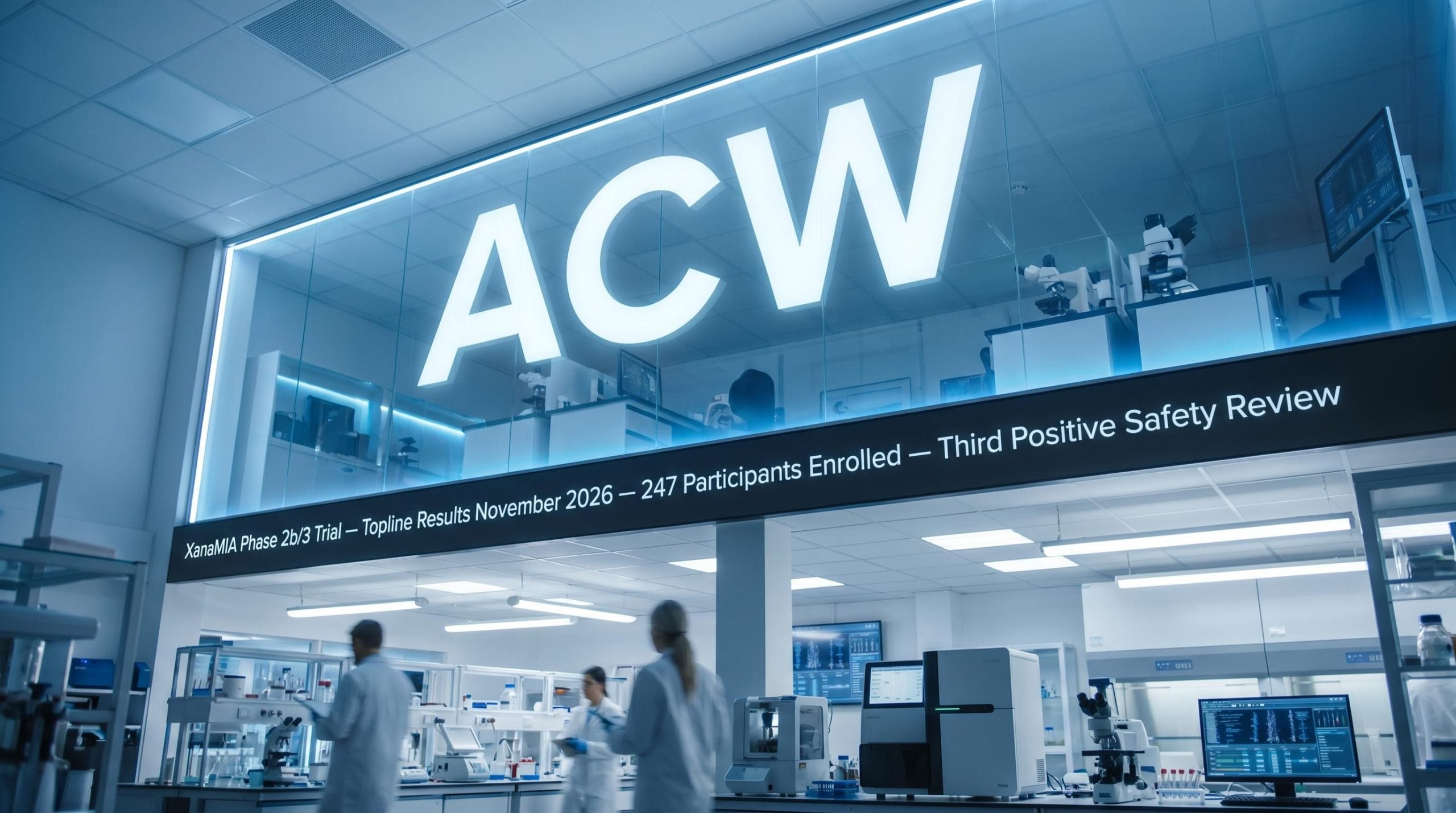
Third independent safety review clears Xanamem for continued Alzheimer’s trial
Actinogen Medical has received a positive recommendation from the independent Data Monitoring Committee (DMC) to continue its XanaMIA phase 2b/3 Alzheimer’s trial without amendment. This marks the third consecutive positive DMC review, reinforcing confidence in Xanamem’s safety profile ahead of topline final trial results expected in November 2026.
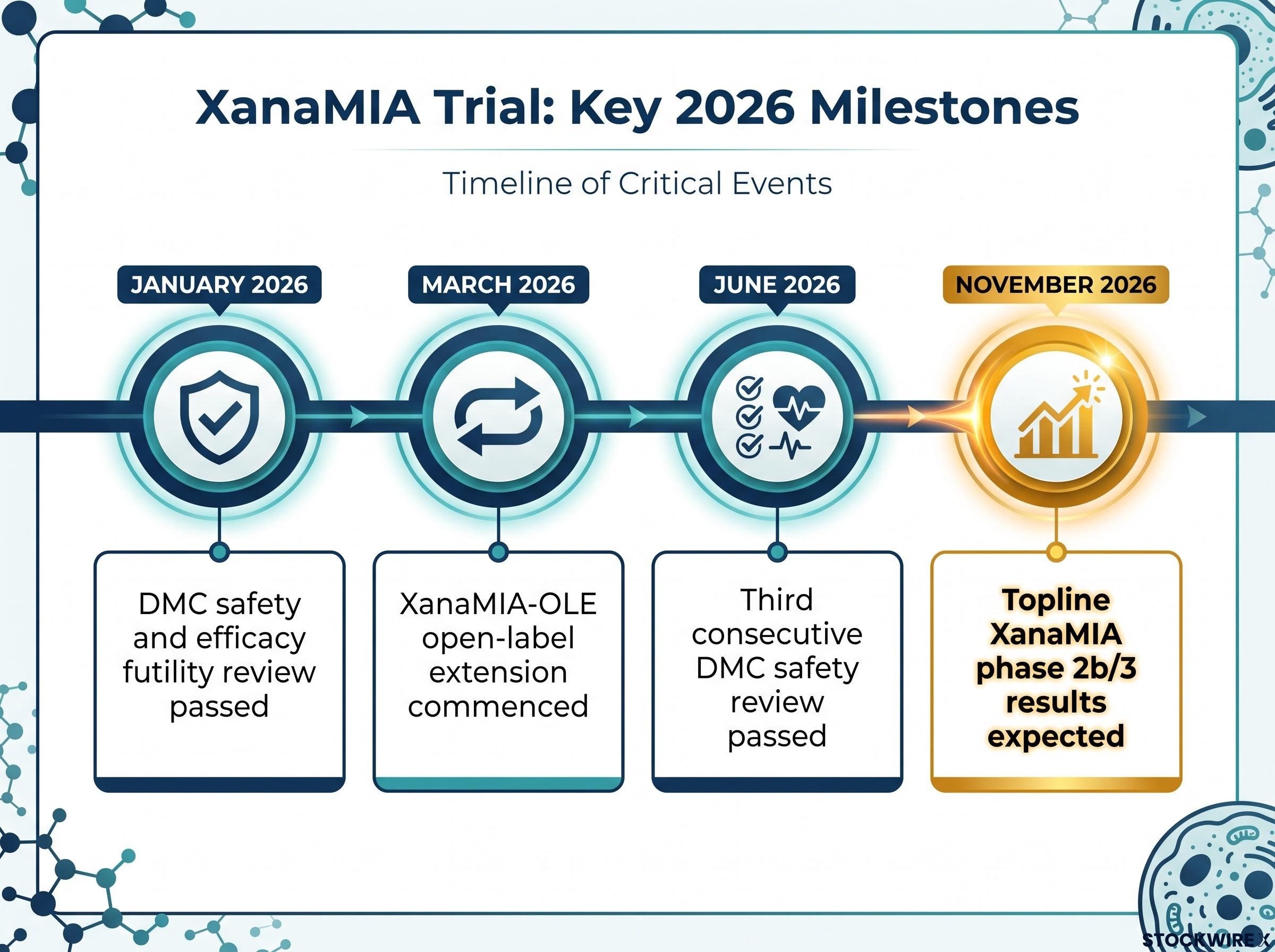
The latest DMC meeting reviewed available safety data from all 247 trial participants, with more than 100 participants having completed the full 36 weeks of treatment with Xanamem 10 mg once daily. Unlike the January 2026 DMC meeting, which evaluated efficacy futility through a confidential interim analysis, the DMC reviewed available safety data and was not asked to review unblinded efficacy at this meeting.
The DMC comprises independent clinical and statistical experts with no connection to the day-to-day conduct or analysis of the trial. For investors, a third consecutive positive safety review de-risks the drug candidate ahead of the pivotal November readout, as it confirms no safety signals have emerged that would trigger protocol changes or early termination.
When big ASX news breaks, our subscribers know first
How independent Data Monitoring Committees work in clinical trials
A Data Monitoring Committee is an independent group of external experts who review trial data whilst a study is ongoing. The DMC’s role is to protect patient safety and assess whether a trial should continue, be modified, or be stopped based on emerging evidence.
DMC members remain blinded to which patients receive the active drug versus placebo, ensuring unbiased assessment. This independence is critical, as the committee operates separately from the sponsor company and clinical trial investigators. The DMC reviews both safety data (such as adverse events and laboratory results) and, when specified in the trial protocol, efficacy data to determine if continuing the trial remains ethical and scientifically justified.
The distinction between safety reviews and efficacy futility reviews is important. This June 2026 meeting focused solely on safety, whilst the January 2026 meeting evaluated both safety and whether the trial showed futility, meaning no reasonable chance of demonstrating efficacy.
The XanaMIA efficacy futility review conducted in January 2026 confirmed no futility signal at the 37% data threshold, preserving the full 247-participant dataset and the trial’s potential to demonstrate meaningful clinical benefit at the November readout.
For investors, a positive DMC recommendation signals the trial is progressing without safety concerns that would warrant early termination or protocol amendments. It provides external validation that the drug candidate remains viable and that patient risk-benefit remains acceptable.
CEO commentary on Xanamem’s potential
Dr Steven Gourlay, Managing Director and CEO
“With the third positive independent safety review complete we are confident of the suitability of Xanamem for longer-term treatment. Xanamem has the potential to be a game-changer for Alzheimer’s disease given its potential product profile as a safe and effective oral medication with the ability to slow disease course progression significantly more than any approved therapy.”
Management is positioning Xanamem as a potential best-in-class therapy. The emphasis on oral administration represents a key differentiator versus injectable alternatives currently used in Alzheimer’s treatment, potentially improving patient compliance and broadening the addressable market.
XanaMIA trial design and timeline
The XanaMIA trial is evaluating Xanamem’s ability to slow Alzheimer’s disease progression in patients with mild to moderate disease. Patient eligibility requires progressive disease confirmed by elevated levels of the pTau181 protein biomarker in blood, a marker associated with Alzheimer’s pathology.
| Trial Name | Phase | Participants | Treatment Duration | Dosing | Primary Endpoint |
|---|---|---|---|---|---|
| XanaMIA | 2b/3 | 247 | 36 weeks | Xanamem 10 mg once daily vs placebo | CDR-SB (Clinical Dementia Rating scale – Sum of Boxes) |
The trial is double-blind and placebo-controlled, conducted across sites in Australia and the United States. Recruitment is now closed. The CDR-SB primary endpoint is an internationally recognised measure of cognitive and functional decline in dementia. The trial has passed an independent DMC safety and efficacy futility review, conducted in January 2026, confirming the study retains sufficient potential to demonstrate meaningful clinical benefit.
Open-label extension study underway
The XanaMIA-OLE open-label extension commenced in March 2026 and is open to all former and current XanaMIA participants. In this phase, all participants receive active Xanamem 10 mg once daily for up to 25 months.
The extension study evaluates long-term safety and a limited number of efficacy endpoints, including the CDR-SB scale used in the main trial. This ongoing data collection provides additional evidence of Xanamem’s safety profile over extended treatment periods, which will support regulatory submissions if pivotal trial results are positive.
For readers wanting to understand the extension study structure in more depth, our full explainer on the XanaMIA open-label extension covers the commencement of dosing, participant eligibility details, and the long-term safety and efficacy endpoints being tracked across the 25-month programme.
Xanamem’s mechanism and competitive positioning
Xanamem’s novel mechanism targets chronically elevated cortisol in the brain by inhibiting the enzyme 11β-HSD1. This enzyme is responsible for converting inactive cortisone into active cortisol inside brain cells. By blocking this conversion, Xanamem reduces cortisol levels in key brain regions such as the hippocampus and frontal cortex, without affecting cortisol production by the adrenal glands, which is essential for the body’s normal stress response and metabolic function.
Chronically elevated cortisol is associated with Alzheimer’s disease progression and is toxic to brain cells, contributing to cognitive decline. Xanamem is described as a first-in-class therapy targeting this pathway. The company has studied the drug in more than 500 volunteers and patients across eight clinical trials to date. High levels of target engagement in the brain have been demonstrated at doses as low as 5 mg daily in a human PET imaging study, confirming Xanamem reaches and inhibits its target at clinically relevant doses.
A key differentiator is Xanamem’s oral once-daily pill formulation. This contrasts with injectable Alzheimer’s treatments, which require periodic infusions or subcutaneous injections. If efficacy is demonstrated in the XanaMIA trial, Xanamem could compete favourably on convenience, potentially improving patient compliance and broadening adoption in community care settings where injectable treatments present logistical challenges.
What investors should watch for next
-
Topline XanaMIA phase 2b/3 results expected in November 2026 — This represents a binary event for the company. Positive efficacy data on the CDR-SB primary endpoint would validate the cortisol-reduction thesis and likely trigger significant re-rating of the company’s valuation.
-
Ongoing XanaMIA-OLE safety and efficacy data accumulation — Long-term data from the open-label extension will continue to provide evidence supporting Xanamem’s safety profile and durability of effect, which are critical for regulatory approval pathways.
-
Regulatory pathway clarity post-readout — Should November results prove positive, investors will be watching for management guidance on regulatory submission timelines with the FDA and other global health authorities.
Xanamem remains investigational and is not approved by the FDA or any global regulatory authority. The November 2026 readout will be the definitive test of whether the cortisol-reduction mechanism translates into meaningful clinical benefit for Alzheimer’s patients.
Don’t Miss the Next Biotech Breakthrough
Join 20,000+ investors getting FREE breaking ASX news delivered to your inbox within minutes of release, complete with in-depth analysis. Click the “Free Alerts” button at Big News Blast to start receiving real-time alerts the moment market-moving announcements hit the ASX.