
Nyrada banks A$2.455M R&D tax rebate as Xolatryp Phase IIa advances
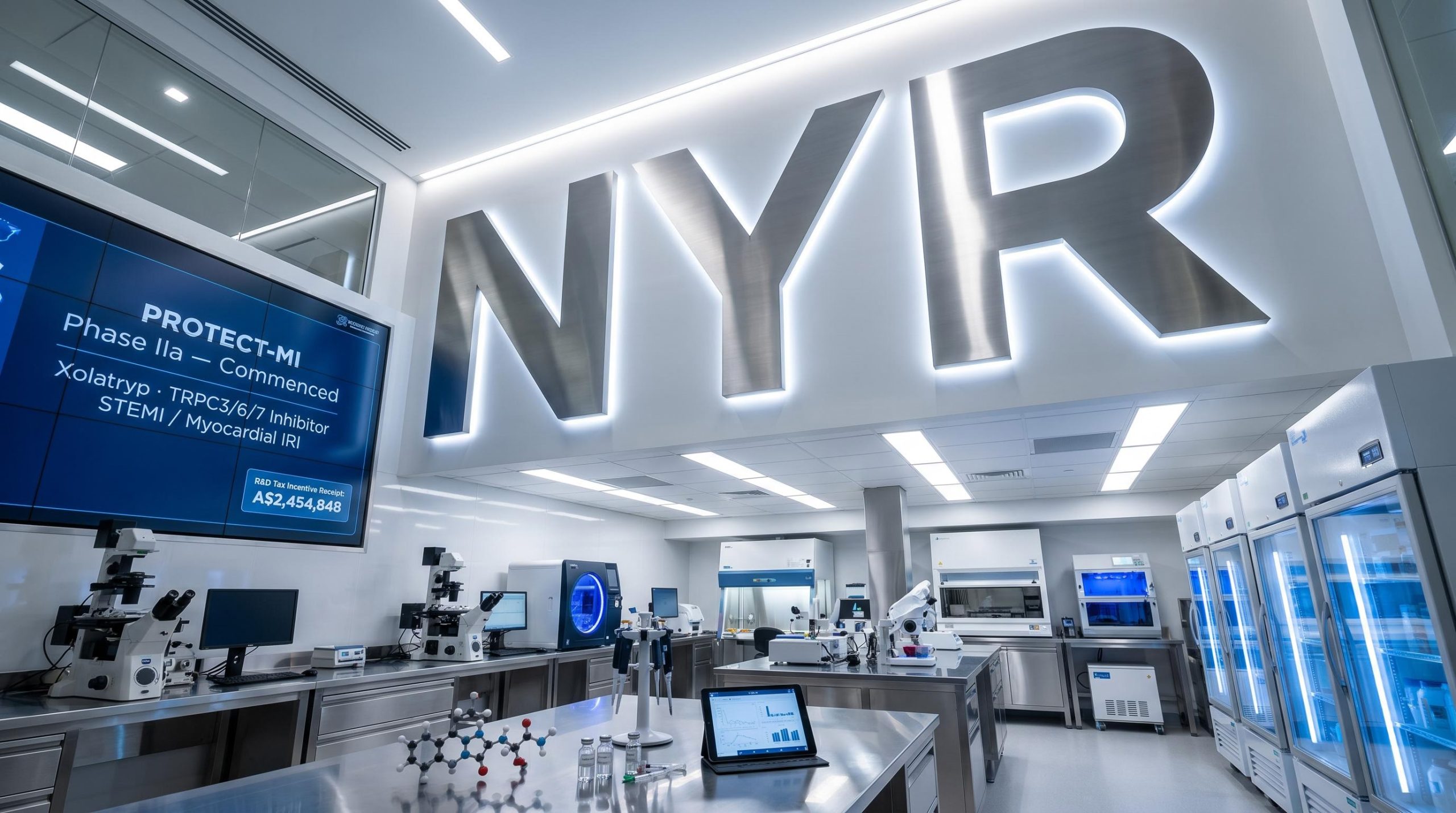
Nyrada Inc. (ASX: NYR), a clinical-stage biotechnology company developing Transient Receptor Potential Canonical (TRPC) ion channel inhibitors, has received a AU$2,454,848 cash rebate from the Australian Federal Government’s Research & Development (R&D) Tax Incentive Program. The rebate relates to eligible expenditures incurred during the 2025 financial year on the development of Xolatryp, the company’s lead small-molecule candidate. The receipt arrives as Nyrada’s Phase IIa clinical trial under the PROTECT-MI programme has commenced, providing a non-dilutive funding boost at a meaningful point in the clinical journey.
When big ASX news breaks, our subscribers know first
What is the R&D Tax Incentive and why does it matter for biotech investors?
Australia’s R&D Tax Incentive is a government-backed programme that provides a cash refund to eligible companies for qualifying research and development expenditure. For companies operating at a loss, such as most clinical-stage biotechs, the incentive is paid as a cash rebate rather than a tax offset, meaning it lands directly on the balance sheet.
For investors, the key attributes are:
- Non-dilutive cash receipt: the company receives funds without issuing new shares or incurring debt
- Government-backed and recurring annually: tied to each financial year’s eligible R&D spend
- Directly linked to R&D investment: validates the quality and scale of the company’s development activity
- Extends cash runway: reduces the frequency or urgency of capital raisings during trial periods
For a clinical-stage company burning cash on trials, this type of rebate can materially lengthen the runway between funding rounds.
Xolatryp’s clinical journey: from Phase I completion to Phase IIa
A small molecule with a big target
Xolatryp is a small-molecule inhibitor of TRPC3/6/7 channels designed to limit excessive Ca²⁺ entry associated with multiple disease pathologies. Before advancing into human trials, the compound was evaluated across a broad range of preclinical models, including cardioprotection, neuroprotection, traumatic brain injury, stroke, and anti-tumour settings. It is important to note that findings from these preclinical studies do not guarantee clinical outcomes.
Xolatryp has since completed a Phase I clinical trial assessing safety, tolerability, and pharmacokinetics. A Phase IIa trial under the PROTECT-MI programme has now commenced, focused on assessing safety and preliminary efficacy in reducing myocardial ischemia reperfusion injury (IRI) in patients with ST-Elevation Myocardial Infarction (STEMI) undergoing percutaneous coronary intervention (PCI).
The table below summarises the clinical progression of Xolatryp to date:
| Stage | Focus | Status | Indication |
|---|---|---|---|
| Preclinical | Cardioprotection, neuroprotection, TBI, stroke, anti-tumour | Completed | Multiple |
| Phase I | Safety, tolerability, pharmacokinetics | Completed | First-in-human |
| Phase IIa (PROTECT-MI) | Safety and preliminary efficacy | Commenced | STEMI / myocardial IRI (PCI setting) |
Investment thesis: non-dilutive funding at a pivotal trial moment
The timing of this rebate is worth noting. Nyrada enters the Phase IIa data-generating period with a strengthened cash position, having received nearly $2.5 million without issuing additional shares. For investors in clinical-stage biotechs, this matters because dilution risk is a persistent concern during trial phases.
The R&D Tax Incentive is a recurring mechanism, meaning future years of eligible R&D expenditure on Xolatryp could generate further annual receipts. The next material catalyst for investors to watch is the progression of the PROTECT-MI Phase IIa trial, where safety and preliminary efficacy data in STEMI patients will provide the first human-stage indication of Xolatryp’s therapeutic potential in myocardial IRI.
Don’t Miss the Next ASX Healthcare Breakthrough
Big News Blast delivers FREE breaking ASX healthcare news to your inbox within minutes of release, complete with in-depth analysis already done for you. Join 20,000+ subscribers staying ahead of the market on clinical milestones, funding updates, and sector-moving announcements. Click the “Free Alerts” button at StockWire X to start receiving alerts today.