
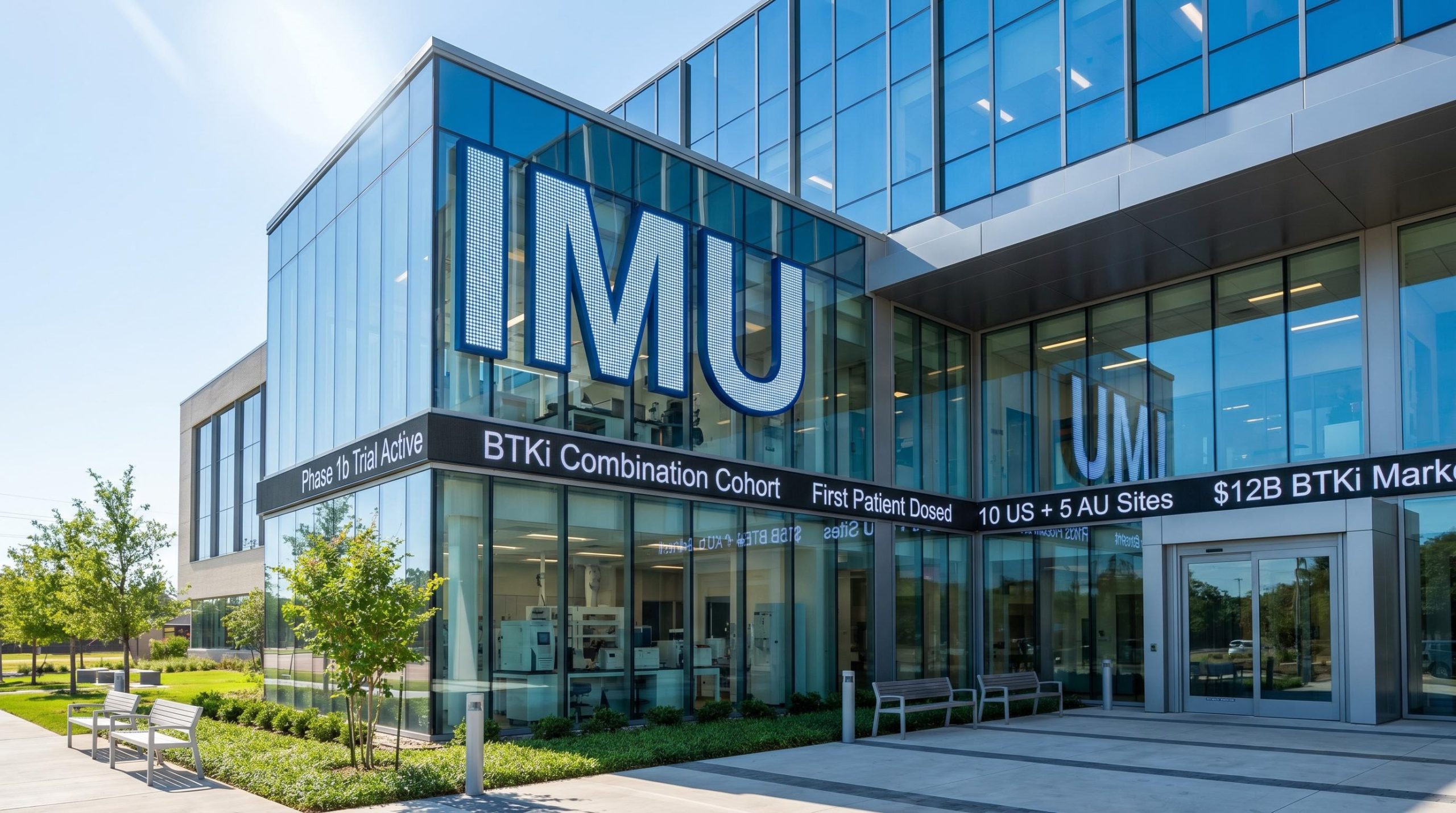
Imugene has dosed the first patient in the BTK inhibitor combination cohort of its azer-cel Phase 1b study at Baylor University in Waco, Texas. The Mantle Cell Lymphoma (MCL) patient had previously failed BTKi therapy, marking an expansion of the trial into combination approaches targeting patients with limited treatment options.
Imugene expands azer-cel trial with BTKi combination cohort
The new cohort adds a third treatment arm to the ongoing Phase 1b basket study of azer-cel, Imugene’s off-the-shelf CAR T cell therapy. Patients in this cohort will be treated with azer-cel in combination with a BTKi to evaluate whether the combination enhances therapeutic activity in patients who have developed resistance or intolerance to prior BTKi treatment.
BTK inhibitors represent an established standard of care across multiple B-cell malignancies, including follicular lymphoma (FL), chronic lymphocytic leukemia (CLL), and mantle cell lymphoma (MCL). The global BTKi market reached approximately US$12.0 billion in 2025, highlighting the commercial scale of this patient population.
Enrolment is ongoing across 10 US sites and 5 Australian sites. The trial expansion positions azer-cel to address a broader addressable market in BTKi-relapsed patients whilst creating additional partnering opportunities through expanded clinical scope.
When big ASX news breaks, our subscribers know first
What is BTK inhibitor combination therapy?
BTK inhibitors are targeted therapies that block Bruton’s tyrosine kinase, a protein essential for the survival and growth of certain cancerous B-cells. They have become front-line and subsequent-line treatments for several B-cell blood cancers:
- Follicular lymphoma (FL)
- Chronic lymphocytic leukemia (CLL)
- Mantle cell lymphoma (MCL)
Despite their efficacy, many patients ultimately develop resistance or intolerance to BTKi therapy, creating significant unmet medical need. The combination cohort tests the hypothesis that concurrent dosing of azer-cel with a BTKi may enhance the activity of both therapies in this BTKi-relapsed setting.
The combination approach could differentiate azer-cel in the competitive CAR T landscape by demonstrating activity in patients who have exhausted standard-of-care BTKi options.
Phase 1b trial design and scope
Azer-cel is an allogeneic (off-the-shelf) CAR T cell therapy targeting CD19, a protein expressed on the surface of B-cells. The Phase 1b study is an open-label, multi-centre basket trial enrolling both CAR T relapsed patients and CAR T naïve patients across a broad range of Non-Hodgkin’s lymphomas.
Eligible B-cell malignancies include follicular lymphoma (FL), chronic lymphocytic leukemia (CLL)/small lymphocytic lymphoma (SLL), marginal zone lymphoma (MZL), Waldenstrom macroglobulinemia (WM), and mantle cell lymphoma (MCL). The newly added BTKi combination cohort specifically targets patients who have previously failed BTKi therapy.
Treatment protocol involves azer-cel with lymphodepletion (LD) and IL-2. According to the announcement, treatment with azer-cel is showing promising results with evidence of meaningful clinical activity and durability of response, whilst the safety profile is described as manageable and generally well tolerated.
| Element | Detail |
|---|---|
| Phase | 1b |
| Design | Open-label, multi-centre basket study |
| Locations | 10 US sites, 5 Australian sites |
| New cohort | BTKi combination for BTKi-relapsed patients |
| Treatment protocol | Azer-cel with lymphodepletion (LD) and IL-2 |
Strategic rationale and partnering potential
The expansion into a BTKi combination cohort broadens the range of eligible B-cell malignancies in the Phase 1b study. This positions Imugene to prioritise indications where azer-cel demonstrates the strongest clinical potential, supporting what the company describes as a disciplined and capital-efficient development strategy.
By evaluating azer-cel across multiple patient populations (CAR T relapsed, CAR T naïve, and now BTKi-relapsed), the trial creates multiple development pathways. This de-risks the programme by avoiding dependence on a single indication whilst generating clinical data that may support partnering discussions.
The US$12.0 billion global BTKi market in 2025 indicates meaningful commercial opportunity if the combination approach demonstrates efficacy. The addition of the BTKi cohort may support further partnering and collaboration opportunities by demonstrating clinical activity in a well-established, large-scale therapeutic market.
CEO commentary
Leslie Chong, Managing Director and Chief Executive Officer
“The enrolment of first patients into the BTKi combination cohort is a meaningful step in expanding the clinical scope of the azer-cel program. BTKi-relapsed patients represent a significant population with limited options, and we believe the concurrent combination approach has the potential to address this unmet need. We look forward to reporting safety and preliminary efficacy data as patients become evaluable, and to continuing to build the evidence base for azer-cel across B-cell malignancies.”
What comes next for Imugene investors
The company has stated it will report safety and preliminary efficacy data as patients become evaluable. Enrolment continues across the 15 sites in the US and Australia, with the company positioned to provide updates as data matures.
Existing clinical evidence suggests treatment with azer-cel is showing promising results with evidence of meaningful clinical activity and durability of response. The safety profile is reported as manageable and generally well tolerated, which may support the rationale for combination approaches.
Near-term catalysts for investors include:
- Safety data from BTKi combination cohort
- Preliminary efficacy data as patients become evaluable
- Ongoing enrolment updates across 15 sites
Positive combination data could strengthen partnering discussions and support indication prioritisation decisions. The trial’s basket design allows Imugene to accumulate evidence across multiple B-cell malignancies whilst maintaining capital efficiency through a single protocol structure.
Want to Track Imugene’s Azer-Cel Data Readouts?
The BTKi combination cohort targets a US$12.0 billion global market and addresses patients with limited treatment options. Safety and preliminary efficacy data will be released as patients become evaluable across the 15-site trial.
Stay informed on upcoming clinical milestones and trial updates by visiting the Imugene investor centre. Monitor enrolment progress, data readouts, and potential partnering developments as the Phase 1b study advances.