

Imugene reports second complete response in azer-cel BTKi cohort, including first mantle cell lymphoma patient
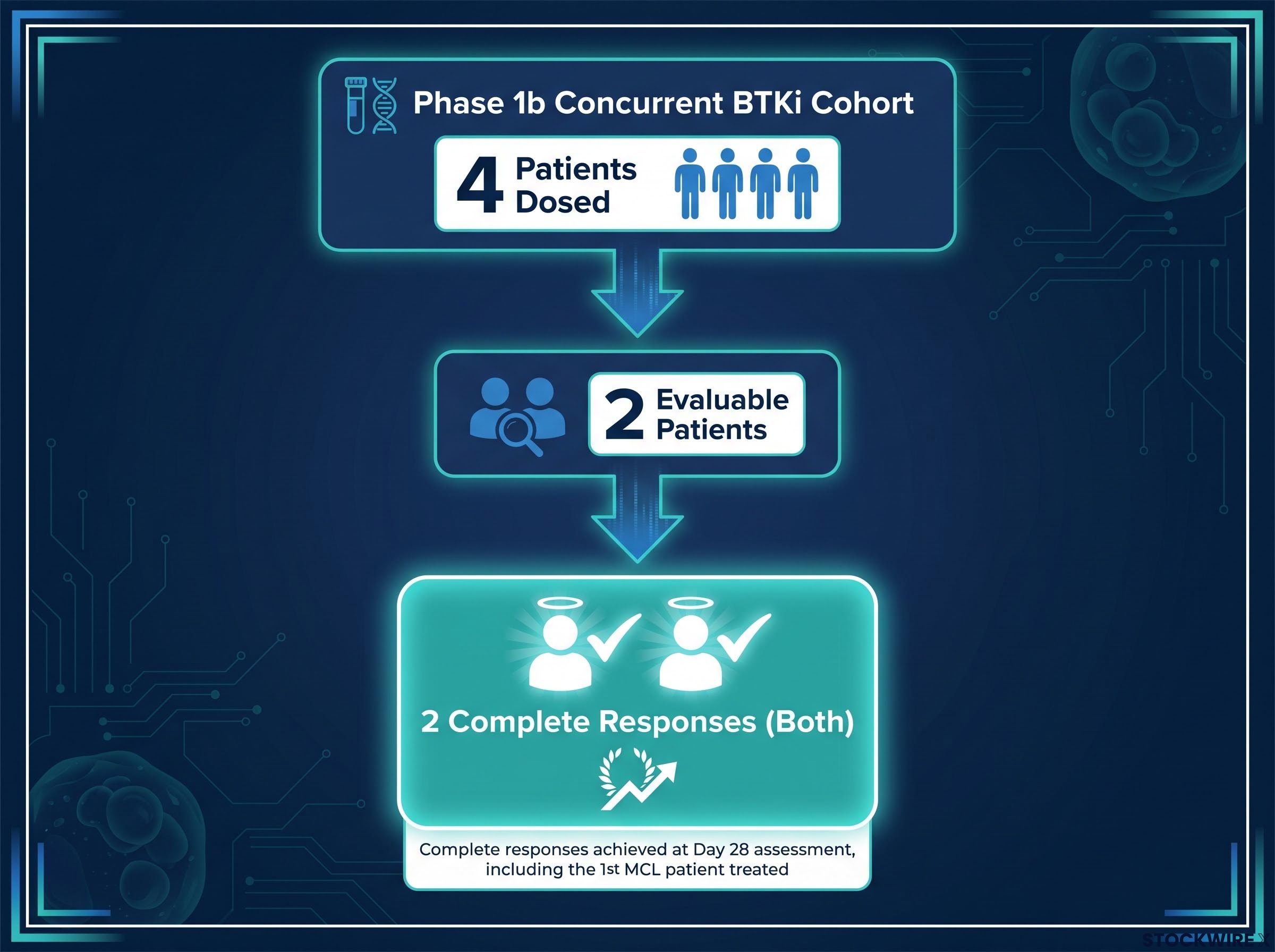
An additional patient in the concurrent Bruton Tyrosine Kinase inhibitor (BTKi) cohort of the Imugene (ASX:IMU) azer-cel Phase 1b trial has achieved a complete response (CR) at the Day 28 assessment. Notably, this patient is the first Mantle Cell Lymphoma (MCL) patient treated in the study.
The patient had previously received and failed BTKi therapy, placing them within a population that faces limited remaining treatment options. This result marks the second complete response recorded in the concurrent BTKi cohort.
The clinical relevance is anchored by market size. BTK inhibitors address a US$12.0 billion global market as of 2025, with a proportion of patients developing resistance as their disease progresses over time. Imugene is a clinical-stage oncology company.
When big ASX news breaks, our subscribers know first
What the latest cohort data shows
The complete response was achieved at the Day 28 assessment in the first MCL patient treated in the study. All patients enrolled in the cohort have “relapsed on or are refractory to BTKi therapy,” a standard treatment across multiple B-cell malignancies.
The cohort evaluates whether concurrent dosing of azer-cel with a BTKi “may restore or enhance therapeutic activity” in this setting. Key data points from the update include:
The BTKi combo cohort was opened after Imugene amended its Phase 1b protocol to add a third treatment arm specifically targeting patients who had relapsed on or become refractory to BTK inhibitor therapy, with the first patient dosed at Baylor University ahead of the enrolment now active across fifteen sites.
-
Patients dosed in concurrent BTKi cohort: four
-
Evaluable patients: two
-
Complete responses among evaluable patients: two (both)
-
First MCL patient treated in the study achieved a CR at Day 28
-
Enrolment ongoing across ten US sites and five Australian sites
CEO Commentary
“Achieving a second complete response in the concurrent BTKi cohort, including in the first Mantle Cell Lymphoma patient treated in the study, further reinforces our belief in azer-cel’s potential for patients who have progressed on BTKi therapy. Given the broad use of BTK inhibitors across B-cell malignancies and the limited treatment options available following progression, we believe this concurrent dosing approach represents a highly promising clinical and commercial opportunity for azer-cel,” said Leslie Chong, Managing Director and Chief Executive Officer of Imugene.
Understanding azer-cel and the BTKi resistance problem
What is azer-cel?
Azer-cel (azercabtagene zapreleucel) is an off-the-shelf, allogeneic CAR T cell therapy that targets CD19 to treat blood cancers.
The practical advantage lies in its manufacturing model. Because azer-cel is derived from healthy donor T cells, it is ready for administration within days. This avoids the three-to-six-week manufacturing lead time required for autologous CAR T products.
Why BTKi resistance matters
MCL is an aggressive B-cell non-Hodgkin lymphoma that typically presents at an advanced stage and “remains incurable with standard therapies.” BTK inhibitors have become an established treatment across relapsed or refractory MCL.
However, a significant proportion of patients develop resistance or intolerance over time, leaving them with limited remaining options. This defines the unmet-need patient population that azer-cel is targeting and frames the broader commercial opportunity.
| Factor | Detail |
|---|---|
| Global BTKi market (2025) | US$12.0 billion |
| Target | CD19 |
| Therapy type | Off-the-shelf allogeneic CAR T |
| Cohort population | Patients relapsed/refractory to BTKi therapy |
| Trial phase | Phase 1b, open-label, multi-centre |
What comes next for the azer-cel trial
Patient enrolment is ongoing across the ten US sites and five Australian sites. The company noted that further updates will be provided “as additional data becomes available, and the dataset matures,” with no specific timelines disclosed.
The ongoing open-label, multi-centre Phase 1b trial spans a broad range of Non-Hodgkin lymphomas, including follicular lymphoma (FL), chronic lymphocytic leukaemia (CLL)/small lymphocytic lymphoma (SLL), marginal zone lymphoma (MZL), Waldenström macroglobulinaemia (WM), and mantle cell lymphoma (MCL). The trial most recently expanded into the concurrent BTKi cohort for patients who have previously failed BTKi therapy.
According to the company, the safety profile is described as “manageable and generally well tolerated.” The broad use of BTK inhibitors across B-cell malignancies, combined with limited post-progression options, frames azer-cel’s concurrent dosing approach as a clinical and commercial opportunity for the Imugene BTKi cohort.
For investors wanting a fuller picture of azer-cel’s clinical track record across the broader basket program, our detailed coverage of the azer-cel Phase 1b basket results from March 2026 walks through the 100% ORR in CLL/SLL, the 80% ORR in MZL, and the registrational pathway logic underpinning the multi-cohort design.
Ready to Explore Imugene’s Latest azer-cel Clinical Data?
Azer-cel’s BTKi cohort has now recorded two complete responses from two evaluable patients, including the first Mantle Cell Lymphoma patient treated in the study — a result that reinforces the therapy’s potential in a heavily pre-treated population with few remaining options. The concurrent dosing approach targets a US$12.0 billion global BTKi market where resistance remains a significant and growing unmet need.
Investors seeking the full clinical picture can view Imugene’s latest ASX announcements directly on the company’s investor centre, where all trial updates and regulatory disclosures are published as the dataset matures.