
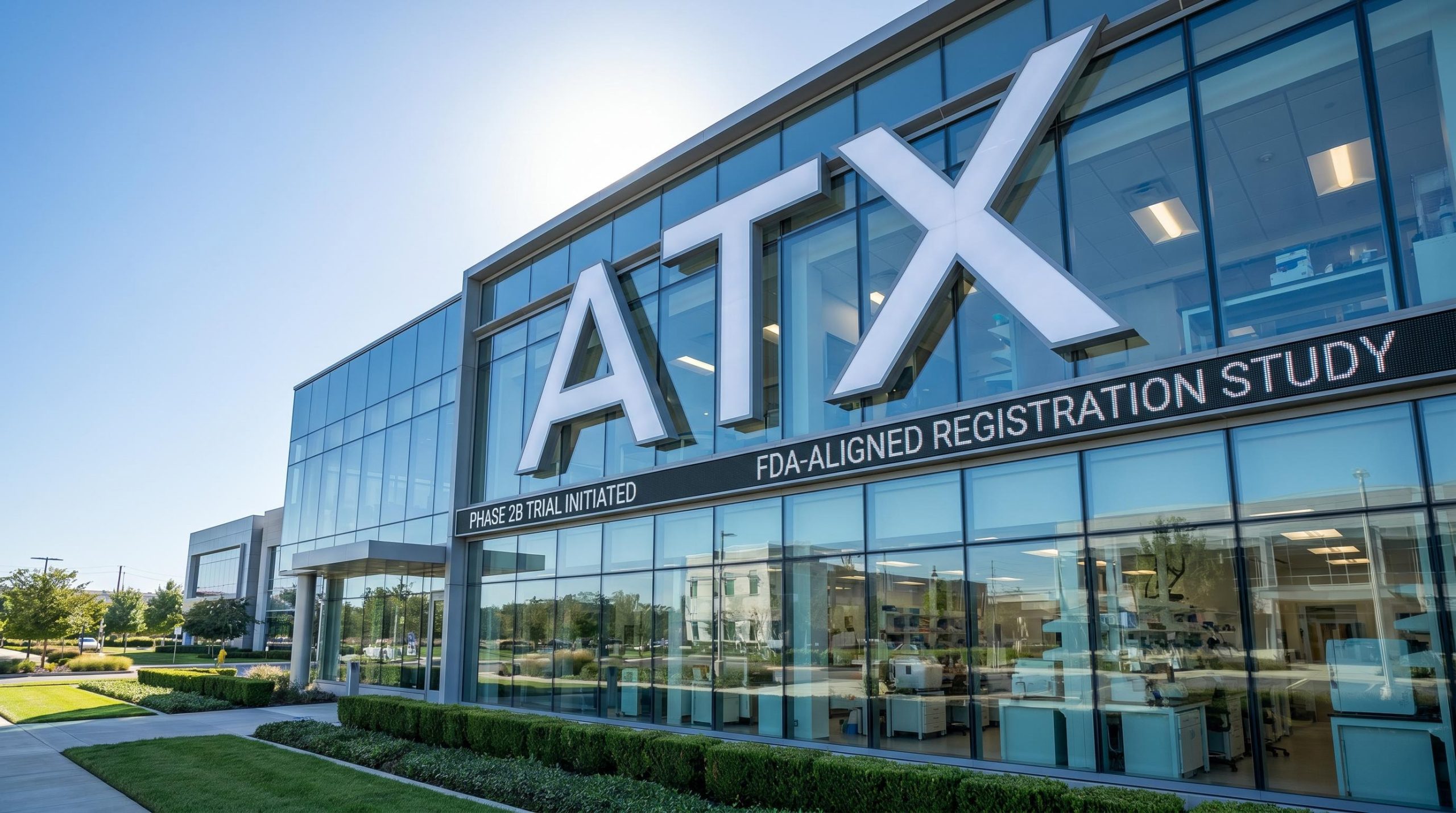
Amplia launches registration-enabling Phase 2b trial for narmafotinib in pancreatic cancer
Amplia Therapeutics (ASX: ATX) is initiating a Phase 2b study of narmafotinib designed to form the first stage of a registrational study for U.S. Food and Drug Administration (FDA) approval in advanced pancreatic cancer. The study was designed in alignment with FDA feedback, establishing a clear regulatory pathway for the company’s lead Focal Adhesion Kinase (FAK) inhibitor, which holds both orphan drug designation and fast track designation from the U.S. FDA. Patient enrolment is planned to begin by Q4 2026, with safety, tolerability, and pharmacokinetics assessment for 12 patients expected to complete in Q2 2027.
When big ASX news breaks, our subscribers know first
What is a registration-enabling trial and why does it matter?
A registration-enabling trial is a study designed to generate the data required for regulatory approval to market a drug. This Phase 2b forms the “first stage” of Amplia’s registrational study, meaning data generated will carry forward into Phase 3 rather than requiring an entirely separate program.
The significance of FDA alignment cannot be overstated—studies designed with regulator input have materially higher probability of acceptance. In this context, narmafotinib’s orphan drug designation provides commercial exclusivity benefits upon approval, whilst the fast track designation offers potential for expedited regulatory review. These designations reflect the FDA’s recognition of high unmet need in advanced pancreatic cancer, a disease with limited treatment options and poor prognosis.
Investment significance: Registration-enabling trials represent a pivotal inflection point in drug development. Success here creates a direct pathway to commercialisation rather than requiring additional studies, substantially de-risking the development timeline.
New daily dosing regimen under investigation
This study will investigate daily dosing of narmafotinib for the first time, a significant shift from the intermittent dosing schedule used in prior trials. The rationale stems from the earlier ACCENT study, which demonstrated compelling efficacy signals with intermittent dosing and showed no significant tolerability burden over chemotherapy alone.
The study design includes:
- Daily dosing at two different dose levels (first time investigated)
- Combination therapy with gemcitabine and Abraxane (standard chemotherapy regimen)
- 12 patients total (6 per dosing cohort)
- Enrolment across 3-4 sites in Australia
Dr Chris Burns, CEO and Managing Director
“To-date narmafotinib has shown no significant tolerability burden over chemotherapy alone, and we have observed a range of compelling efficacy signals across responses and survival. This has been achieved with only an intermittent dosing schedule, giving us confidence that moving into daily dosing may further enhance the therapeutic potential of narmafotinib.”
Investment significance: Daily dosing may enhance drug efficacy compared to intermittent dosing. The small patient cohort in this first stage allows rapid safety assessment before broader expansion, accelerating the path to Phase 3.
Building on compelling ACCENT study results
The Phase 2b study builds on data from Amplia’s earlier Phase 1b/2a ACCENT study, which generated efficacy signals that support this advancement into registration-enabling work. For pancreatic cancer—a disease with historically poor treatment outcomes—the ACCENT results represent meaningful clinical activity.
| Metric | ACCENT Study Result |
|---|---|
| Response rate | 36% |
| Median overall survival (mOS) | 11.1 months |
| Tolerability | No significant burden over chemotherapy alone |
The 36% response rate is described as superior to chemotherapy alone in this patient population. Median overall survival of 11.1 months provides a benchmark for the upcoming study to build upon.
Investment significance: These figures establish clinical proof-of-concept for narmafotinib’s mechanism in pancreatic cancer. Reproducing or exceeding this performance with daily dosing would strengthen the regulatory submission.
Endpoints and biomarker exploration
The study will assess three primary endpoints:
- Safety and tolerability
- Pharmacokinetics (PK)
- Efficacy assessment
Exploratory endpoints will examine effects on disease biomarkers and effects on fibrosis, a key indicator of FAK activity. FAK is overexpressed in pancreatic cancer and is linked to tumour-associated fibrosis, which contributes to treatment resistance and poor prognosis.
Investment significance: Biomarker and fibrosis data could strengthen the biological rationale for narmafotinib’s mechanism, supporting both regulatory and commercial positioning by demonstrating target engagement.
Accelerated timeline enabled by AMPLICITY resource redeployment
Accelerated initiation of the Phase 2b study was made possible by clinic-ready drug product and resources transitioned from the AMPLICITY study, which wound down recruitment. AMPLICITY was a separate trial investigating narmafotinib in combination with FOLFIRINOX chemotherapy in advanced pancreatic cancer patients.
Dr Burns noted that the registrational study submission to the FDA will be strengthened by the inclusion of this portion of the Phase 2b study, with further regulator engagement planned ahead.
Key timeline milestones:
- Patient enrolment to begin: Q4 2026
- Safety, tolerability, and PK assessment for 12 patients: Q2 2027
Investment significance: Resource redeployment demonstrates capital efficiency and operational agility. Utilising existing drug product inventory accelerates timelines without requiring additional manufacturing spend, reducing cash burn during this critical development phase.
Pathway to FDA registration
The Phase 2b data will form the foundation for the Phase 3 registrational study, establishing a streamlined pathway to potential approval. Narmafotinib’s orphan drug designation and fast track designation from the U.S. FDA position the company for potential accelerated commercialisation in a high-unmet-need indication.
The company anticipates further engagement with regulators as the study progresses, building on the FDA alignment already achieved in the study design. This collaborative approach reduces regulatory risk by ensuring study endpoints and design parameters meet agency expectations before Phase 3 initiation.
Investment significance: The combination of FDA alignment, fast track designation, and a clear registrational pathway positions Amplia for potential accelerated commercialisation. Orphan drug designation offers seven years of market exclusivity upon approval, a significant commercial advantage in the pancreatic cancer treatment landscape.
Ready to Learn More About Amplia’s Registrational Pathway for Narmafotinib?
Amplia’s Phase 2b trial represents a critical inflection point, with FDA-aligned design and orphan drug designation establishing a direct pathway to potential commercialisation in advanced pancreatic cancer. Daily dosing could enhance the compelling efficacy signals already observed in the ACCENT study, whilst fast track designation positions the company for expedited regulatory review.
To explore the full details of Amplia’s regulatory strategy and clinical development program, visit the Amplia investor centre. Detailed information on narmafotinib’s mechanism, trial design, and commercial positioning is available for investors assessing this high-unmet-need opportunity.