

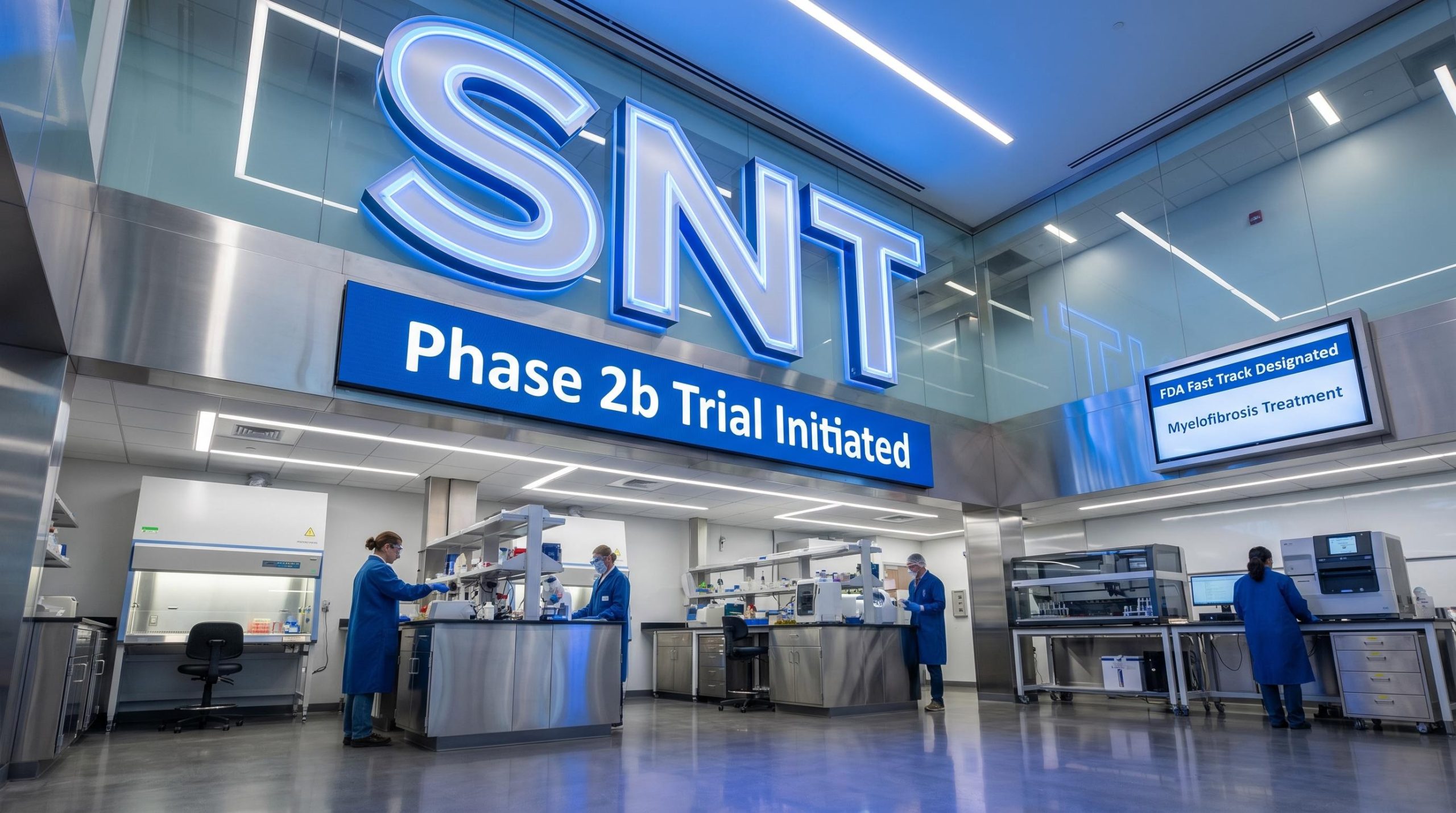
Syntara secures FDA backing for amsulostat Phase 2b trial in myelofibrosis
Syntara Limited (ASX: SNT) has received positive feedback from the US Food and Drug Administration following a Type C meeting, with the agency supporting the Phase 2b design for amsulostat in myelofibrosis. The study will enrol approximately 100 patients in a 9-month double blind, placebo-controlled trial targeting a 50% reduction in total symptom score (TSS50) as the primary endpoint.
The regulatory alignment represents a major milestone enabling progression into late-stage clinical development. Amsulostat already holds FDA Fast Track Designation and Orphan Drug Designation for myelofibrosis, providing a foundation for accelerated regulatory review timelines. The agreed development pathway enhances the asset’s profile for commercial partnering discussions, with the company stating the milestone creates opportunity for engagement with potential partners.
The Phase 2b trial will study amsulostat as an add-on therapy to standard of care JAK inhibition in patients who have had an inadequate response to existing treatments. This patient population represents a clear unmet medical need, as individuals who fail first-line therapies have limited options under current care protocols.
When big ASX news breaks, our subscribers know first
What is a Type C meeting and why does it matter?
A Type C meeting is a formal FDA consultation where drug developers seek guidance on clinical trial design and regulatory strategy. Positive feedback from such meetings indicates the FDA views the proposed approach as reasonable and scientifically sound, though it does not constitute approval of the drug itself.
For investors, this regulatory validation reduces the risk of costly mid-trial design changes or protocol amendments that could delay development timelines. The FDA’s support provides the company with confidence to allocate capital to the Phase 2b programme, knowing the study design aligns with the agency’s expectations for late-stage evidence generation.
This type of pre-trial engagement minimises the probability of regulatory rejection later in development, strengthening the commercial partnering narrative by demonstrating the asset has a credible path to potential approval.
Phase 2b trial design targets inadequate responders to standard of care
The Phase 2b study will enrol myelofibrosis patients who have had an inadequate response to JAK inhibitors, the current standard of care. Amsulostat will be studied as an add-on therapy rather than a replacement, with the primary endpoint measuring achievement of TSS50 after 9 months of treatment.
The double blind, placebo-controlled design represents the gold standard for clinical evidence, minimising bias and providing regulators with robust comparative data. The study parameters are:
- Approximately 100 patients enrolled
- Double blind, placebo-controlled design
- Amsulostat added to standard of care (JAK inhibition)
- Primary endpoint: TSS50 at 9 months
Targeting inadequate responders addresses a significant unmet medical need. Patients who fail existing treatments have limited therapeutic options, creating commercial opportunity for new mechanisms that can deliver symptom relief where JAK inhibitors alone have proven insufficient.
CEO Commentary
Gary Phillips, Chief Executive Officer
“We are delighted to have received a positive FDA review of the trial protocol for the planned Phase 2b study. Amsulostat has a differentiated and competitive safety and efficacy profile, with strong potential as a breakthrough therapy for MF patients with an inadequate response to standard of care.”
Multiple clinical catalysts position 2026 as a landmark year
Syntara has several clinical readouts expected in CY2026 beyond the myelofibrosis Phase 2b programme. The diversified pipeline creates multiple independent opportunities for value creation across different therapeutic areas and patient populations.
The additional near-term catalysts include:
- MDS (Myelodysplastic Syndrome): Two Phase 1b/2 trials reporting interim data in 2H 2026
- iRBD/Parkinson’s: Phase 2 top-line data for SNT-4728 expected in CY2026
- Skin Scarring: Phase 1b placebo-controlled study results for SNT-9465 (hypertrophic scarring) due in CY2026
This multi-asset approach reduces single-programme risk. Each clinical readout represents a potential re-rating event, with positive data in any indication capable of driving investor reassessment of the company’s broader pipeline value.
The myelodysplastic syndrome trials extend amsulostat’s development into a second haematological indication, potentially expanding the addressable patient population and commercial opportunity if the mechanism demonstrates efficacy across multiple blood cancer settings.
Amsulostat’s regulatory designations and development history
Amsulostat has secured multiple regulatory designations from the FDA, positioning the asset for accelerated development timelines. The drug has completed a Phase 2a trial in myelofibrosis, where it was dosed both as monotherapy and in combination with JAK inhibitors, establishing proof-of-concept in the target indication.
Two Phase 1c/2 studies in myelodysplastic syndrome have been initiated, representing potential indication extension beyond the core myelofibrosis programme. This dual-indication strategy creates optionality for the asset’s development pathway.
| Regulatory Milestone | Status |
|---|---|
| FDA Fast Track Designation | Granted |
| FDA Orphan Drug Designation | Granted |
| IND Clearance (Myelofibrosis) | Cleared |
| Phase 2a (Myelofibrosis) | Completed |
| Phase 1c/2 (MDS) | Initiated |
Fast Track Designation provides the company with more frequent FDA interactions and eligibility for rolling review submissions, potentially compressing regulatory timelines. Orphan Drug Designation carries seven years of market exclusivity upon approval, enhancing the asset’s commercial value by limiting generic competition.
Partnership opportunity strengthened by agreed development pathway
The FDA-validated Phase 2b design enhances amsulostat’s profile for commercial partnering discussions. Biotech assets with clear regulatory alignment and de-risked development pathways typically attract greater interest from potential acquirers or licensing partners.
The Phase 2b study represents a value inflection point. Partnership interest could materialise before data readout (based on the trial design and regulatory validation) or following positive results (where clinical efficacy data supports commercial projections). Late-stage clinical assets with FDA-backed protocols command premium valuations in licensing or acquisition negotiations compared to earlier-stage programmes with higher regulatory uncertainty.
Don’t Miss the Next Biotech Breakthrough
Join 20,000+ investors getting FREE breaking ASX news delivered to your inbox within minutes of release, complete with in-depth analysis. Click the “Free Alerts” button at StockWire X to start receiving alerts the moment market-moving announcements hit the ASX.