S&P 500, Nasdaq Hit Records as Iran Peace Hopes Fuel Rally

Key Takeaways
- The S&P 500 and Nasdaq closed at all-time highs on Thursday April 17, 2026, with the S&P 500 up 4.5% and the Nasdaq up 6.8% for the week, marking a third consecutive weekly advance for major US indices.
- US-Iran peace negotiations, including Iran's agreement to halt nuclear enrichment indefinitely and reopen the Strait of Hormuz, served as the primary catalyst for the risk-on market rally.
- The Magnificent Seven technology stocks gained 9% over five sessions, with Magnificent Seven earnings projected to deliver 20% growth versus 12% for the remaining S&P 493 constituents.
- The rally remains fragile, as the temporary ceasefire expires Tuesday April 22, oil sits at $99.39 per barrel, and strategists warn that sustained momentum requires tangible concessions from either the US or Iran.
- Tesla's Q1 2026 earnings report on Tuesday and a slate of economic data including retail sales and the University of Michigan final sentiment reading will be critical tests for whether the rally can hold.
The S&P 500 and Nasdaq closed at all-time highs on Thursday, April 17, 2026, marking the third consecutive weekly advance for all major US indices amid optimism around US-Iran peace negotiations. The S&P 500 gained 4.5% for the week, the Nasdaq surged 6.8%, and the Dow Jones rose 3.2%, though the Dow was the sole index not reaching a new record. According to Adam Turnquist, Chief Technical Strategist at LPL Financial, markets are seeing a return of risk appetite with early cyclical rotation building underneath broader trends.
| Index | Thursday Close | Thursday Change | Weekly Change |
|---|---|---|---|
| S&P 500 | 7,041.28 | +0.3% | +4.5% |
| Nasdaq | 24,102.70 | +0.4% | +6.8% |
| Dow Jones | 48,578.72 | +0.2% | +3.2% |
What’s Driving the Rally: Iran Peace Hopes and Oil Price Relief
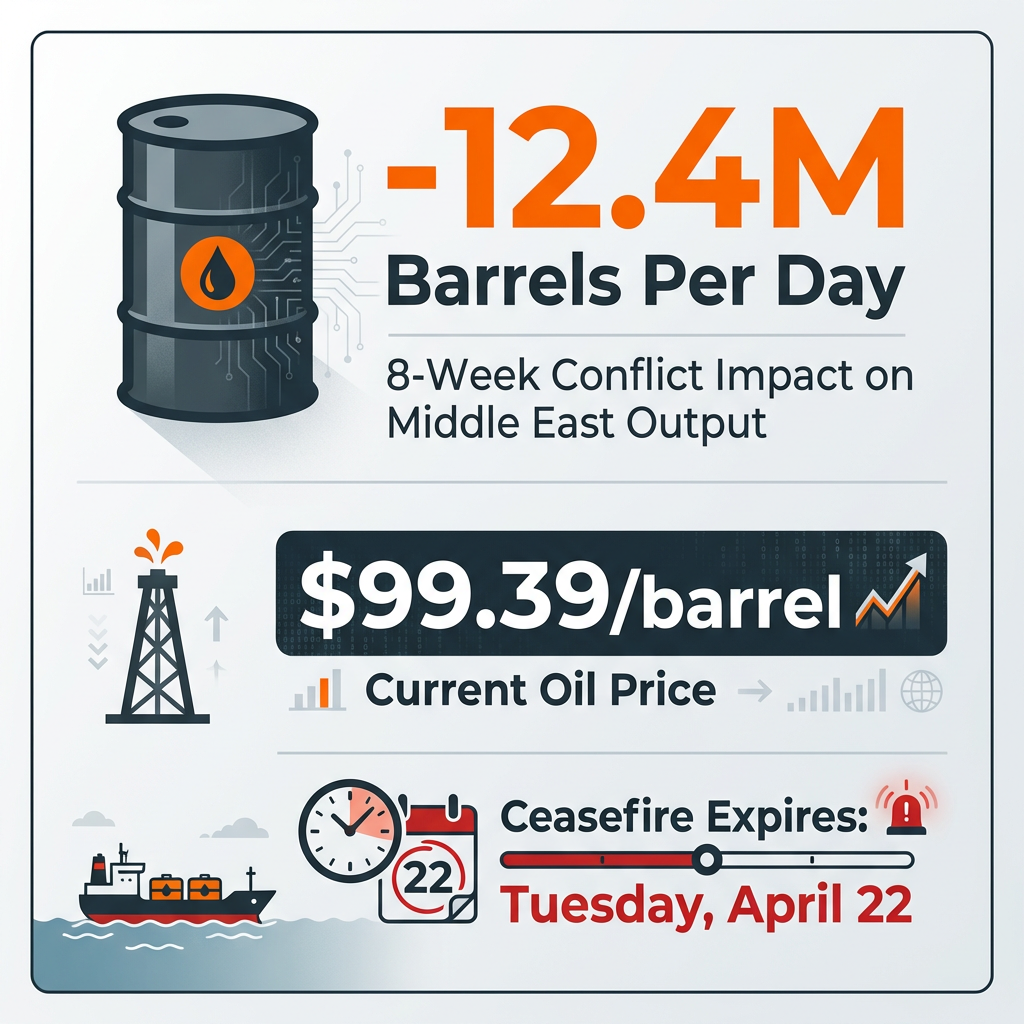
The rally’s primary catalyst emerged from geopolitical de-escalation signals. Iran’s foreign minister Abbas Aragchi declared the Strait of Hormuz open for commercial shipping, followed by President Trump announcing Iran agreed to halt nuclear enrichment indefinitely. The temporary ceasefire is holding but expires Tuesday, April 22, with second-round negotiations scheduled this weekend.
The conflict’s impact on energy markets represents history’s largest oil supply disruption according to the International Energy Agency, with the S&P 500 declining approximately 5% through late March before the current rally began.
This development matters significantly to markets because the eight-week conflict had reduced Middle Eastern oil output by approximately 12.4 million barrels daily, according to Rystad Energy. Analyst Artam Abramov stated that any credible indication of the strait reopening constitutes a highly significant market event. Markets are pricing in the possibility of a deal rather than waiting for formal agreement, driving immediate risk-on sentiment despite hundreds of vessels remaining trapped in the Persian Gulf.
“Sustaining the rally would likely require tangible concessions from either the US or Iran.”
Thierry Wizman, Strategist, Macquarie
When big ASX news breaks, our subscribers know first
Big Tech Leads the Charge Ahead of Key Earnings Week
The Magnificent Seven technology stocks mounted a dramatic recovery, with the MAGS ETF gaining 9% over five trading sessions after dropping to its lowest level since July 2025 during the conflict’s first six weeks. The ETF reached close to its record high following the surge.
Taiwan Semiconductor reported stronger-than-expected results on Thursday, with 66% year-over-year adjusted earnings per share growth and 40% revenue growth. The results bolstered tech stocks broadly, providing fundamental support for the rally. Nicole Inui from HSBC described expectations for an exceptional Q1 2026 earnings period, with technology offering the greatest optimism. The Magnificent Seven are projected to deliver 20% earnings growth versus 12% for the remaining S&P 493 constituents.
TSMC’s $18.2 billion record profit paradoxically drove a 3% share price decline on April 16, illustrating how elevated expectations can produce negative market reactions even to stellar results, a dynamic that may play out across other Magnificent Seven earnings this week.
Jefferies analyst Michael Toomey cautioned that the tech sector could be approaching the end of its current rally, with near-term consolidation anticipated. This warning sets up the stakes for Tuesday’s Tesla earnings report.
Tesla Earnings Tuesday: Stock Rebounds but Headwinds Persist
Tesla ended an eight-week losing streak with a 3.01% gain ahead of Tuesday’s Q1 earnings report. CEO Elon Musk disclosed the company reached final design stages for its AI5 chip, intended for future electric vehicles, training clusters, and Optimus humanoid robots. Reuters reported Tesla is recruiting chip engineers in Taiwan, signalling the company’s chipmaking ambitions.
Tesla’s eight-week losing streak and 3.01% Friday rebound came on trading volume reaching 88 million shares, nearly double the three-month average, signalling heightened institutional positioning ahead of Tuesday’s Q1 report.
UBS analyst Joseph Spak stated that Tesla stock is driven more by sentiment, narrative, and momentum than by underlying financials. Spak identified multiple headwinds: weakening electric vehicle demand, Q1 2026 energy shortfall, rising costs, elevated capital expenditure needs, and sluggish robo-taxi and Optimus progress. Despite near-term concerns, Spak maintains Tesla as a frontrunner in physical artificial intelligence.
The next major ASX story will hit our subscribers first
Economic Data and Earnings to Watch This Week
Consumer health data takes on heightened importance given eight weeks of conflict, price increases, and uncertainty. The April preliminary University of Michigan sentiment fell to a historic low of 47.6, making Friday’s final reading highly anticipated.
Key events this week:
- Tuesday: March retail sales (+1.3% expected versus +0.6% prior)
- Tuesday: Tesla earnings, GE Vernova (artificial intelligence infrastructure gauge)
- Thursday: Initial claims (210,000 expected), Intel earnings (stock at highest since 2000), S&P Global PMI flash readings
- Friday: University of Michigan sentiment final (48.3 expected)
Airline earnings from Alaska Air on Monday and United on Tuesday will offer insight into surging jet fuel costs’ impact on the sector.
Can the Rally Last? Strategists Warn of Fragile Foundation
Bullish signals are evident: the S&P 500 sits at record highs with 11 gains in 12 sessions heading into Thursday, broad global equity participation (Nikkei +2.4%), and stronger-than-expected corporate earnings. Markets have recovered 10%+ since late March lows.
ING Bank strategists Warren Patterson and Ewa Manthey identified breakdown in US-Iran peace talks as the key upside risk to markets. Oil’s uptick to $99.39/barrel reflects ongoing nervousness despite earlier optimism. Experts warn that even with a binding peace agreement, normalisation of oil markets could require weeks to months. Hundreds of vessels remain trapped in the Persian Gulf, and full resumption of 12.4 million barrels daily of Middle Eastern output faces logistical challenges.
“Markets are pricing in the possibility of a deal rather than waiting for formal agreement.”
Artam Abramov, Analyst, Rystad Energy
This underscores the rally’s anticipatory and therefore fragile nature heading into Tuesday’s ceasefire expiration. The coming week will test whether geopolitical optimism can translate into sustained market momentum or whether the lack of fundamental economic drivers will prompt profit-taking.
For readers questioning the sustainability of the rally given fragile geopolitical foundations and $99.39 oil, our deep-dive into whether markets hitting records as oil nears $100 reflects resilience or denial examines historical precedents for equity rallies during energy crises, positioning data, and divergence between price action and economic fundamentals.
This article is for informational purposes only and should not be considered financial advice. Investors should conduct their own research and consult with financial professionals before making investment decisions.
Frequently Asked Questions
What is driving the current US stock market rally in April 2026?
The rally is primarily driven by geopolitical de-escalation signals from US-Iran peace negotiations, including Iran's declaration that the Strait of Hormuz is open for commercial shipping and an agreement to halt nuclear enrichment indefinitely, which has reduced oil supply fears and boosted risk appetite.
How much have the S&P 500 and Nasdaq gained this week?
The S&P 500 gained 4.5% for the week, closing at a record high of 7,041.28, while the Nasdaq surged 6.8% to close at 24,102.70, also reaching an all-time high.
How does the Iran conflict affect oil prices and the stock market?
The eight-week Iran conflict reduced Middle Eastern oil output by approximately 12.4 million barrels daily, representing one of history's largest oil supply disruptions, which pushed oil toward $99.39 per barrel and contributed to an S&P 500 decline of approximately 5% before the current rally began.
What should investors watch for to determine if this stock market rally is sustainable?
Investors should monitor the outcome of US-Iran ceasefire negotiations, which expire Tuesday April 22, as well as key earnings reports from Tesla, Intel, and others, and the final University of Michigan consumer sentiment reading, since the rally is built on anticipatory optimism rather than confirmed geopolitical resolution.
How are Magnificent Seven stocks performing during the current market rally?
The Magnificent Seven technology stocks, tracked by the MAGS ETF, surged 9% over five trading sessions, recovering from their lowest level since July 2025, supported by TSMC reporting 66% year-over-year earnings per share growth and 40% revenue growth.