
PainChek secures landmark North America deployment with $5 billion healthcare REIT
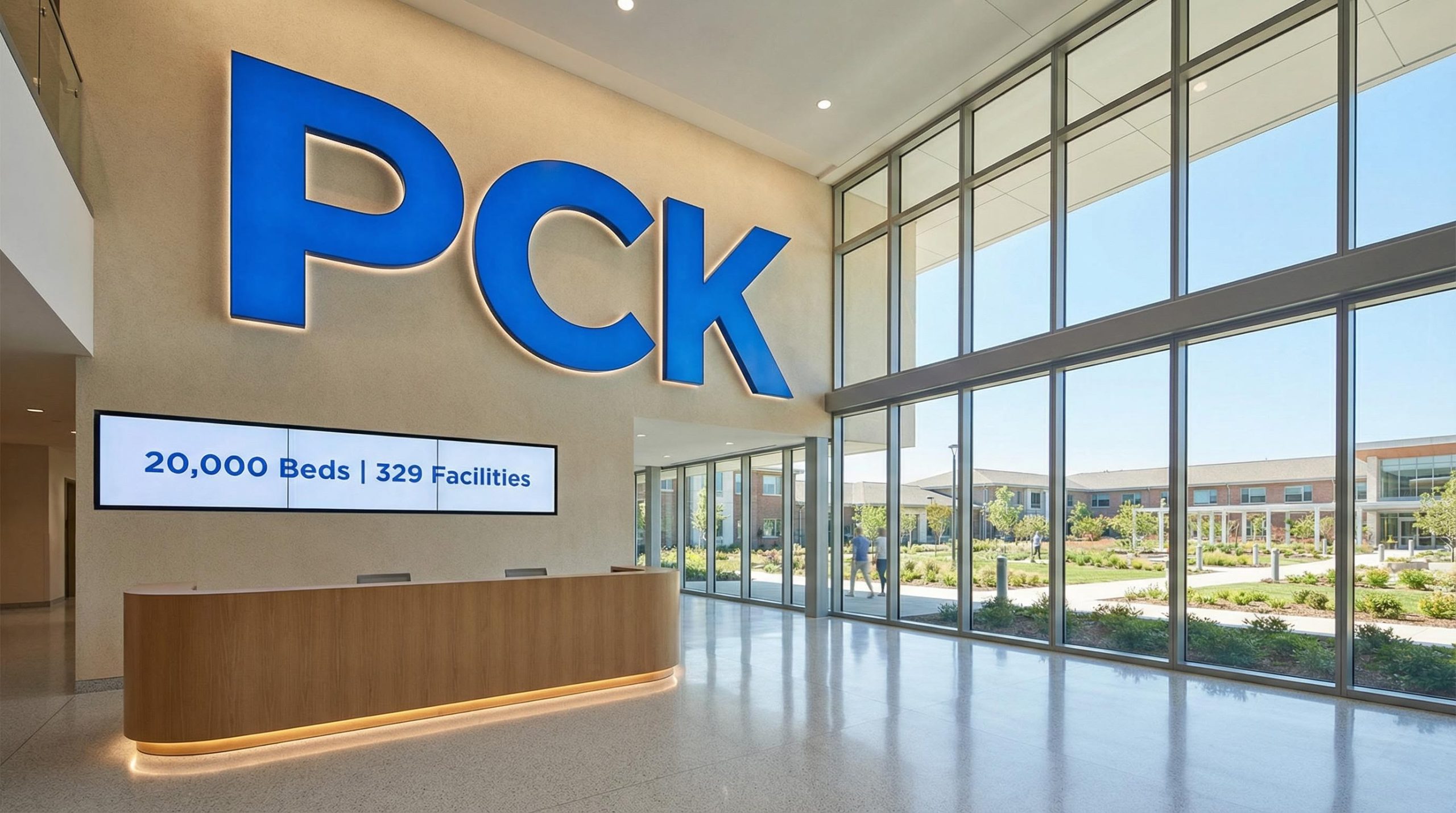
PainChek has entered into a Master Services Agreement with Nasdaq-listed Sabra Health Care REIT that positions the AI-powered pain assessment technology for deployment across up to 20,000 beds in 329 facilities throughout the United States and Canada. The agreement, announced 14 April 2026, represents a strategic commercial milestone for the company following FDA approval received in 2025 and establishes a capital-light distribution model that bypasses traditional facility-level sales cycles.
Sabra, with a market capitalisation of approximately $5 billion, operates a portfolio of more than 36,000 beds or units across skilled nursing, long-term care, and senior housing facilities in North America. The pricing agreement ranges from $55-75 USD per bed per annum, with the lower tier available for clients committing to 2-3 year agreements or participating in collaborative research or outcomes publication projects with PainChek. The perpetual agreement allows either party to terminate with 90 days’ notice after the initial 12-month period.
Under the agreement structure, Sabra will fund PainChek’s solution on behalf of its operating partners, removing the barrier of convincing individual facility operators to budget for new technology. Sabra is contractually obligated to introduce PainChek to all current and future operators within its portfolio, providing systematic access to the REIT’s entire network rather than requiring facility-by-facility negotiations.
This owner-level funding mechanism materially increases the likelihood of operator uptake, streamlines sales cycles and deployment, and enables portfolio-wide penetration without proportional increases in sales and marketing investment. For PainChek, the agreement converts FDA regulatory validation into revenue-generating commercial traction with an institutional-scale customer in the world’s largest healthcare market.
When big ASX news breaks, our subscribers know first
How the REIT-funded model works
The commercial structure centres on Sabra’s willingness to fund technology adoption across its property portfolio, creating a distribution pathway that differs fundamentally from traditional healthcare software sales. Rather than approaching individual aged care operators who must allocate capital budgets and navigate internal approval processes, PainChek gains access through the asset owner that controls the facilities those operators lease.
This top-down model removes the primary objection operators typically raise when evaluating new clinical tools: upfront cost and budget allocation. Because Sabra funds the deployment, operators can adopt PainChek without impacting their operating budgets, significantly increasing the likelihood of uptake and streamlining implementation timelines.
The pricing structure incorporates two tiers designed to incentivise long-term commitment and clinical collaboration:
| Pricing Tier | Rate (USD per bed p.a.) | Conditions |
|---|---|---|
| Standard | $75 | Standard agreement terms |
| Discounted | $55 | 2-3 year commitment OR research/outcomes publication collaboration |
The lower pricing tier creates dual incentives: operators willing to commit longer-term secure better economics, whilst those participating in outcomes research or publication projects with PainChek contribute clinical evidence that strengthens the product’s market position. Both pathways support PainChek’s broader commercialisation strategy whilst maintaining revenue per bed within the company’s target range.
Sabra’s contractual obligation to introduce PainChek to all current and future operators in its network creates a persistent distribution channel. As Sabra acquires or develops additional facilities, PainChek gains automatic access to those new sites without additional market development cost.
Rollout timeline and operator pipeline
Deployment will proceed in stages, with PainChek currently finalising local agreements with an initial cohort of operators based on the agreed Sabra pricing framework. The staged approach allows the company to refine implementation processes whilst building case studies that support adoption across the broader portfolio.
The current operator pipeline includes:
- Five operators — local agreements being finalised now based on Sabra pricing
- Ten additional operators — in queue for subsequent rollout following initial deployments
- Total Sabra portfolio — 329 facilities representing full addressable opportunity across US and Canada
This pipeline structure demonstrates clear commercial momentum, with fifteen operators in various stages of agreement finalisation or deployment queue representing immediate near-term revenue visibility. The broader 329-facility portfolio represents the total addressable opportunity unlocked by the single Master Services Agreement with Sabra.
What is a healthcare REIT and why does this model matter?
A Real Estate Investment Trust (REIT) is a company that owns and operates income-producing real estate. Healthcare REITs specifically own facilities such as aged care homes, hospitals, senior housing communities, and rehabilitation centres. Unlike traditional healthcare operators, the REIT typically does not provide care services, instead leasing the physical properties to operators who run the day-to-day clinical and residential services.
This separation creates a unique dynamic in healthcare real estate. The property owner (in this case, Sabra) maintains a long-term interest in the quality and competitiveness of the facilities it owns, as operator success directly impacts lease stability and property values. When a REIT funds or mandates technology adoption across its portfolio, it can drive standardisation and quality improvements across hundreds of facilities simultaneously.
For PainChek, this structure allows the company to scale efficiently across fragmented markets by partnering with asset owners rather than pursuing individual operators. A single agreement with Sabra unlocks access to 329 facilities without negotiating separately with each operator, fundamentally altering the sales efficiency equation.
Traditional healthcare software sales require convincing each facility operator to allocate budget, obtain internal approvals, and integrate new technology into existing workflows. This process can take months or years per facility. By contrast, the REIT-funded model shifts the commercial decision to the asset owner level, where strategic decisions about portfolio-wide technology adoption can be made centrally and deployed systematically.
The model also aligns incentives. Sabra benefits from improved care quality and reduced liability risk associated with better pain management, PainChek gains portfolio-wide access at scale, and operators receive funded technology that improves clinical outcomes without impacting operating budgets.
Replicable blueprint for North American expansion
CEO Philip Daffas explicitly described the Sabra agreement as a transferrable model for pursuing other large US-based real estate investment trusts controlling aged care and senior living portfolios. This positions the agreement as validation of a repeatable distribution playbook rather than a one-off transaction.
Philip Daffas, CEO of PainChek
“This model is also a blueprint for PainChek in the US and transferrable to other large, US-based real estate investment trusts who own large numbers of long-term care and senior living facilities.”
The North American healthcare REIT sector includes multiple institutional asset owners collectively controlling thousands of aged care and senior housing facilities. If PainChek can replicate this model with even a small number of additional healthcare REITs, the addressable bed count expands dramatically, with each REIT partnership representing portfolio-wide access rather than facility-by-facility sales effort.
PainChek enters this expansion phase with established regulatory clearance and operational track record across multiple markets:
- Regulatory clearance as a medical device in Australia, USA, Canada, EU, UK, New Zealand, Singapore, and Malaysia
- Contracts with over 2,000 aged care facilities globally
- More than 18 million digital pain assessments conducted to date
This operational scale demonstrates the company’s ability to support large-scale deployments across diverse regulatory environments. The technology has proven viability in Australia and is now positioned to replicate that success in the substantially larger North American market through the REIT-funded distribution model.
The blueprint logic centres on targeting institutional asset owners who share Sabra’s structural position: large portfolios of aged care or senior housing facilities, separation between property ownership and care operations, and strategic interest in quality and compliance improvements that protect asset values and operator relationships.
What comes next
The immediate focus centres on finalising agreements with the initial five operators and commencing staged deployment across their facilities. This phase will establish implementation workflows, generate early case studies, and demonstrate clinical and operational outcomes that support broader adoption.
Medium-term priorities involve working through the ten-operator pipeline currently in queue following the initial deployments. As these operators progress from agreement to active deployment, PainChek will build evidence of adoption rates, utilisation patterns, and clinical impact within the Sabra portfolio.
Longer-term, the company intends to pursue replication of the REIT model with other institutional asset owners in North America. Each successful deployment within the Sabra network strengthens the value proposition for additional healthcare REITs considering similar portfolio-wide technology adoption programmes.
The agreement validates that PainChek’s post-FDA commercialisation strategy is gaining traction, converting regulatory approval into institutional-scale commercial contracts that provide systematic access to thousands of beds through single partnership agreements rather than fragmented facility-level sales.
Want the Next Healthcare Breakthrough in Your Inbox?
Join 20,000+ investors getting FREE breaking ASX news delivered within minutes of release, complete with in-depth analysis. Click the “Free Alerts” button at StockWire X to receive real-time alerts the moment market-moving healthcare and tech announcements break.