

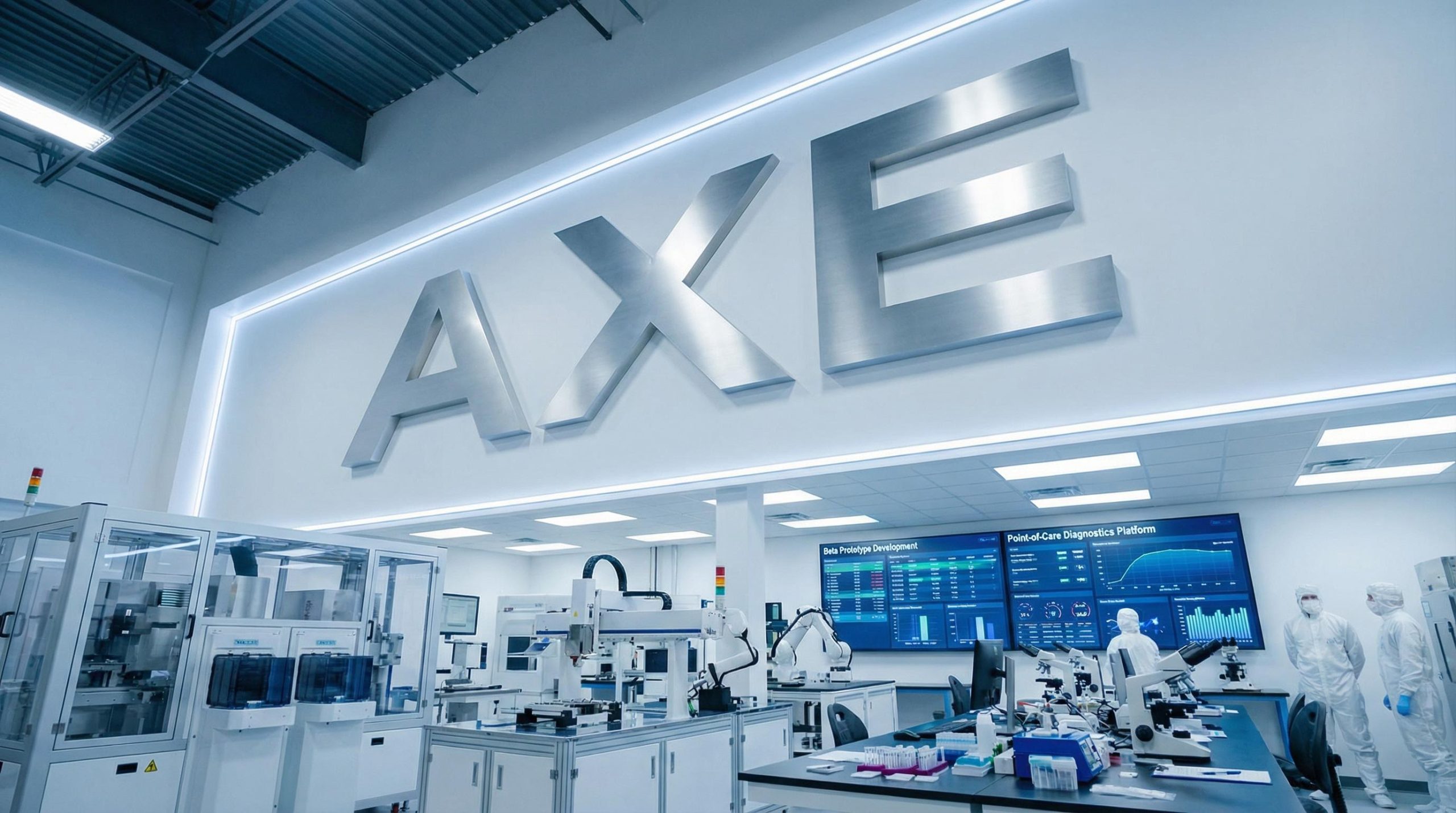
Archer Materials shifts Biochip program to beta prototype phase
Archer Materials (ASX: AXE) has completed its Stage 1 IMEC collaboration and alpha prototype development for the Archer Materials Biochip, advancing the program into beta prototype development designed for external testing and pre-clinical trials. The alpha prototype was completed on 30 January 2026, marking the transition from proof-of-concept to productisation.
The beta prototype system will combine the silicon sensing chip with Archer’s proprietary functionalisation, chip design, cartridge and microfluidics, readout methodology, and electronics. This optimised system is designed for external testing and pre-clinical trials, while also accelerating in-house development of potassium testing and feasibility studies for additional applications.
For investors, this milestone represents a de-risking event in the development pathway, moving the Biochip closer to clinical validation and commercial readiness. The transition to external laboratory testing generates real-world performance data required for regulatory approval and contract manufacturing preparation.
When big ASX news breaks, our subscribers know first
What is the Archer Biochip and why does it matter?
The Archer Biochip is a medical diagnostic device currently focused on potassium testing, with a pipeline of additional applications under development. The technology combines a semiconductor sensing chip with Archer’s proprietary functionalised sensing layer and signal processing methodology to enable rapid, point-of-care diagnostic testing.
Point-of-care diagnostics refer to medical tests that can be performed at or near the site of patient care, rather than sending samples to centralised laboratories. This approach can reduce testing turnaround times from hours or days to minutes, enabling faster clinical decision-making.
The commercial opportunity lies in healthcare and pathology market applications where rapid, easy-to-use diagnostic testing can improve patient outcomes and reduce healthcare system costs. Potassium testing is particularly relevant for patients with cardiovascular conditions, kidney disease, and those taking certain medications, where timely measurement is critical for treatment decisions.
Silicon platform selected to accelerate commercialisation
Archer has selected silicon for current prototype builds due to faster development timelines and established manufacturing pathways. Graphene remains the next-generation chip platform for future performance optimisation and product expansion.
Critically, the proprietary value does not reside in the substrate material. The core intellectual property lies in Archer’s functionalised sensing layer, surface chemistry, chip design, and signal processing methodology. This sensing architecture can be deployed across multiple semiconductor substrates, which de-risks manufacturing and commercialisation by providing platform flexibility.
| Feature | Silicon (Current) | Graphene (Future) |
|---|---|---|
| Development Timeline | Faster—established fabrication processes | Longer—advanced material requiring optimisation |
| Manufacturing Readiness | High—mature supply chains and infrastructure | Emerging—requires specialised fabrication capability |
| Performance Optimisation Potential | Proven stability and manufacturability | Enhanced sensitivity and expanded application range |
This dual-platform strategy reduces single-technology risk while maintaining multiple commercialisation pathways. The ability to deploy the same sensing architecture across different substrates provides strategic flexibility as manufacturing capabilities and market requirements evolve.
Beta prototype development roadmap
The beta prototype development program represents the bridge between laboratory success and real-world clinical validation. The system is being designed for use by external users and laboratories, enabling collection of real-world performance data and user feedback to inform engineering of the final product.
The development program comprises four key components:
- Engineering a user-ready cartridge format that integrates chip, functionalisation, and microfluidics
- Integrating readout electronics and software for measurement and data processing
- Testing for ease-of-use iteration to optimise blood sample workflow and user experience
- Shelf-life and storage stability testing to establish product specifications
External validation through beta testing generates critical data required for regulatory approval and informs contract manufacturing partners. This represents a necessary step between alpha prototype demonstration and clinical trial preparation, providing real-world performance metrics and identifying engineering refinements before finalising product design.
IMEC Stage 2 discussions progressing
Stage 2 project discussions with IMEC are progressing to support fabrication scale-up, packaging, and clinical trial preparation. IMEC provides access to world-class semiconductor fabrication infrastructure and expertise in transitioning laboratory prototypes to production-ready manufacturing processes.
Continued partnership with IMEC reduces execution risk by leveraging established fabrication capabilities and process knowledge, rather than requiring Archer to build internal manufacturing infrastructure during the development phase.
Management’s view on commercialisation pathway
Dr. Simon Ruffell, Chief Executive Officer of Archer, emphasised the strategic significance of completing the alpha prototype and advancing toward beta development.
Dr. Simon Ruffell, CEO
“The results demonstrate that our potassium sensor can be built on a silicon platform without compromising performance, while also providing advantages in stability and manufacturability. This gives us greater confidence in our ability to scale production and meet target product requirements as well as build a pipeline of other applications.”
The commentary signals management confidence in the commercial pathway, highlighting the de-risking achieved through successful alpha prototype completion and platform flexibility. The reference to building a pipeline of applications indicates Archer’s strategy to leverage the core sensing architecture across multiple diagnostic targets beyond potassium testing.
What’s next for Archer Materials investors
Near-term catalysts for (ASX: AXE) shareholders include:
- Beta prototype development, integrating cartridge engineering, electronics, and stability testing
- External laboratory testing to generate real-world performance data and user feedback
- IMEC Stage 2 project discussions supporting fabrication scale-up and clinical trial preparation
- Pre-clinical trial preparation advancing regulatory pathway and clinical validation timeline
These milestones provide visibility on upcoming value-driving events as the Biochip program progresses from laboratory development toward clinical validation and commercial readiness. The transition to beta prototype marks a critical phase where external validation de-risks the technology and informs final product engineering before regulatory submission.
Don’t Miss the Next MedTech Breakthrough
Join 20,000+ investors getting FREE breaking ASX news delivered to your inbox within minutes, complete with in-depth analysis. Click the “Free Alerts” button at StockWire X to start receiving alerts the moment market-moving announcements drop across healthcare, technology, and emerging sectors.