

Clarity Pharmaceuticals reports superior lesion detection in head-to-head prostate cancer imaging trial
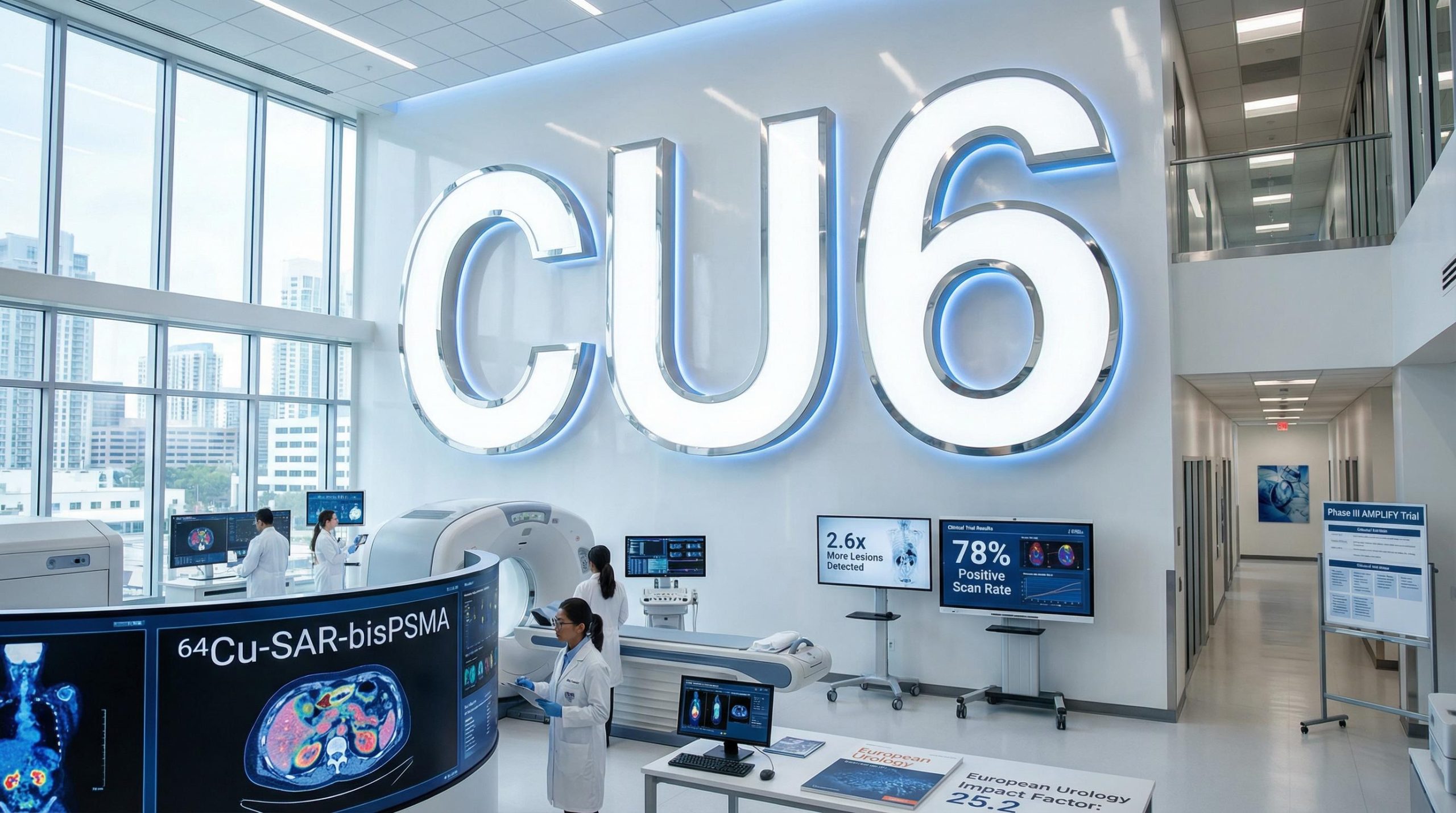
Clarity Pharmaceuticals (ASX: CU6) has announced Clarity Pharmaceuticals Co-PSMA Trial Results demonstrating that its diagnostic agent detected 2.6 times more lesions than the current standard-of-care in patients with biochemical recurrence of prostate cancer. The data was presented at the European Association of Urology (EAU) Congress 2026 in London on 16 March 2026 and has been accepted for publication in European Urology, a journal with an impact factor of 25.2.
The Co-PSMA trial evaluated 64Cu-SAR-bisPSMA against standard-of-care 68Ga-PSMA-11 in a head-to-head comparison involving 50 patients with low prostate-specific antigen (PSA) levels ranging from 0.2 to 0.75 ng/mL following radical prostatectomy. Mean per-patient lesion count was 1.26 for 64Cu-SAR-bisPSMA compared to 0.48 for the comparator agent (p <0.0001), representing clinically meaningful improvement in early recurrence detection.
This pivotal clinical validation data strengthens the regulatory submission package for 64Cu-SAR-bisPSMA in biochemical recurrence of prostate cancer, with the company planning to submit results to the US Food and Drug Administration (FDA) alongside data from the Phase II COBRA trial and the anticipated results from the ongoing pivotal Phase III AMPLIFY study.
When big ASX news breaks, our subscribers know first
What the Co-PSMA trial measured and why it matters
The Co-PSMA trial was designed as a Phase II investigator-initiated trial (IIT) evaluating diagnostic performance in patients with biochemical recurrence, a condition where PSA levels rise after initial treatment, indicating potential cancer return. Biochemical recurrence refers to rising PSA levels following radical prostatectomy (surgical removal of the prostate), often occurring before any physical symptoms appear.
All 50 participants underwent both scans using the same digital PET camera, with 68Ga-PSMA-11 imaging performed first, followed by 64Cu-SAR-bisPSMA imaging at both one hour and 24 hours post-injection. This head-to-head design eliminated variability from different imaging equipment or patient populations.
Detecting recurrence at low PSA levels is clinically important because current standard-of-care agents demonstrate lower sensitivity in this patient population, potentially missing early disease when curative treatment remains possible. The trial specifically targeted this challenging diagnostic scenario where standard agents often fail to localise recurrence.
Enrolled participants had a median PSA of 0.43 ng/mL (IQR: 0.31 to 0.63 ng/mL), with 74% classified as International Society of Urological Pathologists (ISUP) grade 3 or higher, indicating aggressive disease characteristics requiring accurate staging for treatment planning.
Diagnostic accuracy results show meaningful clinical improvement
The trial’s primary endpoint measured the difference in mean per-patient lesion detection between the two agents. 64Cu-SAR-bisPSMA (24-hour imaging) identified a mean of 1.26 lesions per patient compared to 0.48 for 68Ga-PSMA-11, with a difference of 0.78 (95% confidence interval: 0.52 to 1.04), ratio 2.63 (95% CI: 1.64 to 4.20).
| Metric | 68Ga-PSMA-11 | 64Cu-SAR-bisPSMA | Difference |
|---|---|---|---|
| True positive rate | 29% | 71% | +42 percentage points |
| False negative rate | 65% | 21% | -44 percentage points |
| Participants with positive scan | 36% (18/50) | 78% (39/50) | +42 percentage points |
| Total lesions identified | 24 | 63 | 2.6x more |
Among participants with an evaluable standard of truth, the true positive rate for 24-hour 64Cu-SAR-bisPSMA was 71% (24/34) compared to 29% (10/34) for 68Ga-PSMA-11. The false negative rate, representing missed cancers, was 21% for 64Cu-SAR-bisPSMA compared to 65% for the standard agent, a reduction of 44 percentage points that translates directly to fewer undetected recurrences and improved patient outcomes.
Where 64Cu-SAR-bisPSMA found more disease
The superior detection rate was observed across multiple anatomical locations, with the most pronounced differences in the prostate bed and lymph node regions:
- Local recurrence (prostate bed): 56% (28/50) versus 22% (11/50)
- Pelvic/extra-pelvic lymph nodes: 20% (10/50) versus 8% (4/50)
- Bone metastases: 16% (8/50) versus 10% (5/50)
Visceral metastases to the lung were detected in 2% (1/50) of participants by both agents. The increased detection in the prostate fossa region is particularly relevant for patients being considered for salvage radiotherapy, where accurate localisation determines treatment planning.
Management impact demonstrates real-world clinical utility
Planned patient management changed following assessment of 64Cu-SAR-bisPSMA scans in 44% (22/50) of trial participants, with the majority shifting from surveillance to targeted radiotherapy. This management impact data demonstrates that improved imaging performance translates to actionable clinical decisions rather than merely detecting additional findings of uncertain significance.
Prof Louise Emmett, Principal Investigator, St Vincent’s Hospital Sydney
“The Co-PSMA study shows that a novel PSMA-targeted PET agent like 64Cu-SAR-bisPSMA can deliver improved imaging performance compared to other SOC PSMA agents. In Co-PSMA, 64Cu-SAR-bisPSMA at 24 hours identified more sites of recurrence and directly informed personalised treatment decisions, highlighting its potential to improve outcomes in prostate cancer patients with BCR.”
Management impact data is increasingly important for FDA submissions as it demonstrates clinical utility beyond detection rates alone. The shift from surveillance to curative-intent radiotherapy in a substantial proportion of patients indicates that 64Cu-SAR-bisPSMA revealed disease that would have otherwise remained undetected using standard imaging, potentially affecting long-term outcomes.
The trial evaluated treatment changes against a composite reference standard including biopsy confirmation, response to targeted treatment without androgen deprivation therapy, PSA progression without treatment, and corroborative imaging, ensuring that management changes were based on true disease presence rather than false positive findings.
How this data fits Clarity’s regulatory pathway
The Co-PSMA results complement Clarity’s broader clinical development programme for 64Cu-SAR-bisPSMA in biochemical recurrence of prostate cancer. The company has received three Fast Track Designations from the FDA for its SAR-bisPSMA agent, enabling more frequent regulatory interactions and potential priority review.
Current clinical programme status:
- Co-PSMA IIT: Completed, data presented at EAU 2026 and accepted for publication in European Urology
- COBRA Phase II: Completed, demonstrated 90% positive scan rate on 24-hour 64Cu-SAR-bisPSMA versus 60% on standard-of-care PSMA PET
- AMPLIFY Phase III: Target enrolment achieved in 9 months, data collection ongoing
- CLARIFY Phase III: Ongoing
- SECuRE therapeutic trial: Ongoing
The AMPLIFY trial recently reached its target number of participants with rising or detectable PSA after initial definitive treatment at clinical sites across the US and Australia, representing rapid enrolment for a pivotal study that supports strong investigator and patient interest in the diagnostic agent.
Dr Alan Taylor, Executive Chairperson
“The extraordinary quality of the academic research is coupled with the feverish pace of commercialisation where our registrational Phase III trials, AMPLIFY and CLARIFY, are nearing completion… Combined with results from the Co-PSMA and COBRA trials, we believe it will constitute a compelling application for approval of 64Cu-SAR-bisPSMA by regulatory authorities for the BCR indication.”
Three completed trials (Co-PSMA, COBRA, PROPELLER) plus the pivotal AMPLIFY trial nearing completion creates a comprehensive data package for FDA submission. Fast Track Designations enable accelerated regulatory pathways and more frequent FDA interactions during the review process, potentially shortening time to market approval.
Prostate cancer market context
Prostate cancer is the second most common cancer diagnosed in men globally and the fifth leading cause of cancer death in men worldwide. The American Cancer Institute estimates approximately 333,830 new cases of prostate cancer in the US in 2026, with around 36,320 deaths from the disease, making it the second-leading cause of cancer death in American men.
The biochemical recurrence setting represents a clinically challenging scenario where improved diagnostic accuracy directly impacts treatment decisions. Current standard-of-care agents demonstrate lower sensitivity in patients with low PSA levels, creating an unmet need for more sensitive imaging agents that can detect recurrence earlier when curative salvage therapy remains an option.
The Co-PSMA data demonstrates that 64Cu-SAR-bisPSMA addresses this unmet need by detecting disease in 78% of patients compared to 36% with standard imaging, potentially enabling earlier intervention in a patient population where standard diagnostics frequently fail to localise recurrence.
The near-term catalysts for Clarity include data readout from the AMPLIFY Phase III trial and potential FDA submission for 64Cu-SAR-bisPSMA in biochemical recurrence of prostate cancer. The Co-PSMA presentation at Europe’s largest urology congress and acceptance for publication in a top-tier journal with an impact factor of 25.2 represents clinical validation of the diagnostic platform’s superior performance in this challenging patient population.
Want the Next Healthcare Breakthrough in Your Inbox?
Join 20,000+ investors getting FREE breaking ASX news delivered within minutes of release, complete with in-depth analysis. Click the “Free Alerts” button at Big News Blast to start receiving real-time alerts the moment market-moving announcements hit the ASX.