
Island Pharmaceuticals expands antiviral pipeline through Burnet Institute collaboration
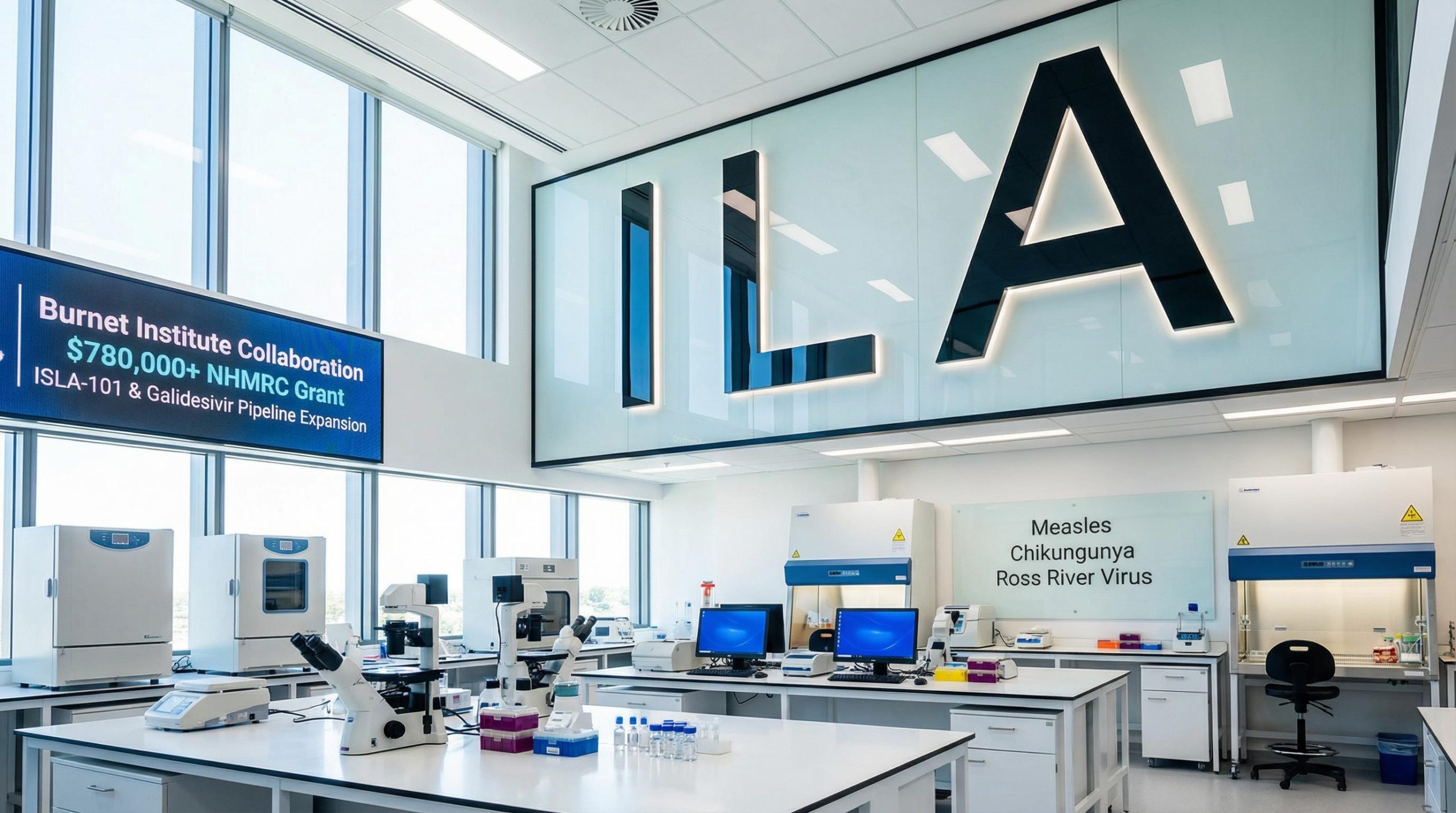
Island Pharmaceuticals (ASX: ILA) has commenced a strategic research collaboration with Burnet Institute to expand development pathways for its lead antiviral molecules, ISLA-101 and Galidesivir. The Island Pharmaceuticals Burnet Institute collaboration targets three additional high-value viral threats: measles, chikungunya, and Ross River virus, each of which currently has no approved treatment.
The programme represents a capital-efficient approach to portfolio expansion, leveraging existing clinical and preclinical datasets rather than acquiring new molecules. According to the company’s announcement dated 9 March 2026, the indication expansion is deliberately aligned with strategic national stockpile, biodefence, and public health frameworks.
Dr Johanna Fraser, co-lead inventor of ISLA-101 and Head of Burnet Institute’s Arbovirology Working Group, will lead the research. Dr Fraser recently secured a $780,000+ NHMRC grant providing three-year funding to advance clinical research associated with ISLA-101. The grant was awarded to Burnet and sits alongside the existing collaboration, extending Island’s research capacity without shareholder dilution.
For investors, this development signals disciplined value creation through strategic asset optimisation rather than dilutive capital raises to fund new acquisitions.
When big ASX news breaks, our subscribers know first
Why antiviral pipeline expansion matters for investors
Indication expansion for existing drug candidates allows biotechnology companies to test whether molecules already proven safe in humans can treat additional diseases. This approach reduces both development risk and timeline compared to starting from scratch with a new compound.
When a drug candidate targets viruses with no approved treatments, it creates commercial white space where no competitor has established market presence. Each new indication validated through preclinical and clinical data represents a separate potential revenue stream or partnership opportunity.
Government preparedness programmes represent procurement opportunities distinct from traditional pharmaceutical sales models. National stockpile frameworks prioritise broad-spectrum antivirals that can address multiple threats, creating non-dilutive revenue pathways through advance purchase agreements or strategic partnerships with health security agencies.
For ISLA-101 and Galidesivir, the ability to address multiple viral pathogens increases partnering optionality. Pharmaceutical companies and government agencies seeking preparedness solutions favour molecules with validated activity across several high-priority threats.
The viral targets and their market significance
The Island Pharmaceuticals Burnet Institute collaboration will assess antiviral activity against three selected pathogens:
- Measles: No specific treatment exists. Measles remains one of the most contagious human viruses globally, with resurgent outbreaks in regions with declining vaccination coverage.
- Chikungunya: No approved treatment. The virus causes millions of infections annually across more than 100 countries, with severe joint pain lasting months to years in many patients.
- Ross River virus: No treatment available. The mosquito-borne virus affects thousands of Australians annually, causing debilitating arthralgia and fatigue.
Each indication represents a validated gap where no competitor has secured antiviral approval. For Island Pharmaceuticals (ASX: ILA), success in any of these areas would position the company in markets with clear unmet medical need and regulatory support for novel therapeutics.
Dr Johanna Fraser’s role and the NHMRC funding boost
Dr Fraser’s involvement provides scientific continuity and domain expertise as Island expands ISLA-101 and Galidesivir across additional indications. As co-lead inventor of ISLA-101, she has undertaken extensive preclinical research involving the molecule, contributing to the scientific understanding of its antiviral activity, mechanism of action, and potential application across orthoflaviviruses.
The $780,000+ NHMRC grant secured by Dr Fraser represents meaningful external validation of the scientific rationale underpinning ISLA-101’s development. The competitive three-year grant provides funding for additional translational and clinical work designed to further de-risk ISLA-101, complementing Island’s broader Phase 2/3 development strategy.
For investors, external grant funding extends the company’s research runway without requiring shareholder dilution. The NHMRC’s decision to award funding signals independent scientific review and confidence in the programme’s merit.
Dr Johanna Fraser, Head, Arbovirology Working Group at Burnet Institute
“There are currently no approved antiviral therapeutics for the treatment of dengue, and only two compounds have demonstrated efficacy in Phase 2 clinical trials. One of these is ISLA-101, for which I co-led the program of discovery and characterisation as an antiviral. This highlights both the scientific validity of targeting dengue with repurposed antivirals and the growing maturity of the field.”
Dr Fraser’s statement underscores ISLA-101’s clinical credibility. Having already generated meaningful clinical and translational data, the molecule enters this expanded programme with validated proof-of-concept in humans.
Alignment with government biodefence priorities
The selection of measles, chikungunya, and Ross River virus as target indications followed an extensive review of historical data associated with both ISLA-101 and Galidesivir. Critically, these indications were chosen based on relevance to strategic national stockpile and government biodefence preparedness programmes.
National stockpile frameworks prioritise therapeutics that can address high-consequence pathogens and emerging infectious disease threats. Preparedness-driven frameworks offer alternative commercialisation pathways distinct from traditional pharmaceutical development models, including advance purchase agreements and strategic reserves.
As part of the collaboration, Burnet will assess in vitro and translational studies of the antiviral activity of ISLA-101 and Galidesivir against selected viral pathogens. The collaboration is expected to generate valuable data required to inform development pathways aligned with government preparedness and strategic stockpile frameworks, considerably strengthening Island’s broader intellectual property portfolio.
For Island Pharmaceuticals (ASX: ILA), alignment with government biodefence priorities positions the company to participate in procurement discussions as health security agencies seek broad-spectrum antiviral capabilities.
The next major ASX story will hit our subscribers first
What this means for Island’s investment thesis
The Island Pharmaceuticals Burnet Institute collaboration expands commercial and strategic optionality for the company’s existing antiviral portfolio without requiring new asset acquisition. By leveraging historical datasets and pairing them with targeted new research, Island is maximising asset value through capital-efficient portfolio expansion.
The collaboration advances Island’s objective of building a portfolio of antivirals with clear regulatory pathways, strategic relevance, and strong partnership potential. ISLA-101’s existing Phase 2 clinical efficacy data and Galidesivir’s extensive clinical development history provide validated starting points for expanded indication development.
Dr David Foster, CEO and Managing Director
“This collaboration with Burnet Institute represents a strategically important step in unlocking additional value from our existing antiviral portfolio. Importantly, the work aligns directly with government biodefence and preparedness priorities, as well as ongoing public health initiatives, where we believe there is growing demand for broad-spectrum antivirals.”
The table below summarises the key elements of the collaboration:
| Element | Detail |
|---|---|
| Research partner | Burnet Institute |
| Lead molecules | ISLA-101, Galidesivir |
| New viral targets | Measles, Chikungunya, Ross River virus |
| External funding secured | $780,000+ NHMRC grant (three years) |
For investors, the collaboration represents a disciplined approach to value creation. Rather than pursuing dilutive capital raises to fund new molecule acquisition, Island is extracting additional value from assets already in its portfolio. The external NHMRC funding further de-risks the programme whilst strengthening the scientific foundation underpinning broader Phase 2/3 development plans across both assets.
The collaboration is expected to generate robust in vitro and translational datasets across the three target indications. This data will inform future development pathways, particularly in the context of preparedness-driven frameworks and potential stockpile applications, strengthening Island’s position in partnership discussions with pharmaceutical companies and government agencies.
Want the Next Biotech Breakthrough in Your Inbox?
Join 20,000+ investors receiving FREE breaking ASX Healthcare news within minutes of release, complete with in-depth analysis. Click the “Free Alerts” button at StockWire X to get market-moving biotech announcements the moment they drop.