

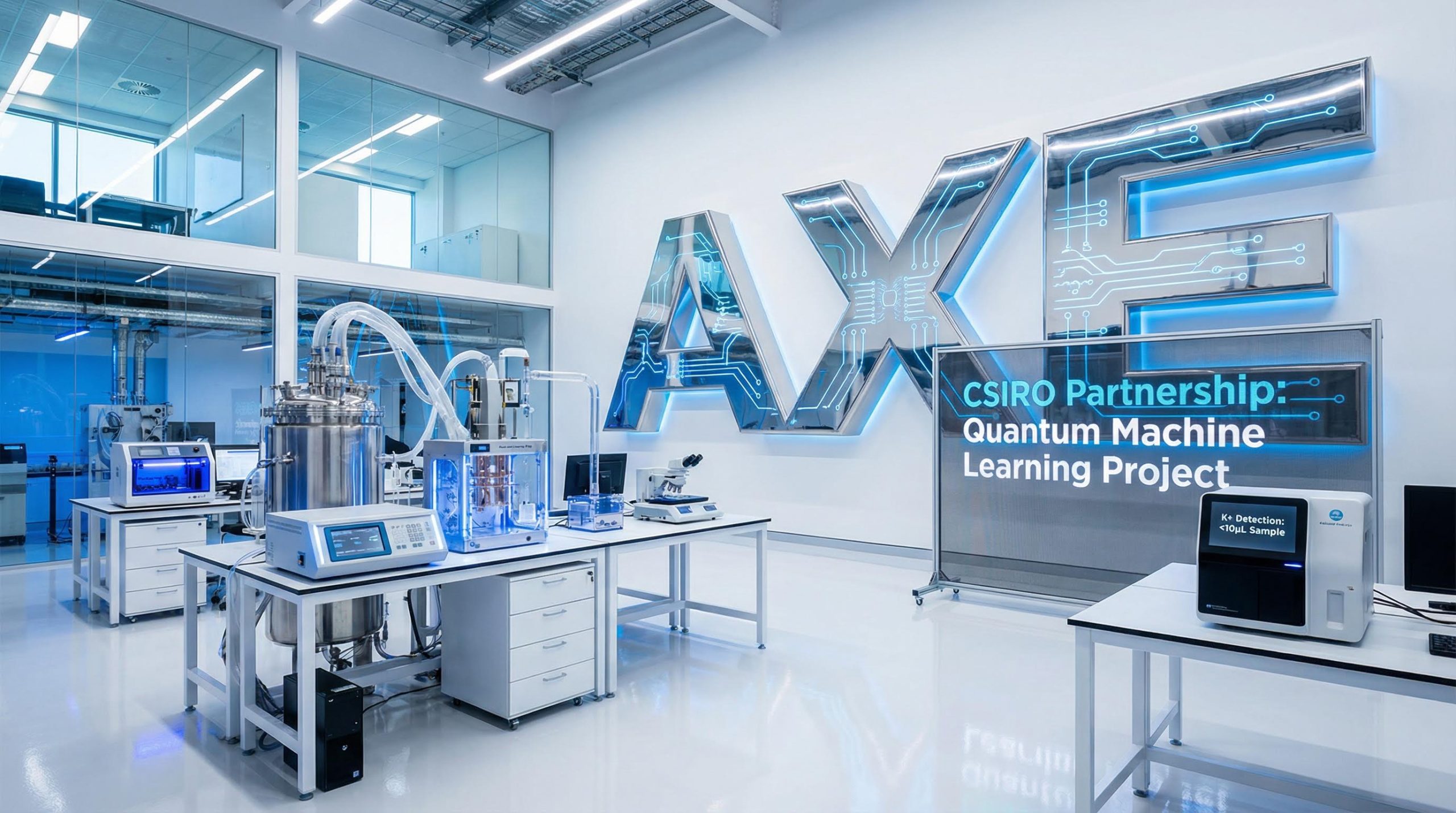
Archer Materials launches quantum machine learning project with CSIRO
Archer Materials (ASX: AXE) has partnered with CSIRO to develop Quantum Machine Learning (QML) models for fraud detection, management outlined in its 1H FY26 update delivered on 4 March 2026. The collaboration adds a fourth pillar to the company’s technology roadmap alongside quantum computing, quantum sensing, and its biochip platform. As the only ASX-listed quantum technology company, Archer’s QML initiative positions the firm to develop near-term commercial applications whilst building intellectual property optionality across healthcare, defence, aerospace, and cybersecurity sectors.
The company has filed over 40 patents globally across its technology portfolio. Initial outputs from the CSIRO partnership will include prototype QML fraud detection models and performance benchmarks tested on simulated financial datasets. Management framed the project as reinforcing Archer’s strategy to commercialise quantum applications with global impact whilst maintaining its unique positioning on the ASX.
The 1H FY26 period saw the QML project join progress across the company’s existing three technology verticals. Management stated the period delivered technical derisking and broadening of the intellectual property portfolio, with development partnerships maintained with world-class R&D institutions and industry leaders.
When big ASX news breaks, our subscribers know first
What is quantum machine learning?
Quantum machine learning applies quantum computing principles to enhance traditional machine learning capabilities, particularly for complex pattern recognition tasks. Where classical computers process information using binary bits, quantum computers utilise qubits that can exist in multiple states simultaneously. This allows quantum systems to potentially analyse vastly larger datasets and identify patterns that classical algorithms may miss.
In fraud detection applications, quantum machine learning could offer advantages for identifying sophisticated financial fraud schemes. Financial transactions generate enormous volumes of data with subtle patterns indicating fraudulent activity. Classical machine learning models process this data sequentially, whilst quantum approaches may simultaneously evaluate multiple variables and relationships. The technology remains in development stages, with researchers and financial institutions exploring whether quantum advantages translate to practical performance gains over existing fraud detection systems.
Why fraud detection is the starting point
Management emphasised that whilst fraud detection serves as the initial application, the underlying QML framework developed through the CSIRO partnership maintains broad applicability. The same quantum machine learning architecture could be adapted for pattern recognition and data analysis challenges across multiple high-value sectors including healthcare diagnostics, defence and aerospace systems, and cybersecurity threat detection.
This approach creates optionality for Archer Materials whilst building defensible intellectual property. Rather than developing separate quantum solutions for each sector, the company is establishing a foundational QML platform that can be customised for different commercial applications. The strategy demonstrates capital-efficient R&D, where a single partnership investment potentially unlocks multiple market opportunities as the technology matures and quantum computing hardware becomes more accessible.
Quantum computing and sensing progress
Archer’s 12CQ carbon-based qubit material platform achieved fundamental readout milestones for carbon qubits during the 1H FY26 period. The company entered a collaboration agreement with Emergence Quantum to advance its quantum computing development pathway. Management stated these achievements represent technical derisking toward the planned carbon-based quantum qubit demonstration targeted for 2026.
Progress in quantum sensing included demonstration of cryogenic tunnel magnetoresistance (TMR) operation. The company is exploring associated applications in advanced sensing, aerospace, and space exploration with potential customers and end-users. Management indicated commercial conversations are underway, validating market interest in the quantum sensing technology.
Key achievements across quantum platforms:
- Fundamental readout milestones achieved for carbon-based qubits
- Collaboration agreement signed with Emergence Quantum
- Cryogenic TMR operation successfully demonstrated
- Commercial discussions progressing with potential end-users for sensing applications
Biochip moves toward beta prototype
Archer’s biochip technology, a blood potassium sensor moving toward clinical application, advanced through critical development stages during the 1H FY26 period. The company completed a project with IMEC that demonstrated feasibility using silicon biochips, providing an improved route to commercialisation. Technical derisking continued with completion of the Alpha prototype, which achieved early integration of test chip, cartridge, and readout electronics capable of testing less than 10 µL of blood.
The Alpha prototype provides the basis for partner meetings and pre-clinical testing scheduled for 2026. Management stated the device allows progression to the Beta prototype phase during 2026, which will support pre-clinical studies and form the basis of negotiations with MedTech companies and engagement with medical device manufacturers. Clinical trials for the blood potassium sensor are targeted to begin at the end of 2026.
Archer is also building the product platform beyond the initial potassium application. The company collected early feasibility data for testing other ions in liquids, including lithium monitoring for mental health disorders. This positions the biochip as a platform technology with expansion potential across multiple diagnostic applications rather than a single-use device.
2026 key milestones at a glance
Management outlined a series of technical and commercial milestones targeted across the company’s technology verticals through 2027. The roadmap includes near-term deliverables in early 2026 alongside longer-term targets for clinical trials and commercial demonstrations.
| Milestone | Target Timing |
|---|---|
| Biochip lab demo (alpha) | Early 2026 |
| Quantum sensing application identified | Early 2026 |
| QML project kick-off | 2026 |
| Biochip beta prototype | 2026 |
| Qubit demonstration (compute) | 2026 |
| QML demonstration | 2026 |
| Quantum sensing prototype | 2026 |
| Blood potassium clinical trials | End of 2026 |
| Biochip clinical trials | 2027 |
The milestones provide multiple near-term catalysts across quantum computing, sensing, machine learning, and biochip development. Each milestone represents a defined technical or commercial deliverable that could serve as a value creation opportunity and newsflow generator for the company through 2027.
Investment positioning
Archer Materials maintains a differentiated position as the sole ASX-listed pure-play quantum technology company. The multi-pathway strategy now encompasses four technology verticals: quantum computing, quantum sensing, biochip diagnostics, and the newly announced quantum machine learning collaboration. This diversified approach reduces single-project risk whilst maintaining exposure to the high-growth quantum technology sector.
The company’s global patent portfolio of over 40 patents creates an intellectual property moat across its technology platforms. Development partnerships with world-class R&D institutions including CSIRO, IMEC, and Emergence Quantum provide access to specialised capabilities and validation of the company’s technical approach. The 1H FY26 period demonstrated both technical derisking across multiple projects and IP portfolio broadening through the QML partnership.
For investors, the company offers exposure to quantum technology commercialisation pathways across both near-term applications (biochip diagnostics, fraud detection) and longer-term opportunities (quantum computing hardware, advanced sensing systems). The defined milestone roadmap through 2027 provides visibility on expected technical progress and potential inflection points across the portfolio.
Want the Next Quantum Tech Breakthrough in Your Inbox?
Join 20,000+ investors receiving FREE ASX tech news within minutes of release, complete with in-depth analysis. Click the “Free Alerts” button at Big News Blast to get breaking announcements and expert coverage delivered straight to your inbox the moment market-moving news drops.